Mexican Folk Art Ladder-Back Chair — Hand-Painted Floral, Rush Seat View Watchlist >
- Winning Bid: $50.00
- 20 Bid(s) View Bid History
- High Bidder: Witchdoctor
Seller Accepts Credit Cards
Payment and pickup instructions will be available on your invoice (under "My Account") at the conclusion of this auction.
Lot # D604
System ID # 27869917
Start Date
End Date
5 Watching
Mexican Folk Art Ladder-Back Chair — Hand-Painted Floral, Rush Seat
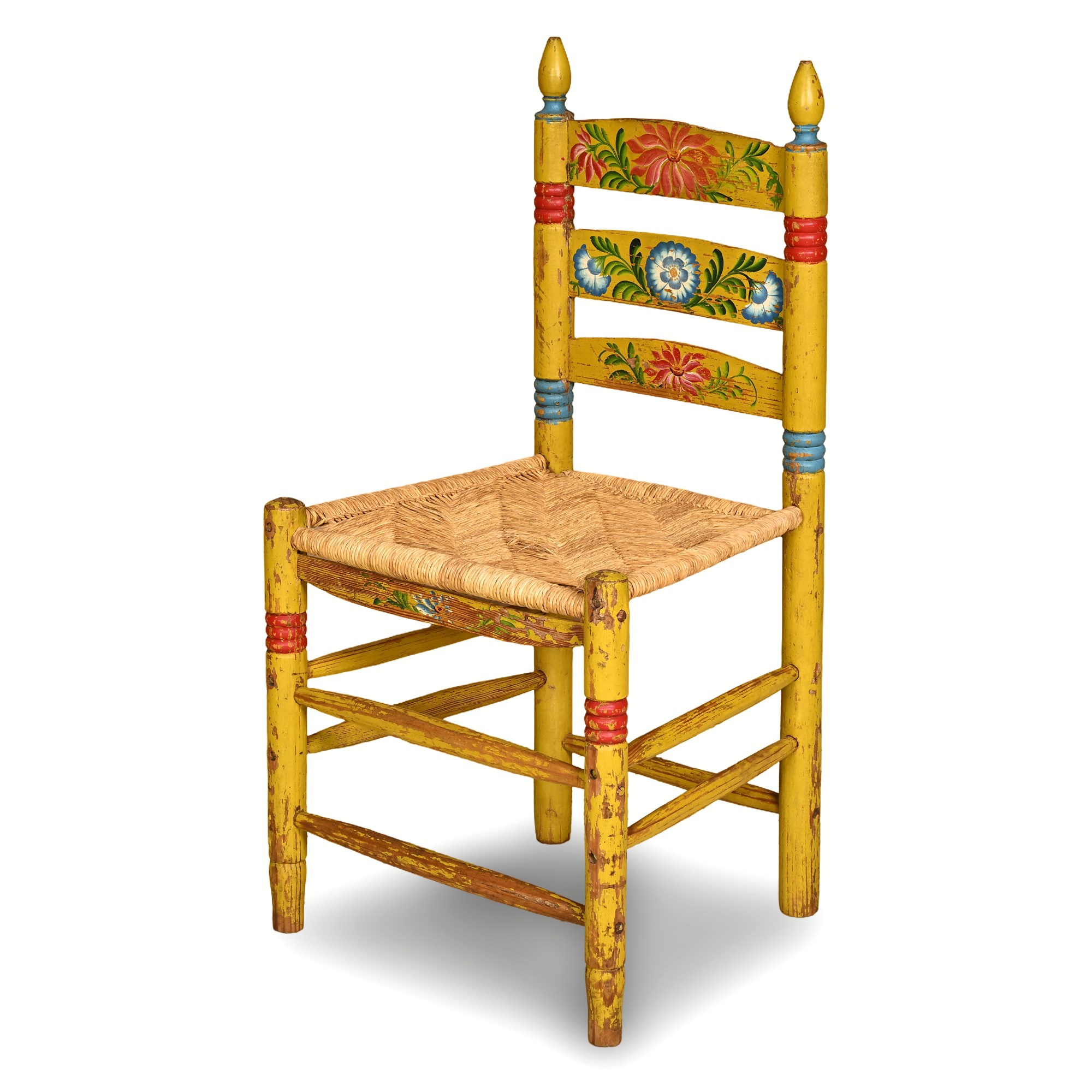
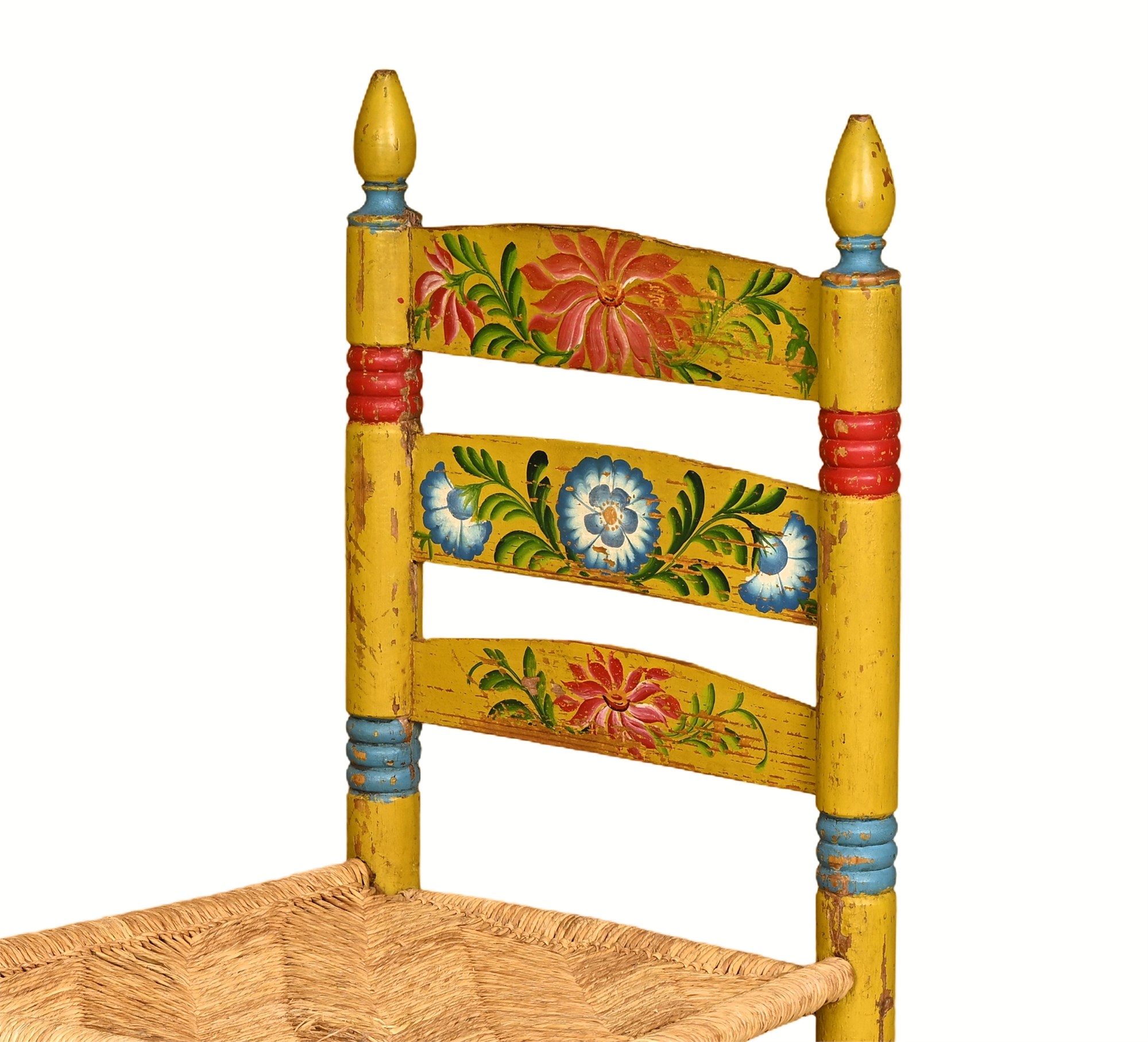
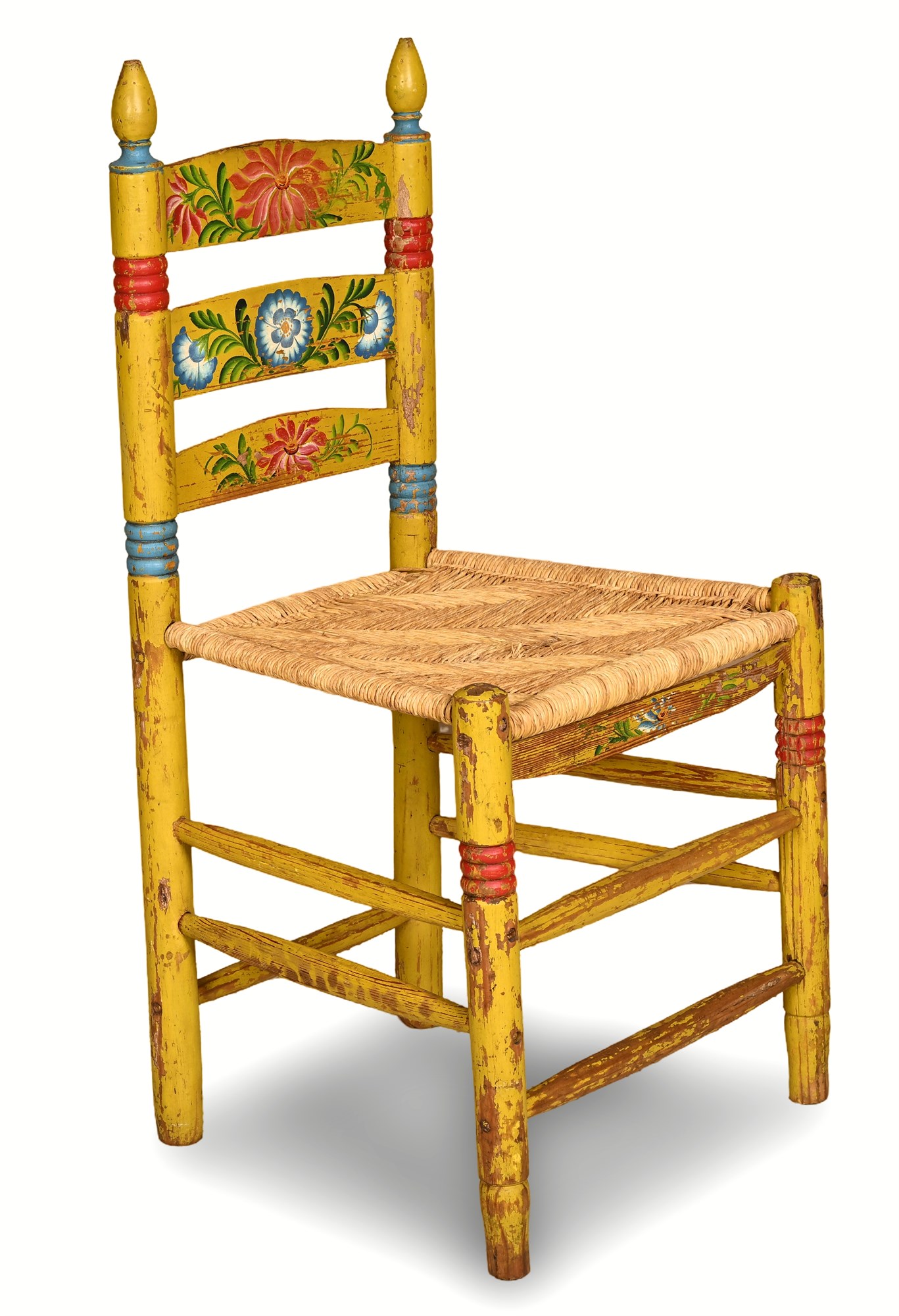
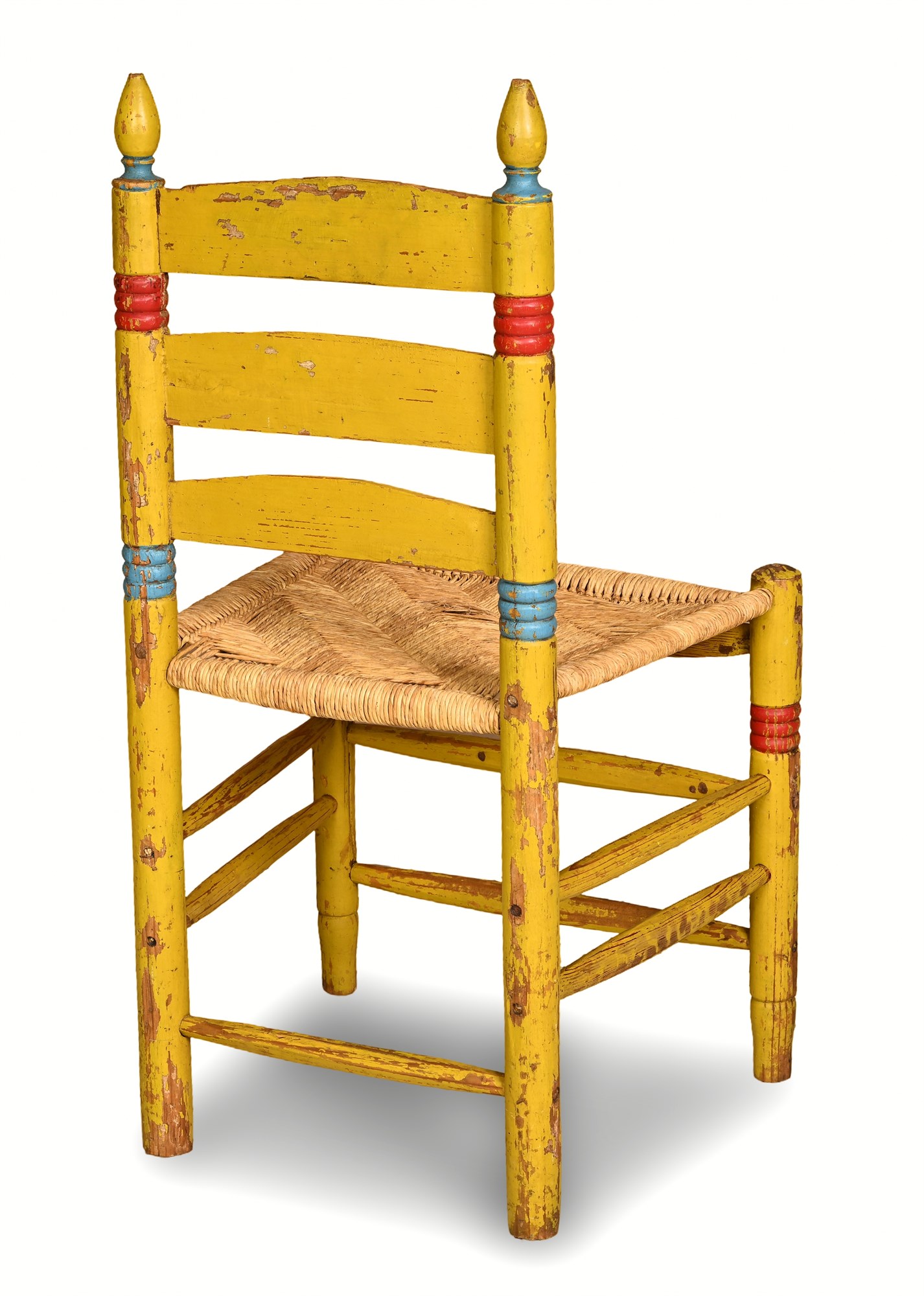
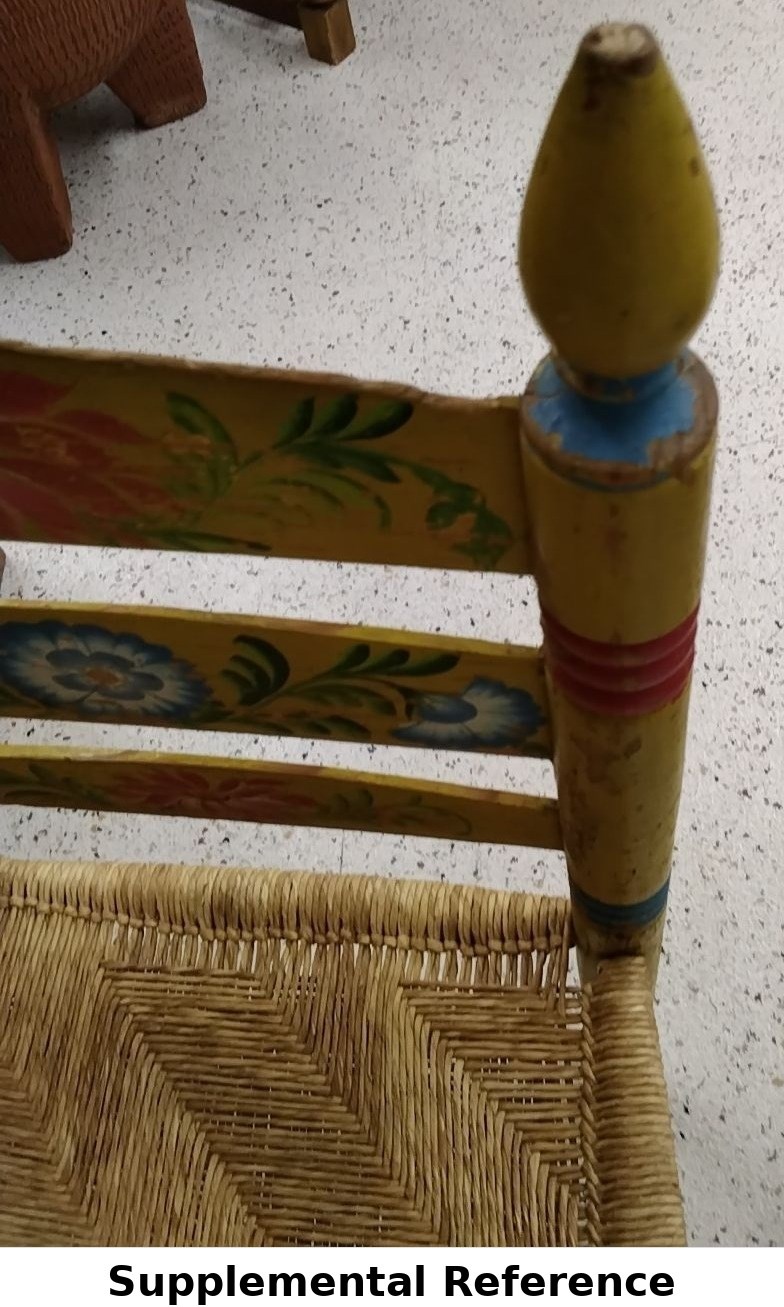
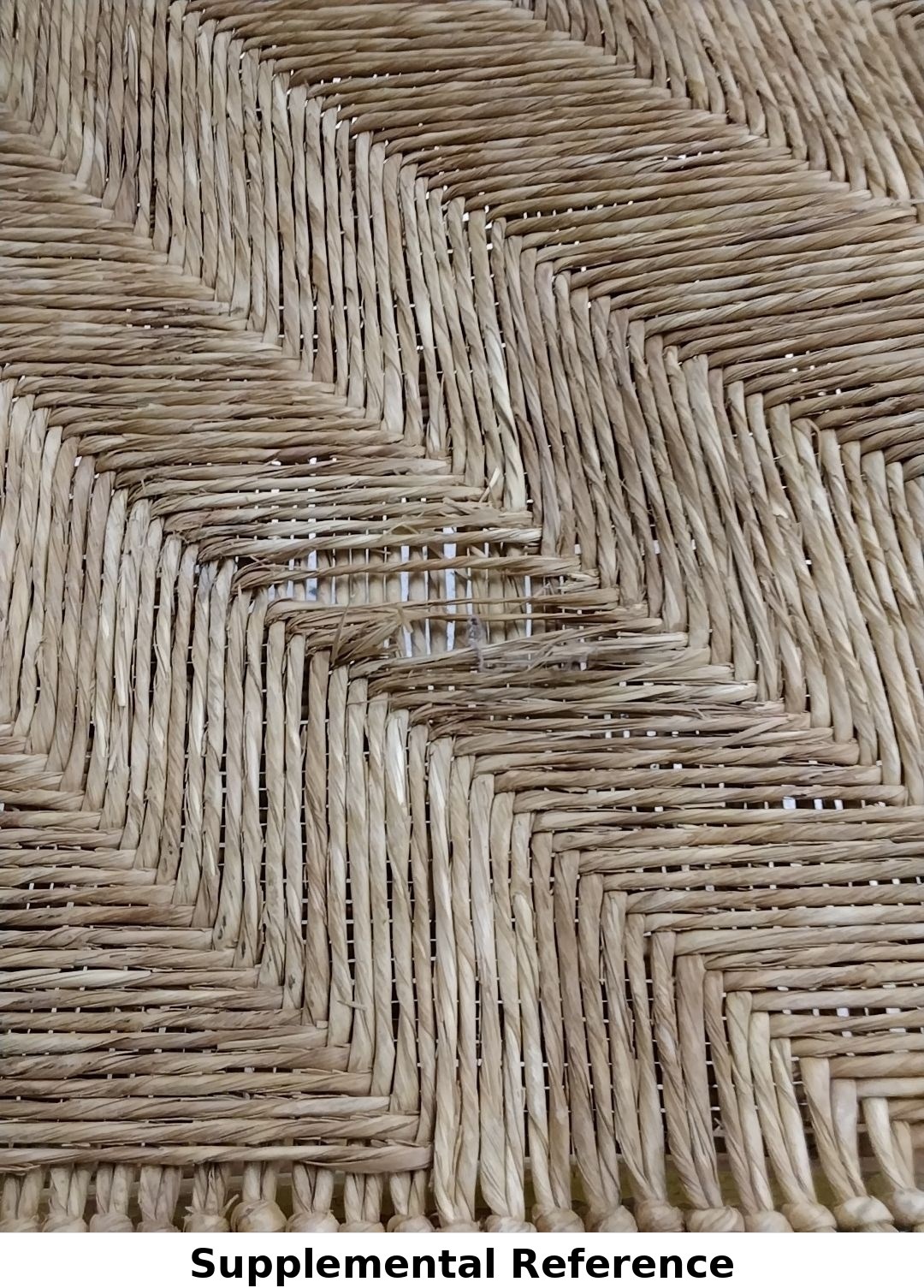
A turned-wood ladder-back side chair in the Purépecha (Tarascan) folk furniture tradition of Michoacán, finished in a bold chrome-yellow ground paint with red and blue accent rings on the stile turnings and bullet-form finials crowning the back posts. Three curved back slats carry freehand folk floral painting — a large pink dahlia-style bloom on the top slat, paired blue asters with green foliage at center, and a red flower grouping on the lower slat — executed with the broad, confident brushwork of mid-20th century Mexican pintura popular. The seat is woven in natural tule rush using a tight herringbone chevron pattern, consistent with the Lake Pátzcuaro basin weaving tradition for which the region is known.
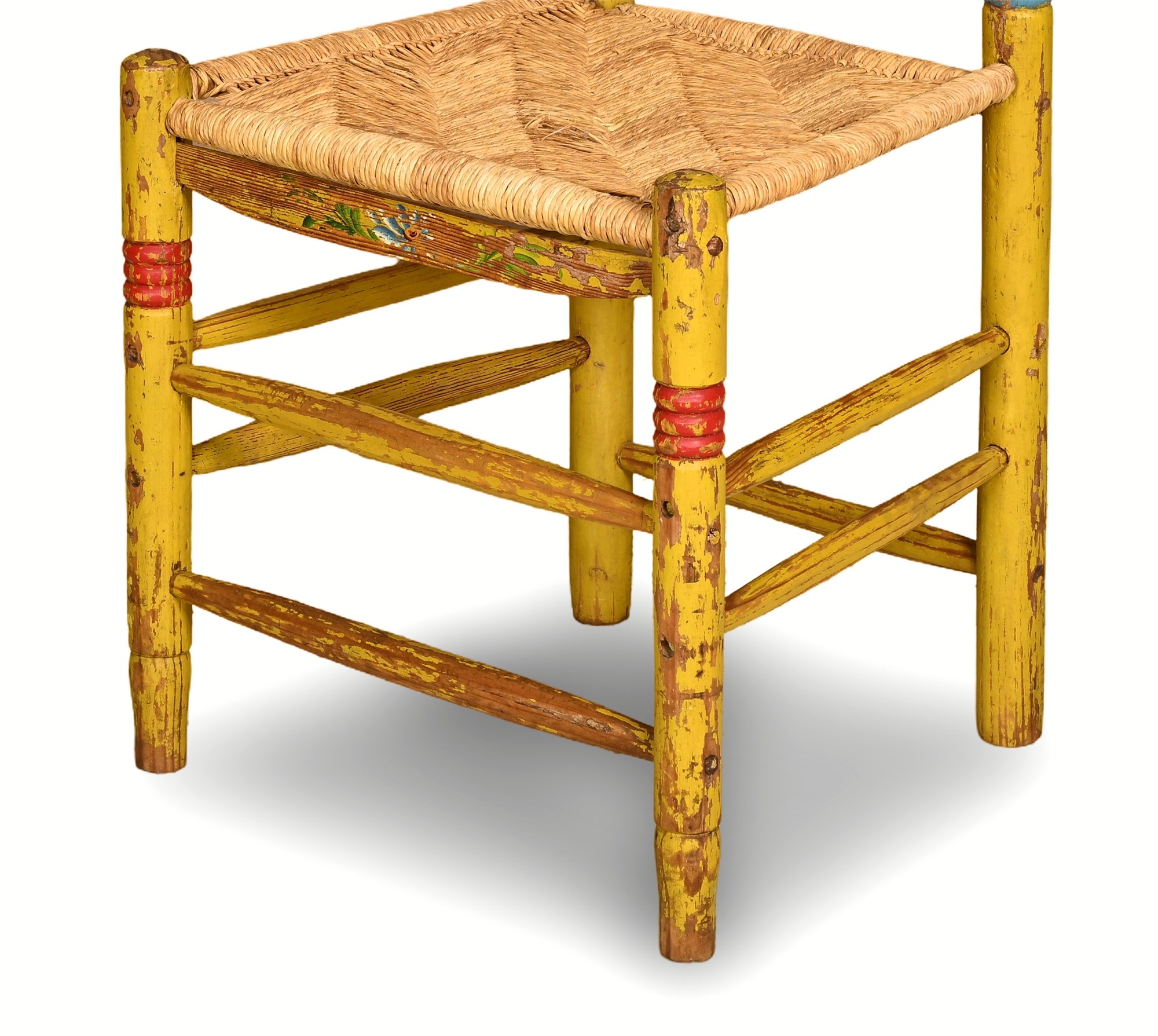
The yellow-painted frame carries an original polychrome surface with honest age patina — crazing and paint loss across all members that collectors of Mexican folk material recognize as a mark of authenticity, not detraction. The hand-painted floral decoration retains strong color and full legibility throughout.
CONDITION
Good — finish shows widespread crazing and paint loss across all frame members, age-appropriate and consistent throughout. The hand-painted floral decoration retains strong color despite surface wear. Rush seat shows minor fraying and wear as shown in photos.
DIMENSIONS / SPECIFICATIONS
- Overall: 37" H × 19" W × 17" D
- Seat: 18" W × 16" D × 15" H
- Frame: Turned wood, yellow paint ground, red and blue ring accents
- Back: Three curved ladder slats, freehand folk floral decoration
- Finials: Bullet/flame form, yellow-painted
- Seat: Natural tule rush, herringbone/chevron weave
- Origin: Michoacán, Mexico
- Era: Mid-20th century, c. 1940s–1960s