Pathé Disc Gramophone Oak Cabinet Blue Horn — 15 Records, Jimmie Rodgers View Watchlist >
- Winning Bid: $2,099.00
- 76 Bid(s) View Bid History
- High Bidder: jarischj
Seller Accepts Credit Cards
Payment and pickup instructions will be available on your invoice (under "My Account") at the conclusion of this auction.
Lot # D623
System ID # 27887703
Start Date
End Date
13 Watching
Pathé Disc Gramophone Oak Cabinet Blue Horn — 15 Records, Jimmie Rodgers
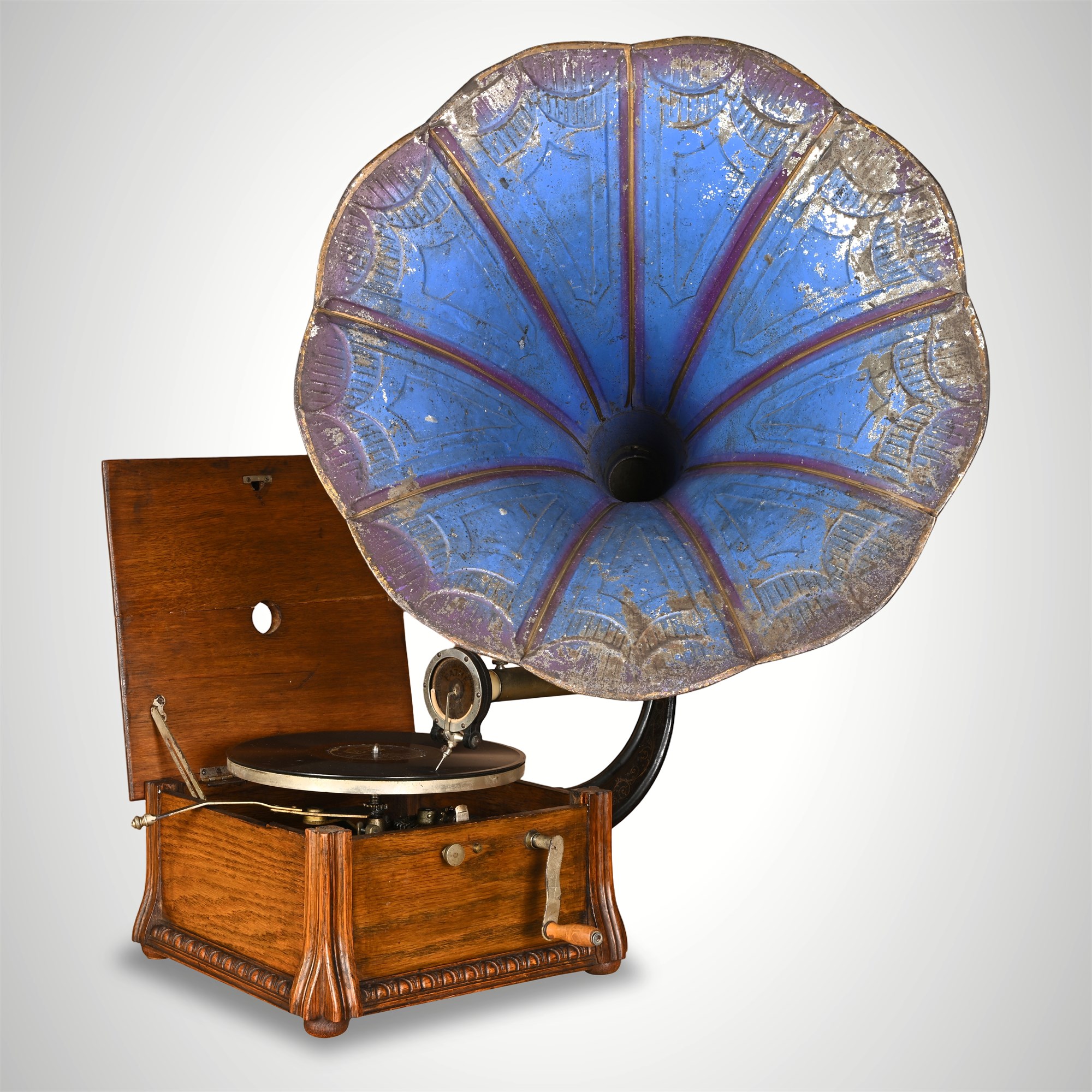
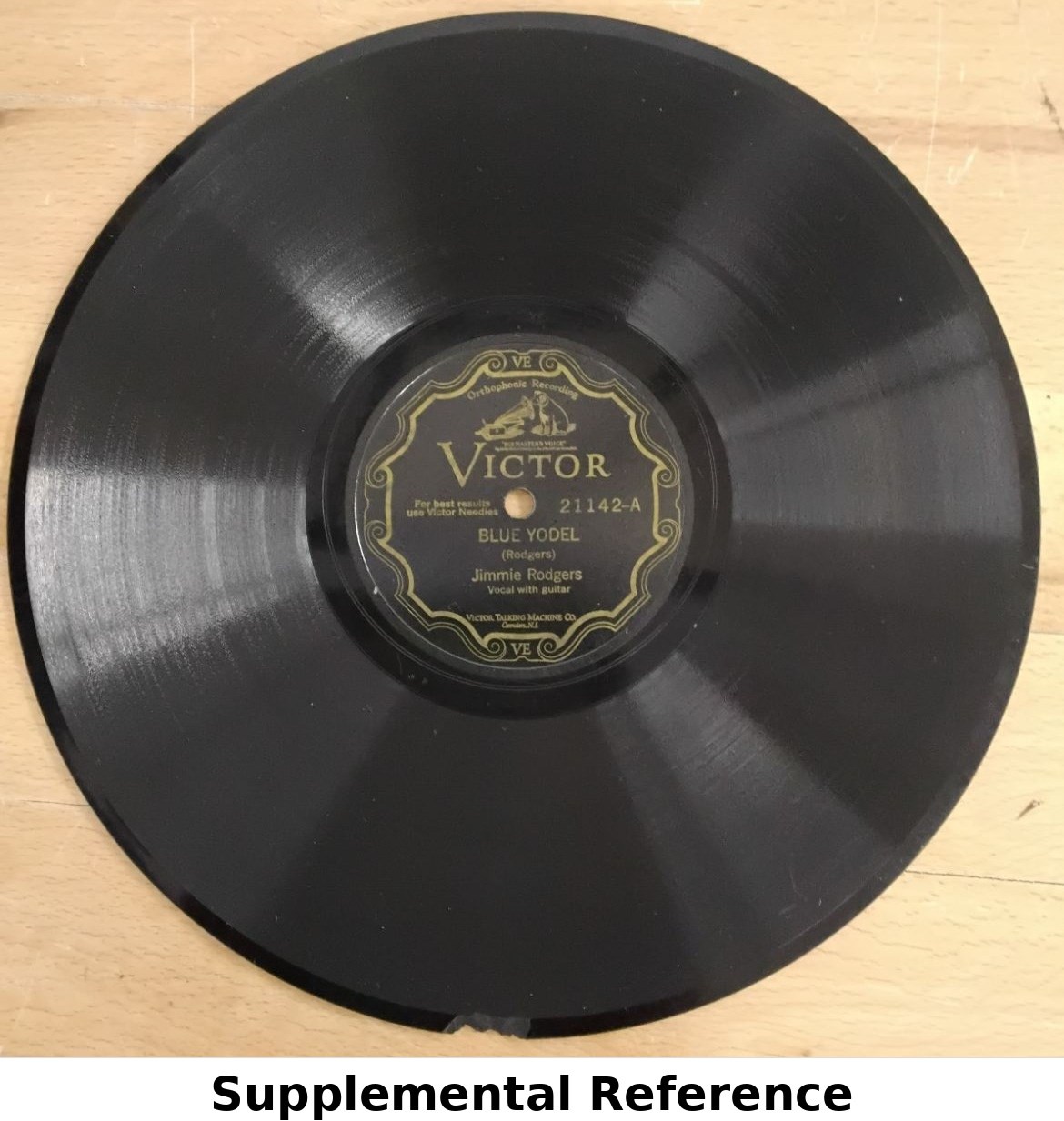
This machine was already twenty years old when Jimmie Rodgers cut "Blue Yodel." The Pathé disc gramophone in this lot dates to approximately 1905–1916 — the golden era of the French horn gramophone — and it arrived in America at roughly the same moment as the phonograph record itself. That Victor 21142 in the stack below? Pressed in 1927, the year Rodgers walked into a Bristol, Tennessee studio and changed American music forever. Here they are together: a working Pathé Frères gramophone and one of the most consequential 78s ever pressed, reunited in a single lot as they might have been in any parlor of the late 1920s.
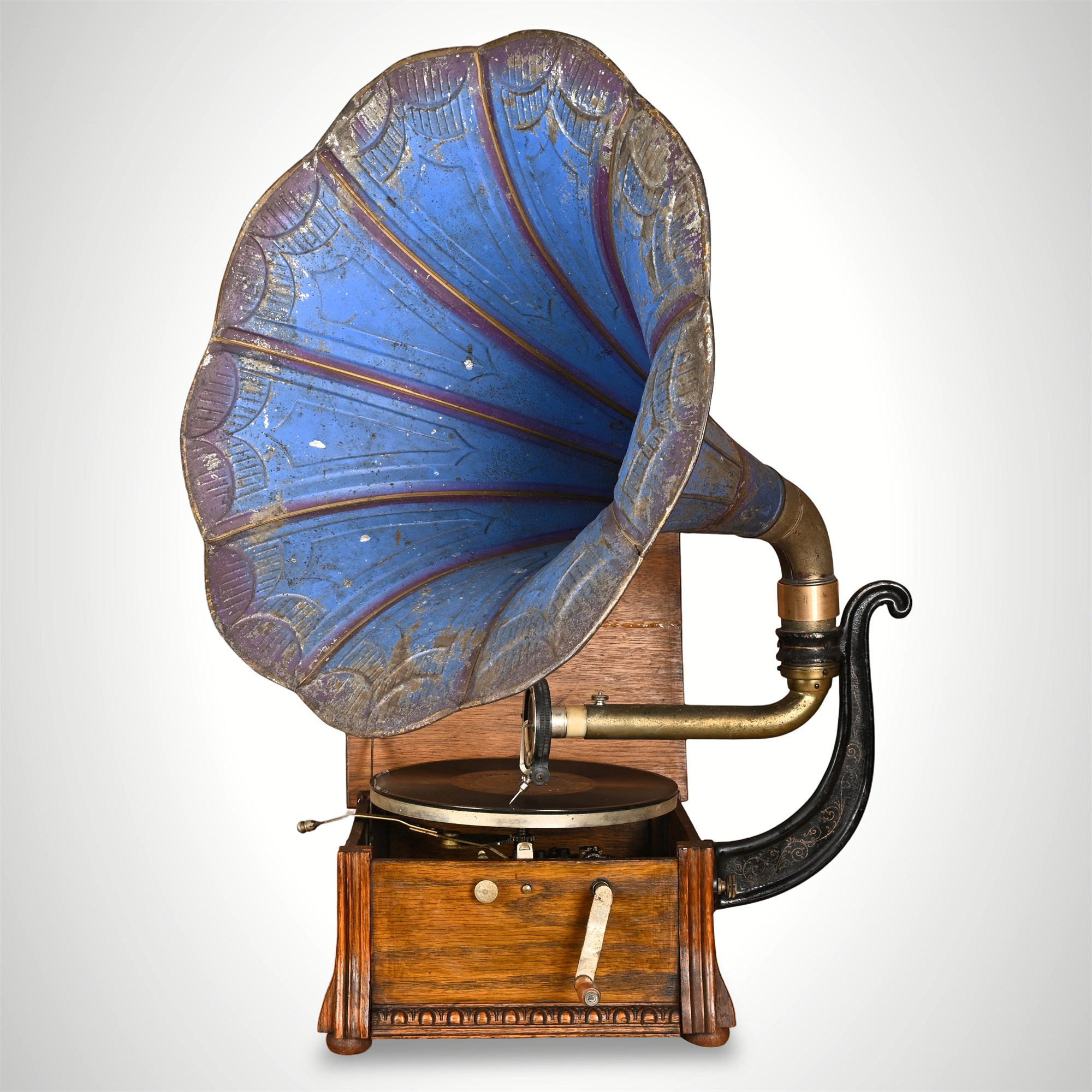
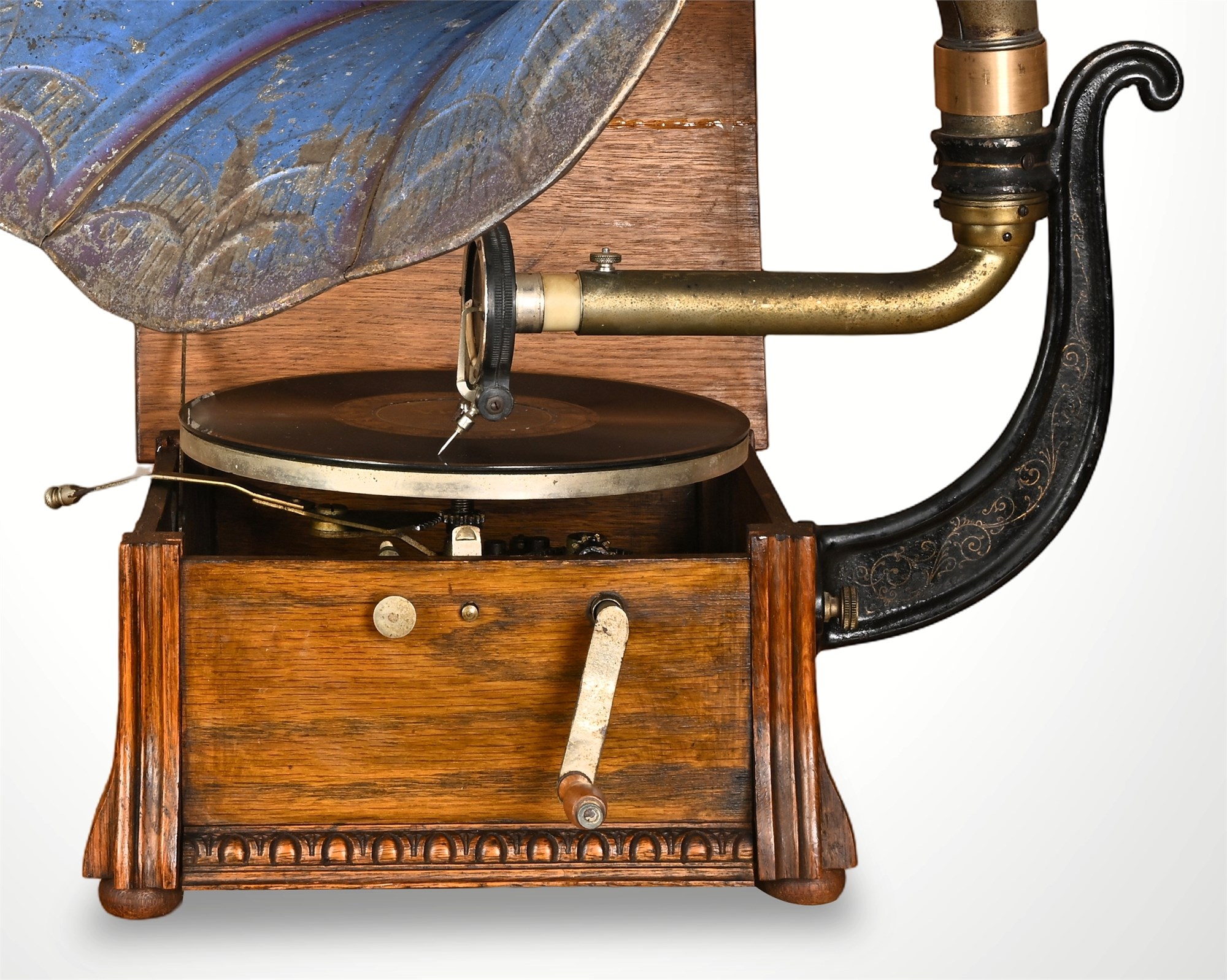
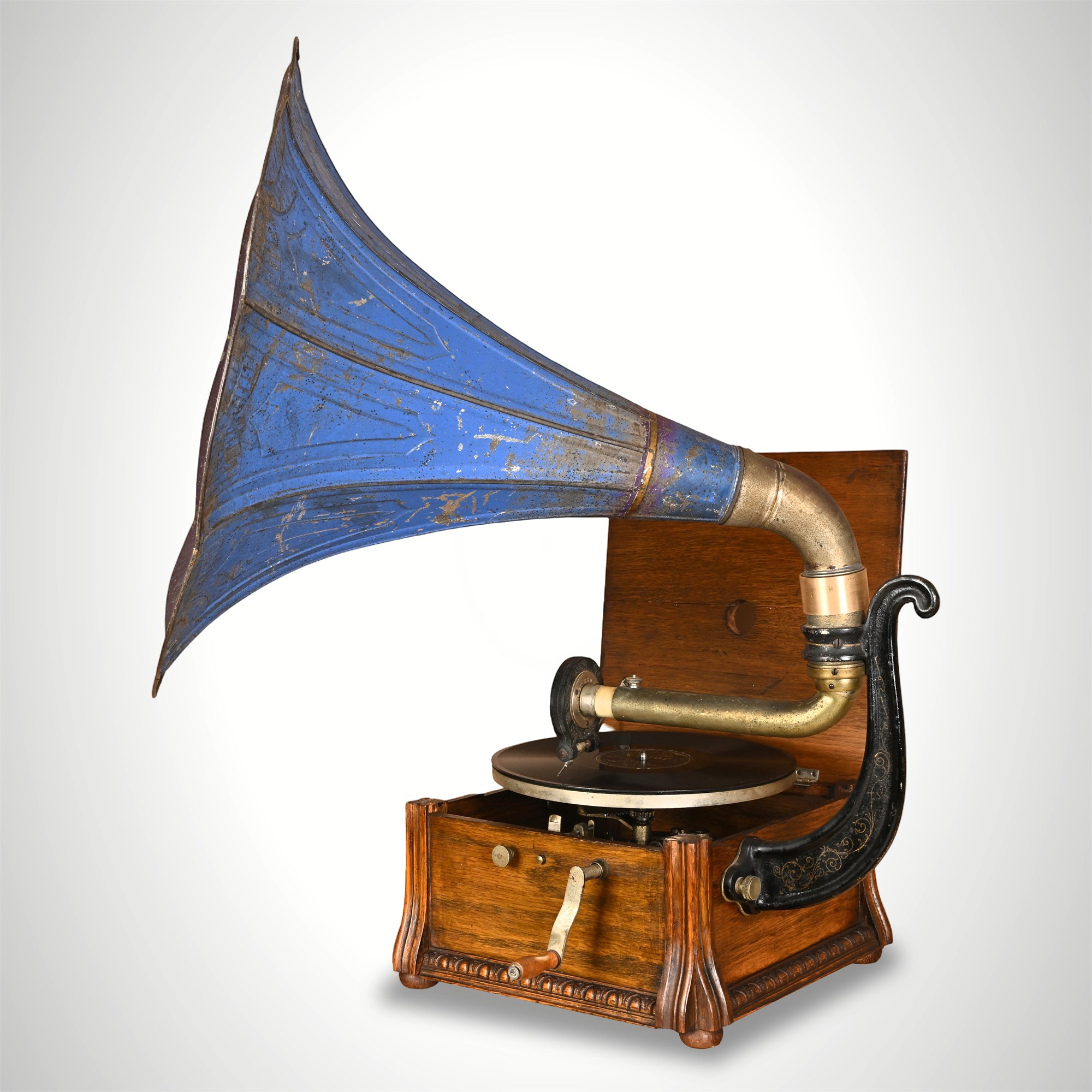
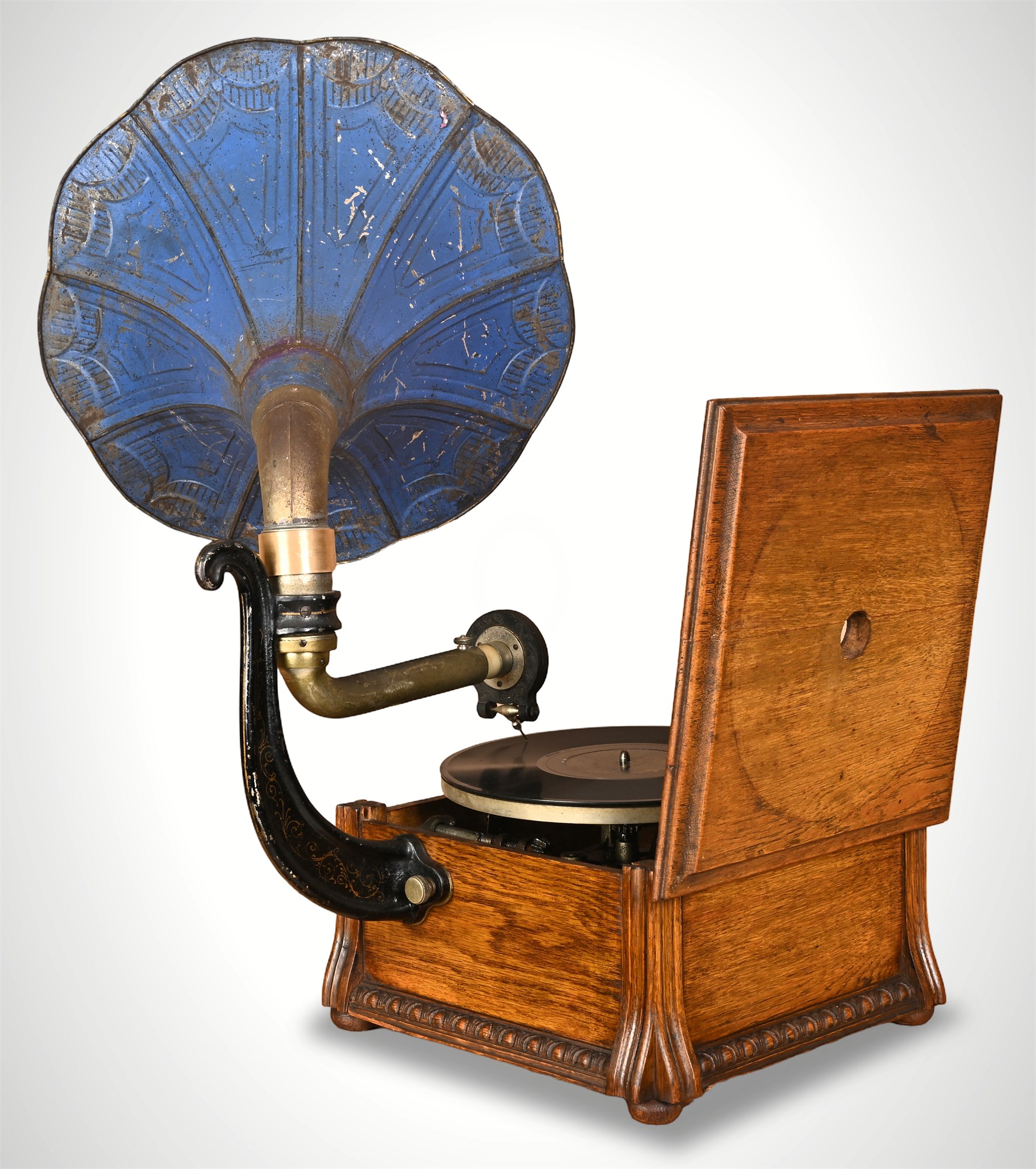
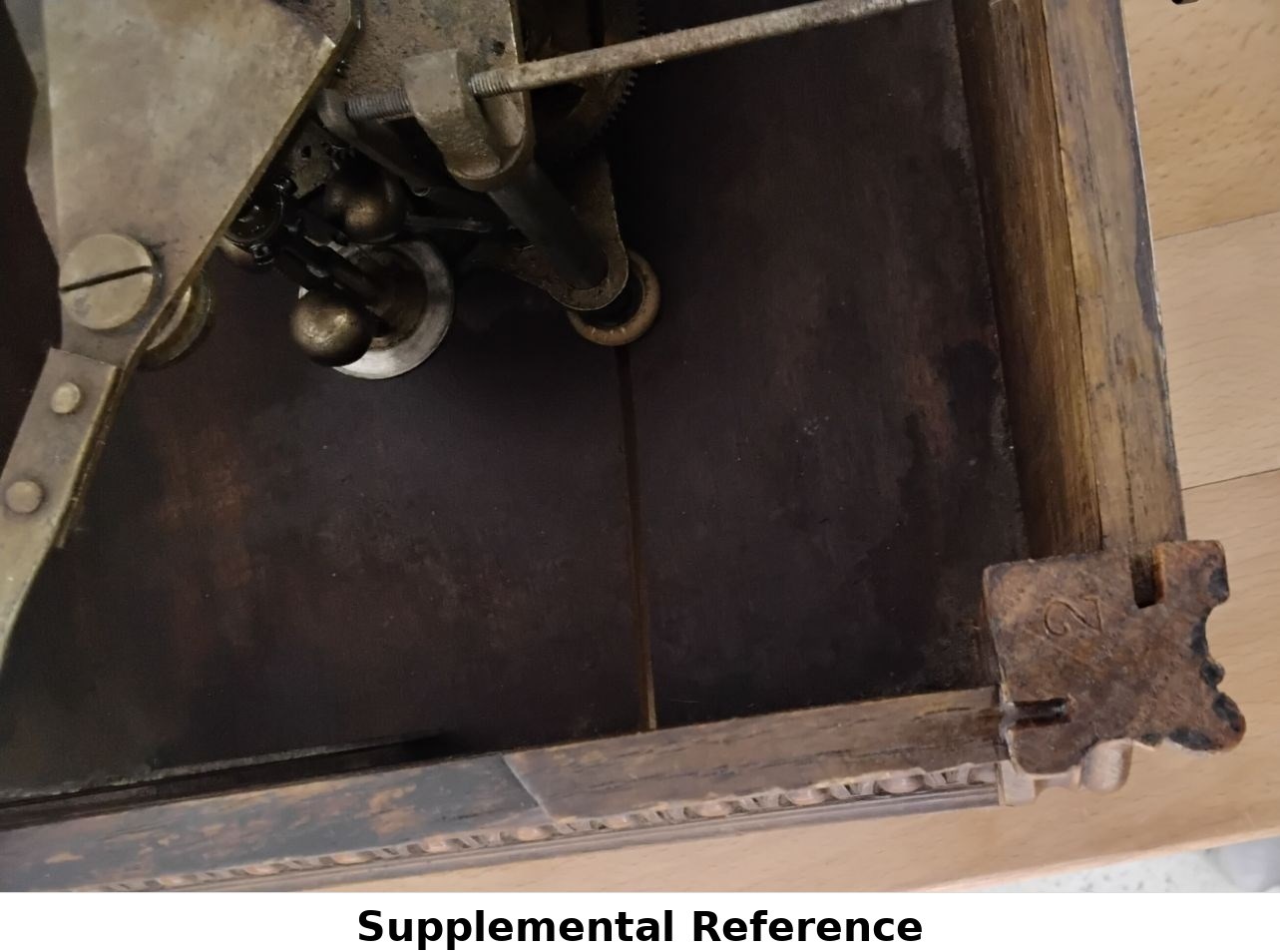
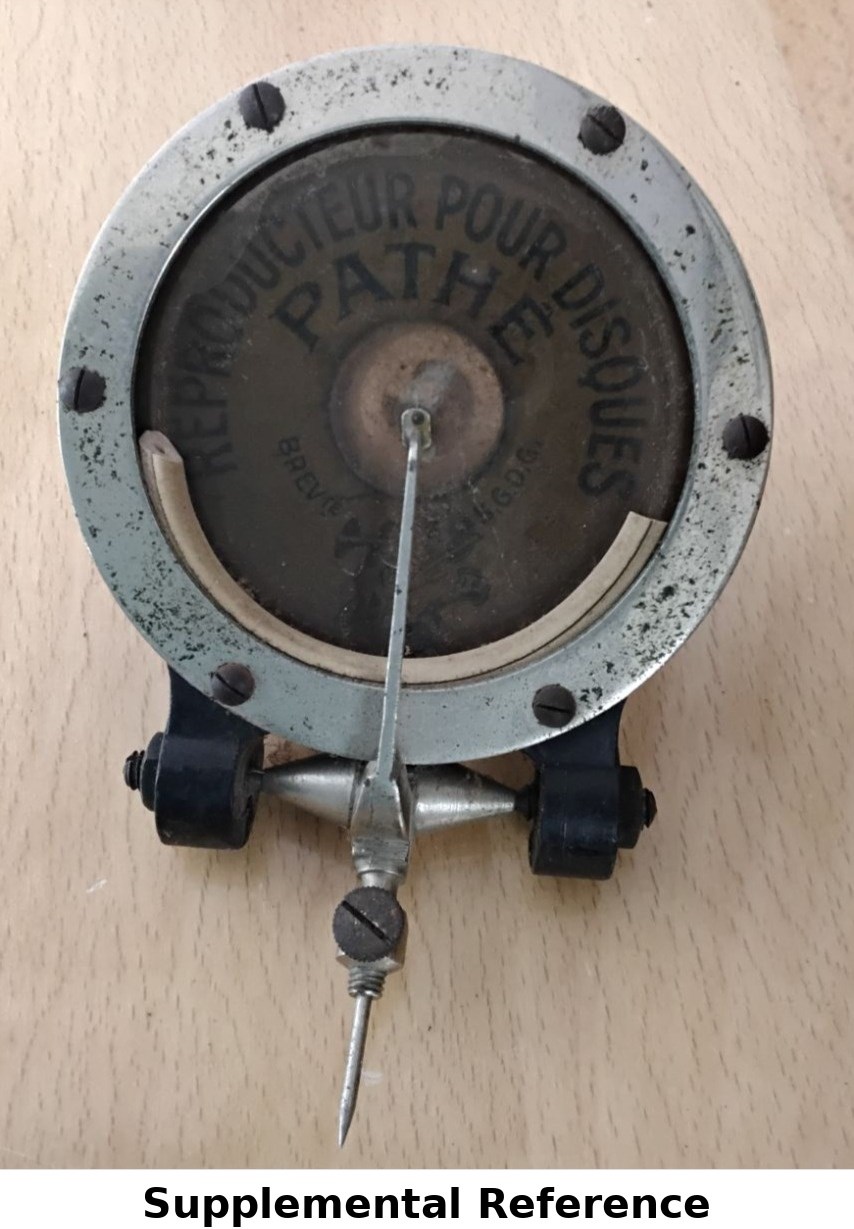
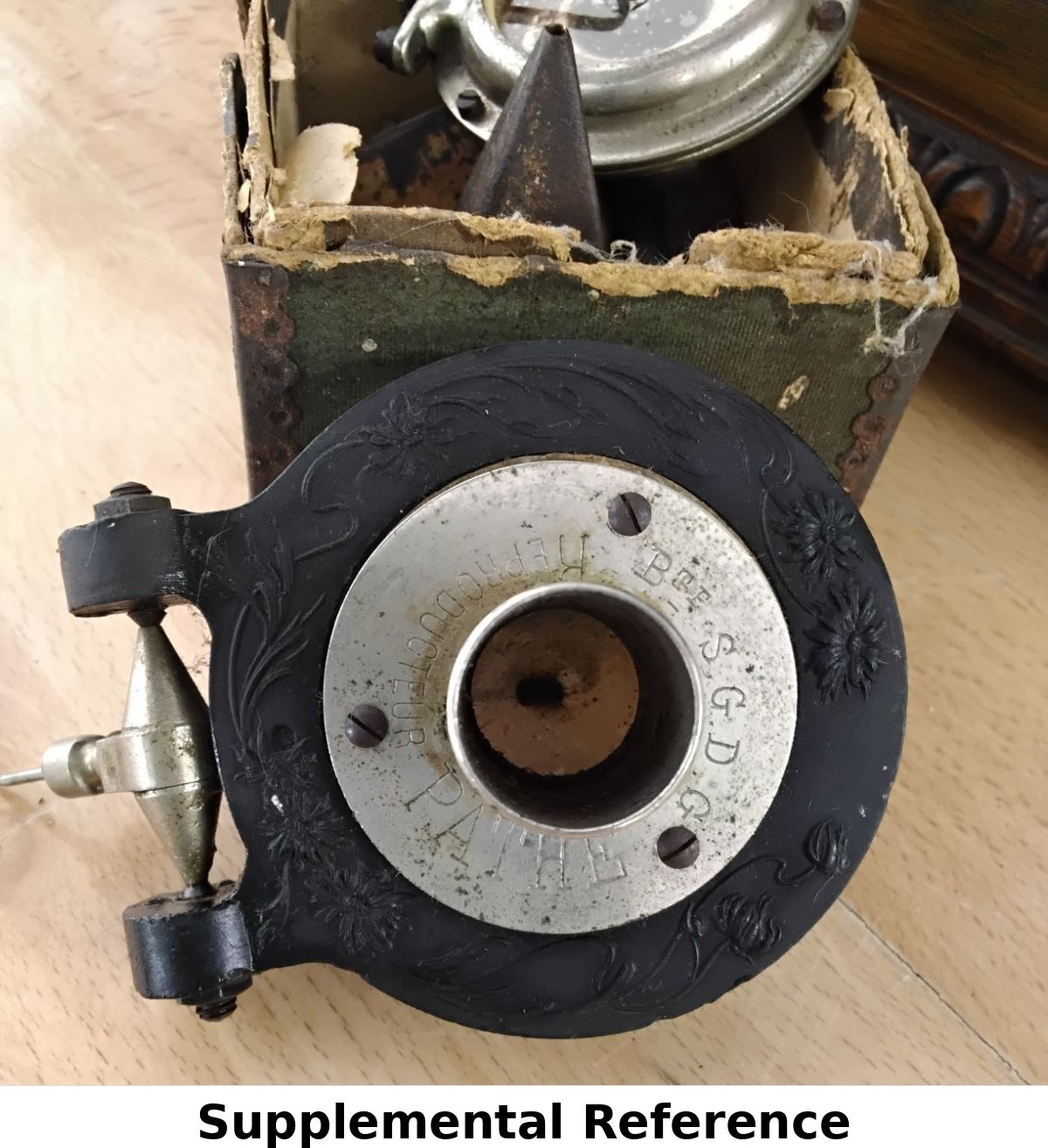
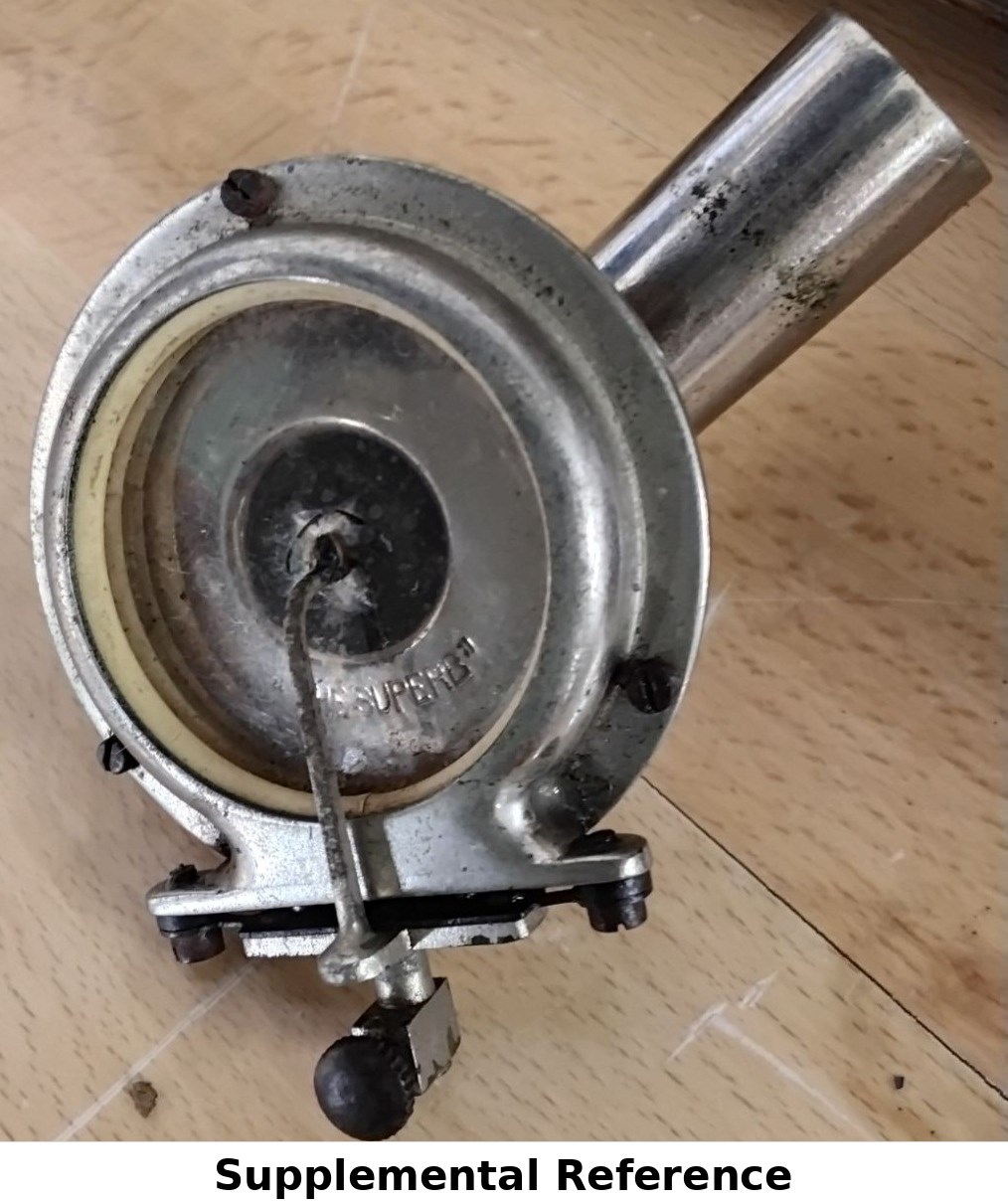
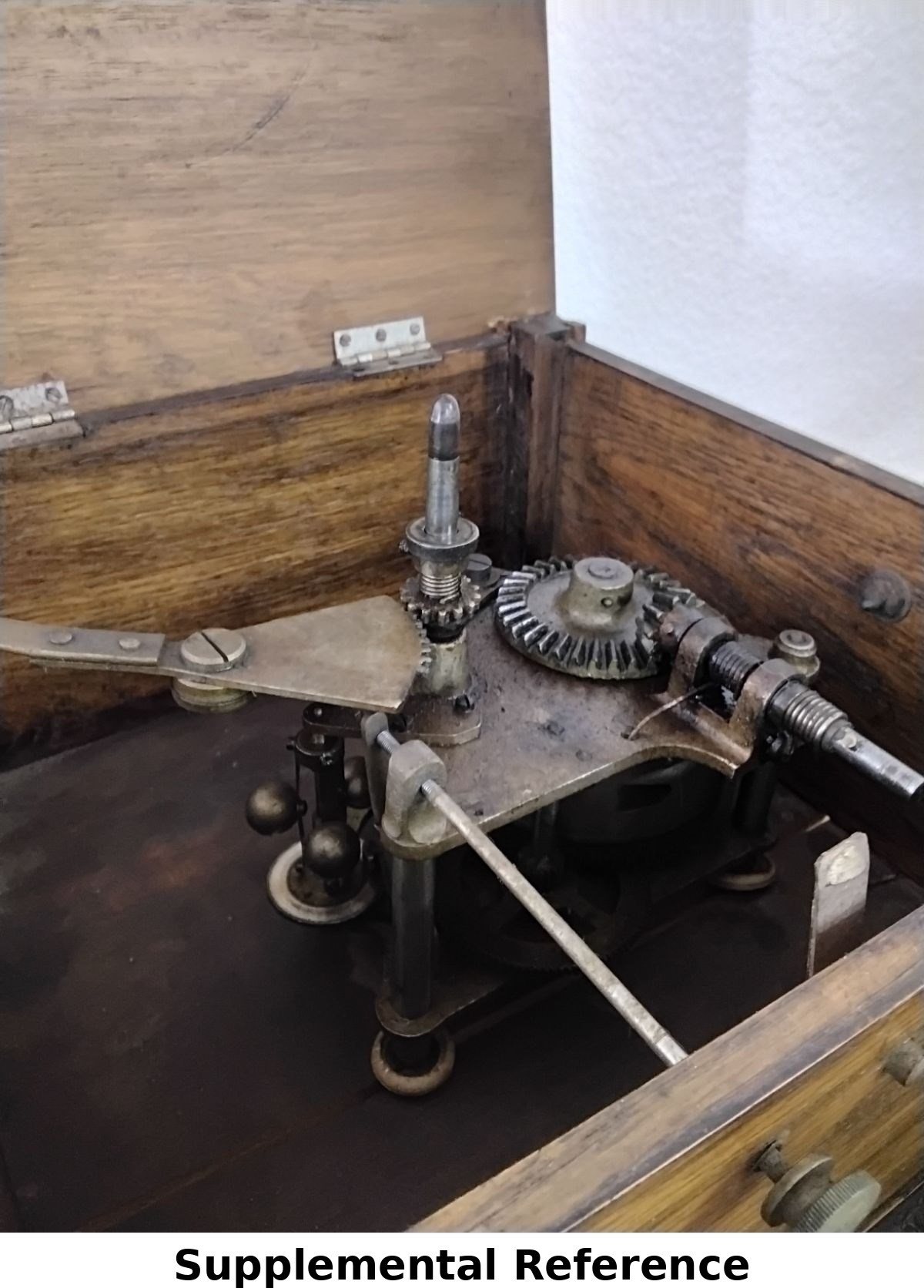
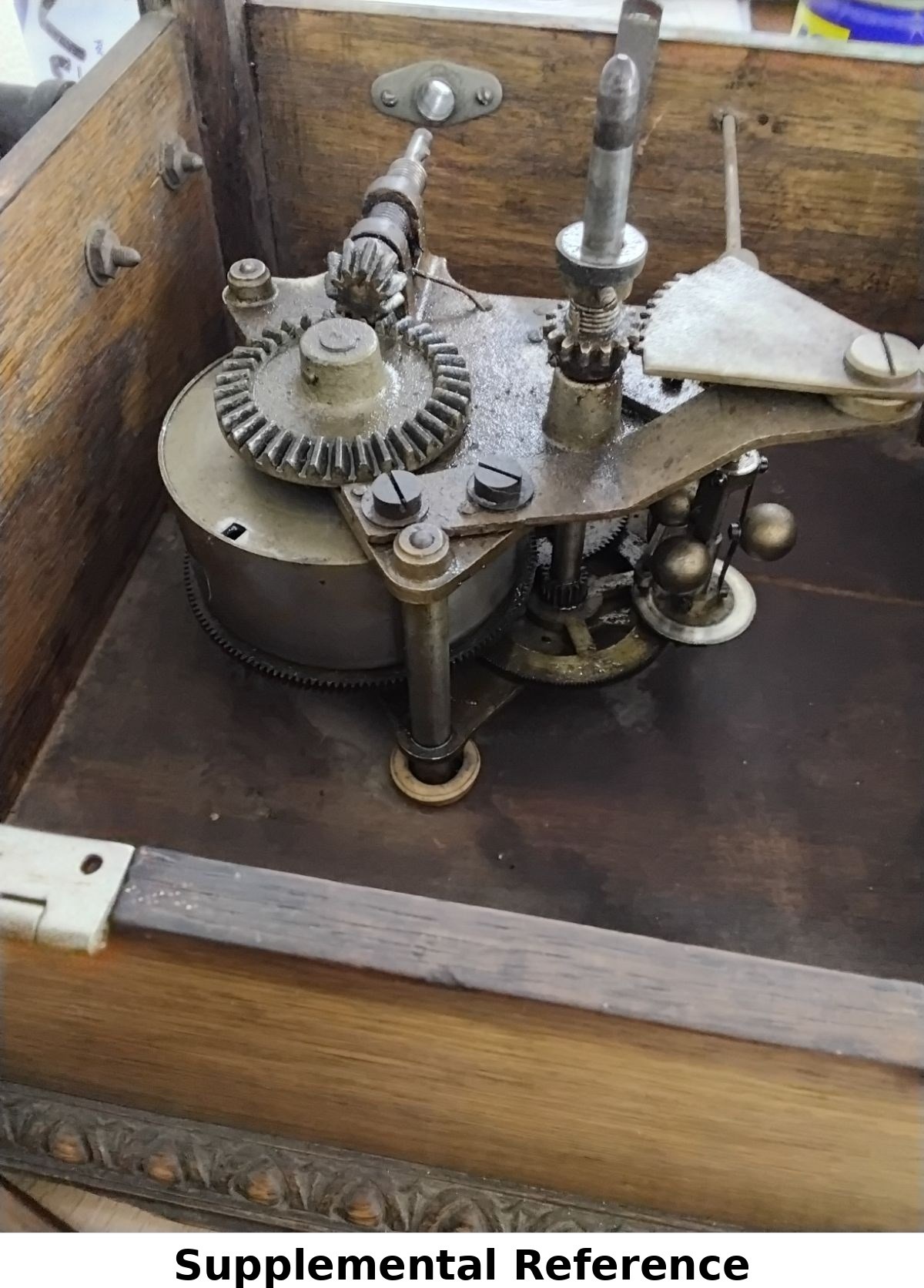
The carved solid oak cabinet features egg-and-dart relief molding along the lower apron, turned reeded corner columns, and bracket feet — construction consistent with mid-tier Pathéphone tabletop models of the period. The spring-wound motor with centrifugal governor operates with the lid raised; the platter seats and spins freely in this position and the machine plays and sounds great. The cast iron scrollwork crane bracket, finished in black with gilt detailing, steps down to a brass goose-neck tone arm. Two reproducers are included: the primary is marked REPRODUCTEUR POUR DISQUES PATHÉ, designed for Pathé's proprietary vertically-cut discs using a sapphire-ball stylus; the second is a French ebonite-cover unit marked BRE S.G.D.G. / REPRODUCTEUR — Sans Garantie Du Gouvernement, the standard French period-patent designation confirming period manufacture.
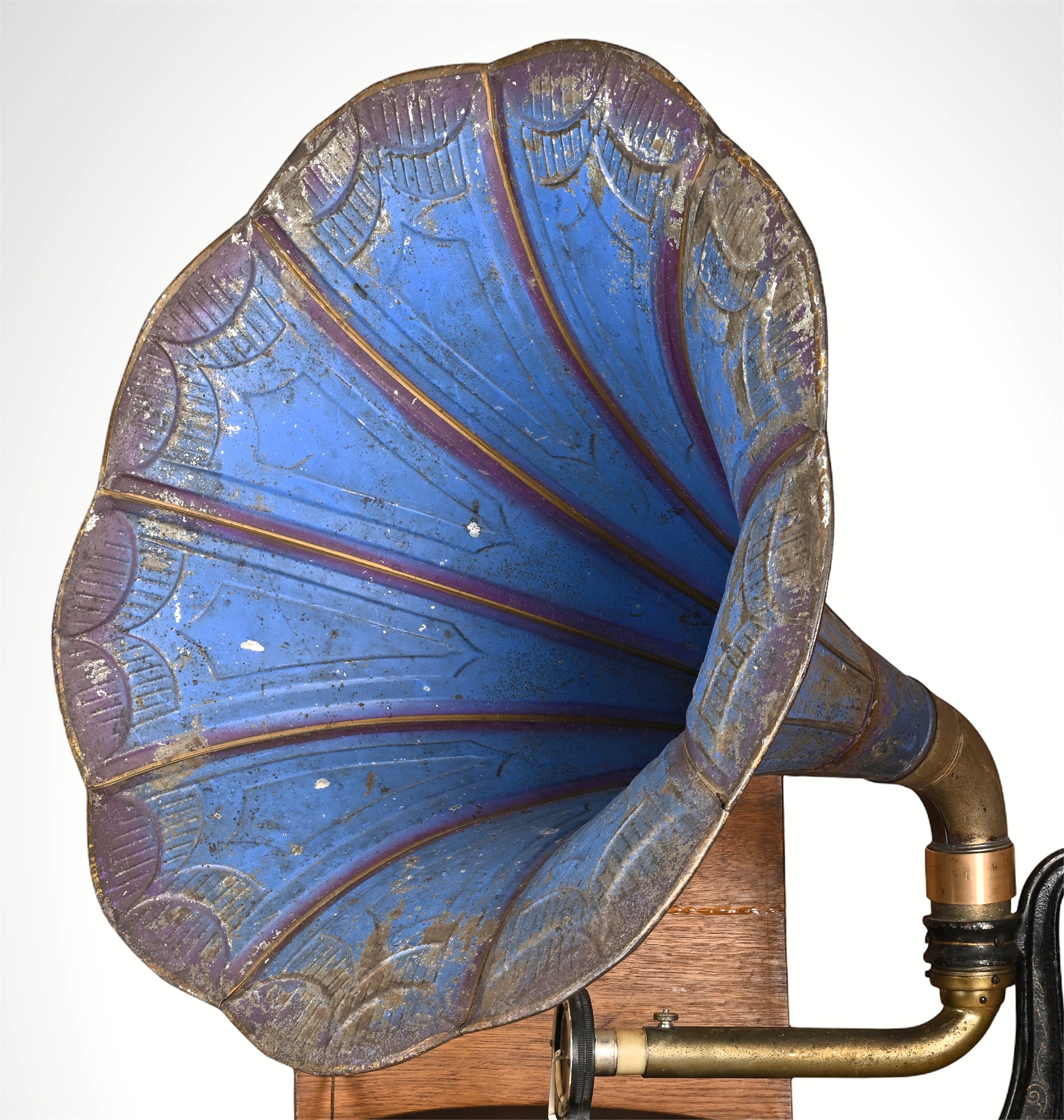
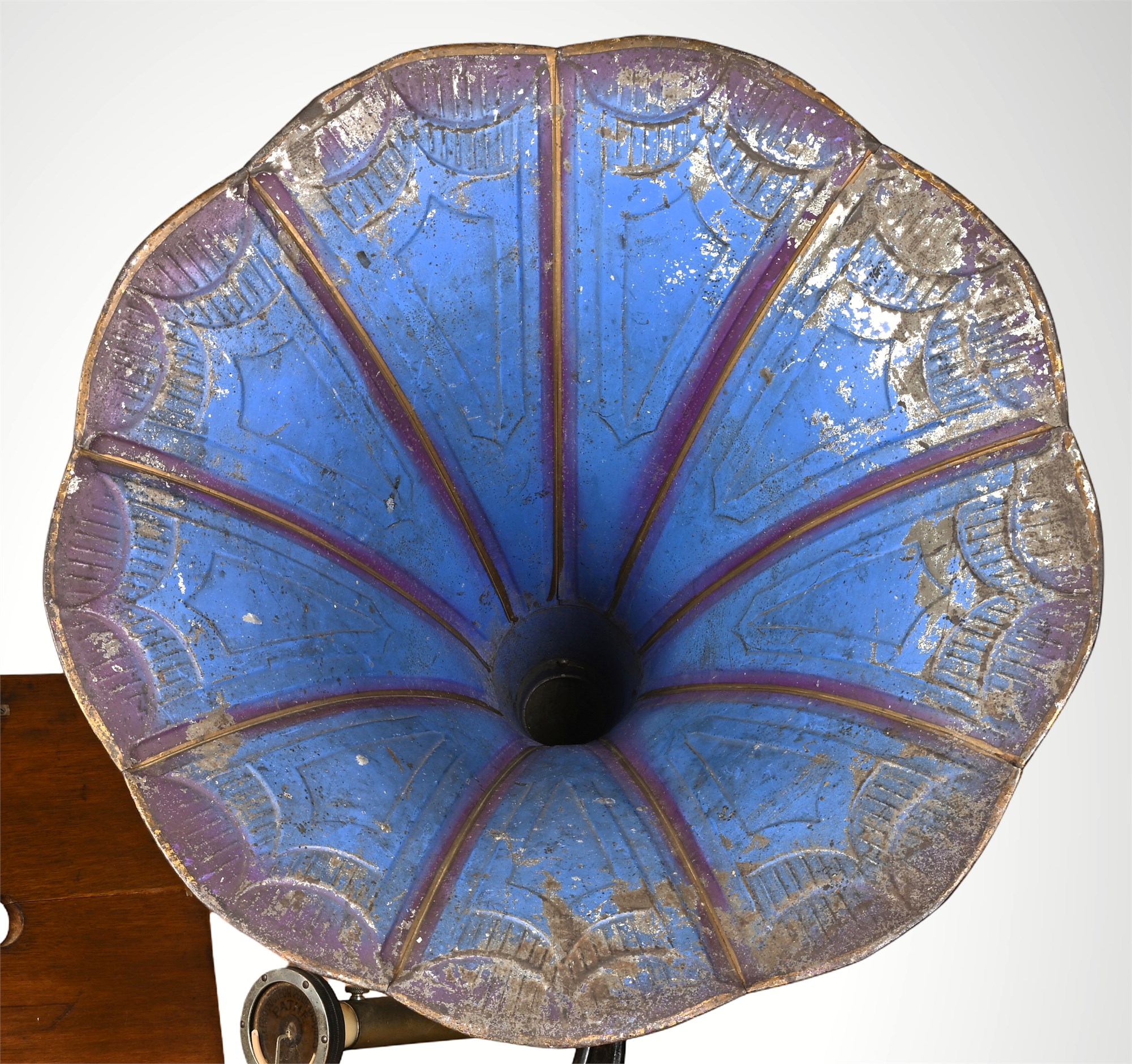
The morning glory horn is the visual heart of this machine. Formed in tinplate and finished in deep cobalt blue, it flares into a wide scalloped bell whose petal-shaped edge traces the silhouette that made these horns the defining image of the acoustic era. Embossed architectural relief panels radiate from the throat outward across each lobe — a period decorative treatment that catches light differently at every angle. Mounted on the cast iron crane bracket, horn aloft, this is the gramophone as parlor centerpiece: the object that made neighbors stop walking and look through the window.
Lot Includes:
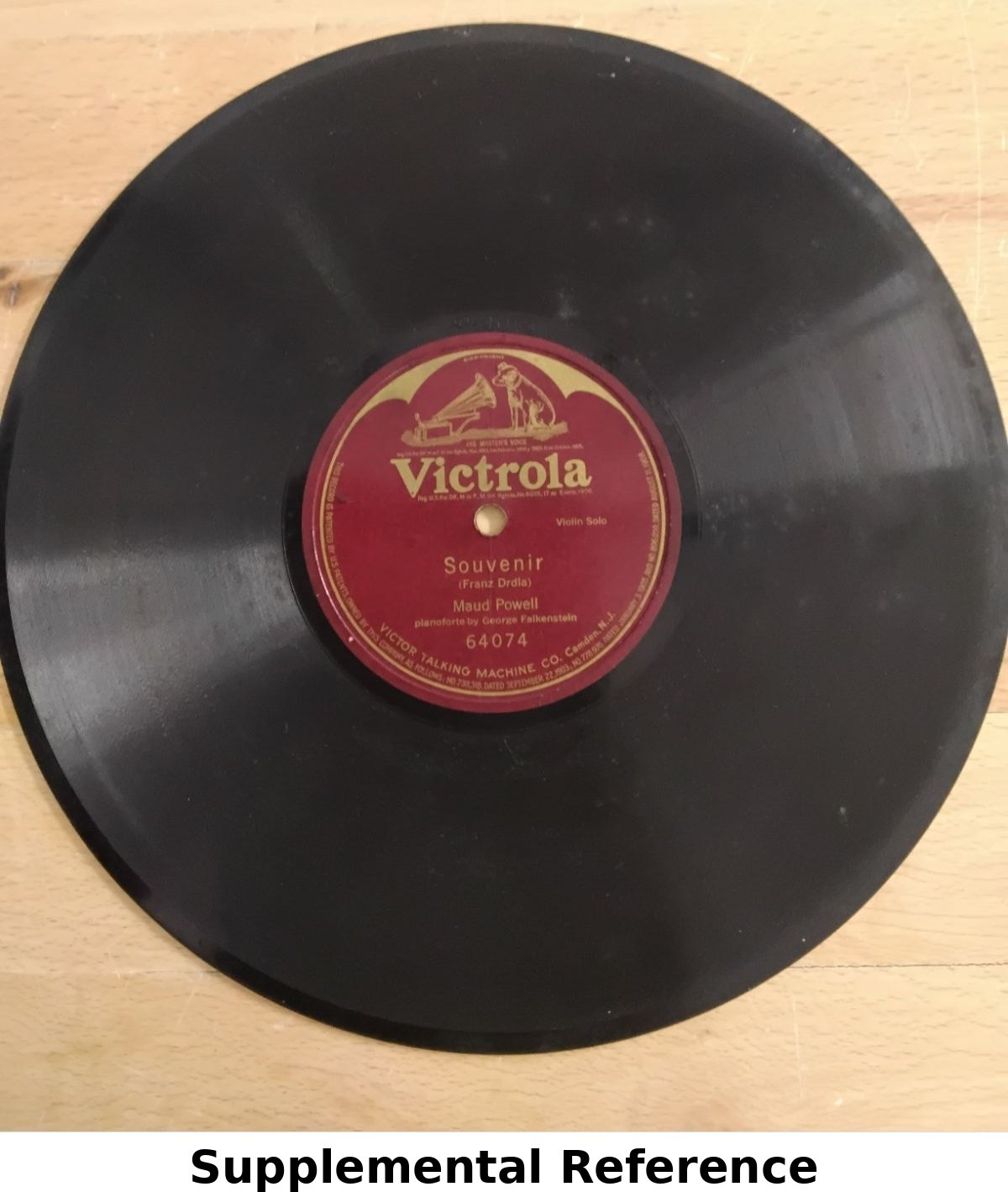
- Victor 21142-A/B — Jimmie Rodgers, "Blue Yodel" (T for Texas) — Recorded November 1927 at Rodgers' second Victor session in Camden, NJ, this is the record that turned an unknown Mississippi railroad man into the Father of Country Music. "Blue Yodel" sold half a million copies in its first year and launched a career that would influence everyone from Ernest Tubb to Bob Dylan. See our video of this record playing through the Pathé horn. One of the most consequential 78s ever pressed.
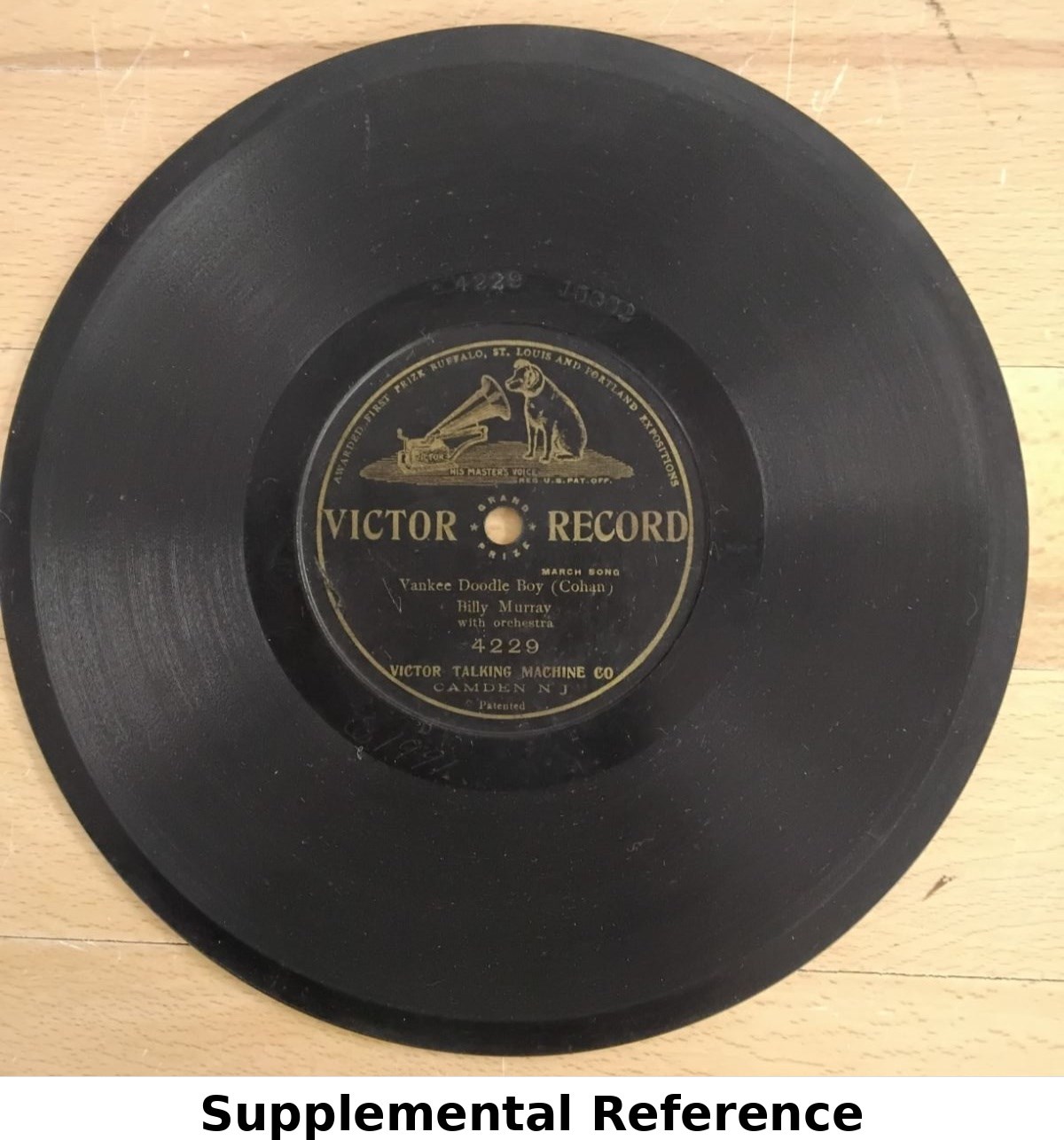
- Victor 4229 — Billy Murray, "Yankee Doodle Boy (Cohan)" — Murray was the best-selling recording artist of the acoustic era, a Broadway-trained tenor who dominated the Victor catalog from 1897 through the early 1920s. This pressing carries the early flat-dog label and 1902 Berliner patent licensing notice on the reverse — placing it among the earliest commercial Victor pressings made. George M. Cohan wrote the song for Little Johnny Jones (1904).
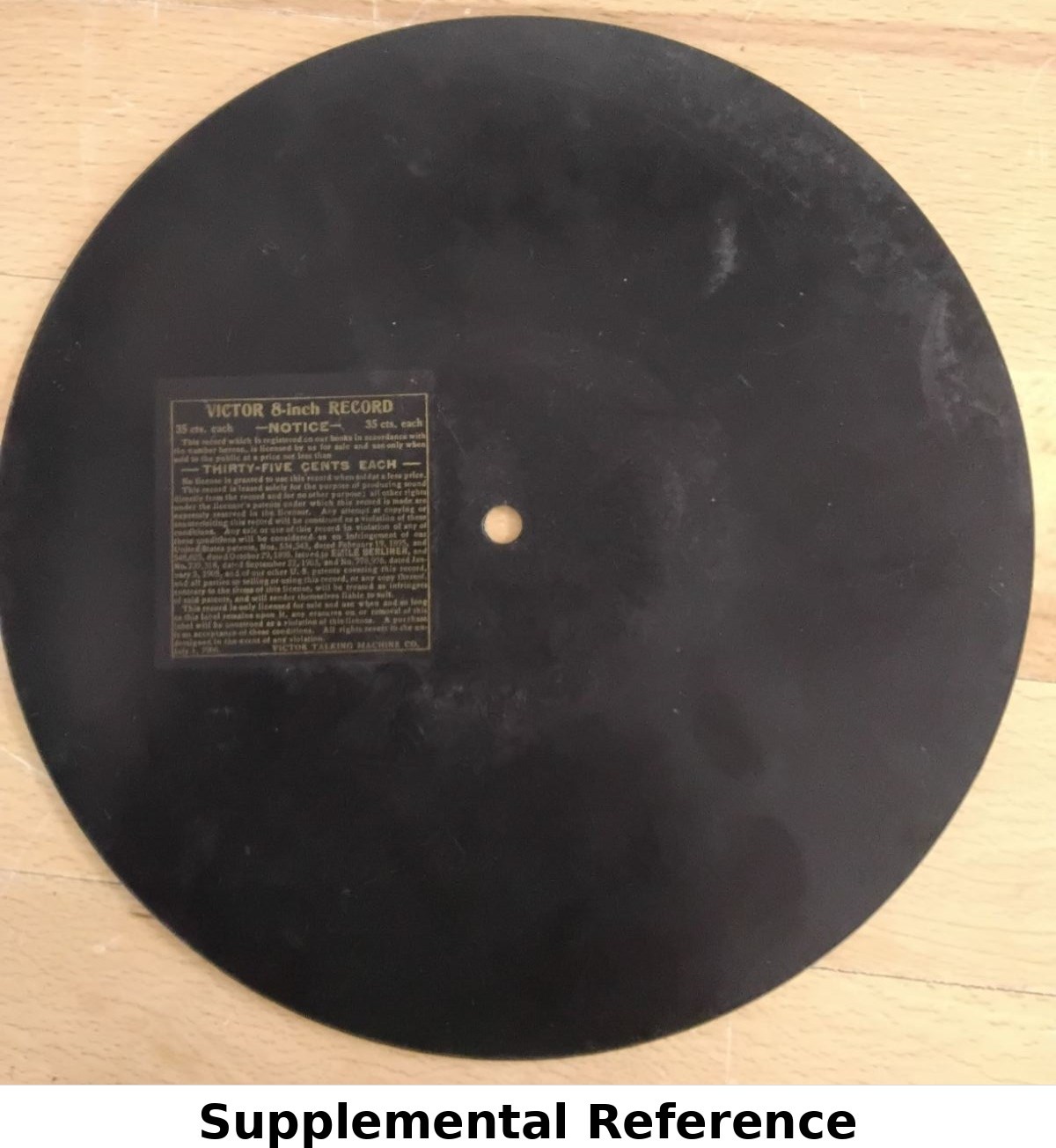
- Victor 8-inch — Early flat-disc pressing, 1902 Berliner patent notice — A genuine artifact of the infancy of recorded sound. The rectangular licensing text on the reverse cites Emile Berliner's original patents by name and sets the retail price at thirty-five cents. Few general buyers understand what they're looking at; phonograph collectors do.
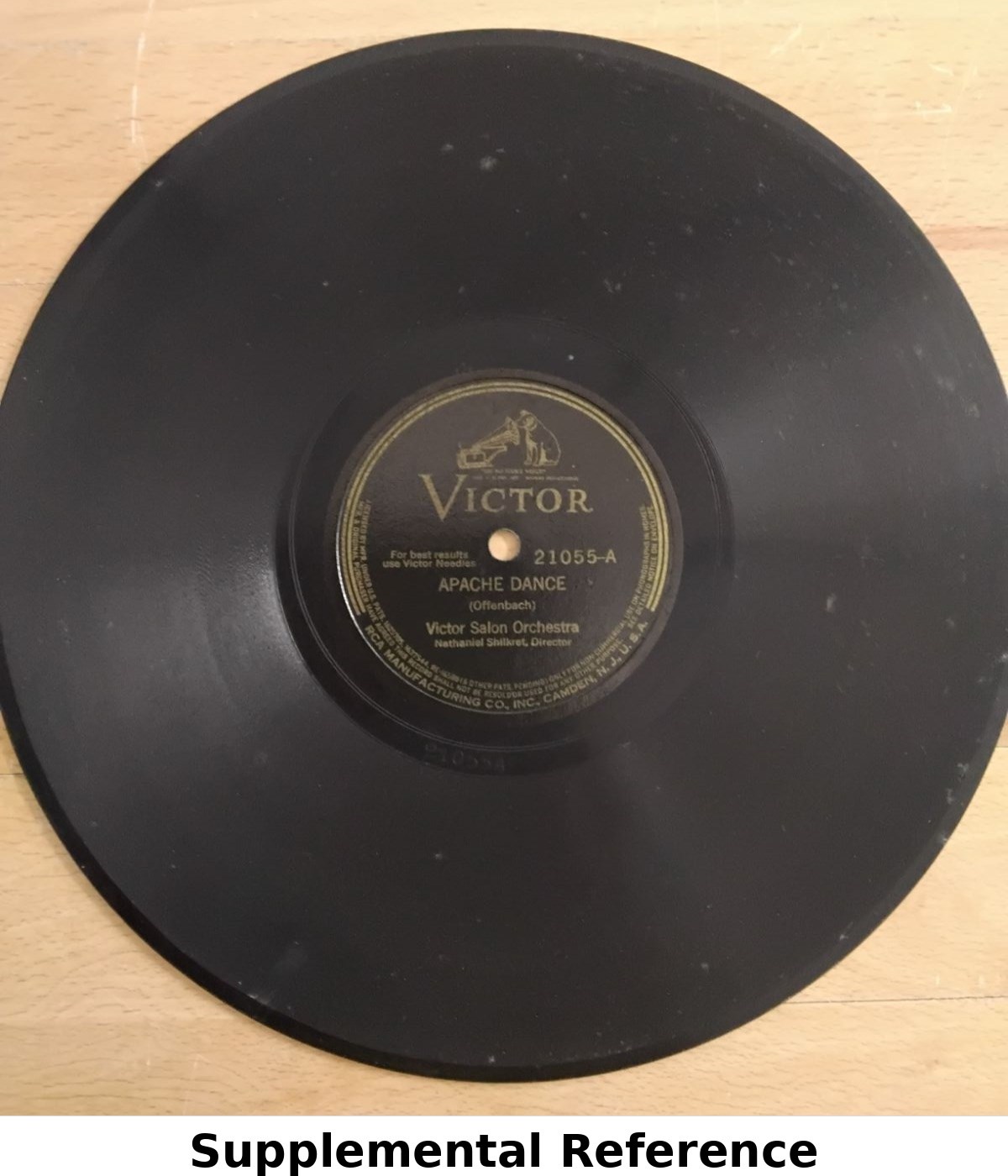
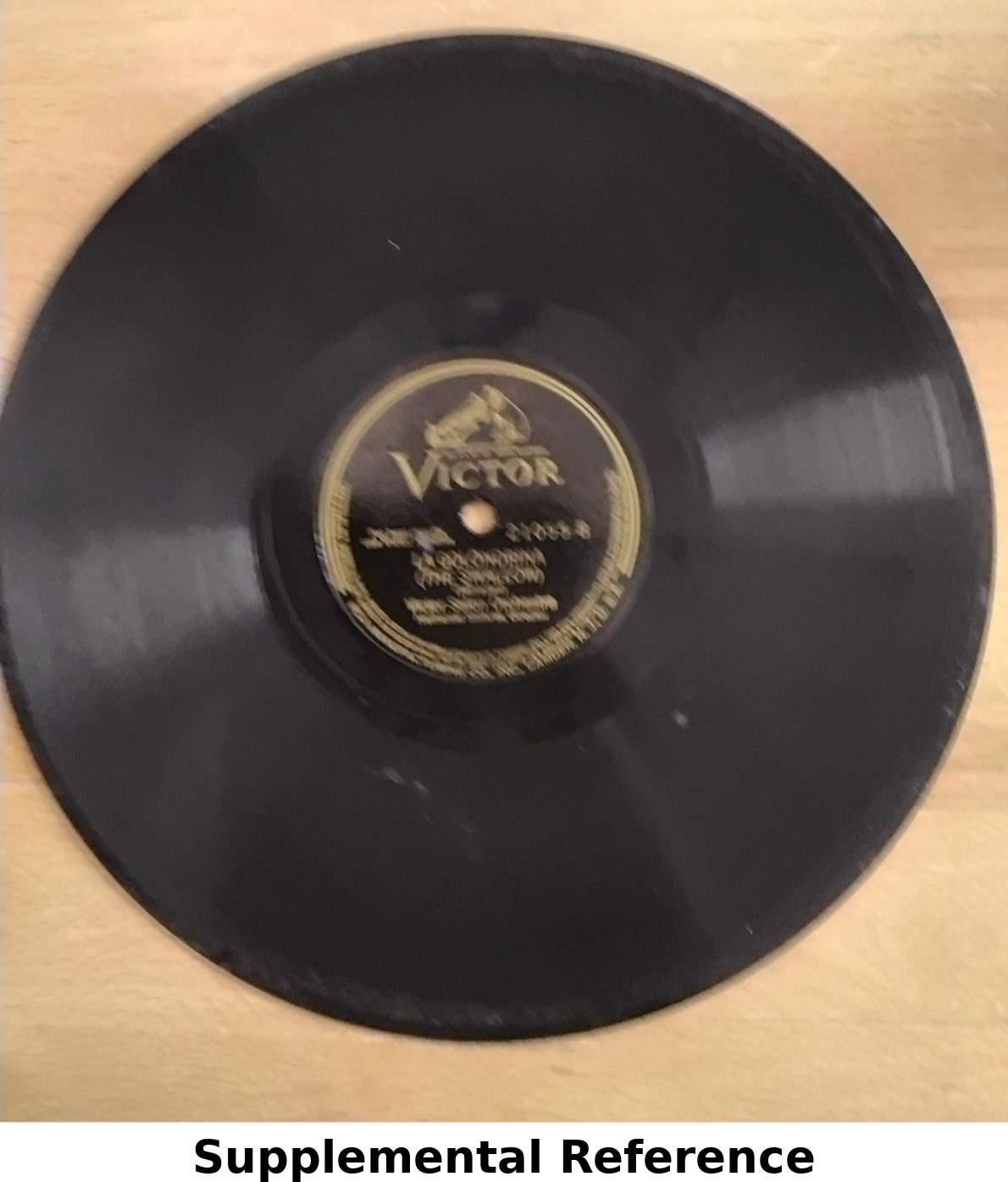
- Victor 21055-A/B — Victor Salon Orchestra / Nathaniel Shilkret, "Apache Dance" (Offenbach) / "La Golondrina" — Shilkret served as Victor's principal recording director through the 1920s and conducted hundreds of sessions. "Apache Dance" originated in Offenbach's 1858 opera Orphée aux Enfers; "La Golondrina" is a 19th-century Mexican waltz, one of the most recorded Spanish-language pieces of the acoustic era.
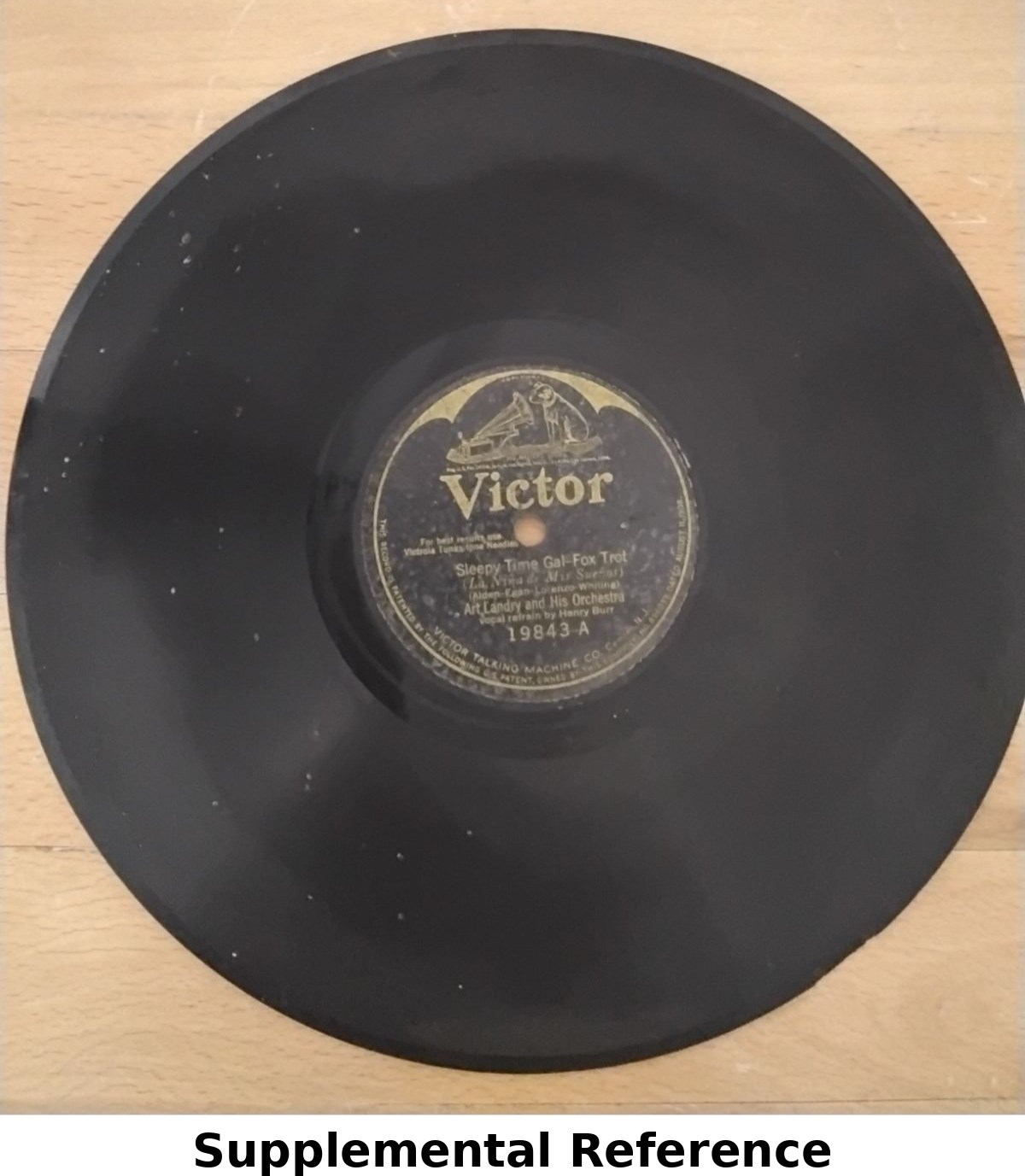
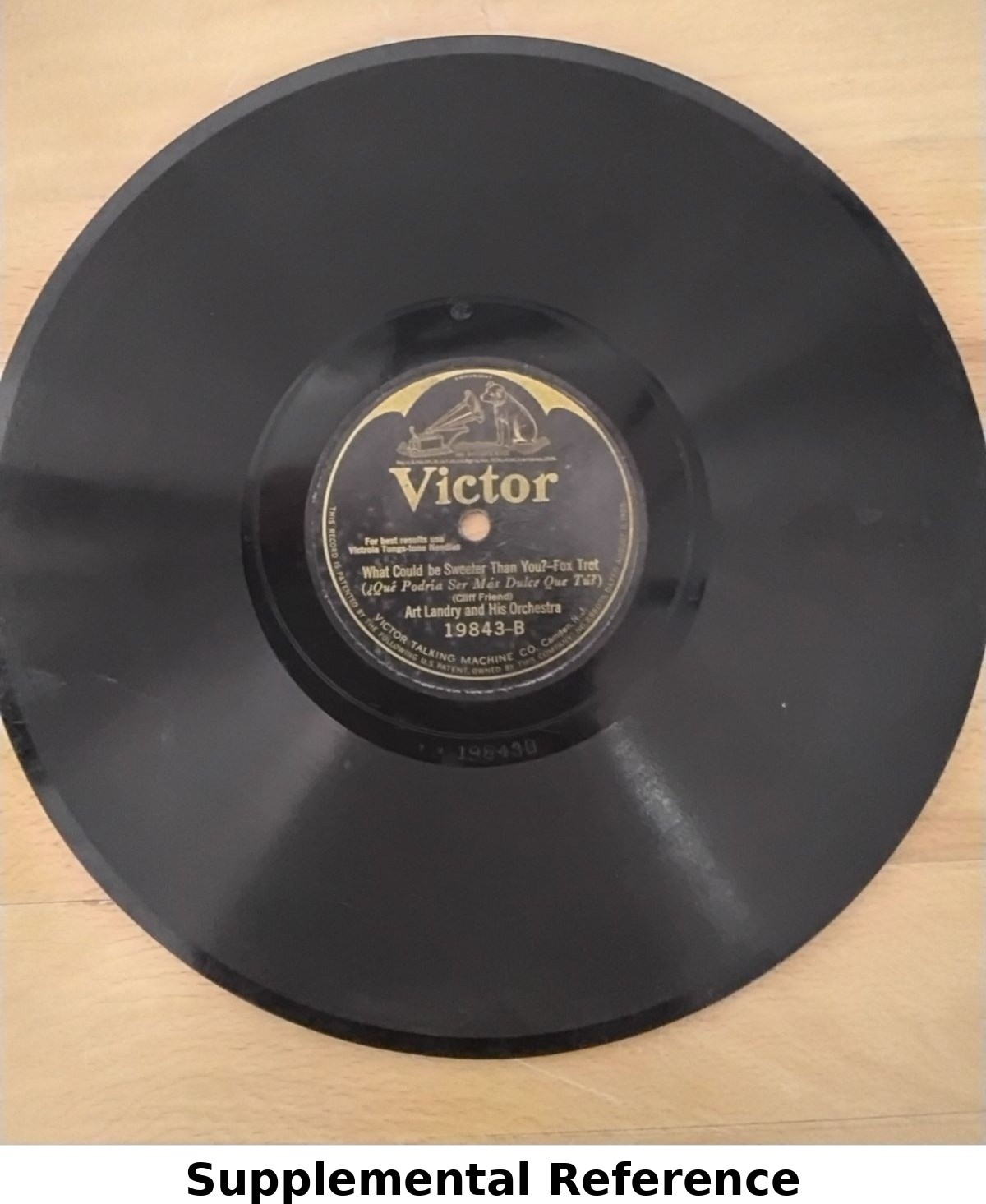
- Victor 19843-A/B — Art Landry and His Orchestra, "Sleepy Time Gal" / "What Could Be Sweeter Than You" — Landry led one of the more sought-after sweet-jazz dance bands of the mid-1920s. "Sleepy Time Gal" (1925) was one of the era's defining fox-trot hits; the Landry version with Henry Burr's vocal refrain is among the most charming pressings of the title.
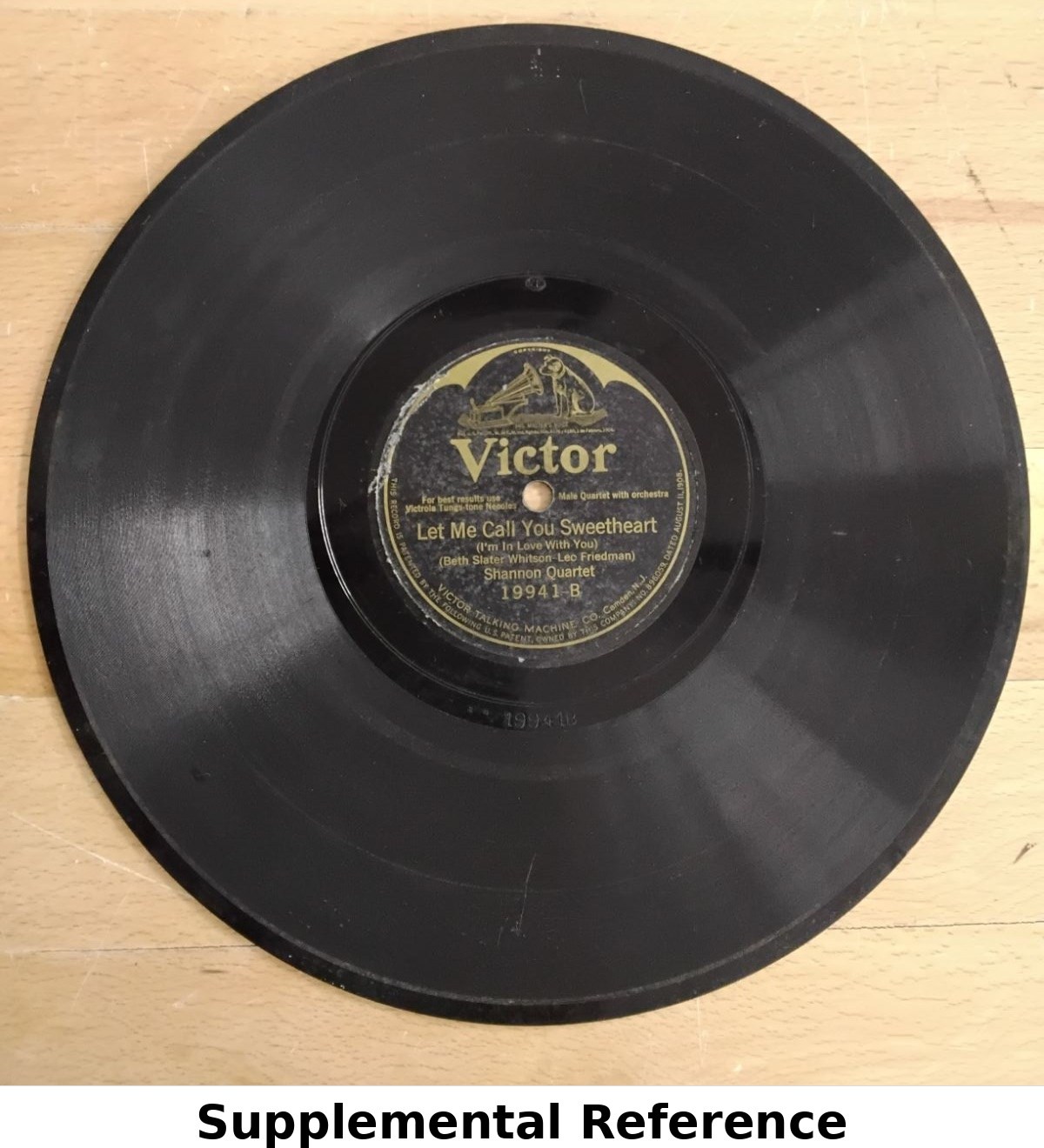
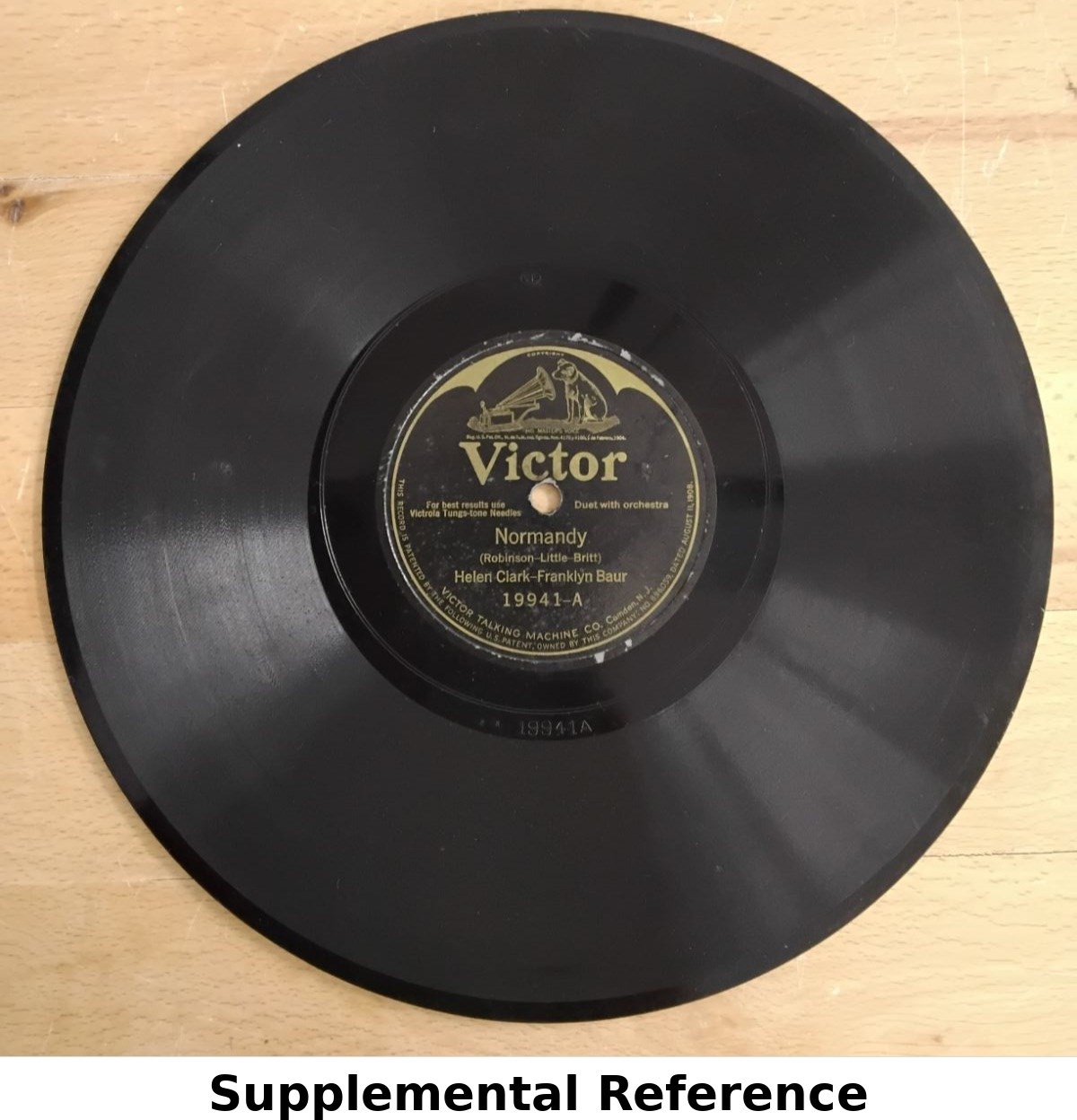
- Victor 19941-A/B — Helen Clark & Franklyn Baur, "Normandy" / Shannon Quartet, "Let Me Call You Sweetheart" — Franklyn Baur was one of Victor's most popular tenors of the late acoustic and early electrical era. The Shannon Quartet was a Victor house vocal group whose smooth close-harmony style made them one of the label's most reliable sellers.
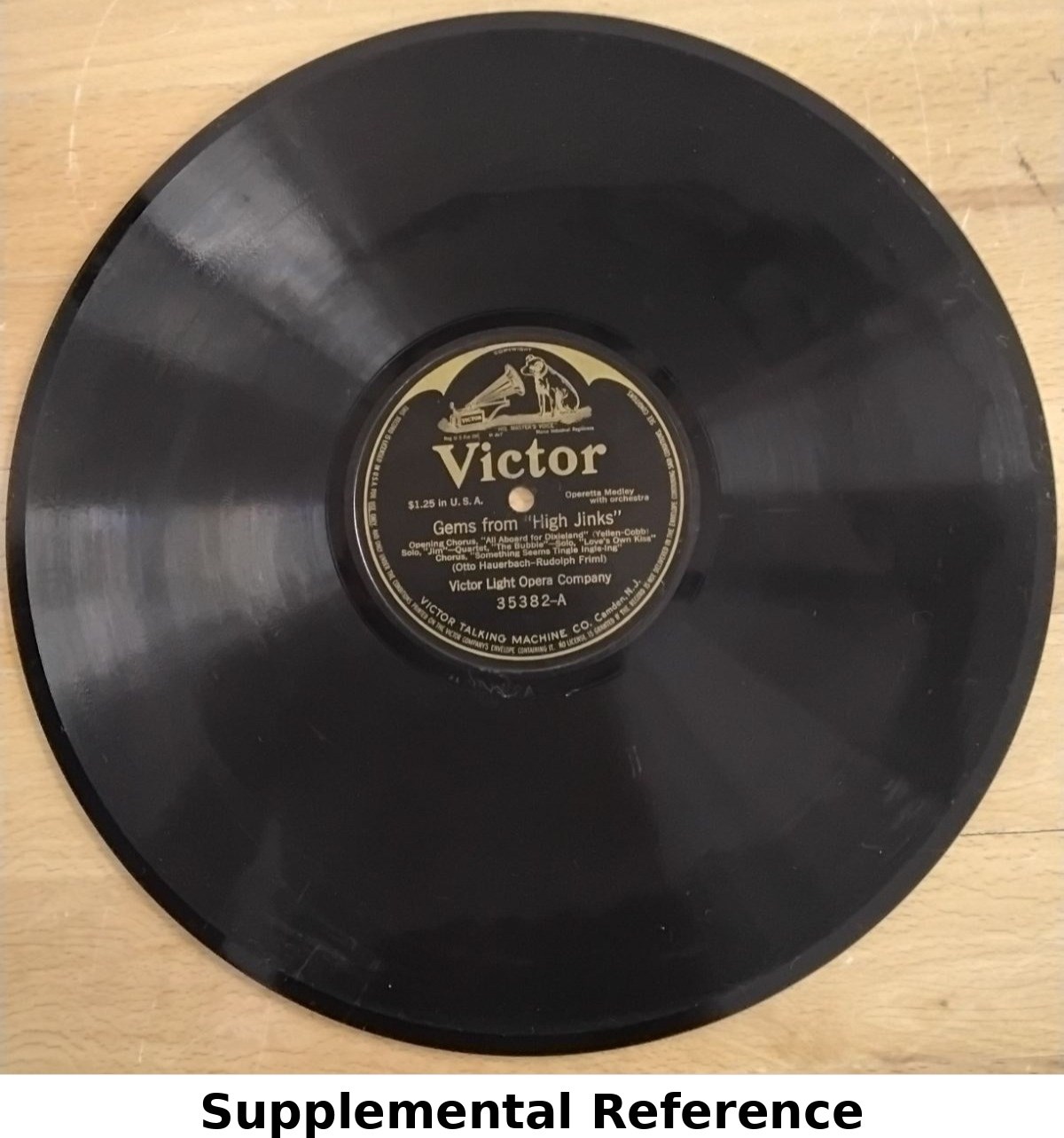
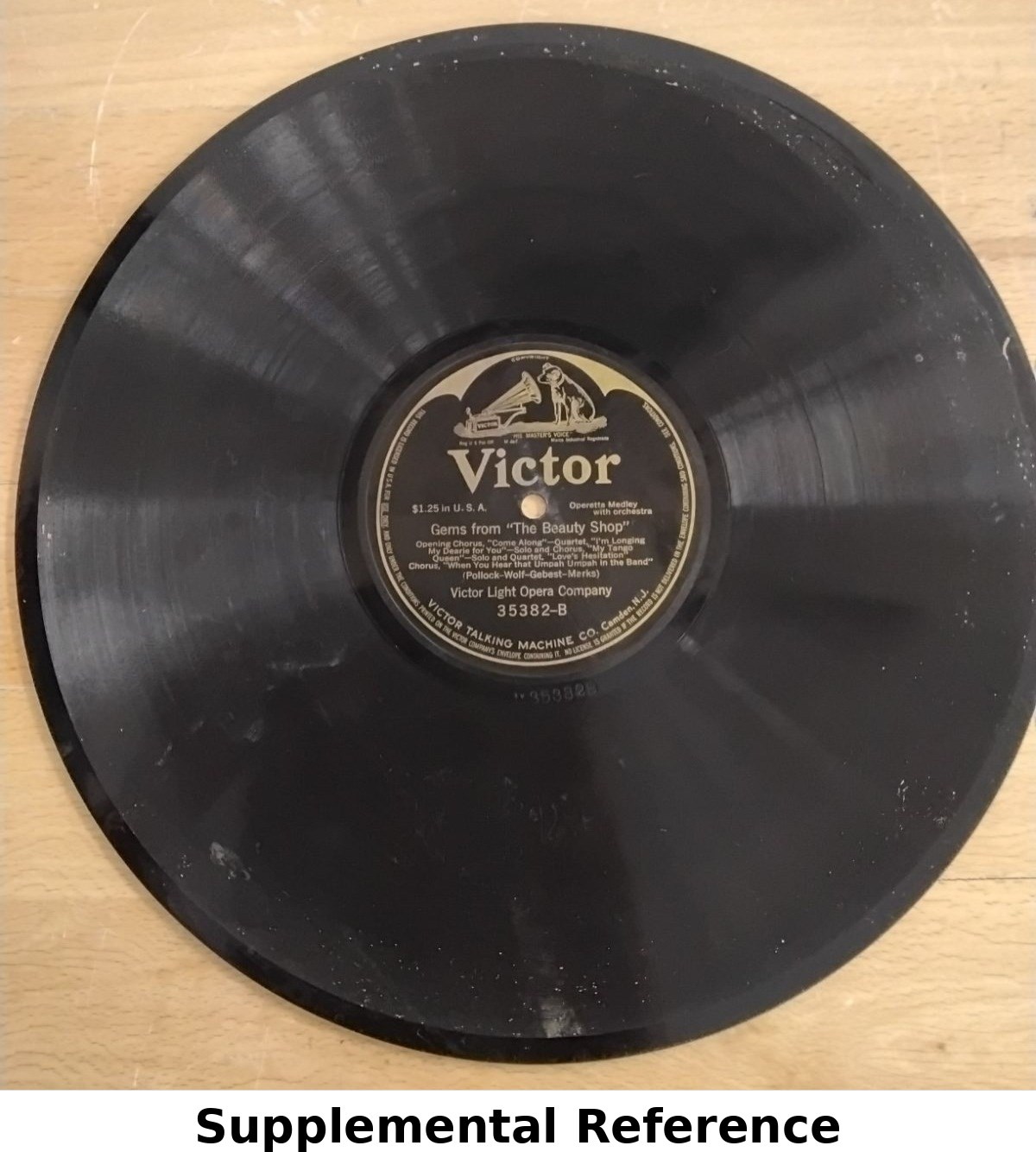
- Victor 35382-A/B — Victor Light Opera Company, "Gems from 'High Jinks'" / "Gems from 'The Beauty Shop'" — 12-inch medley pressings from two Rudolf Friml productions. High Jinks opened on Broadway in 1913 and ran for 213 performances. These 12-inch light-opera discs were Victor's prestige format, originally retailing at $1.25 — the top of the consumer price tier.
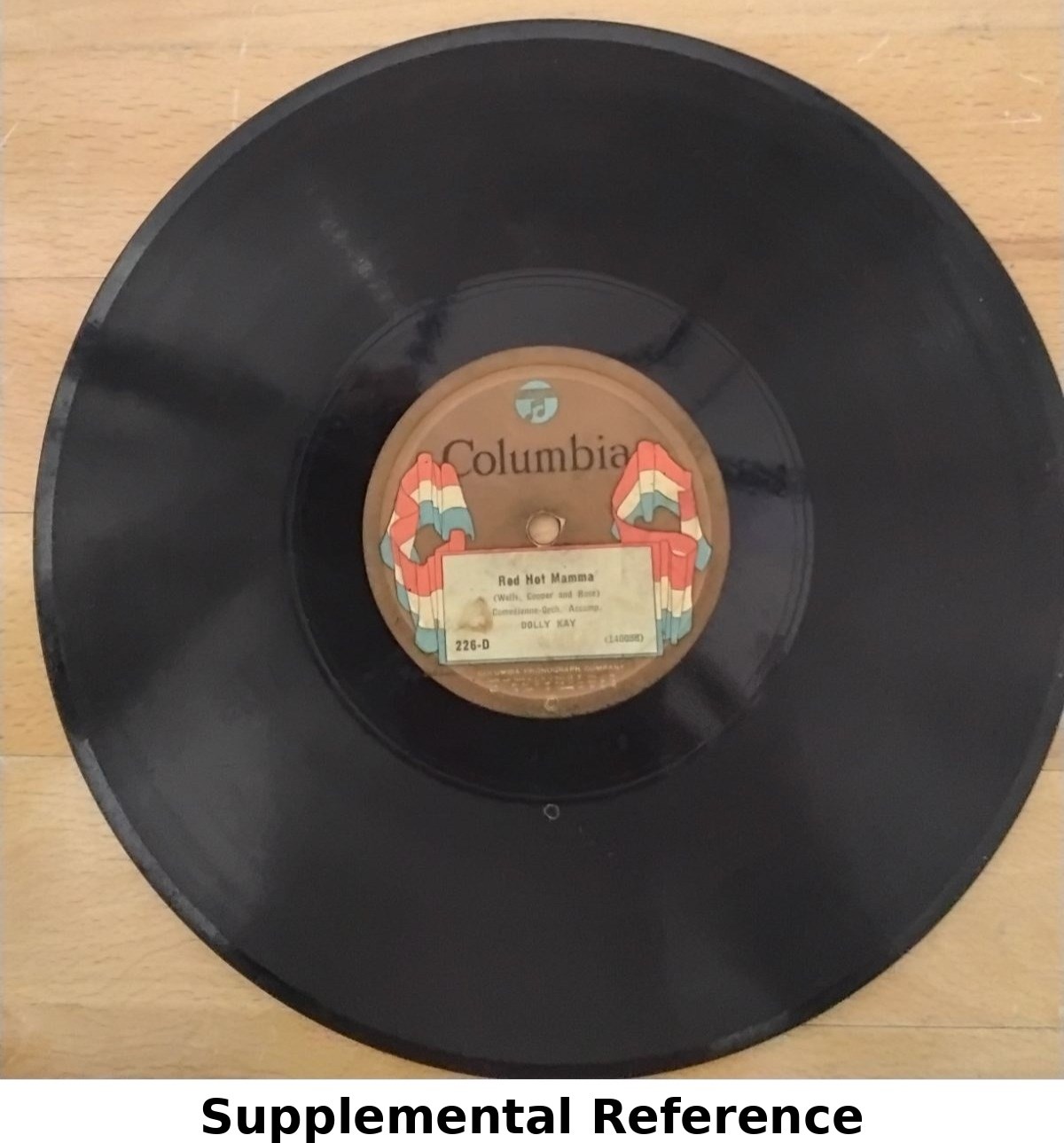
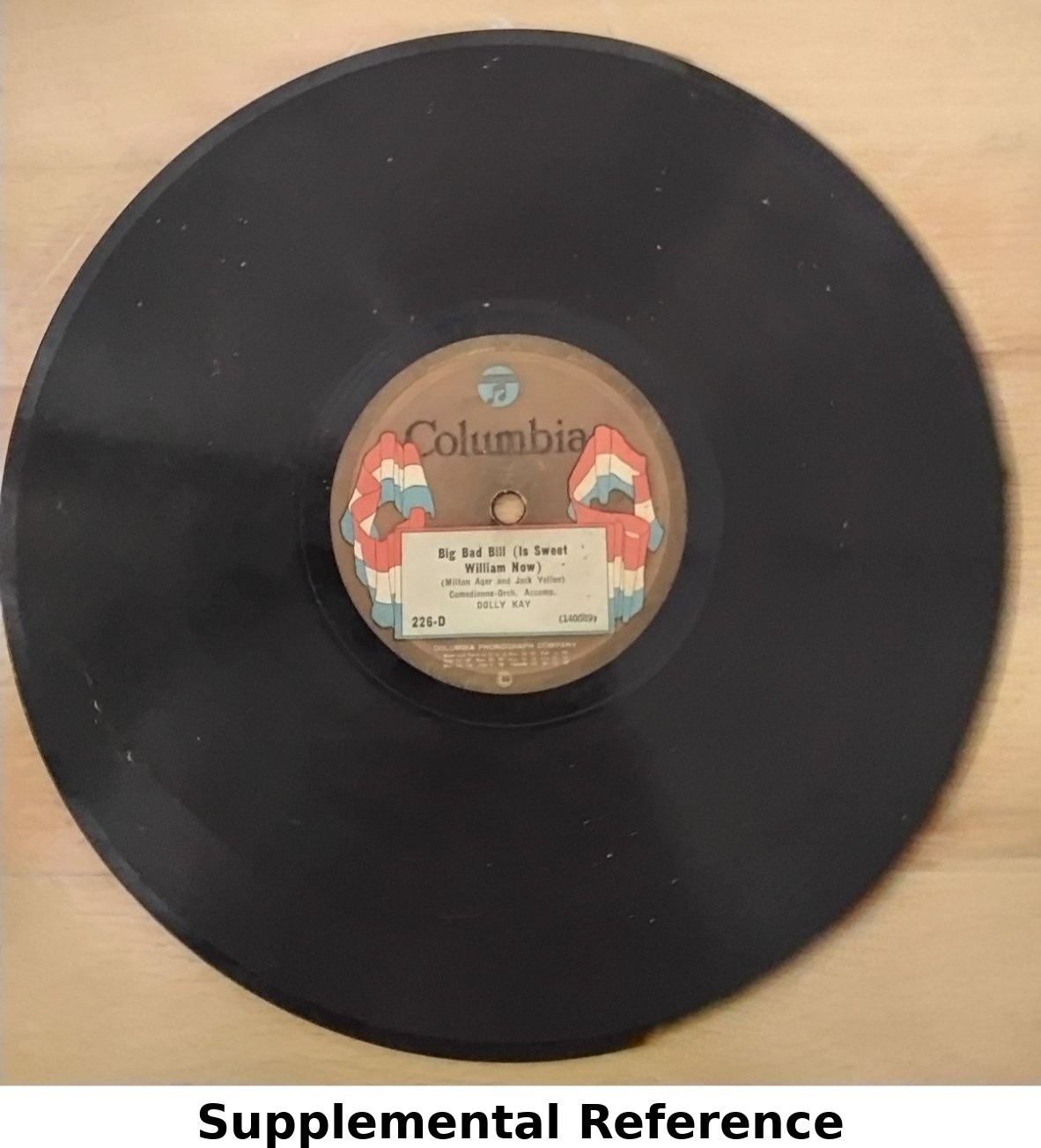
- Columbia 226-D — Dolly Kay, "Big Bad Bill (Is Sweet William Now)" / "Red Hot Mamma" — Kay was a sharp-tongued vaudeville comedienne whose material sat squarely in the novelty-and-bluesiness lane Sophie Tucker had pioneered. Both sides are loud, brassy, and built to fill a parlor.
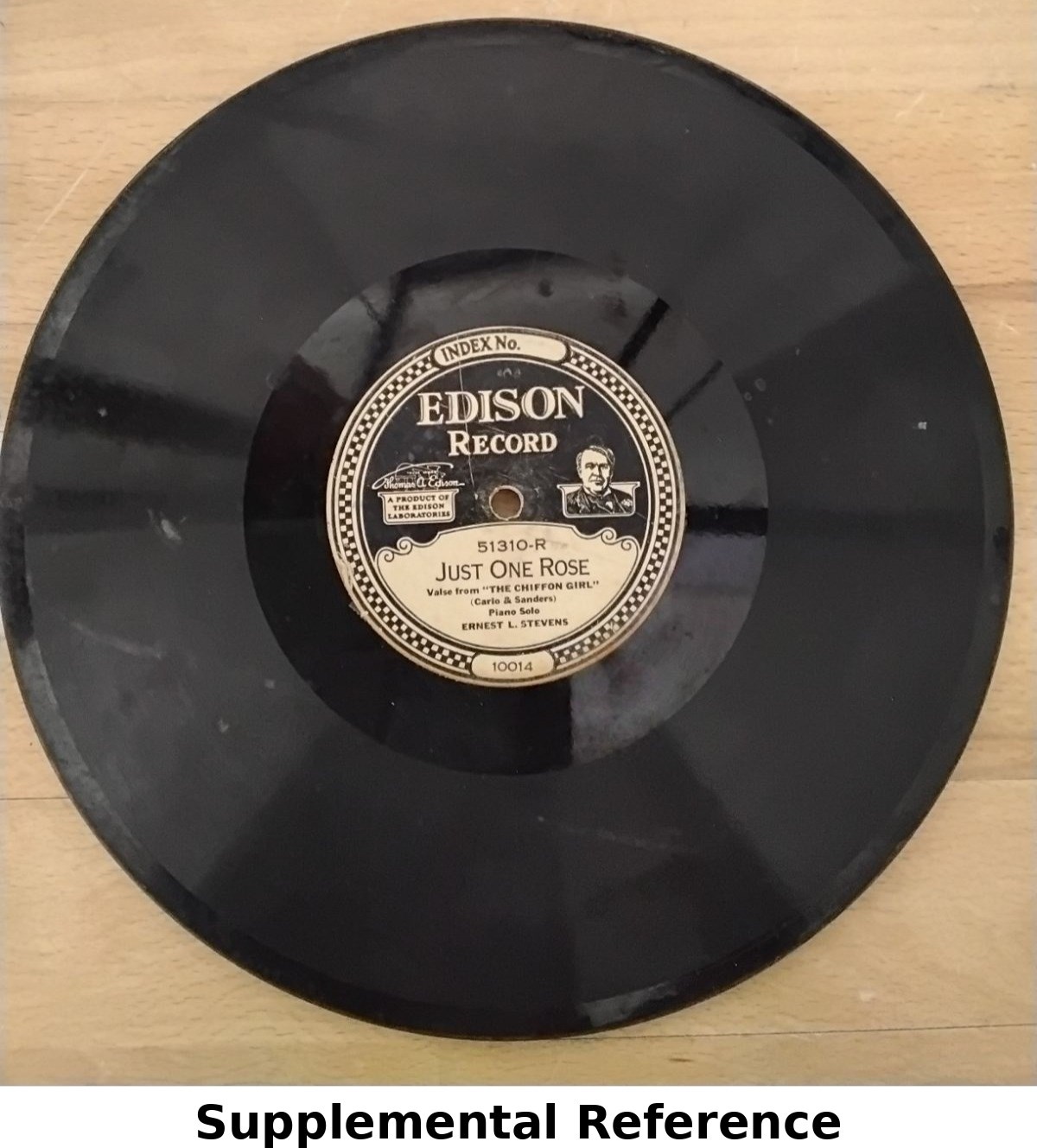
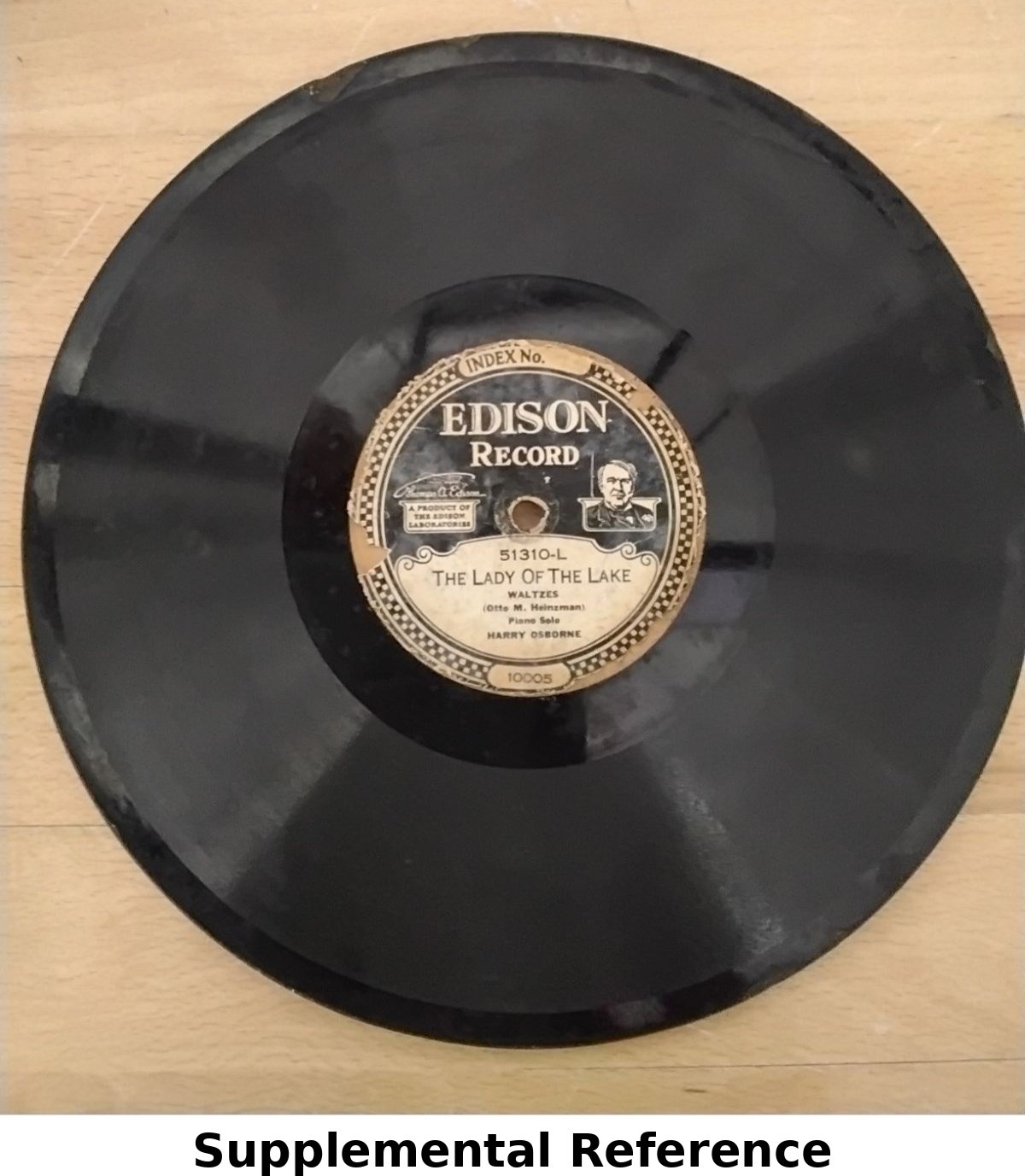
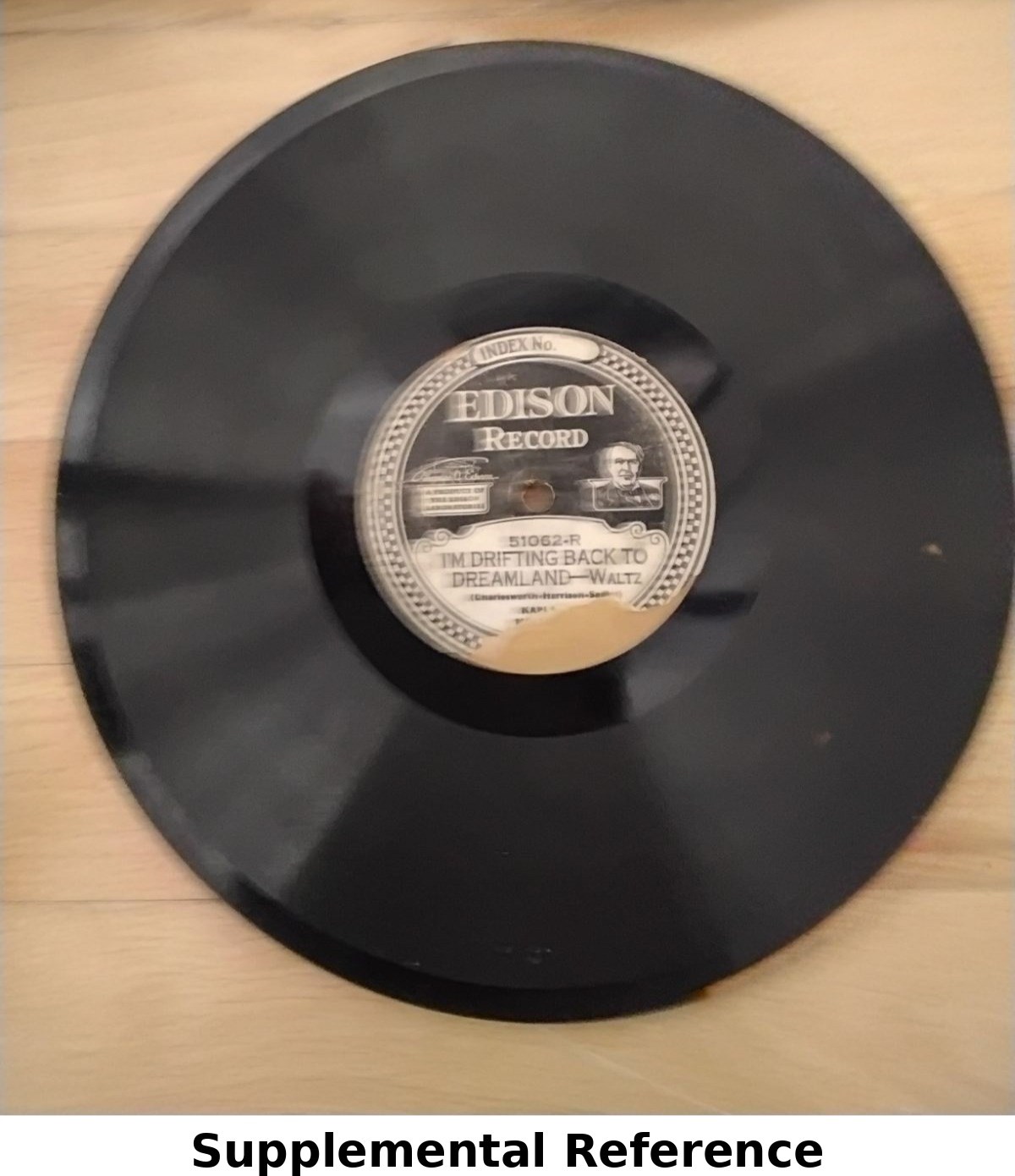
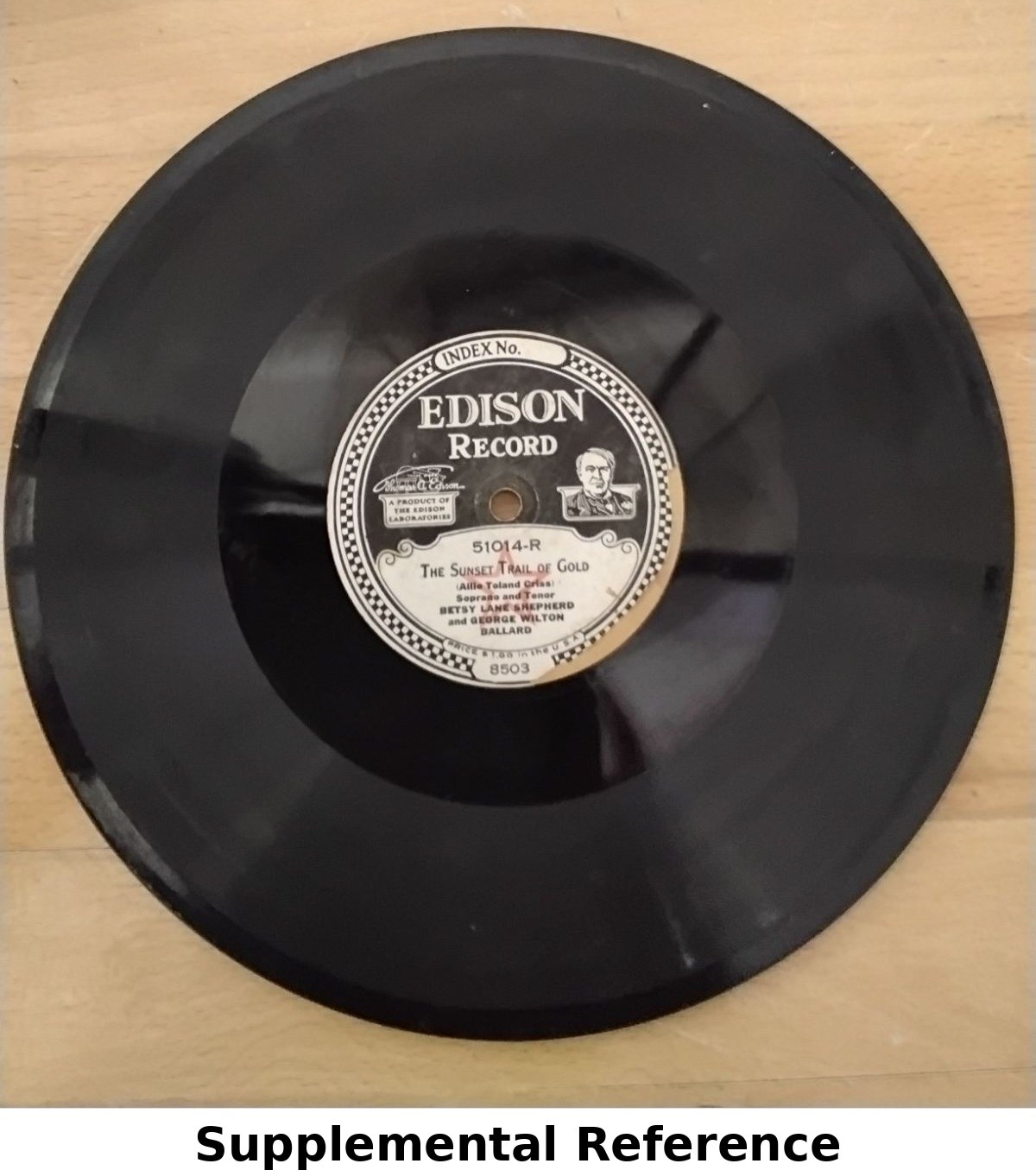
- Edison Record 51310-L/R — Harry Osborne, "The Lady of the Lake (Waltzes)" / Ernest L. Stevens, "Just One Rose" — Two piano solos on Edison's paper-label disc format, c. 1924–1929. These are laterally-cut Edison discs, compatible with standard steel needles.
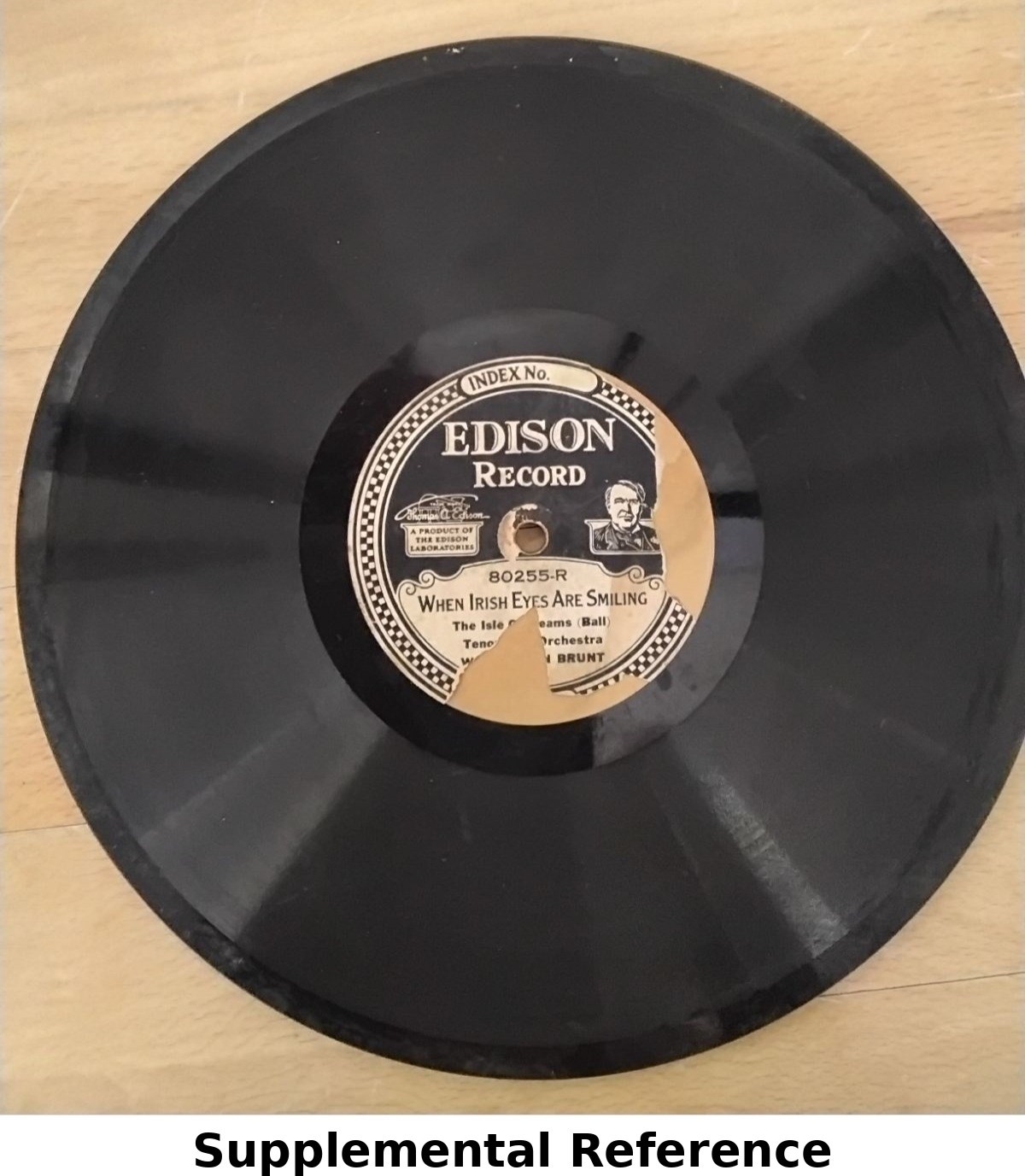
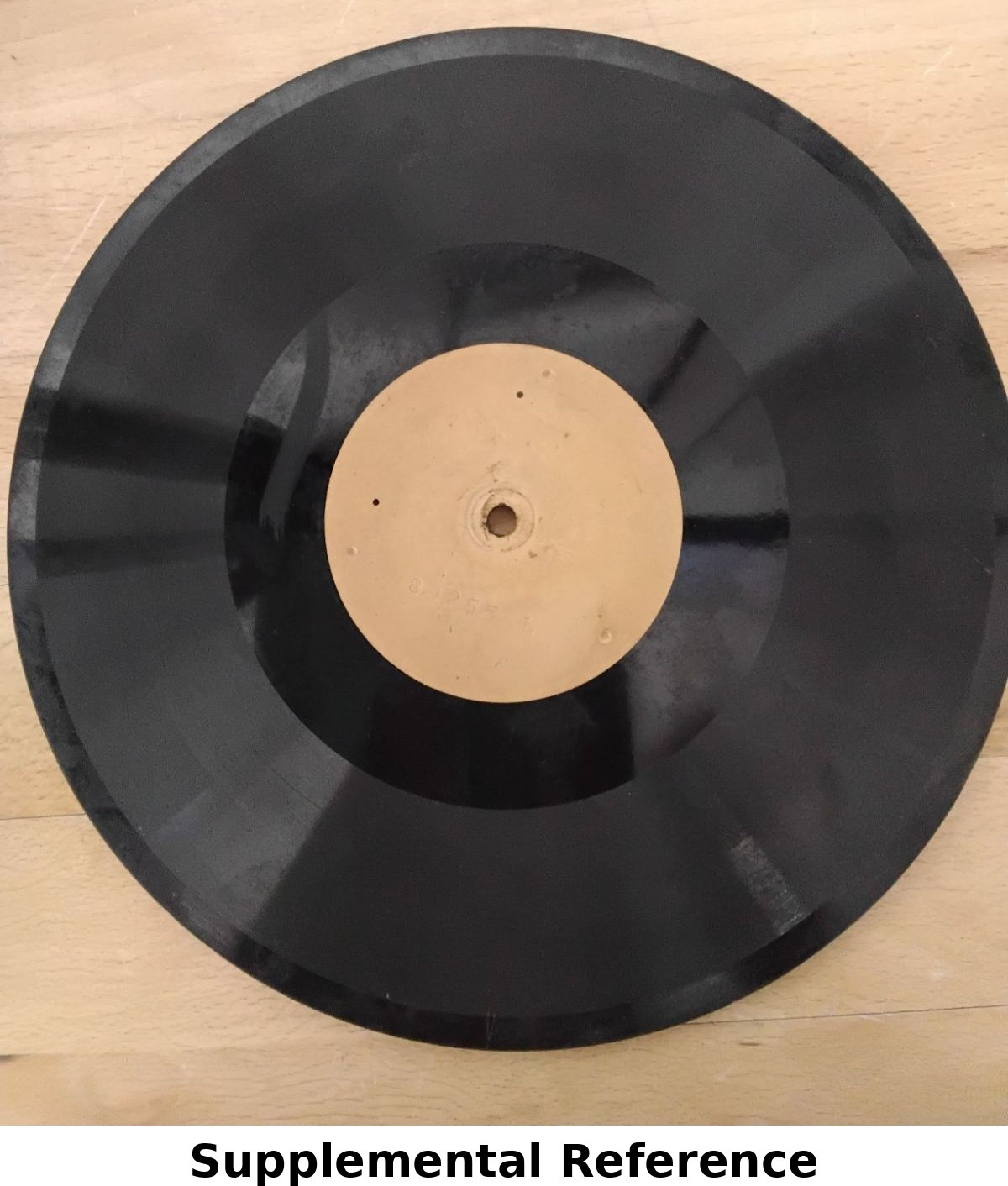
- Edison Record 80255-R — Walter Van Brunt, "When Irish Eyes Are Smiling" — Van Brunt was one of Edison's go-to Irish-American tenors. "When Irish Eyes Are Smiling" (1912) became an instant parlor and vaudeville standard. Edison's embossed paper label format dates this pressing to the mid-to-late 1920s.
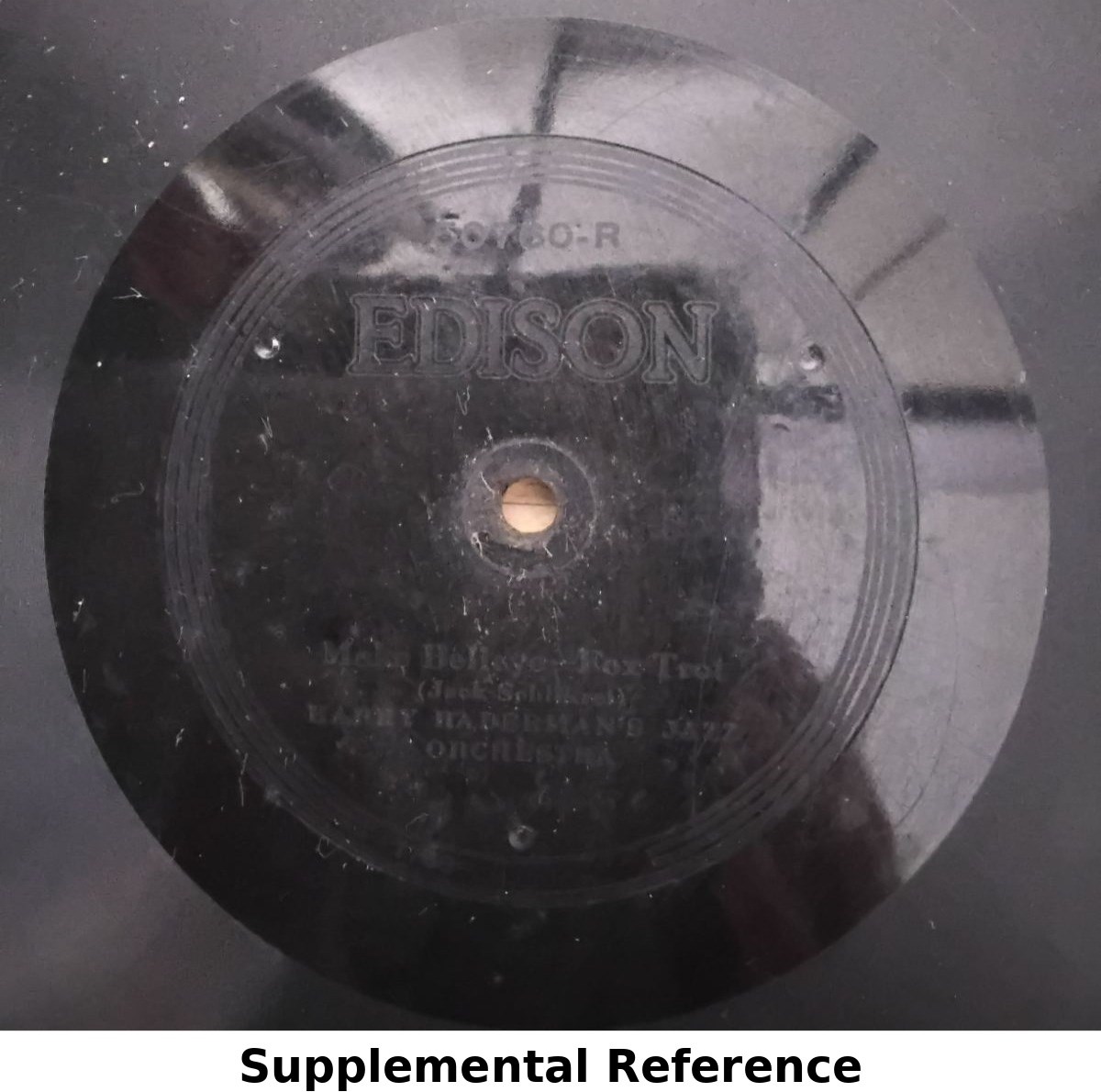
- Edison Diamond Disc — Harry Handeman's Jazz Orchestra, "Make Believe Fox Trot" — Diamond Discs use vertical-cut recording — the same groove geometry as Pathé — and require a diamond-tipped stylus for proper playback.
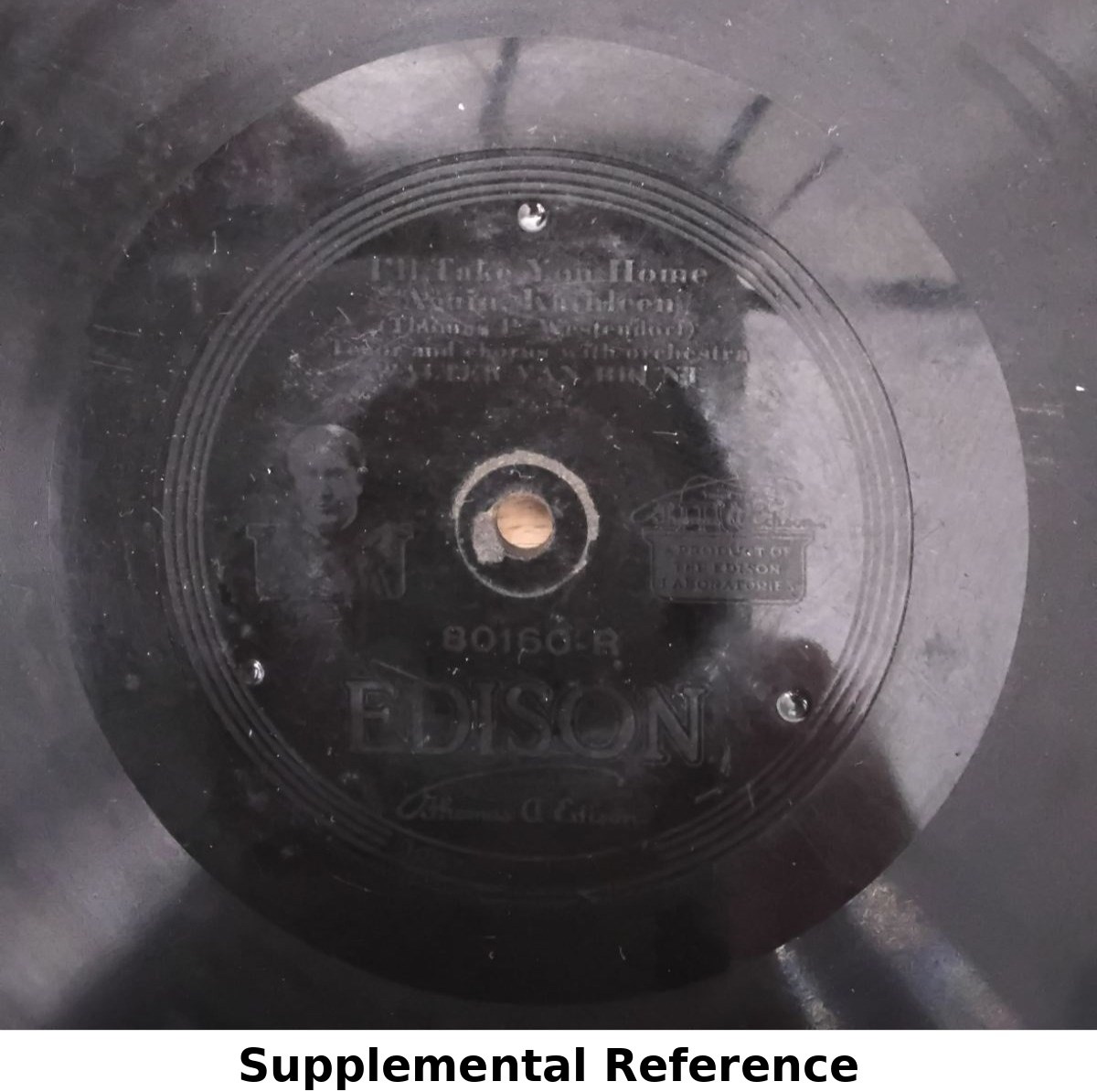
- Edison Diamond Disc 80160-R — Walter Van Brunt, "I'll Take You Home Again Kathleen" — A Diamond Disc pressing of the beloved 19th-century Irish ballad written by Thomas Westendorf in 1875, one of the most recorded Irish-American parlor pieces of the acoustic era.
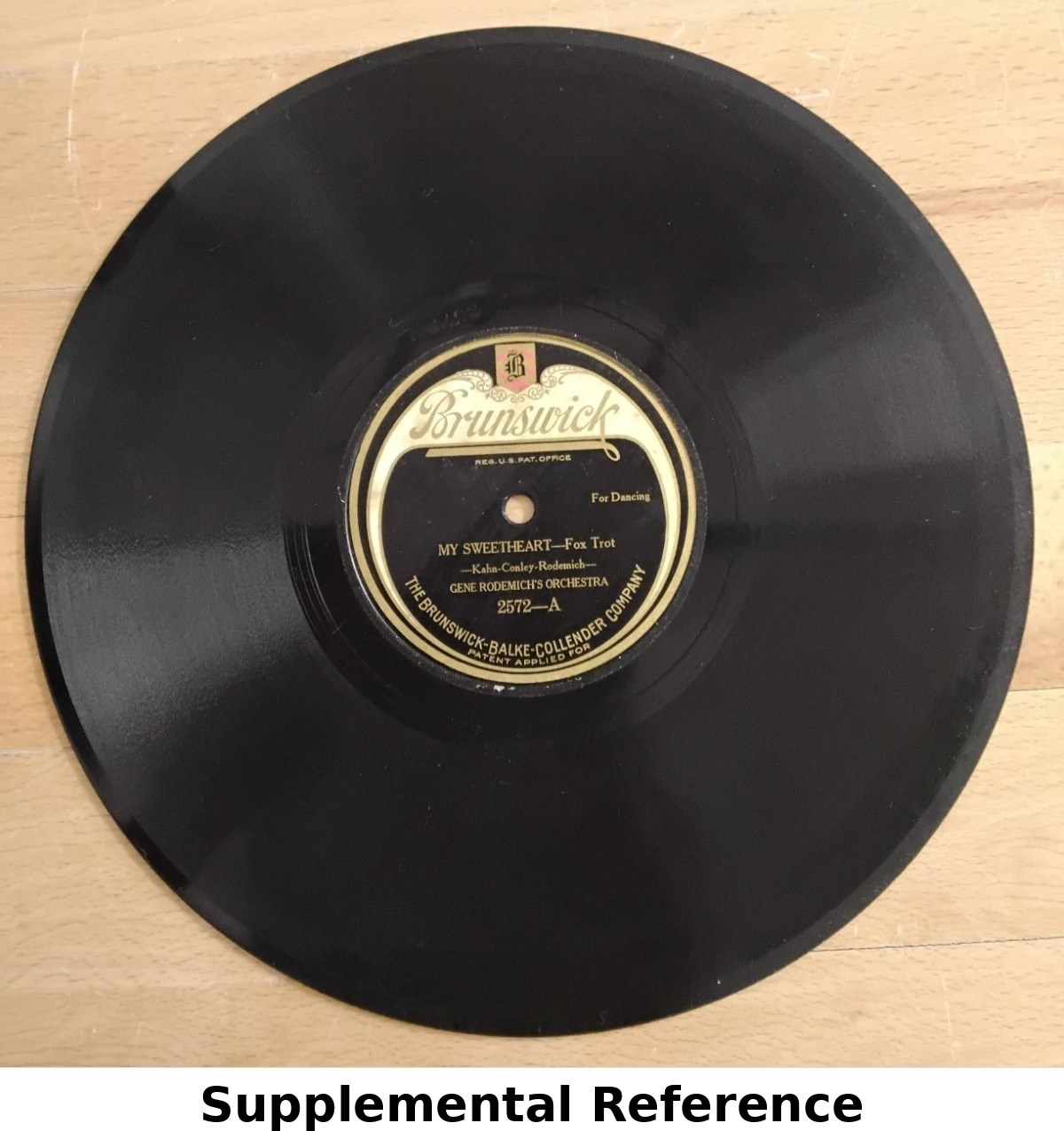
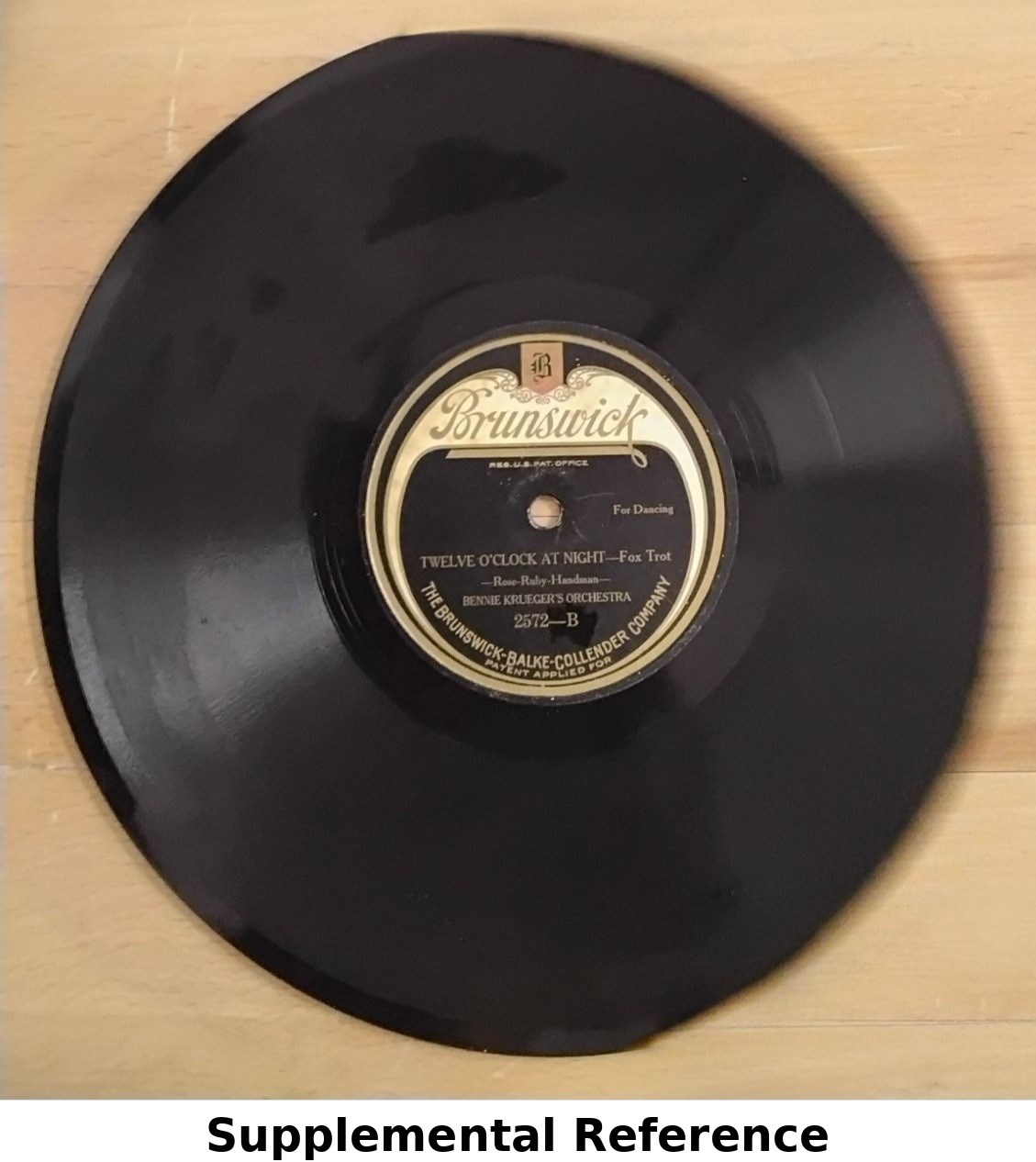
- Brunswick 2572-B — Bennie Krueger's Orchestra, "Twelve O'Clock at Night" — Krueger led one of the snappier hot-dance bands recording for Brunswick in the early 1920s. The Brunswick-Balke-Collender name still appears on this pressing's label, dating it to before Brunswick was acquired by Warner Bros.
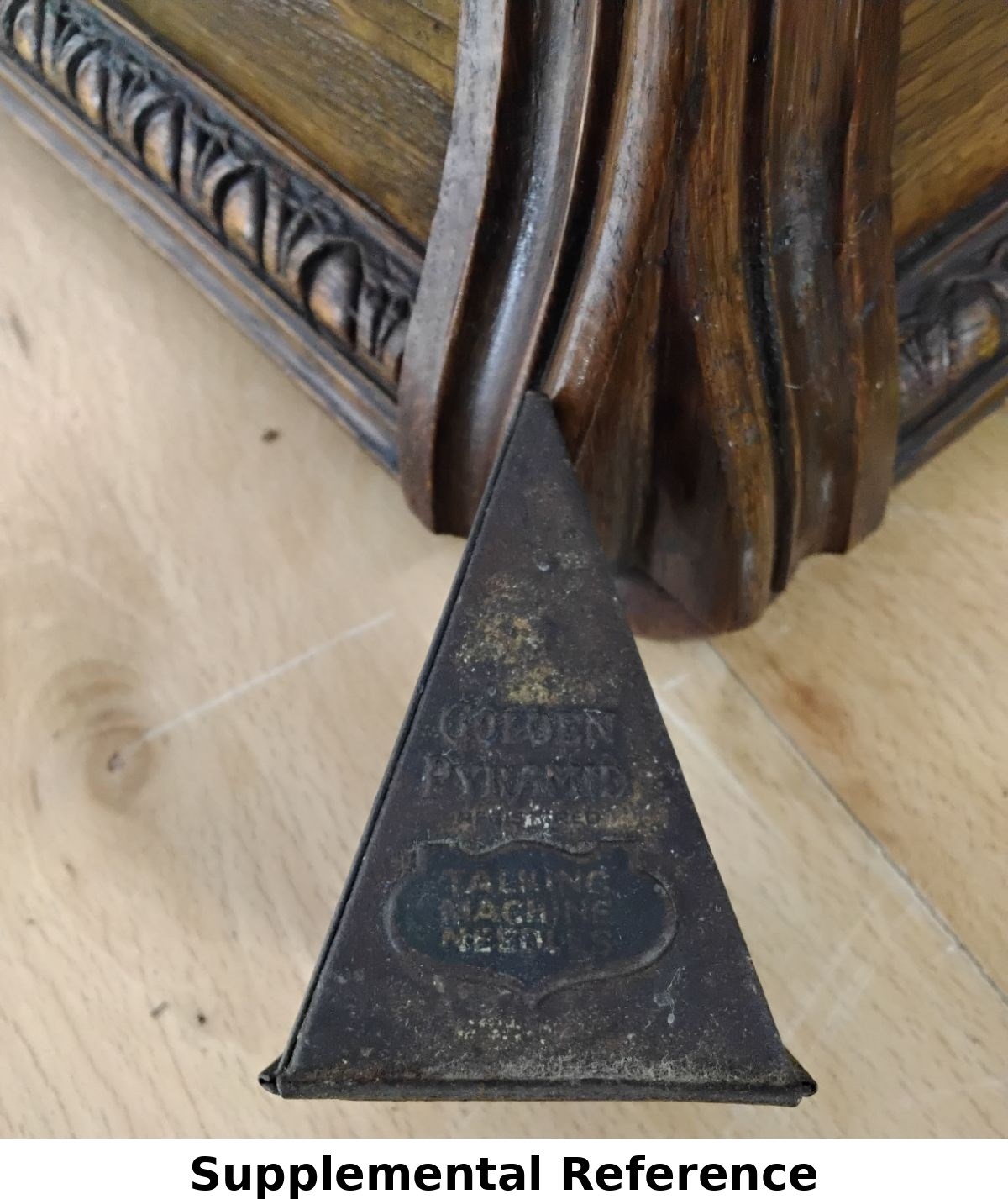
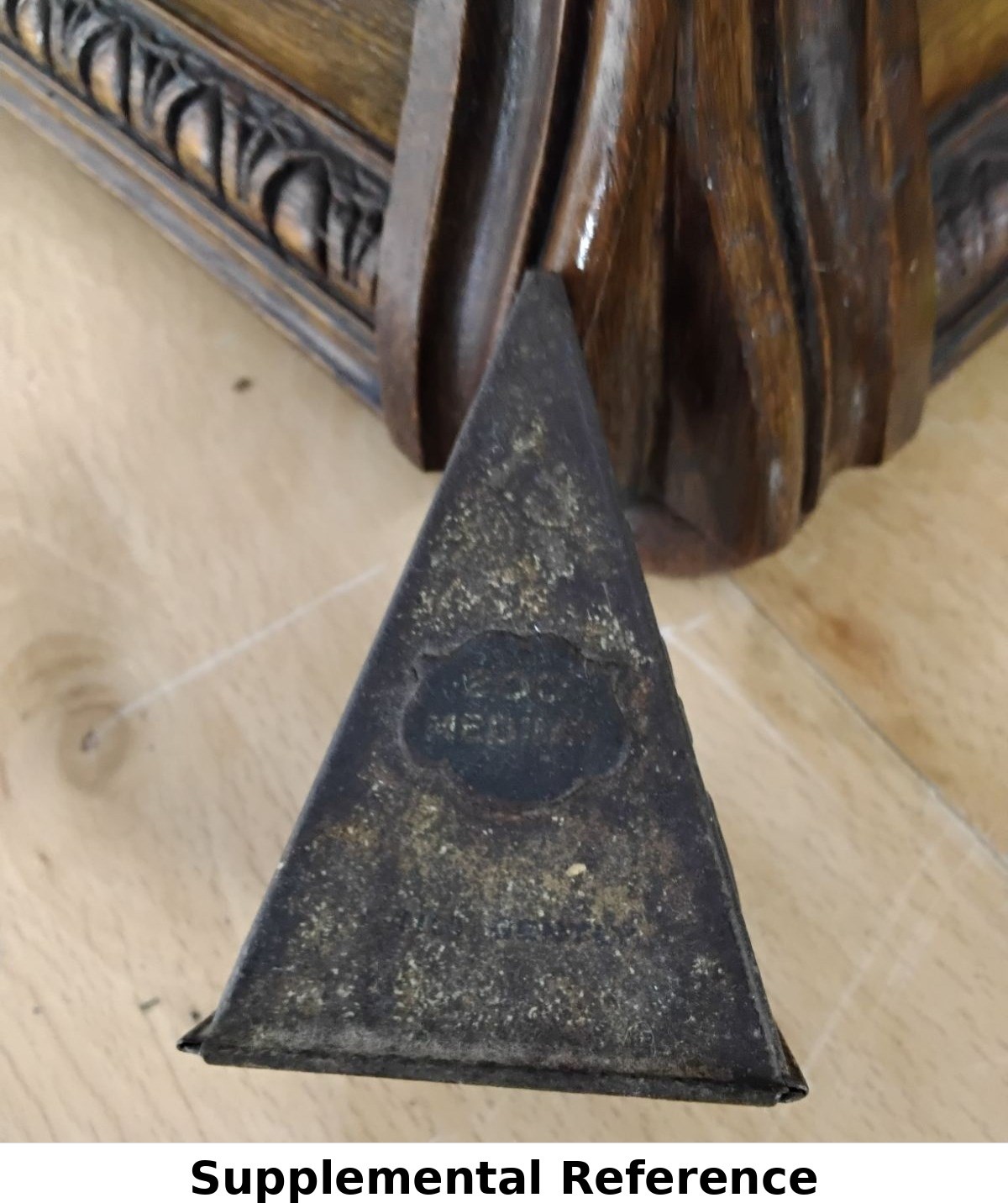
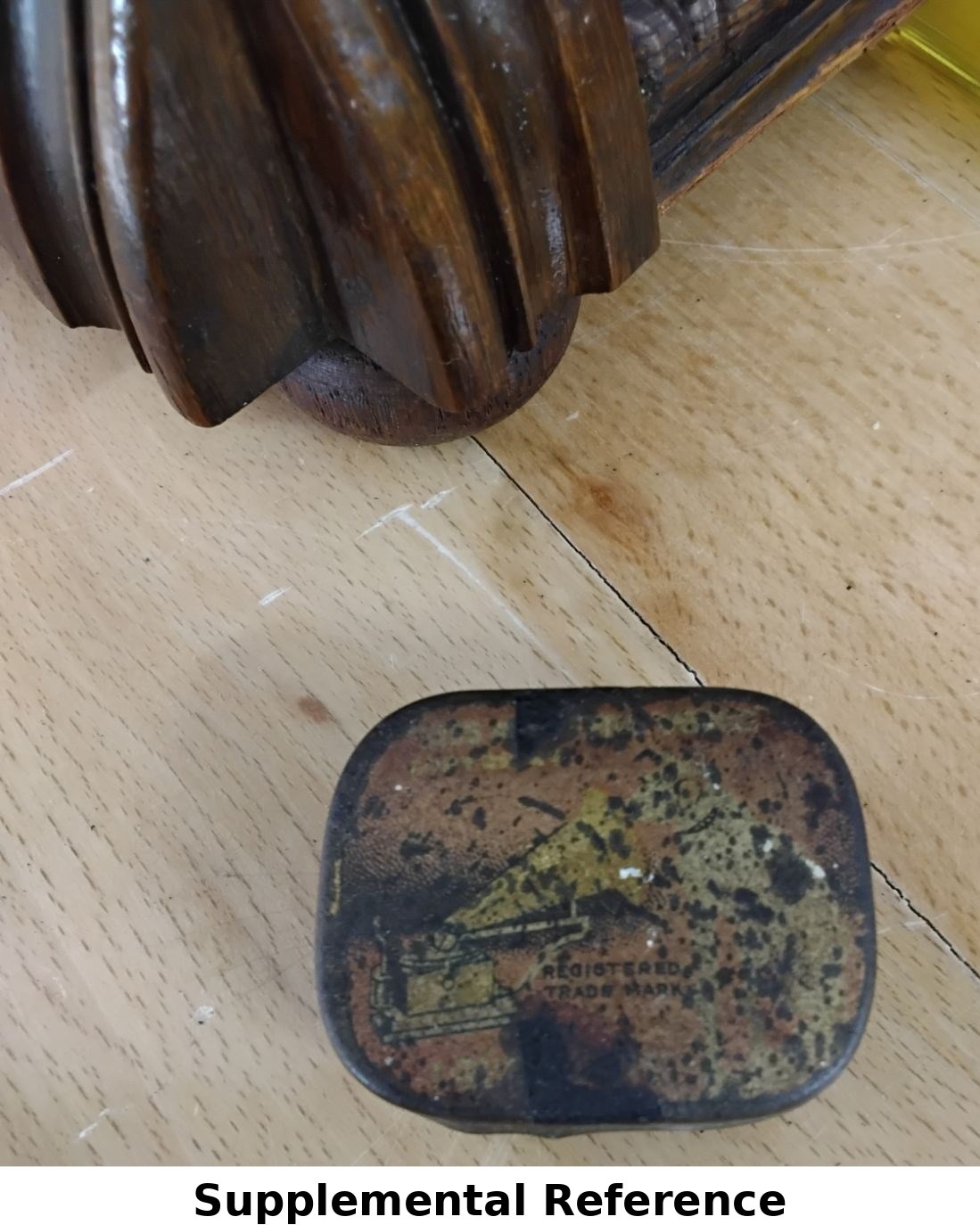
Also included: a Golden Pyramid Talking Machine Needles tin (British Needle Company Ltd., Redditch, England, c. 1900s–1930s) and one additional period gramophone needle tin with registered trade mark impression.
CONDITION
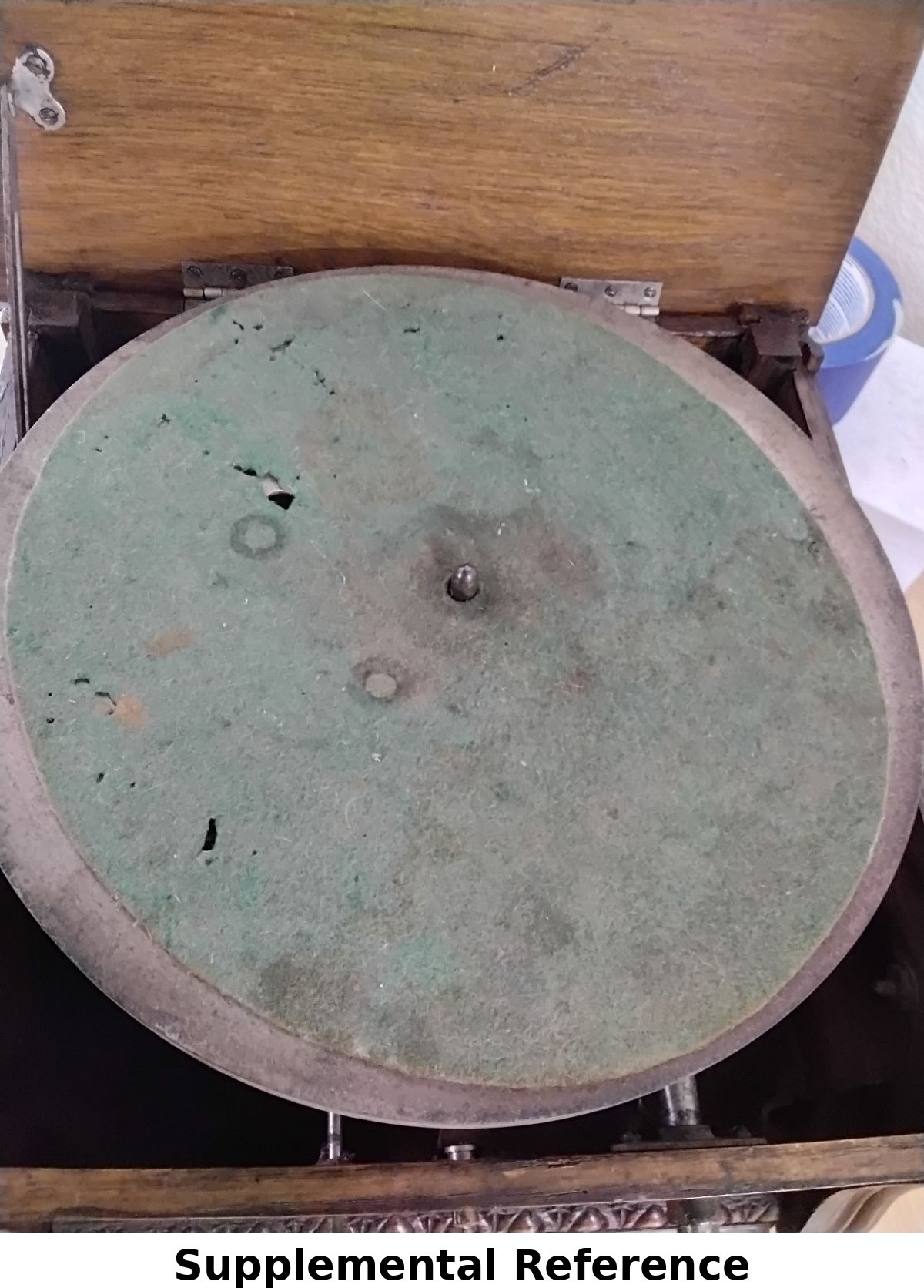
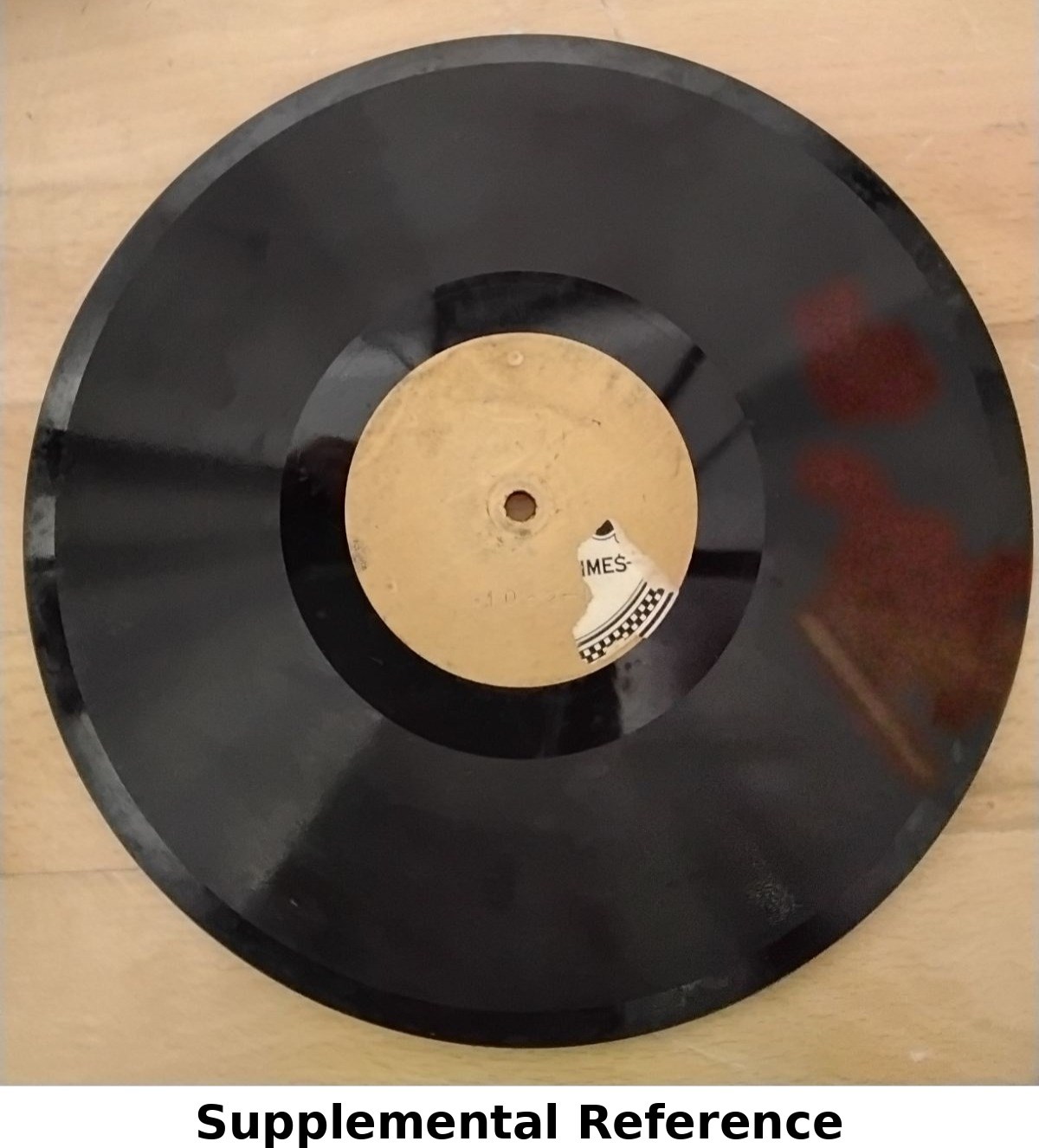
Good — functional with lid open. Motor winds and runs; machine plays and sounds great when the lid is raised and the platter is seated. With the lid closed over the mechanism, the platter does not spin — the lid-down operating position is not currently functional, likely related to a previous repair to the top panel, which also does not latch. Horn paint shows heavy field loss and chipping consistent with age, with original blue color intact in protected areas; cabinet retains original finish with age-appropriate wear. Records are in mixed condition typical of played shellac; individual record grades are not confirmed.
DIMENSIONS / SPECIFICATIONS
- Overall: 29" H × 22" W × 22" D
- Drive Type: Spring-wound motor, centrifugal governor
- Operational Status: Functional with lid open; lid-closed position not operational
- Reproducer 1: Pathé — marked REPRODUCTEUR POUR DISQUES PATHÉ
- Reproducer 2: French ebonite-cover type — marked BRE S.G.D.G. / REPRODUCTEUR
- Horn: Large scalloped morning glory flower horn, blue painted tinplate with embossed relief
- Cabinet Material: Solid oak
- Tone Arm Bracket: Cast iron, black lacquer with gilt scroll decoration
- Tone Arm Tube: Brass
- Records: 15 discs (Victor, Columbia, Edison, Brunswick — see description)
- Needle Tin 1: Golden Pyramid Talking Machine Needles (British Needle Co. Ltd., Redditch)
- Needle Tin 2: Period gramophone needle tin with registered trade mark impression