Antique Primitive Double-Bow Oxen Yoke, Hand-Hewn Wood & Hand-Forged Iron View Watchlist >
- Winning Bid: $170.00
- 29 Bid(s) View Bid History
- High Bidder: Sparks1357
Seller Accepts Credit Cards
Payment and pickup instructions will be available on your invoice (under "My Account") at the conclusion of this auction.
Lot # E605
System ID # 28714013
Start Date
End Date
7 Watching
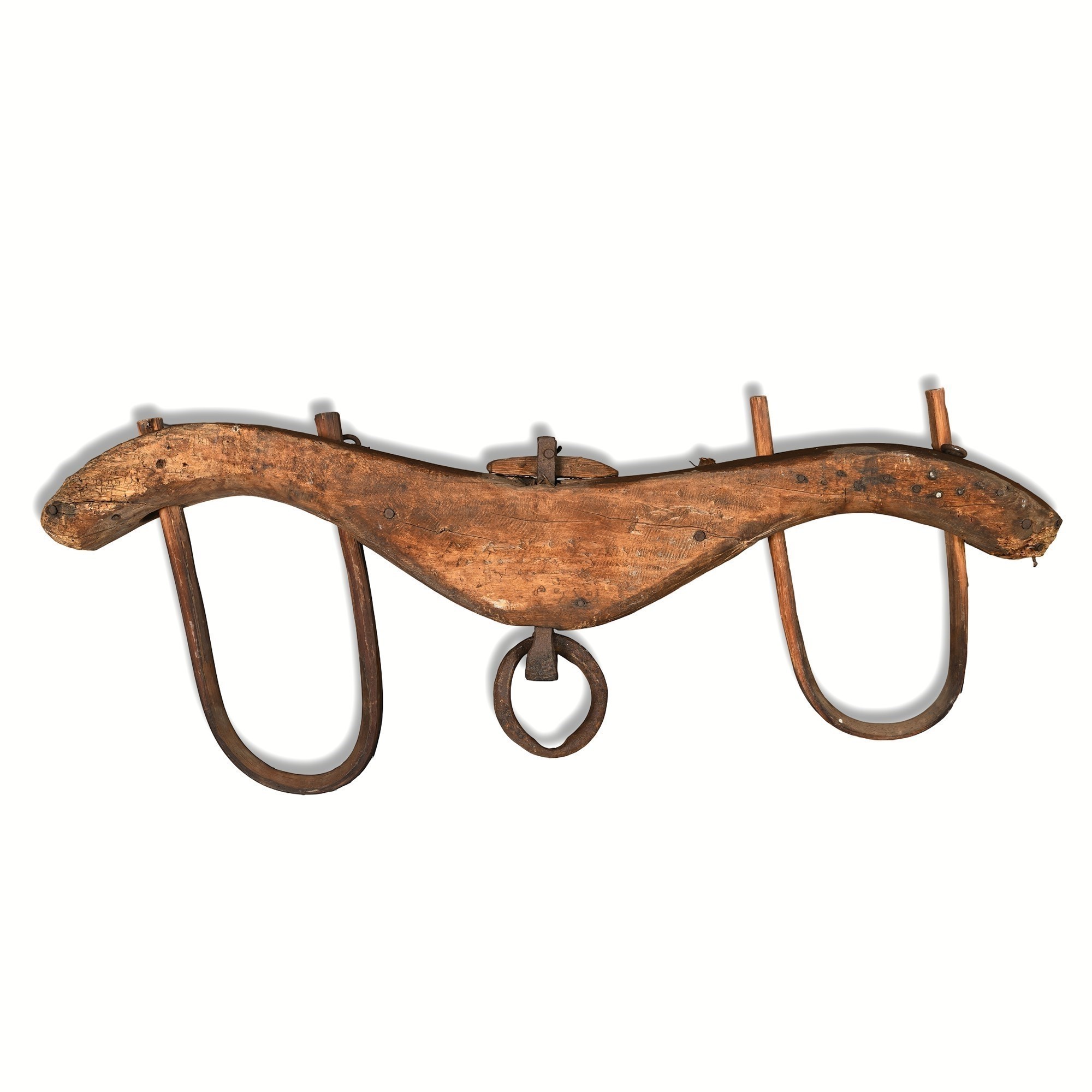
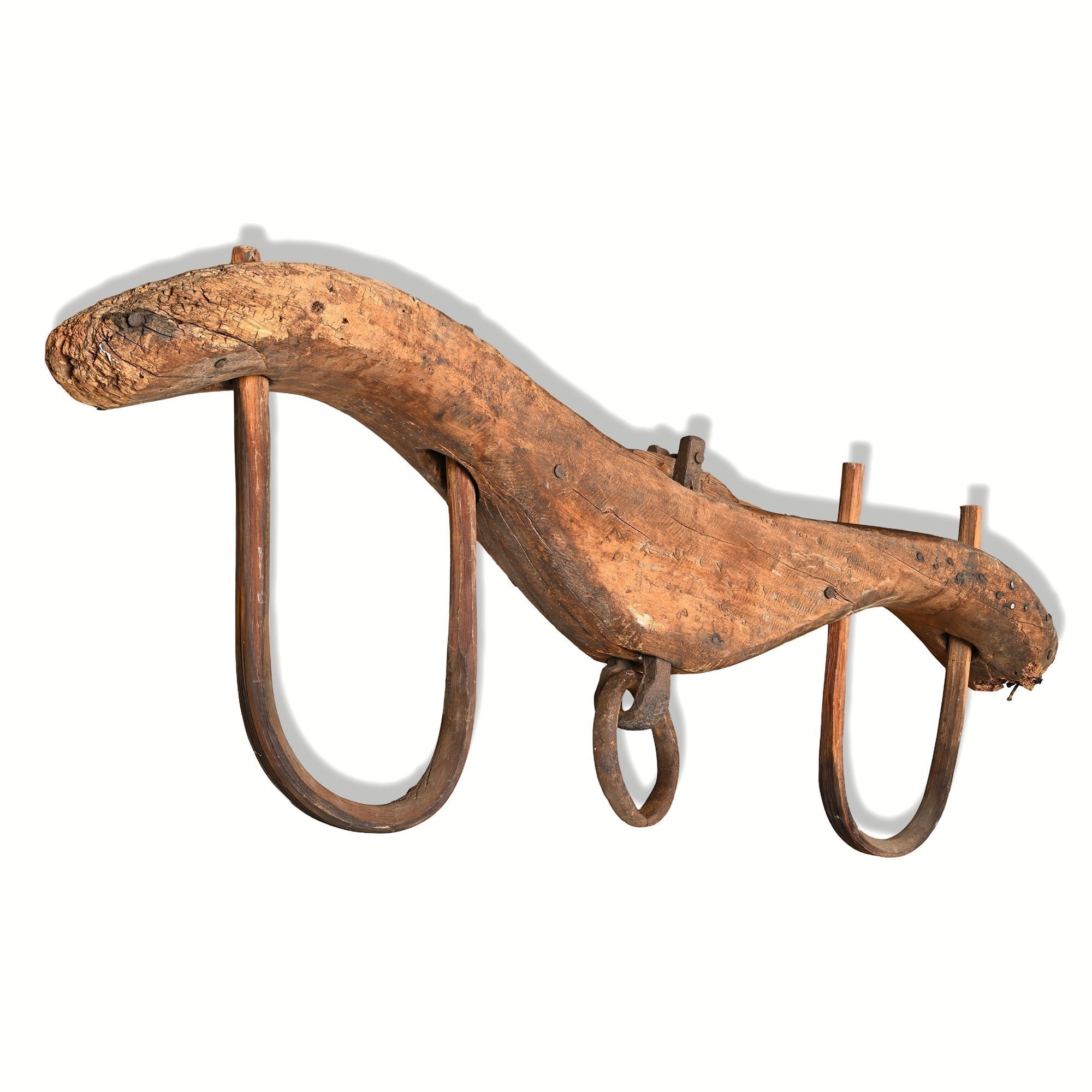
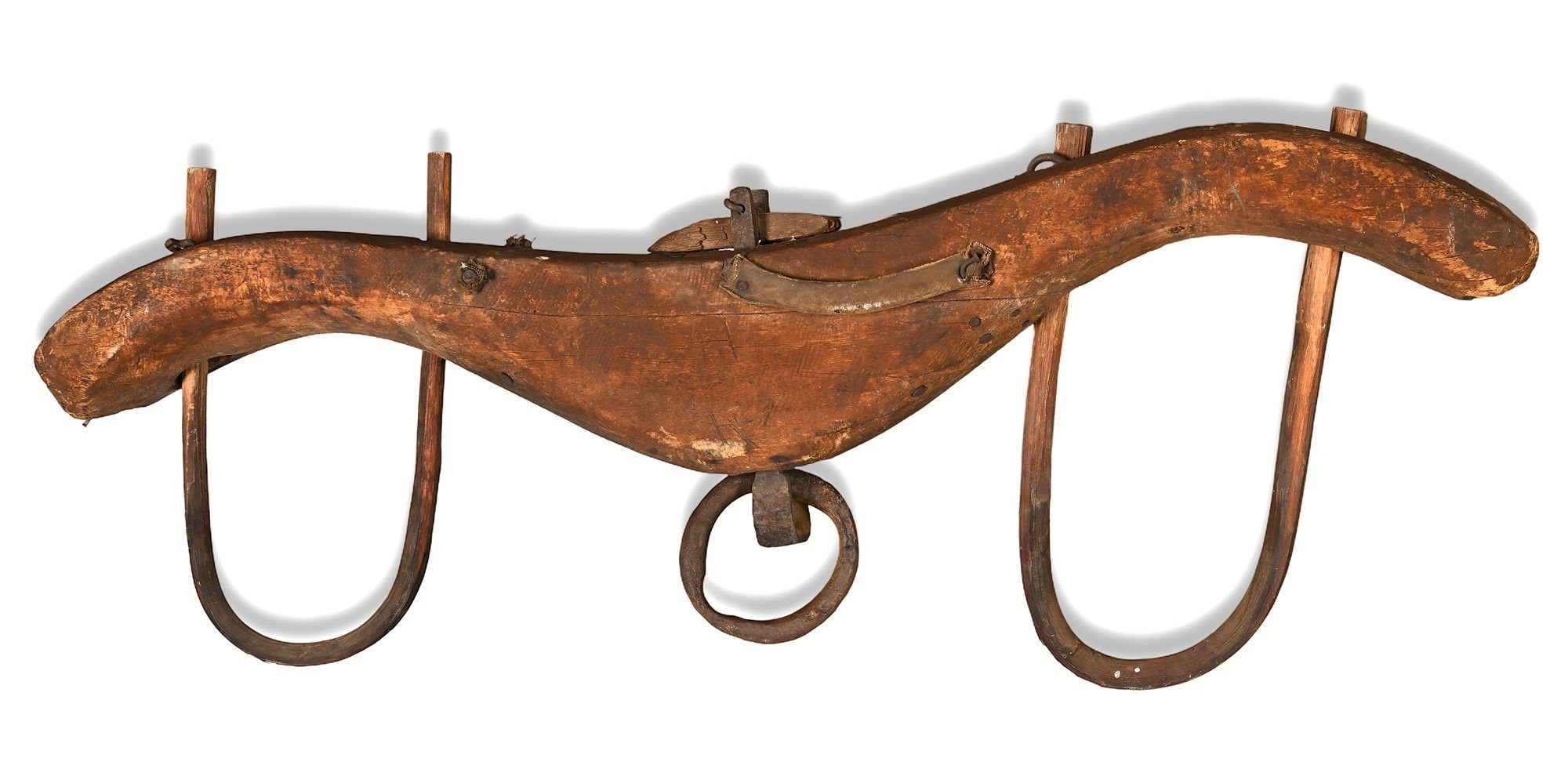
Antique Primitive Double-Bow Oxen Yoke, Hand-Hewn Wood & Hand-Forged Iron
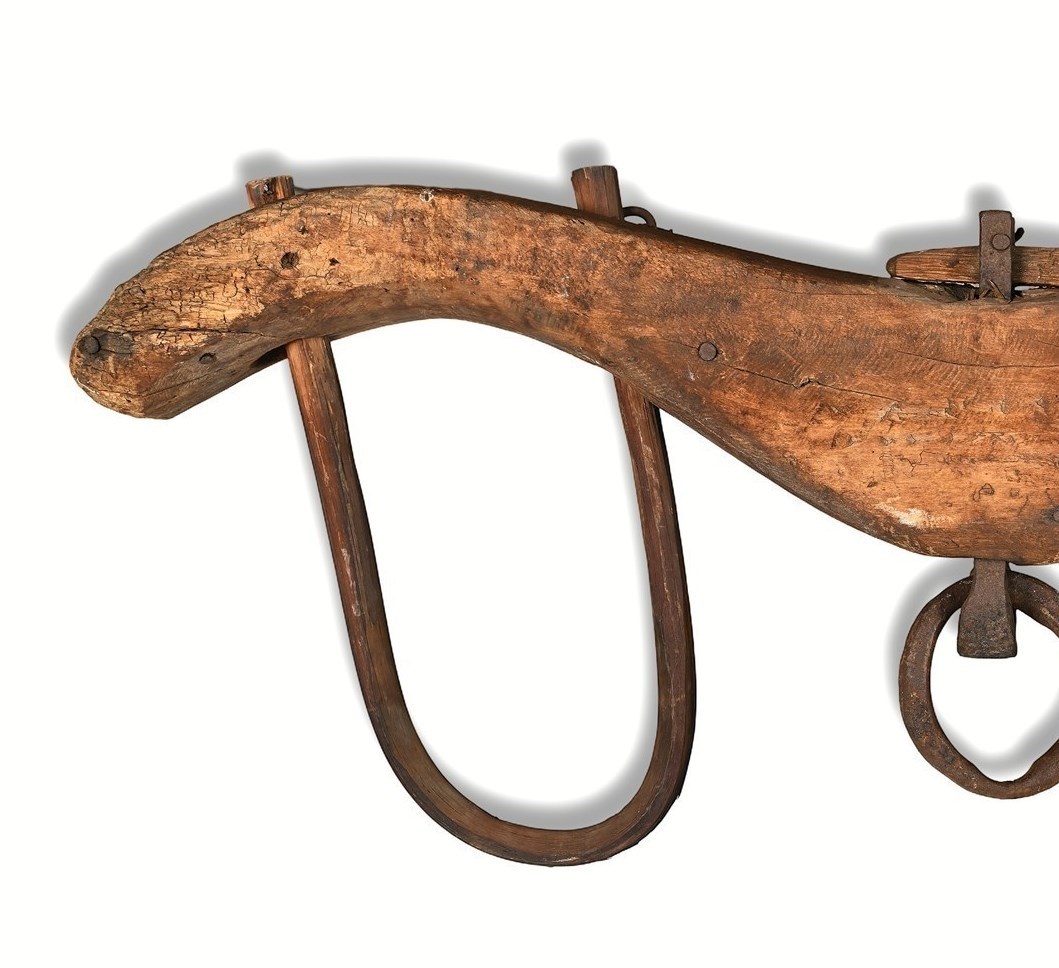
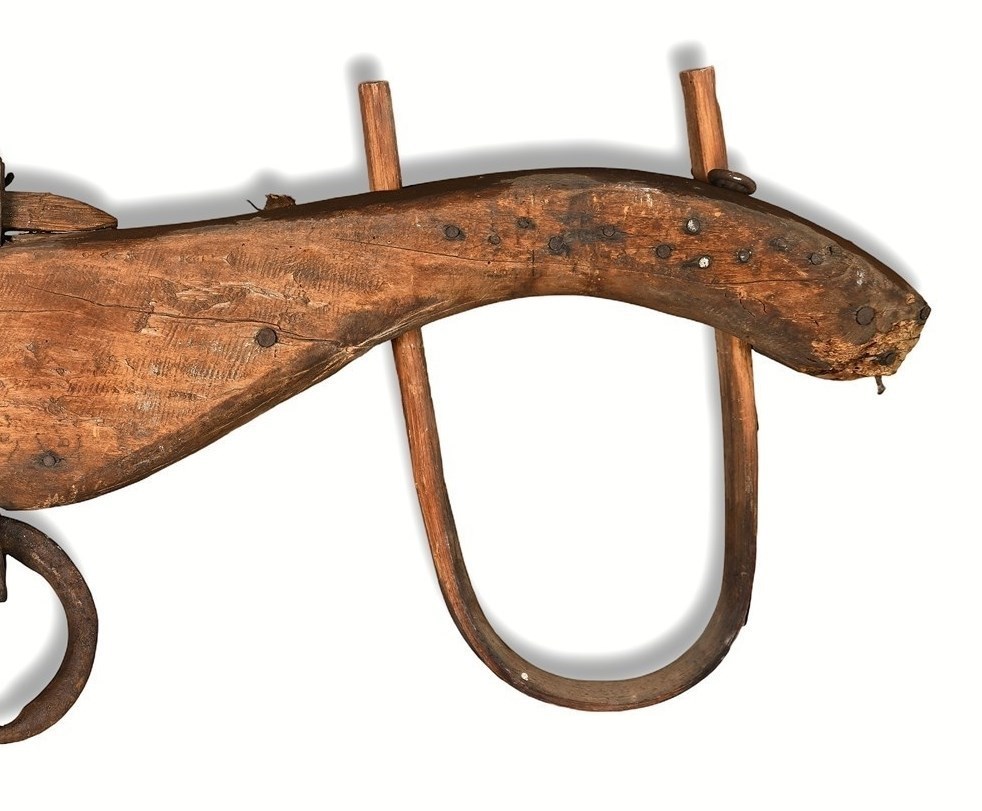
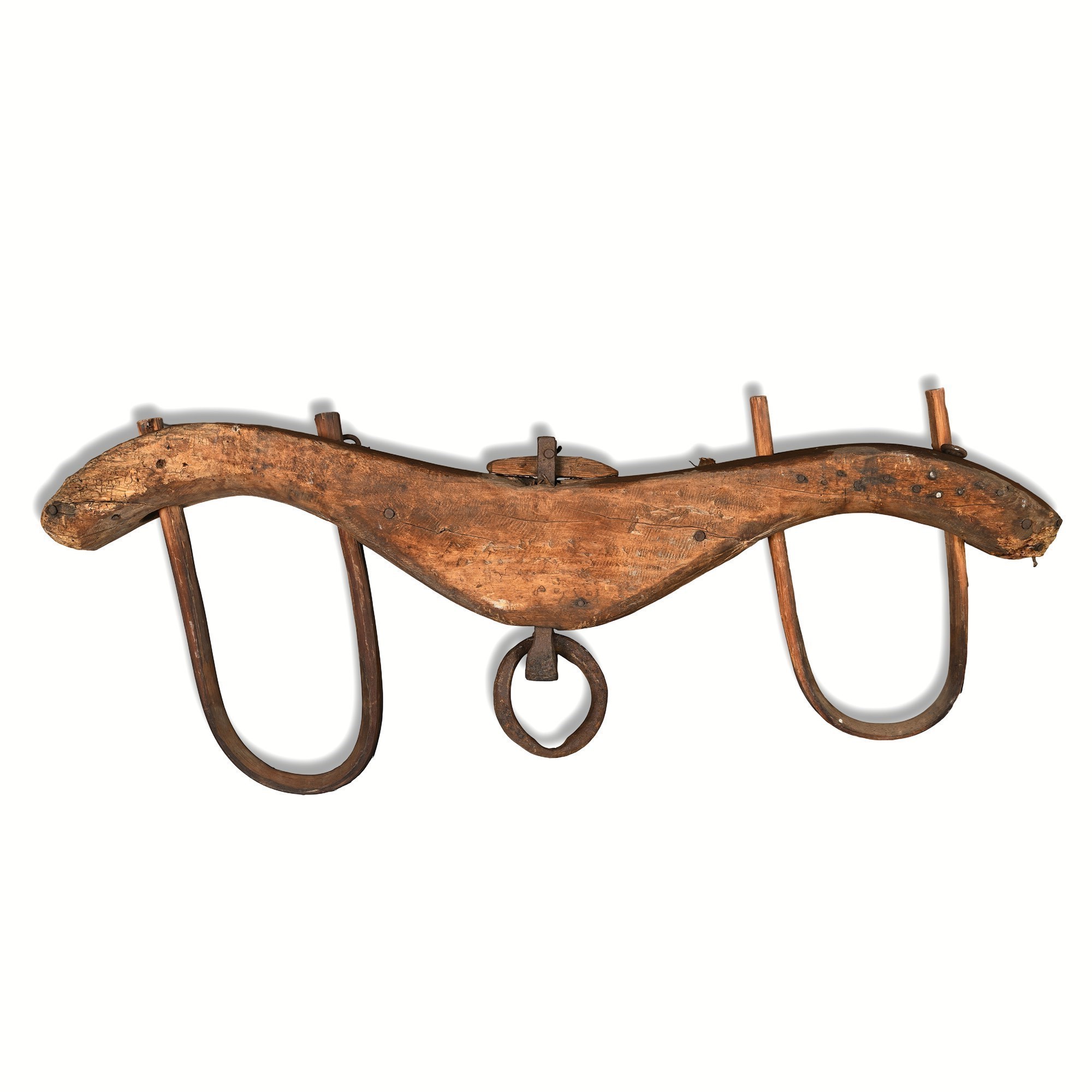
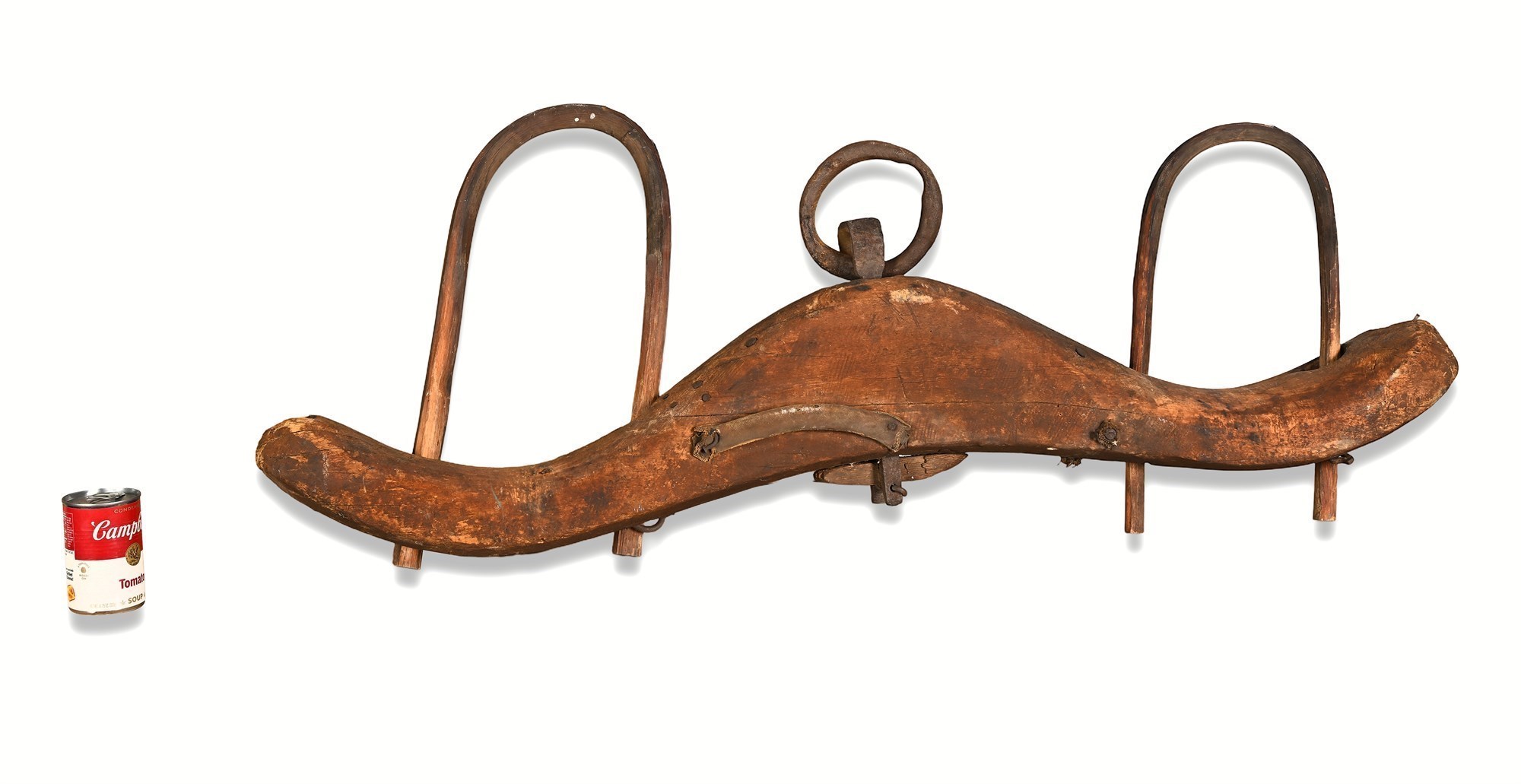
A hand-hewn double-bow oxen yoke built from a naturally curved hardwood timber, shaped to follow the contours of two animals' necks and fitted with four bent-wood bows — one pair flanking each side — that loop downward to cradle the oxen beneath the throat. A heavy hand-forged iron draft ring is mounted at center on a through-iron staple assembly, providing the single attachment point for the draw chain or tongue. Additional iron hardware is secured throughout with cut nails and wooden peg joinery; remnants of a leather lashing survive at the rear. The timber carries adze and drawknife tooling marks along its length — shaped entirely by hand rather than milled to a standard profile.
The double-bow yoke is one of the oldest and most persistent forms of draft technology in the Western agricultural tradition, tracing its lineage directly to the Iberian Peninsula and transplanted throughout the Spanish colonial Americas by the 16th century. In New Mexico and northern Mexico, oxen remained the primary draft animal well into the late 19th and early 20th centuries — preferred over mules and horses for heavy plowing and cart work on the rough terrain of the Rio Grande corridor. The yugo, as it was known in the Spanish-speaking world, was typically a local or community fabrication: a blacksmith shaped the iron ring and staple hardware, while a woodwright selected a naturally curved timber of sufficient girth — ash, oak, cottonwood, or mesquite depending on region — and worked it with drawknife and adze to the required profile. No two were identical. The asymmetrical, organic form of this example is characteristic of that tradition: the timber was chosen for its curve, not cut to a template. The consignment origin points to a New Mexican or northern Mexican provenance, consistent with the form and construction.
CONDITION
Good with age-appropriate wear throughout. The wood shows deep checking, surface erosion, old insect tracking, and end losses consistent with long working use and extended storage. Iron hardware shows oxidation and pitting throughout; the draft ring and staple assembly remain intact. The frame is structurally sound for display purposes.
DIMENSIONS / SPECIFICATIONS
- Overall: 17" H × 48.5" W × 6.5" D
- Weight: 40 lbs
- Materials: Hand-hewn hardwood, bent wood, hand-forged iron, cut nails
- Origin: New Mexican or northern Mexican; unattributed
- Date: 19th–early 20th century
- Campbell's Soup Can (4" H) Shown for Scale — Not Included