Aparício Basílio da Silva Signed Bronze Sculpture "Lovers" — Brazilian Modernist View Watchlist >
Seller Accepts Credit Cards
Payment and pickup instructions will be available on your invoice (under "My Account") at the conclusion of this auction.
Lot # F337
System ID # 29045225
Start Date
End Date
2 Watching
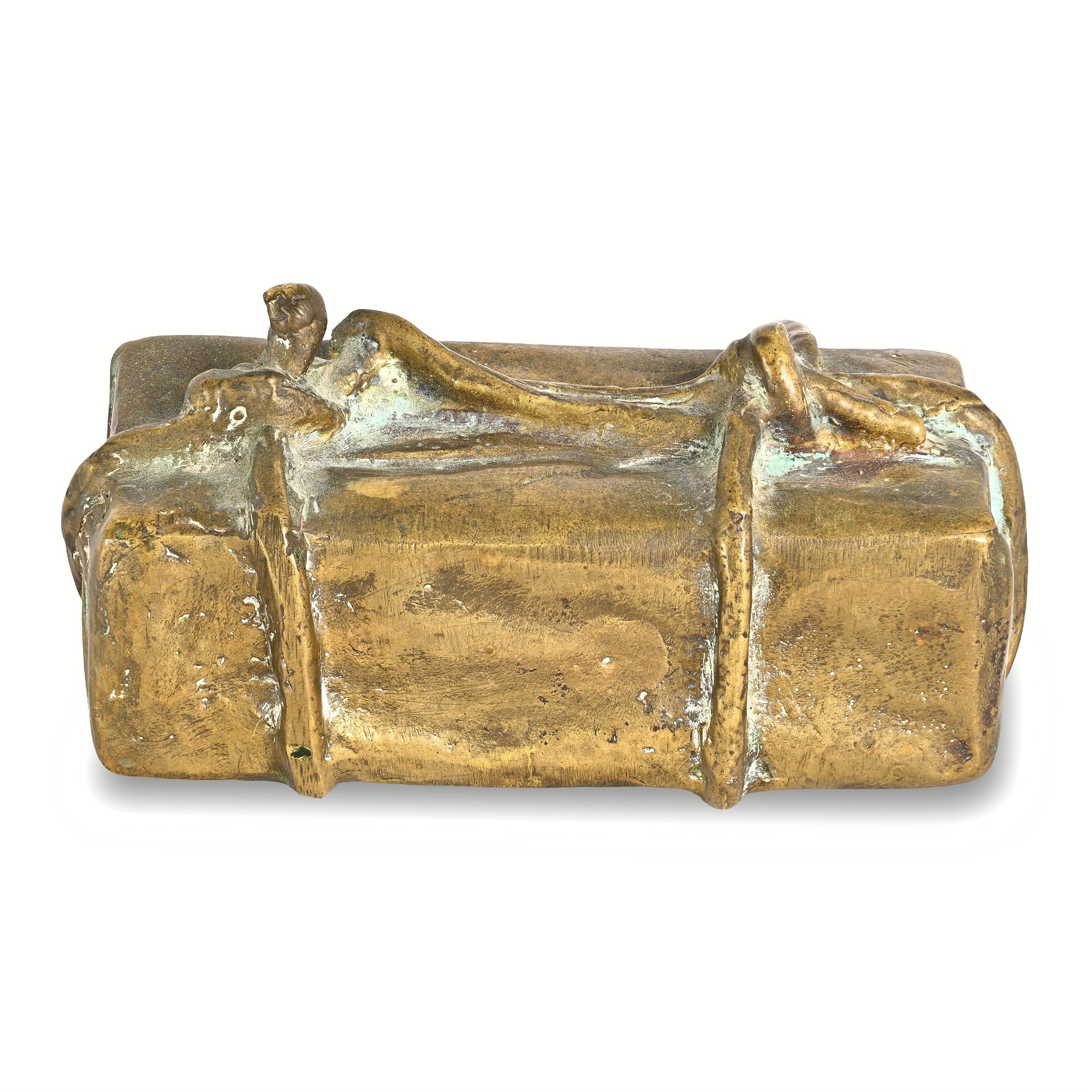
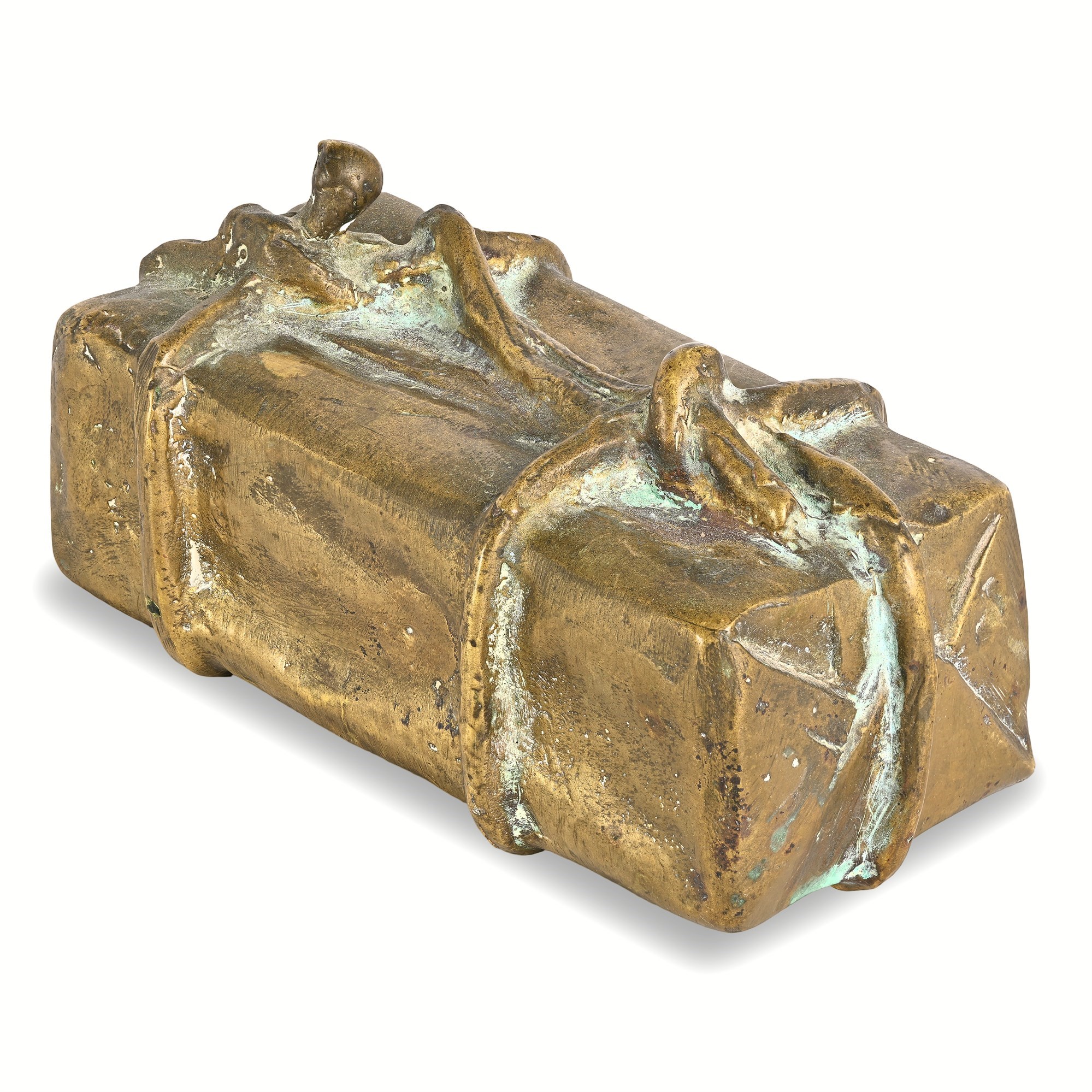
Aparício Basílio da Silva Signed Bronze Sculpture "Lovers" — Brazilian Modernist, Ex-BACI 1982
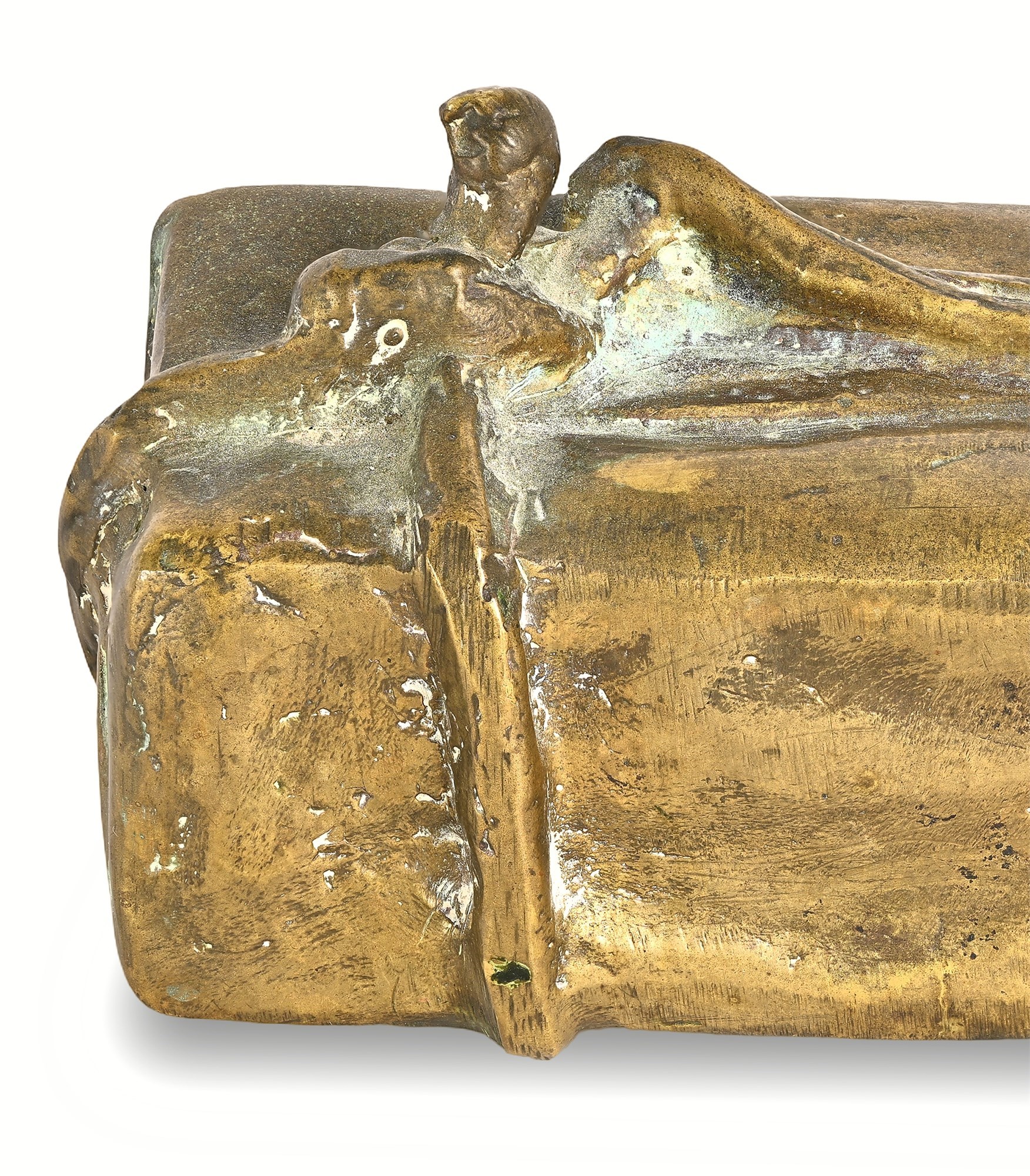
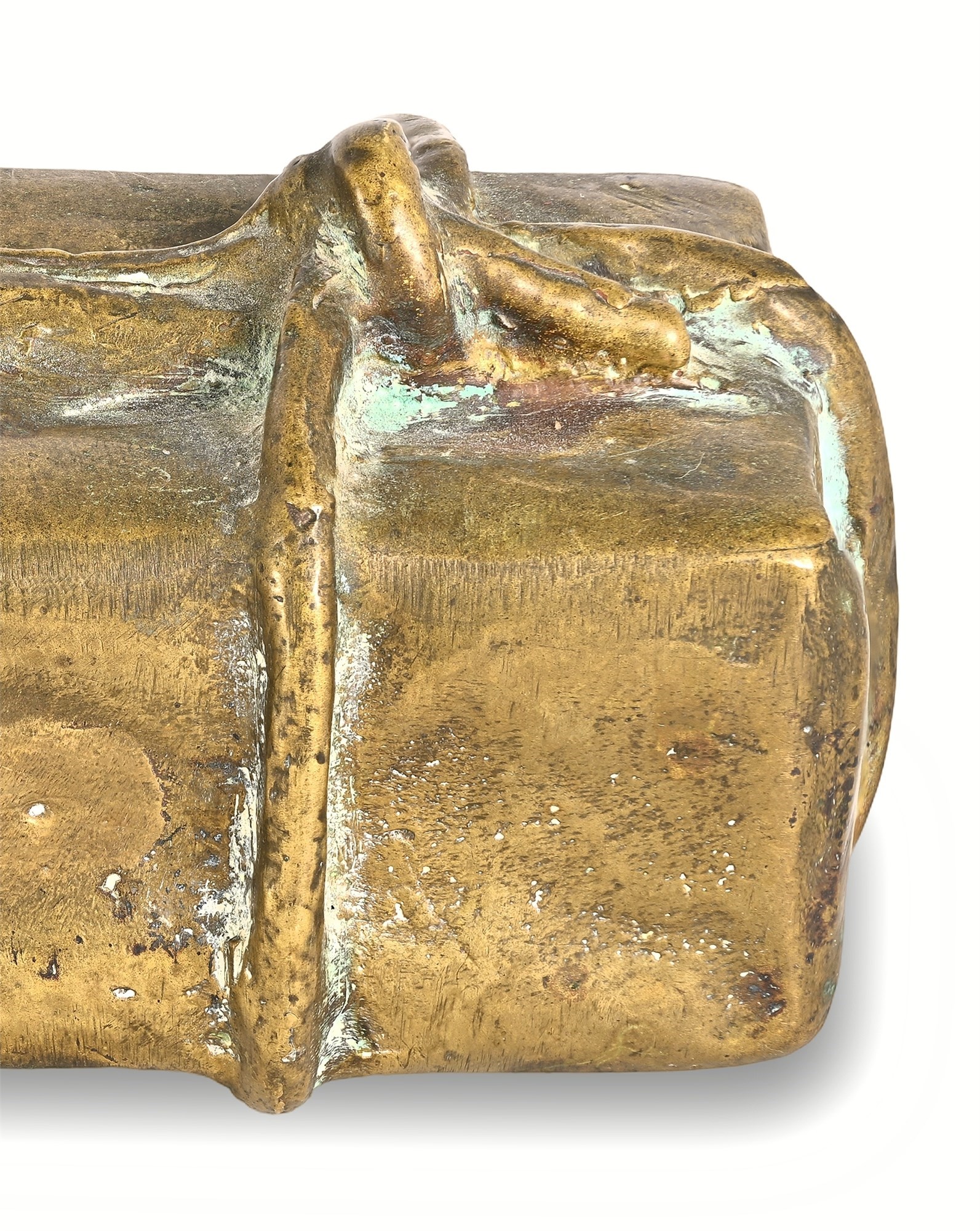
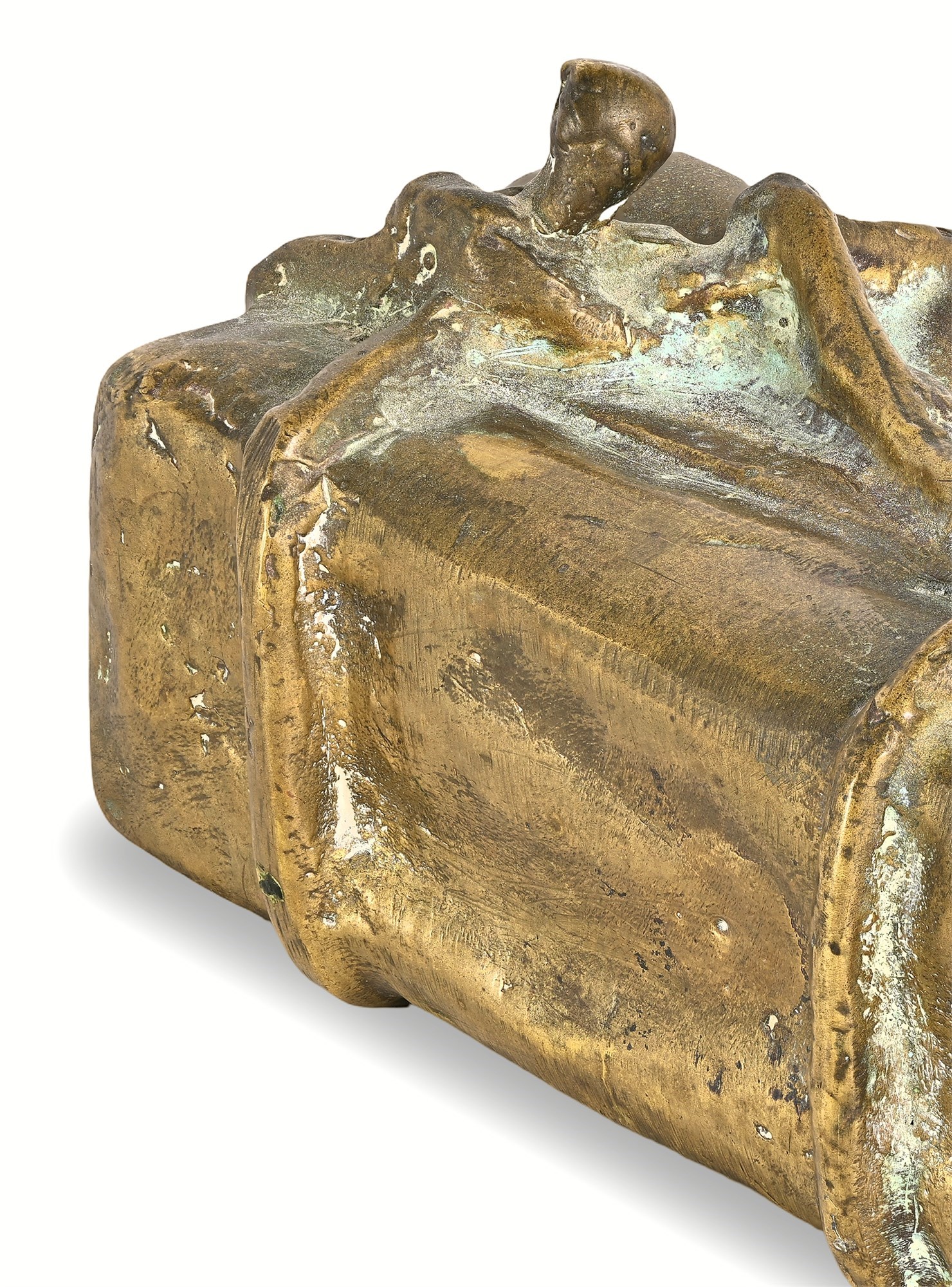
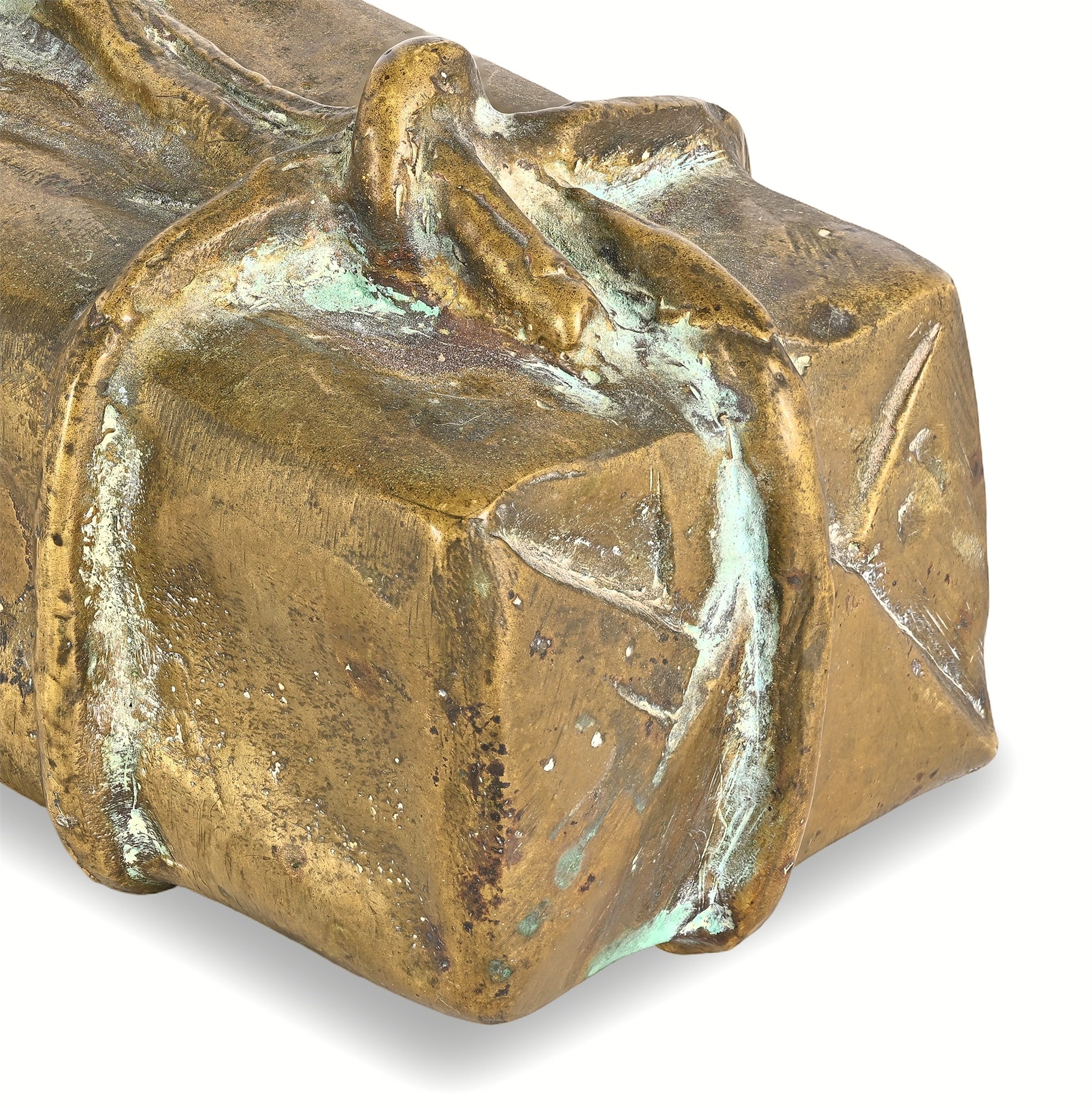
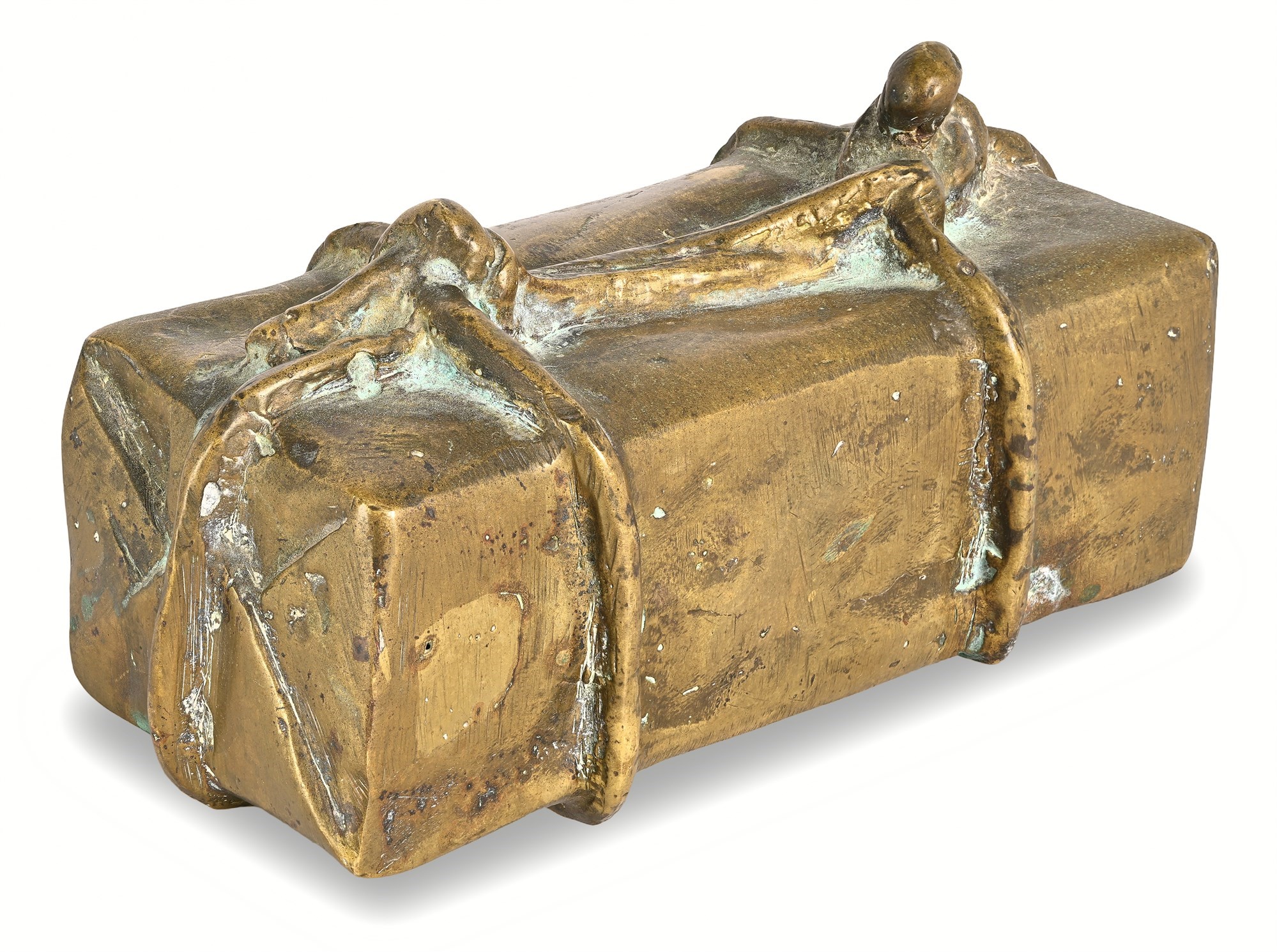
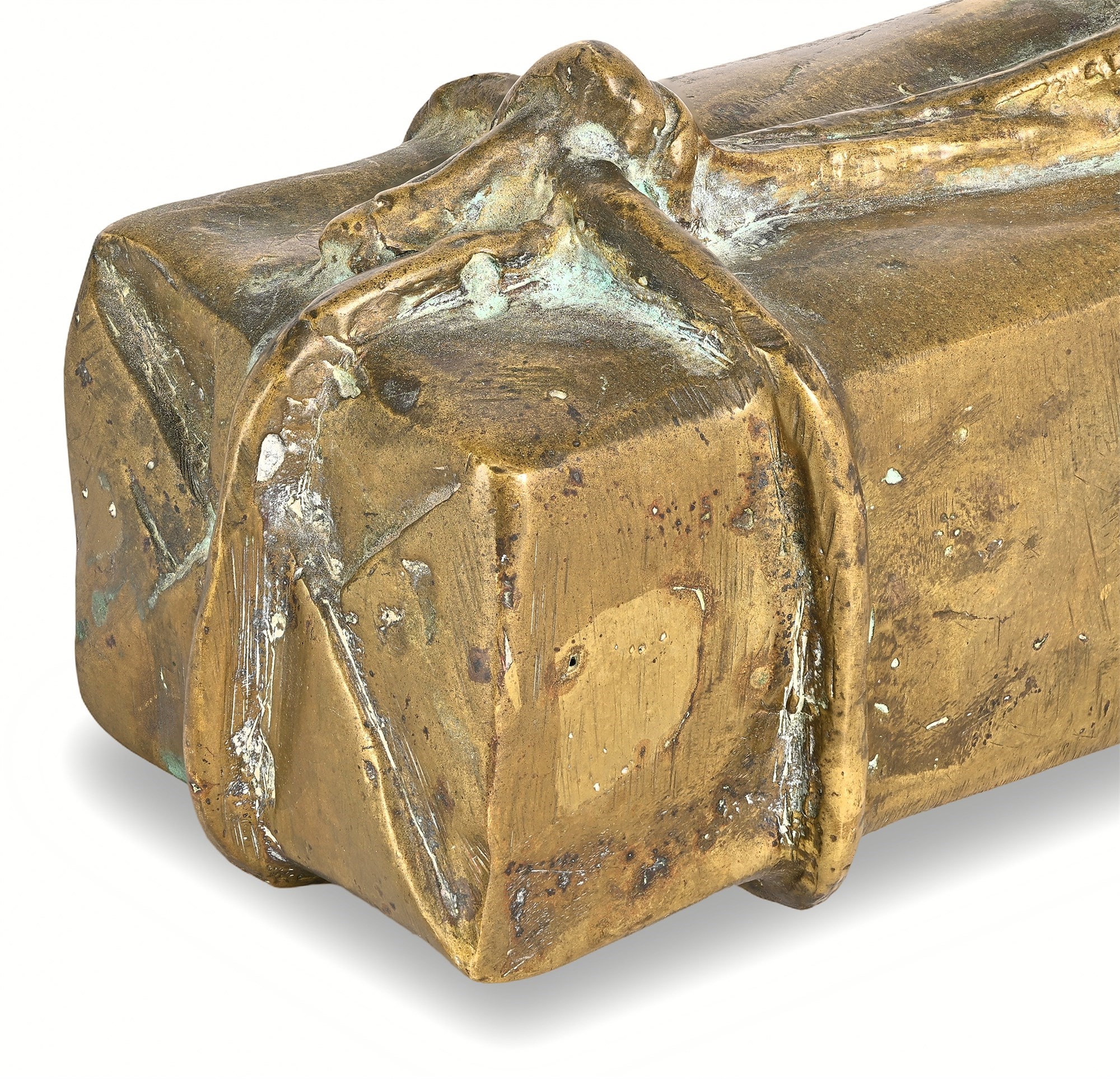
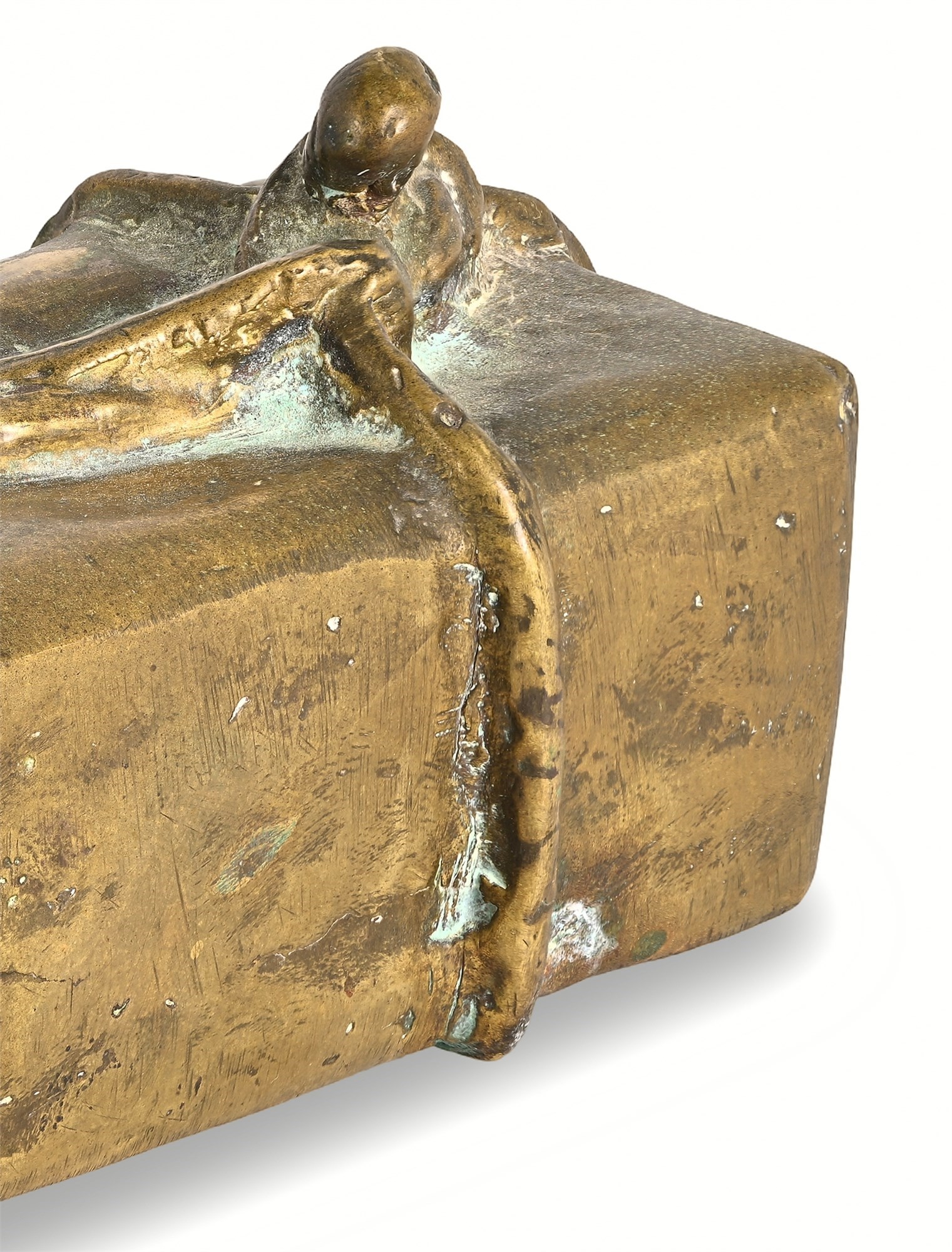
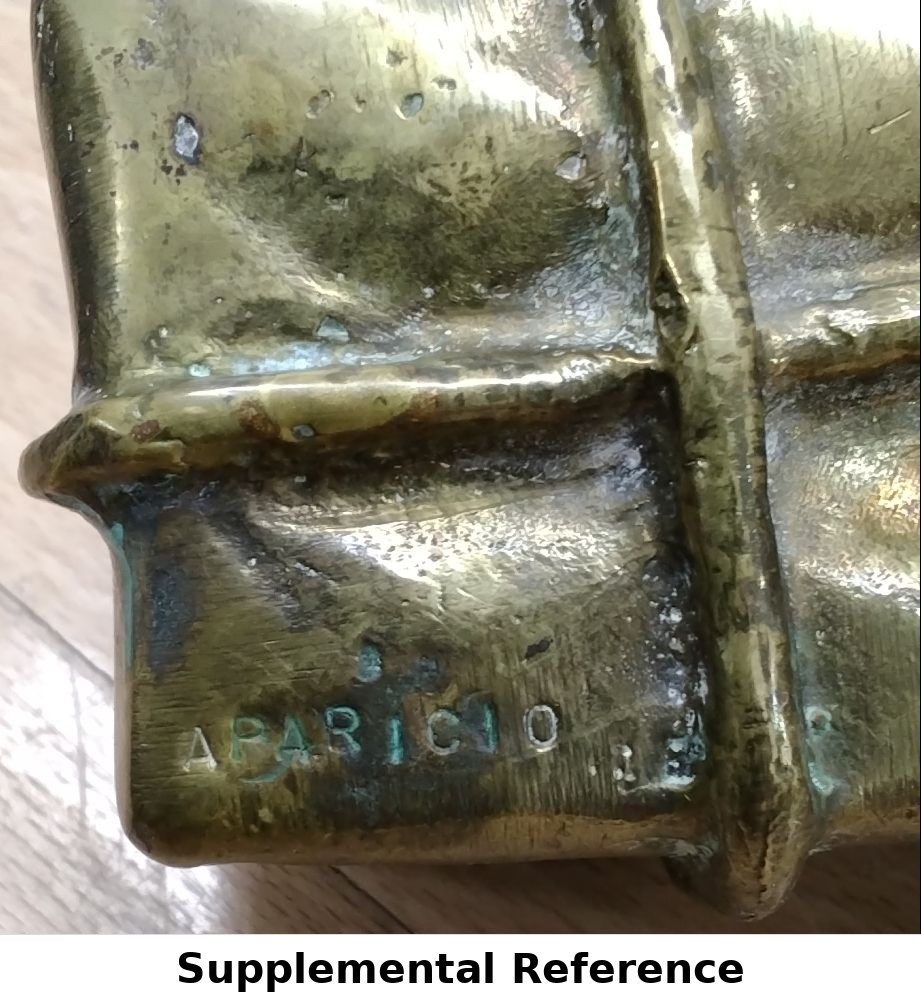
A signed cast bronze sculpture by Brazilian modernist Aparício Basílio da Silva, depicting two abstracted reclining figures emerging from a rectilinear bronze mass. The forms suggest lovers entwined — elongated limbs draped across blocky, architectural bases, heads tilted toward one another at the crown of the composition. The surface carries a rich gilt-bronze patina with verdigris pooling in the recesses, and the work is signed APARICIO in raised cast lettering along one short edge. The material is cast bronze doré — gilded bronze — consistent with da Silva's known small-scale work in this period.
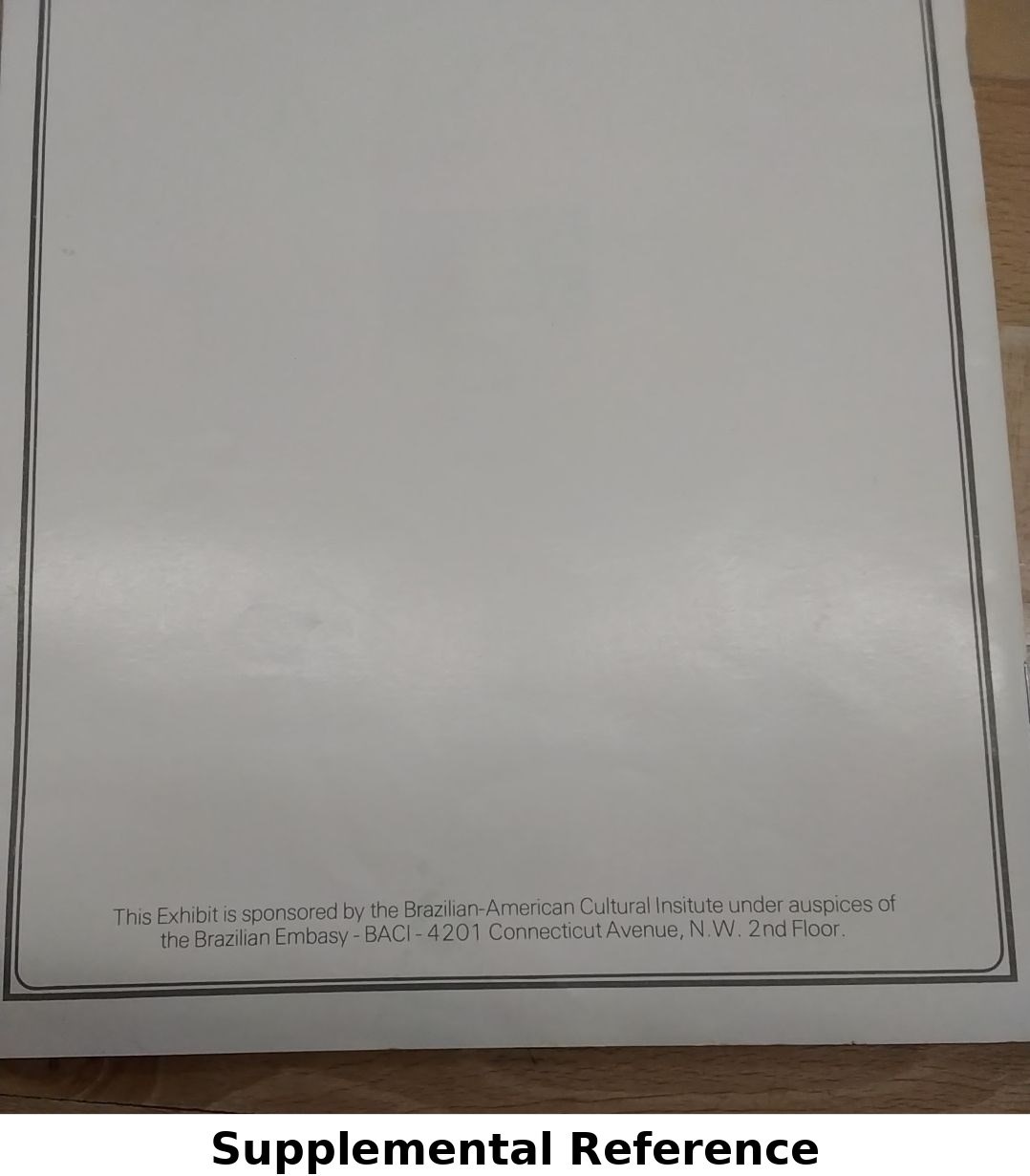
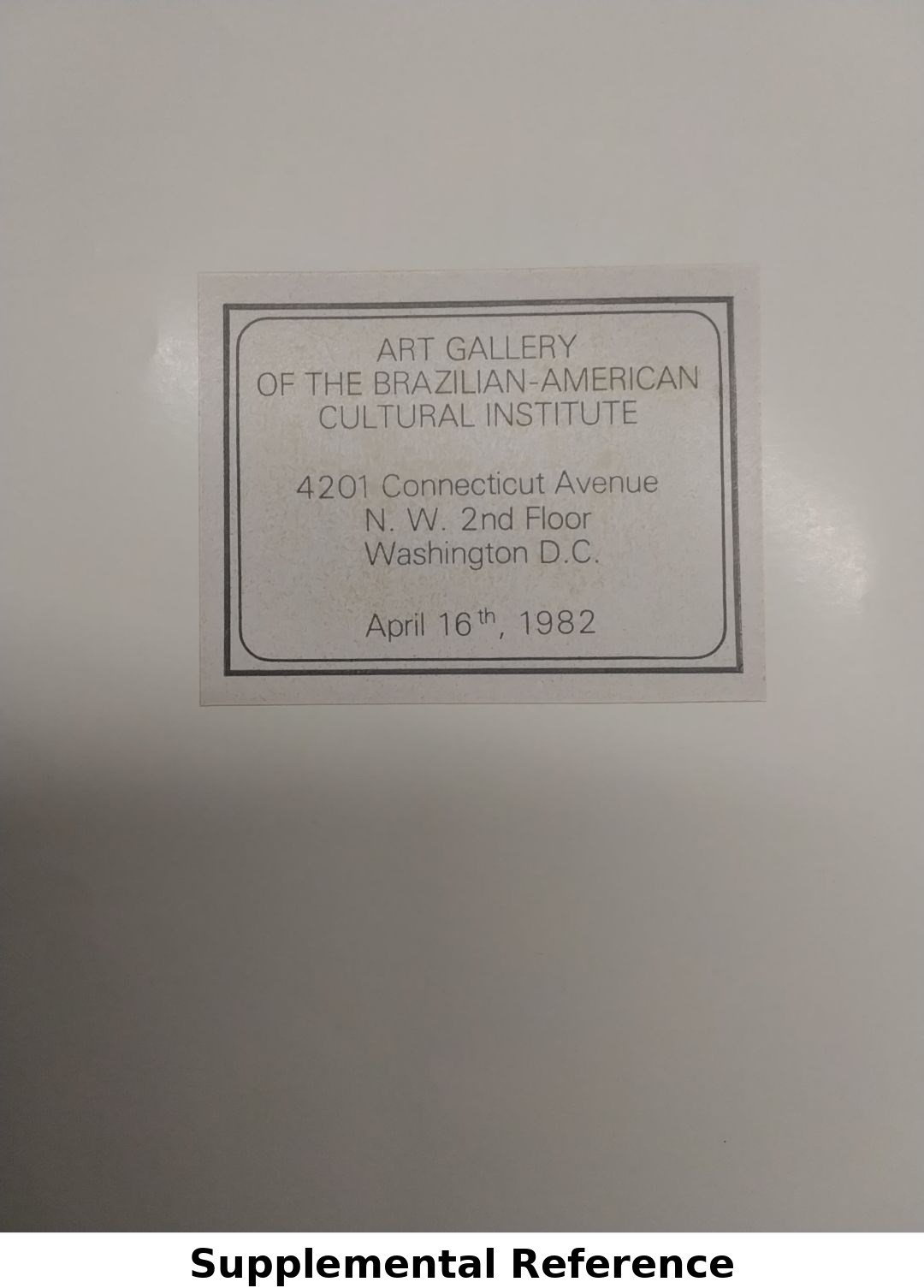
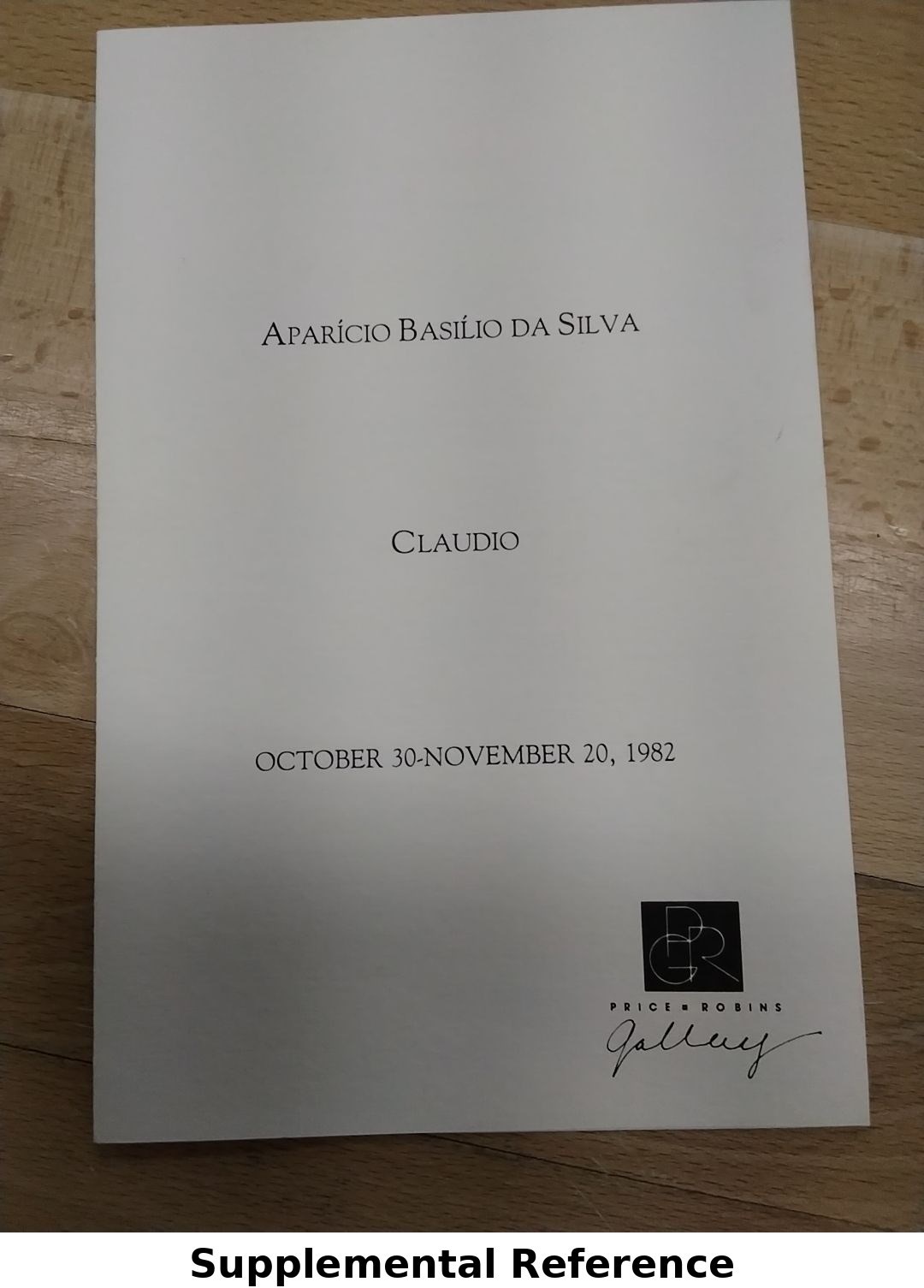
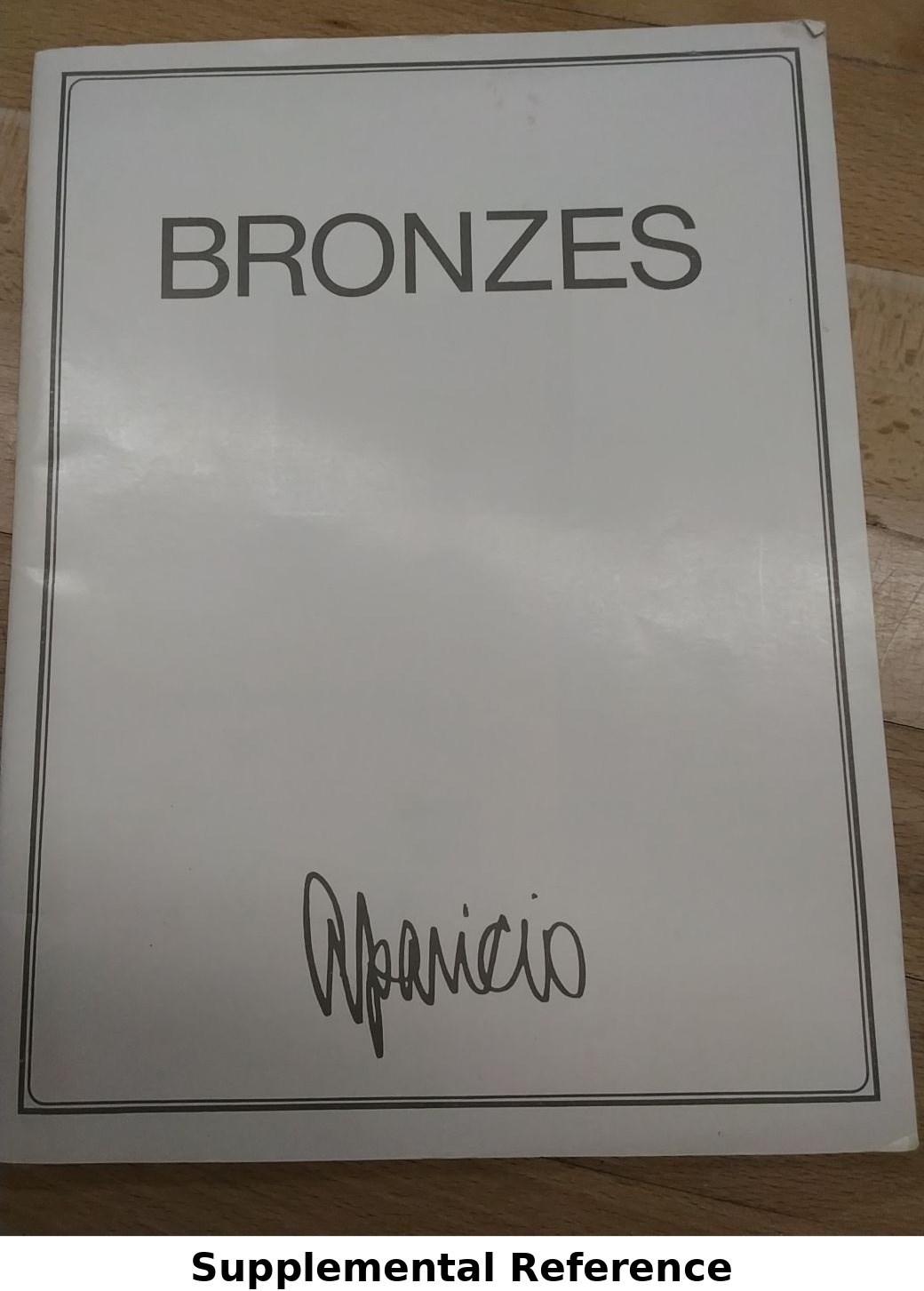
The piece travels with documentation from two 1982 Washington, D.C. exhibition events: a showing at the Art Gallery of the Brazilian-American Cultural Institute (BACI), operating under the auspices of the Brazilian Embassy at 4201 Connecticut Avenue NW, and a separate exhibition at Price-Robins Gallery cataloged as "Aparício Basílio da Silva — Claudio," running October 30 through November 20, 1982. The BACI catalog cover is hand-signed "Aparicio" in ink — consistent with the artist's known signature. A small bronze in every physical sense, but documented to two institutional venues in the same year.
History
Aparício Antônio Basílio da Silva (São Paulo, November 1936 – October 19, 1992) was one of the most prominent figures in São Paulo's cultural and social life across the latter half of the 20th century. A pioneer in the Brazilian perfume industry — founding the Rastro fragrance brand in 1965 — he was equally active as a visual artist, gallerist, and collector. He served as president of the Museu de Arte Moderna de São Paulo (MAM-SP) for nine years, placing him at the center of Brazil's institutional art world during a period of significant modernist expansion. His small-scale cast bronze work — intimate in dimension, conceptually grounded in the European post-war figurative tradition filtered through a distinctly Brazilian sensibility — reflects a sculptor who understood the figure not as anatomy but as psychological event. The rectilinear mass as base, with fluid human forms emerging from it, is characteristic of this mode: geometry as ground, flesh as event. Da Silva was killed in October 1992; his legacy is commemorated by the Troféu Aparício Basílio da Silva and the Praça Aparício Basílio.
Provenance
- Exhibited: Art Gallery of the Brazilian-American Cultural Institute (BACI), 4201 Connecticut Avenue NW, Washington, D.C., April 16, 1982
- Exhibited: Price-Robins Gallery, Washington, D.C. — "Aparício Basílio da Silva: Claudio," October 30–November 20, 1982
- BACI exhibition catalog hand-signed by the artist ("Aparicio") in ink on the cover
- Both original exhibition documents accompany the lot
Authenticity
Signed APARICIO in raised cast lettering on the lower edge of the sculpture. The BACI exhibition catalog additionally bears the artist's ink signature on the cover. Two independent period documents — one institutional, one commercial gallery — corroborate the attribution.
CONDITION
Good with no damage noted. Patina is original and undisturbed, with characteristic verdigris development pooling in the recesses and a warm gilt tone across the raised surfaces. Light handling wear consistent with age.
DIMENSIONS / SPECIFICATIONS
- Overall: 2.5" H × 5" W × 2.5" D
- Weight: 1 lb 4.3 oz
- Material: Cast bronze doré (gilded bronze)
- Origin: Brazil
- Signature: APARICIO (raised cast lettering, lower edge)
- Artist: Aparício Antônio Basílio da Silva (Brazilian, 1936–1992)
- Includes: Original BACI exhibition catalog (April 16, 1982), hand-signed by artist; Price-Robins Gallery exhibition catalog "Claudio" (October 30–November 20, 1982)