19th Century Antique Greek Peloponnese Olive Oil Jar — Glazed Terracotta Pithari View Watchlist >
Seller Accepts Credit Cards
Payment and pickup instructions will be available on your invoice (under "My Account") at the conclusion of this auction.
Lot # F525
System ID # 29252089
Start Date
End Date
9 Watching
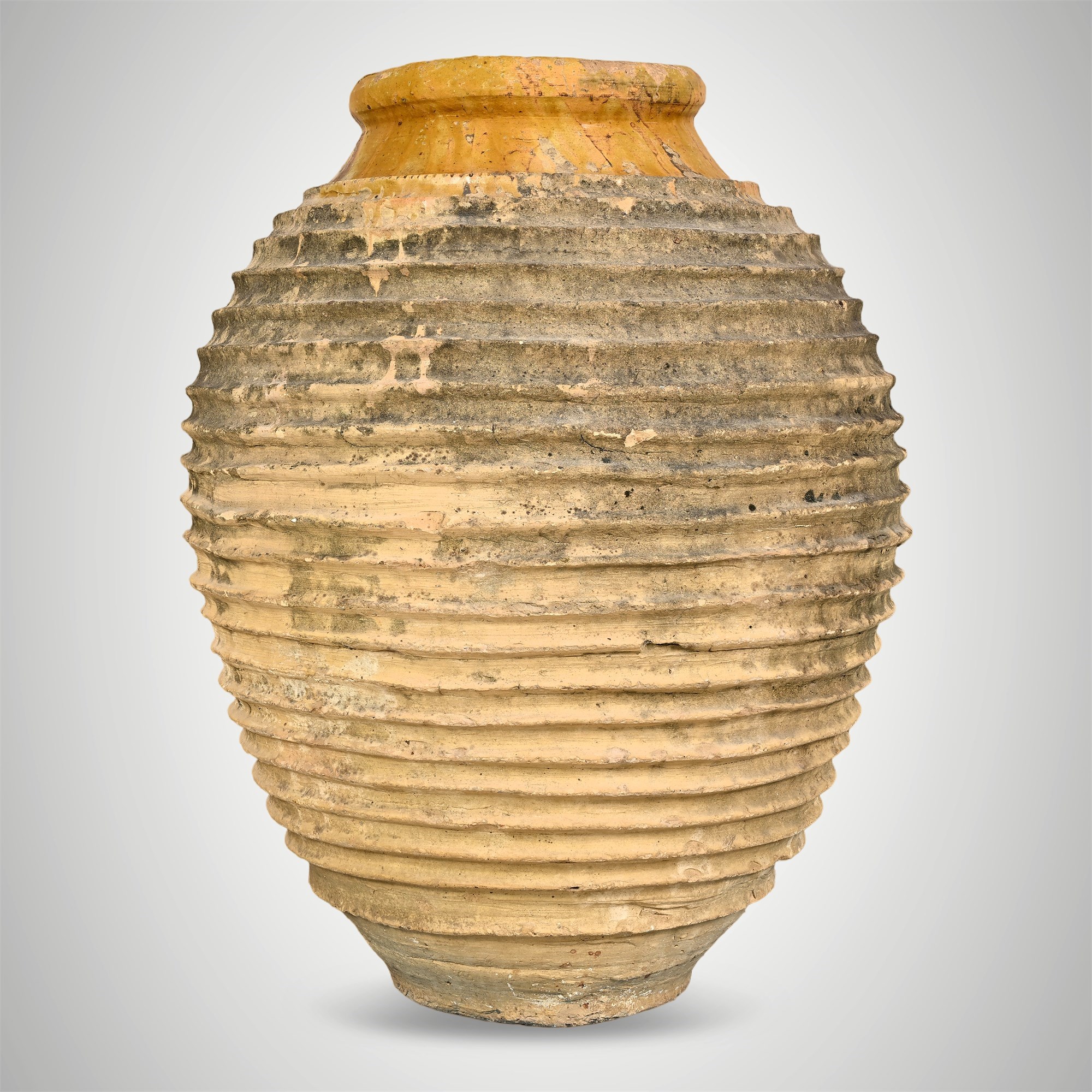
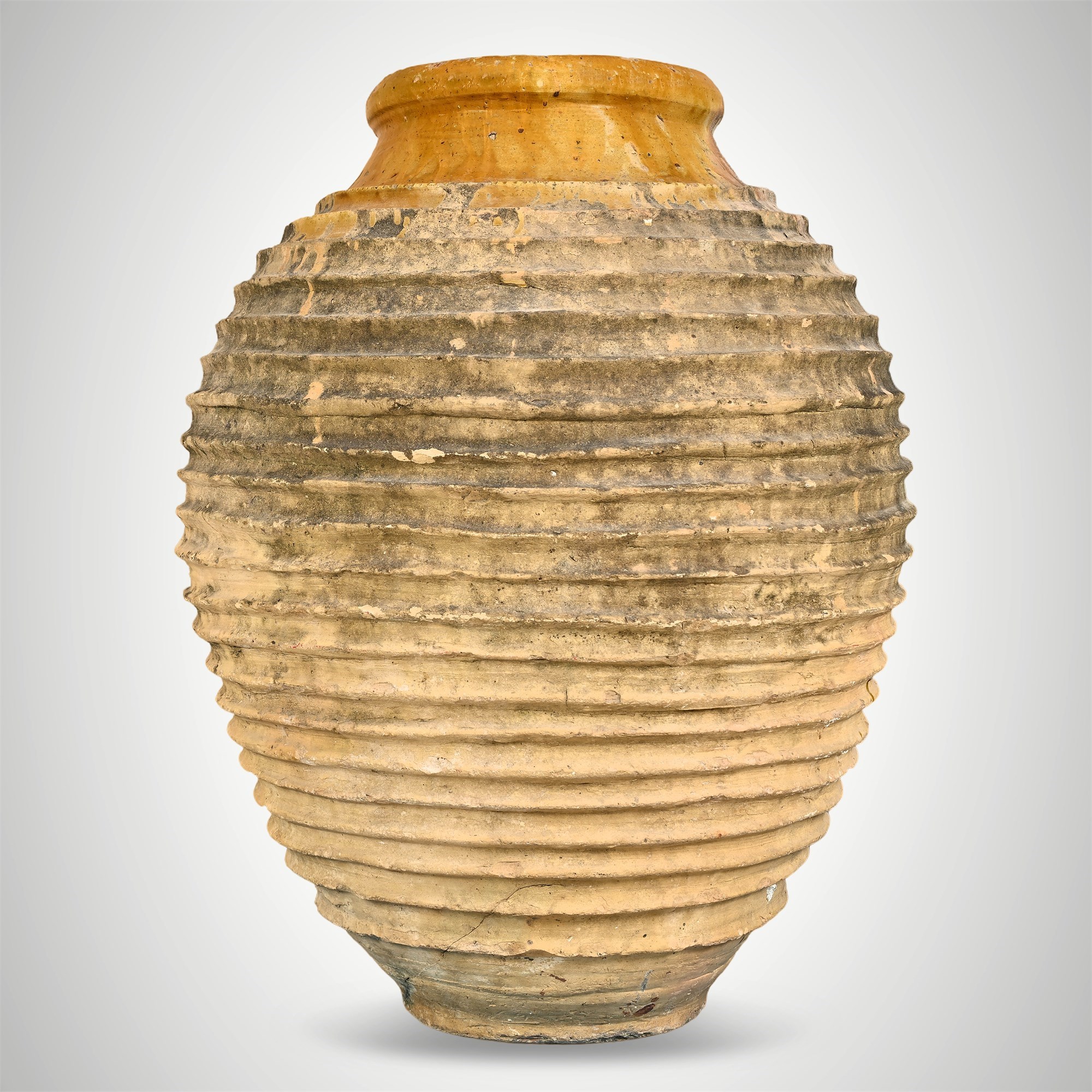
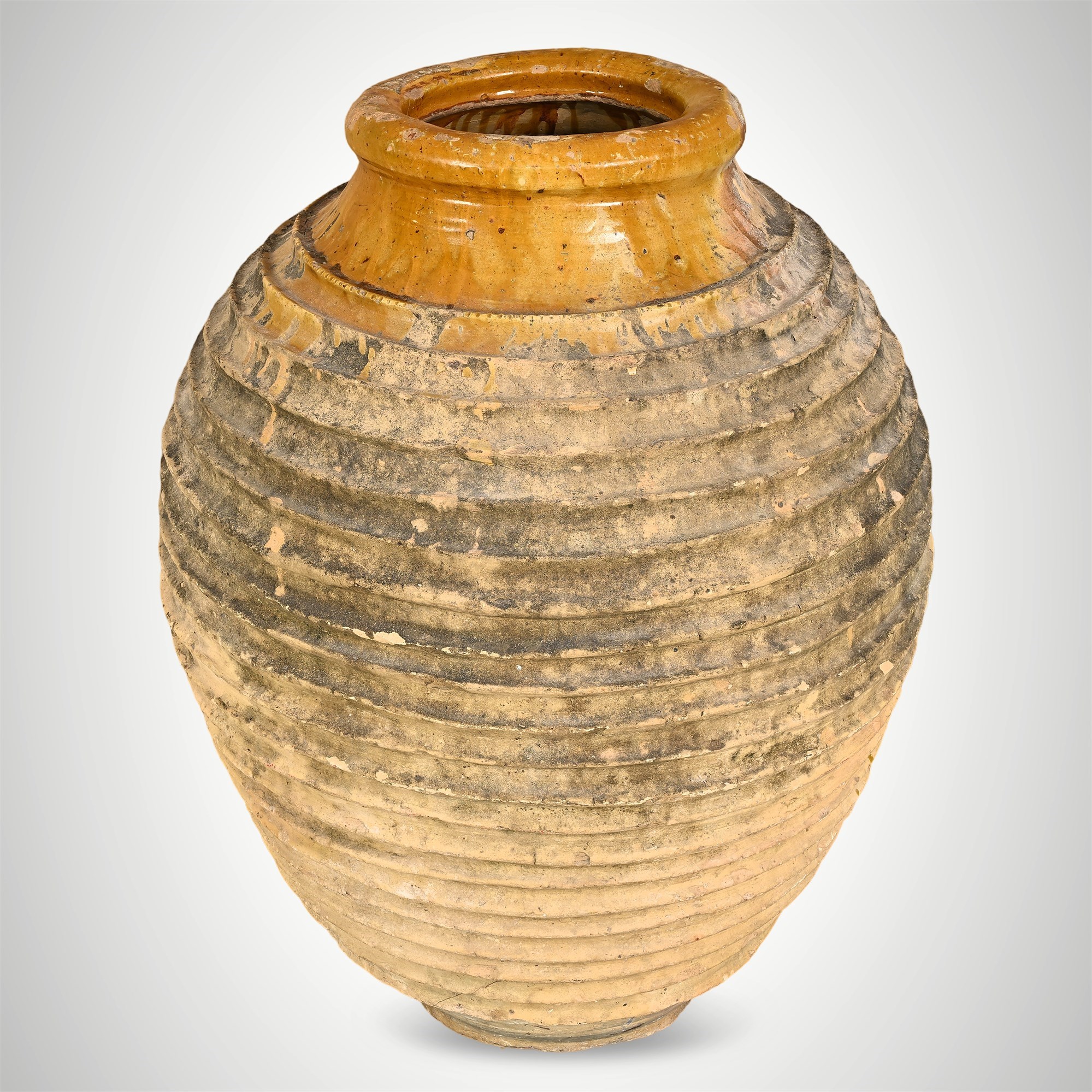
19th Century Antique Greek Peloponnese Olive Oil Jar — Glazed Terracotta Pithari
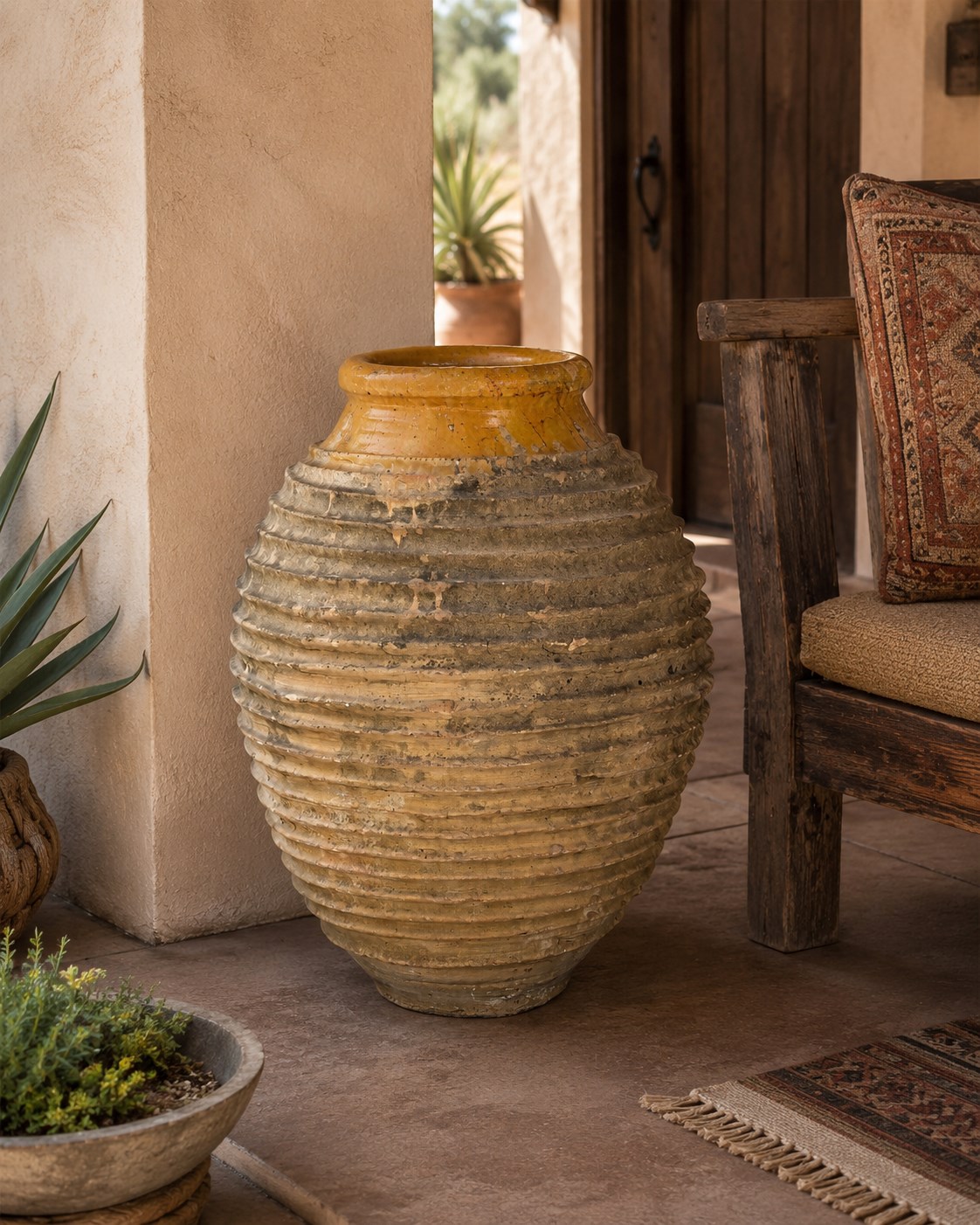
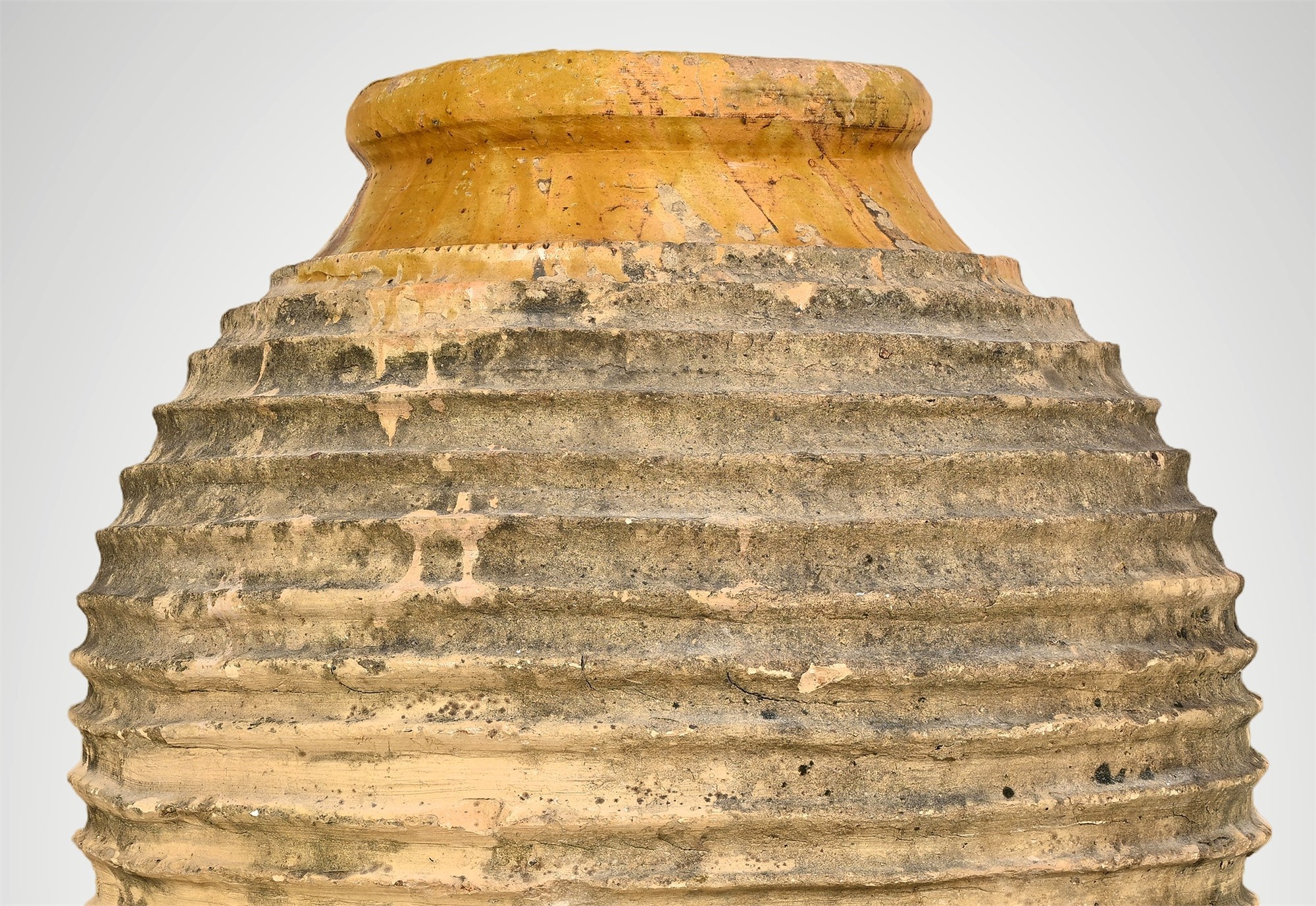
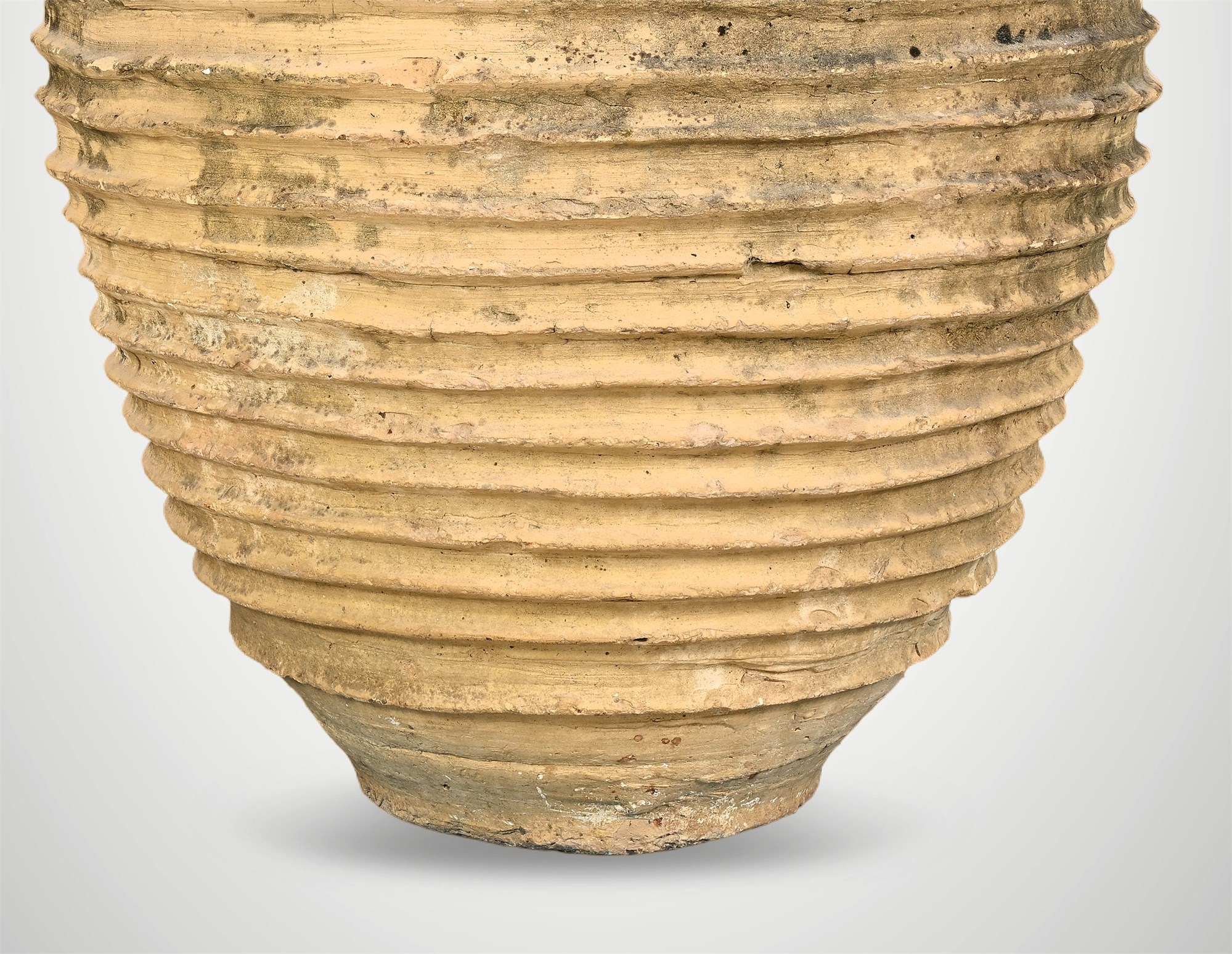
A substantial 19th-century Greek pithari from the Peloponnese, hand-built in the centuries-old tradition of Mediterranean olive oil storage. The ovoid body rises through tightly spaced horizontal ribs — a functional signature of the form, reinforcing the walls against the weight of their contents and giving rope and hand a sure grip when the jars were moved, tipped, or buried to the shoulder in cool earthen floors. The collar and rolled rim carry a rich amber lead glaze that pools and drips into the upper ribs, while the body below remains unglazed buff terracotta, weathered to a soft cream-and-charcoal patina from generations of use and storage.
For three thousand years the Peloponnese has been olive country, and the pithari was the vessel that held the harvest. Each jar was thrown and coiled by hand in regional workshops — Koroni, Messenia, and the villages of the Mani peninsula were known centers — then partially glazed at the neck to seal the pour zone while leaving the porous body to breathe and cool the oil within. At 31 inches and roughly 90 pounds empty, this is a working-scale jar, not a decorative miniature. The accumulated grime in the ribs, the glaze drips frozen mid-run, the soft chips along the foot — all of it is the record of a vessel that did its job for a hundred years or more before crossing the Atlantic.
History
The Greek pithari descends in unbroken lineage from the Minoan pithoi of Bronze Age Crete — the same ovoid form, the same ribbed reinforcement, the same buried-to-the-shoulder storage method documented at Knossos and Phaistos. By the 19th century, production had settled into regional vernacular traditions across the Peloponnese, with workshops supplying olive growers, monasteries, and merchant houses throughout the Aegean and the diaspora. The amber-glazed collar over an unglazed body is the standard treatment of the period: practical, regional, and immediately recognizable to anyone who has handled the type.
Provenance
From an estate collection of fine antiquities in Las Cruces, New Mexico.
CONDITION
Good overall with minor chips and imperfections throughout consistent with age and working use. Glaze loss and crazing to the amber neck; surface accretions and patina across the ribbed body; small losses along the foot and rib edges. Structurally sound and stable.
DIMENSIONS / SPECIFICATIONS
- Height: 31"
- Diameter: 23"
- Weight: Approx. 90 lbs
- Material: Glazed and unglazed terracotta
- Origin: Peloponnese, Greece
- Period: 19th century
- Markings: Unmarked