Central European Folk Art Polychrome Storage Armchair, Box Chair, c. 1900 View Watchlist >
Seller Accepts Credit Cards
Payment and pickup instructions will be available on your invoice (under "My Account") at the conclusion of this auction.
Lot # F827
System ID # 29539228
Start Date
End Date
1 Watching
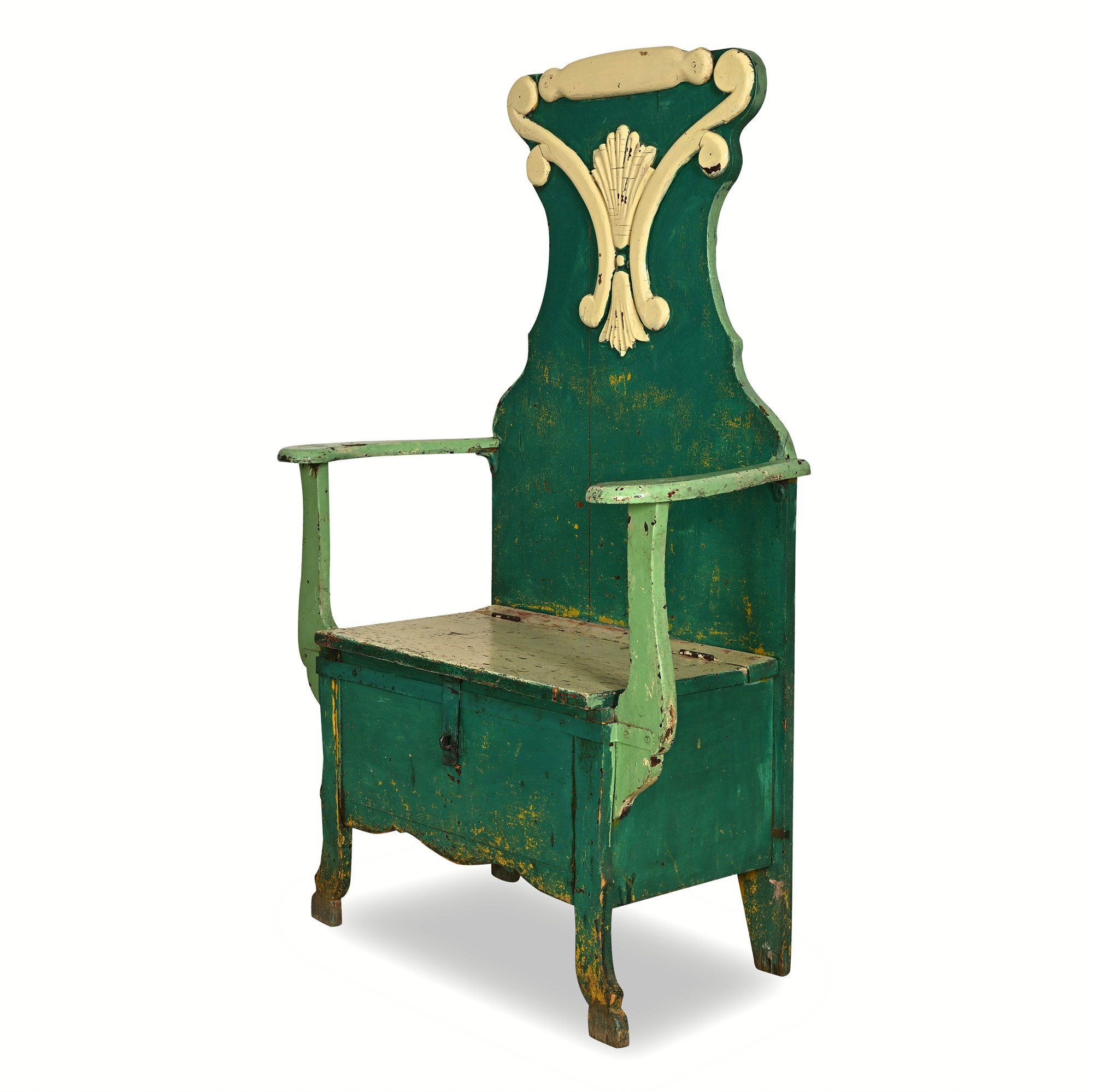
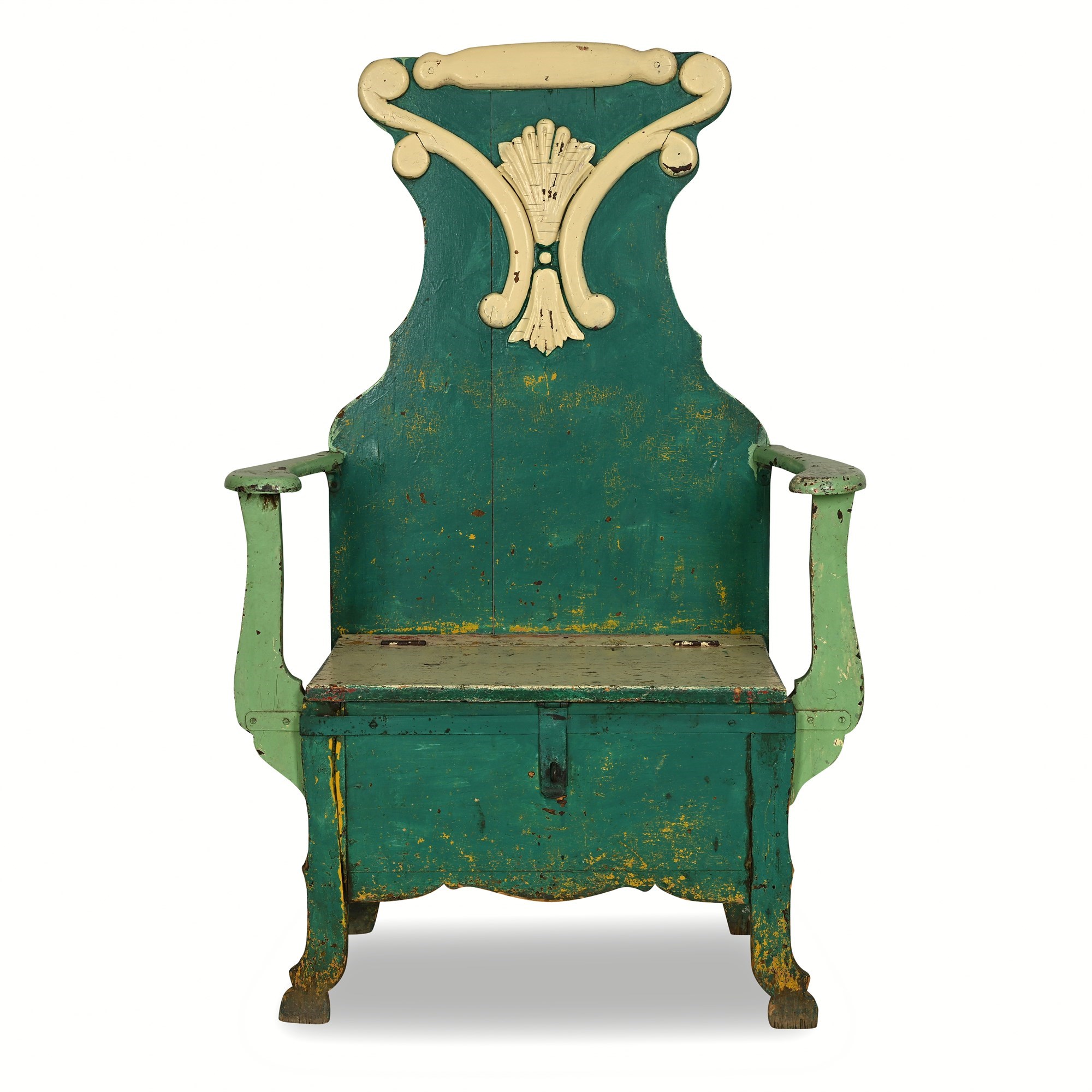
Central European Folk Art Polychrome Storage Armchair, Box Chair, c. 1900
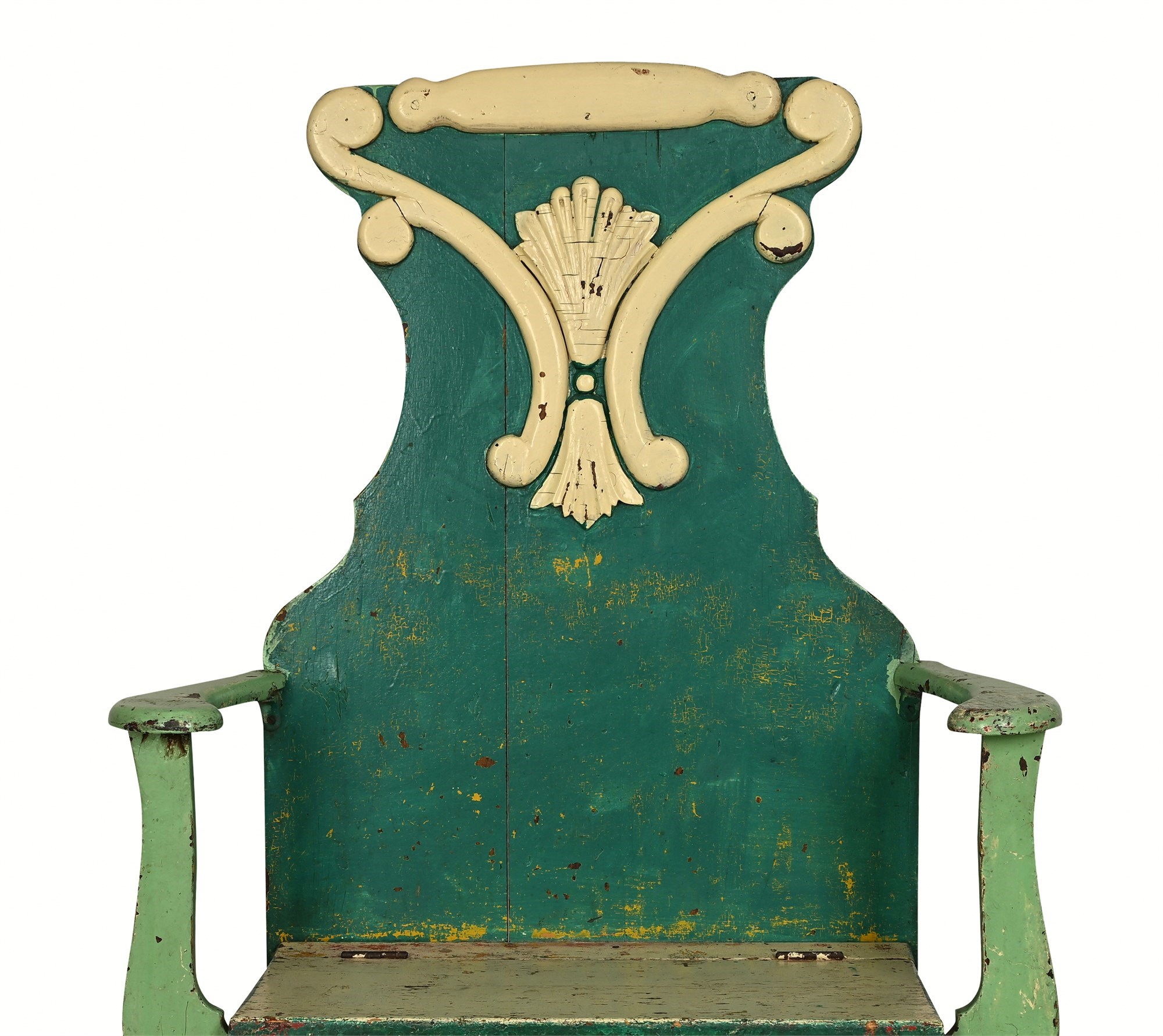
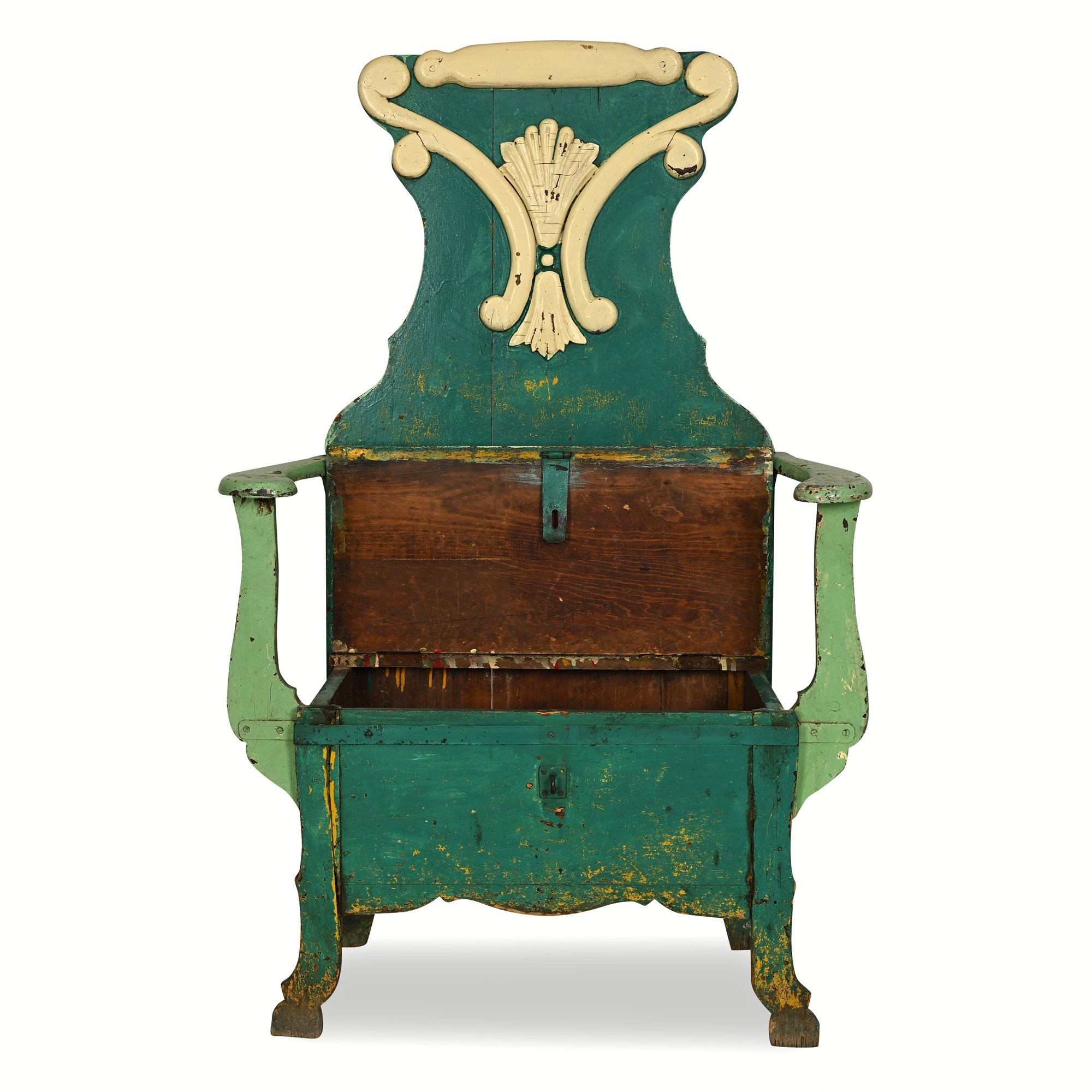
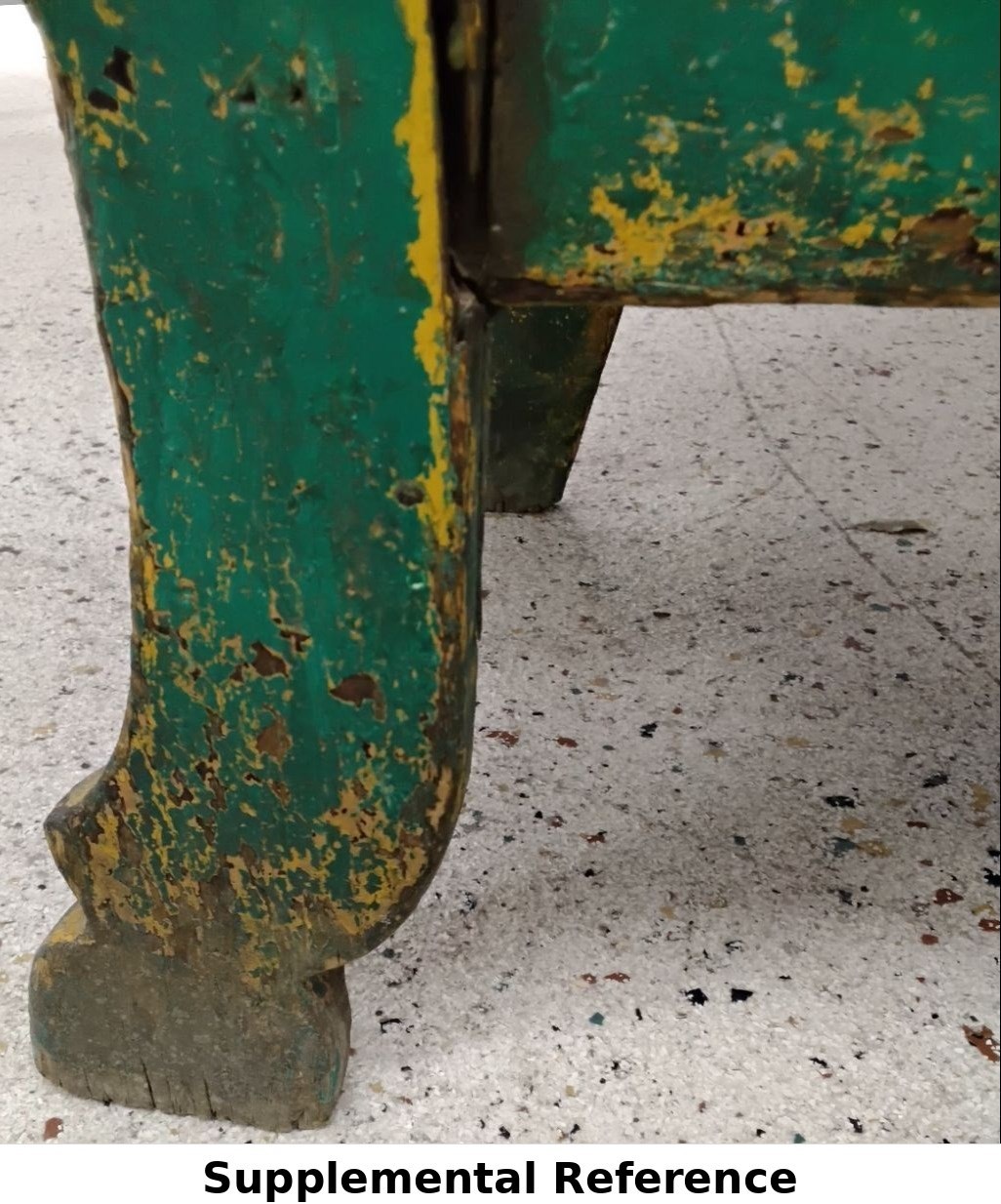
There is a chair in this world that looks like it was built for a village elder to dispense judgment from — nearly four and a half feet of throne-backed, teal-painted authority, with a carved cream-ivory splat of scrolling volutes and a wheat-sheaf motif crowning the whole composition. This is that chair. The form is a Central European box chair — a high-backed armchair built around an integral storage chest, common to Alpine and Scandinavian farmhouse interiors and made by hand in regional vernacular traditions that treated furniture as both tool and declaration. Solid softwood construction, shaped with real craft: the backboard waists dramatically at center before flaring wide at the crest, cabriole-style front legs end in pad feet, and the whole silhouette reads as graphic and commanding from across a room. Two shades of green ride over a buried yellow undercoat, the paint loss revealing that stratigraphy everywhere — this surface was earned over a long working life, not manufactured.
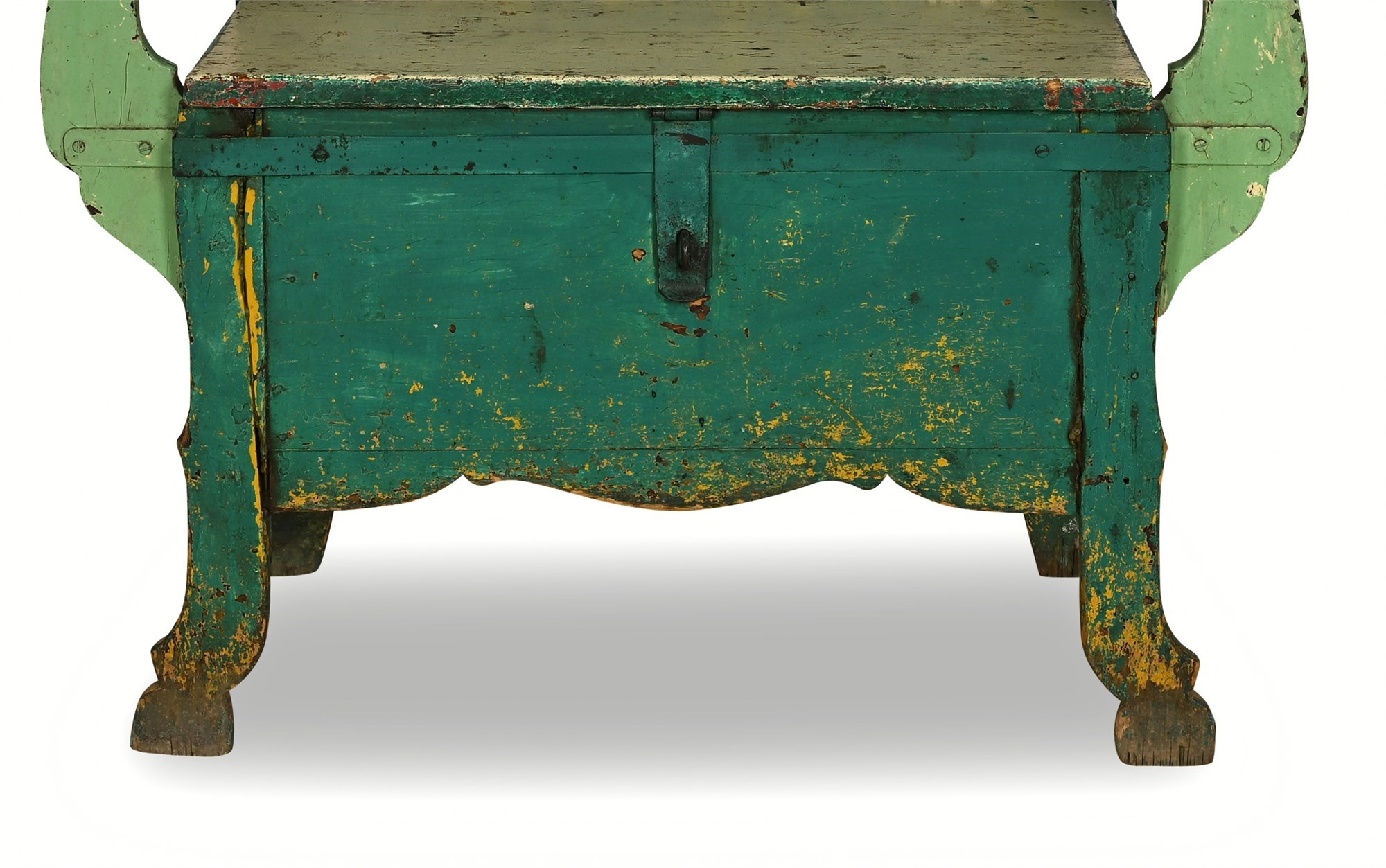
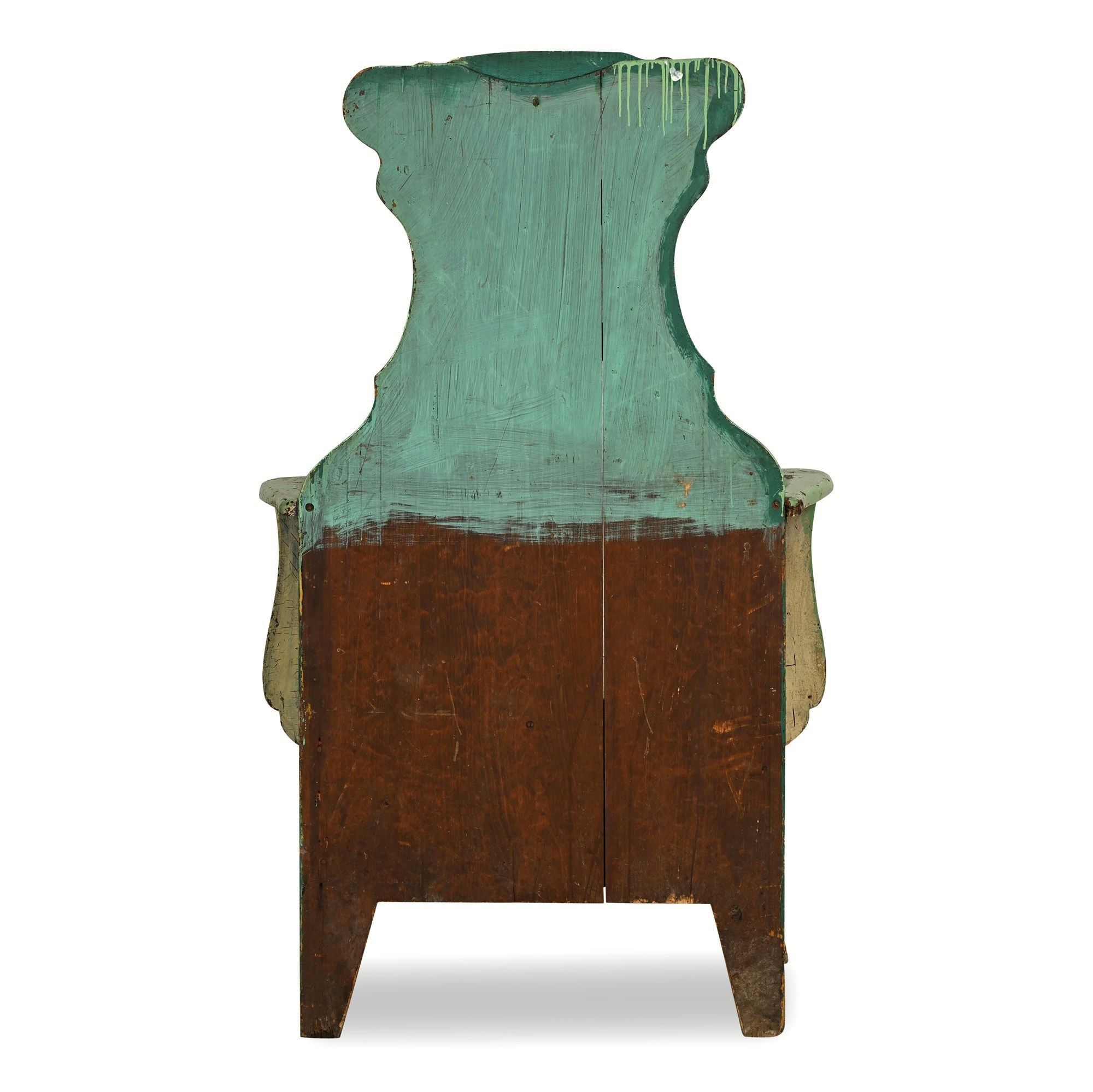
Storage runs two levels deep: a lift-seat compartment opens to an unfinished pine interior worn smooth by decades of use, and a separate lower cabinet beneath is secured by the original iron hasp with keyhole escutcheon. The back is only partially painted — teal covers the upper splat board and stops abruptly where bare wood begins, exactly where the wall would have been. Nobody finished what nobody would see. That kind of workmanlike honesty is what separates a piece with a life from a piece with a price tag. This one had a life.
Collector's Note
The decorator and folk art market is paying a premium right now for exactly this: an unrestored polychrome surface with authentic paint stratification and no apologies. Pieces that have been stripped, refreshed, or "stabilized" trade at a consistent discount against honest survivors. The dual storage function is intact and operational, the iron hardware is original, and the silhouette photographs like a dream — which matters if you're staging it, selling it on, or placing it where everyone who walks in asks what it is. Specific national origin is consistent with Central European Alpine folk tradition — Tyrolean, Bavarian, or Swiss — though a Scandinavian origin cannot be ruled out. The applied carved splat ornament may be a later addition or replacement.
CONDITION
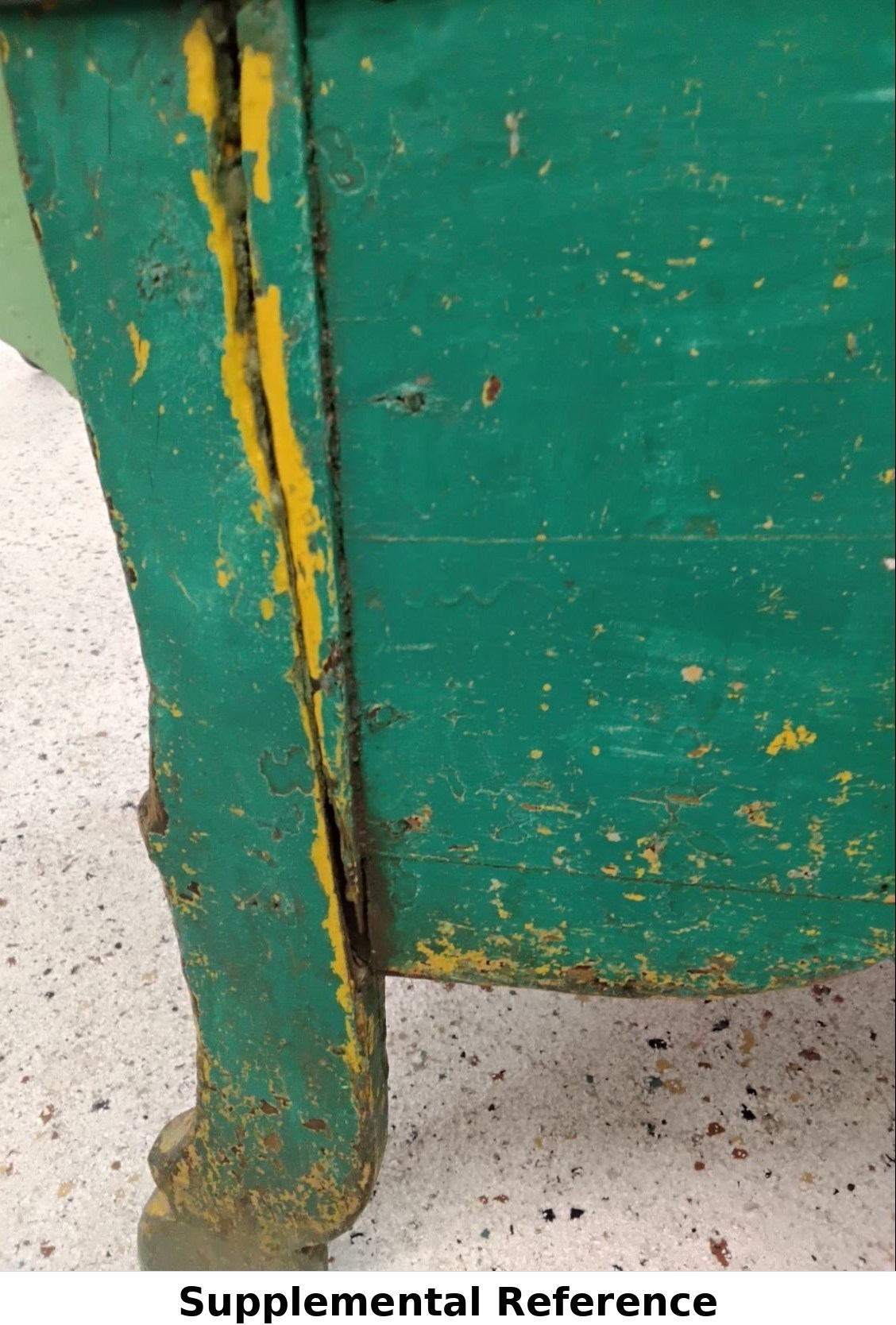
Good overall — sturdy, structurally sound, and presenting well for its age. Paint shows heavy loss throughout, with the yellow undercoat reading broadly through the teal green overcoat across the apron, legs, and lower body; this is authentic surface wear accumulated over decades, not intentional distressing. A significant open crack runs vertically along the front-left leg-to-apron joint, and a second crack is present at the corresponding rear corner — both are stable and consistent with long-term wood movement. The applied carved splat shows surface cracks and minor losses to the cream paint. Seat boards are worn and scratched; interior storage compartments are unfinished and heavily used.
DIMENSIONS / SPECIFICATIONS
- Overall: 50¾" H × 32¼" W × 15" D
- Seat: 18" H × 24" W × 13½" D
- Storage: Lift-seat compartment + lower cabinet with iron hasp and lock
- Materials: Solid softwood (pine or fir), applied carved ornament, iron hardware
- Origin: Central European folk tradition — Alpine (Tyrolean, Bavarian, or Swiss) most consistent; Scandinavian origin possible
- Period: Circa late 19th to early 20th century