George III Mahogany Chest-on-Chest, English, c. 1760–1780 View Watchlist >
Seller Accepts Credit Cards
Payment and pickup instructions will be available on your invoice (under "My Account") at the conclusion of this auction.
Lot # F1055
System ID # 29763691
Start Date
End Date
0 Watching
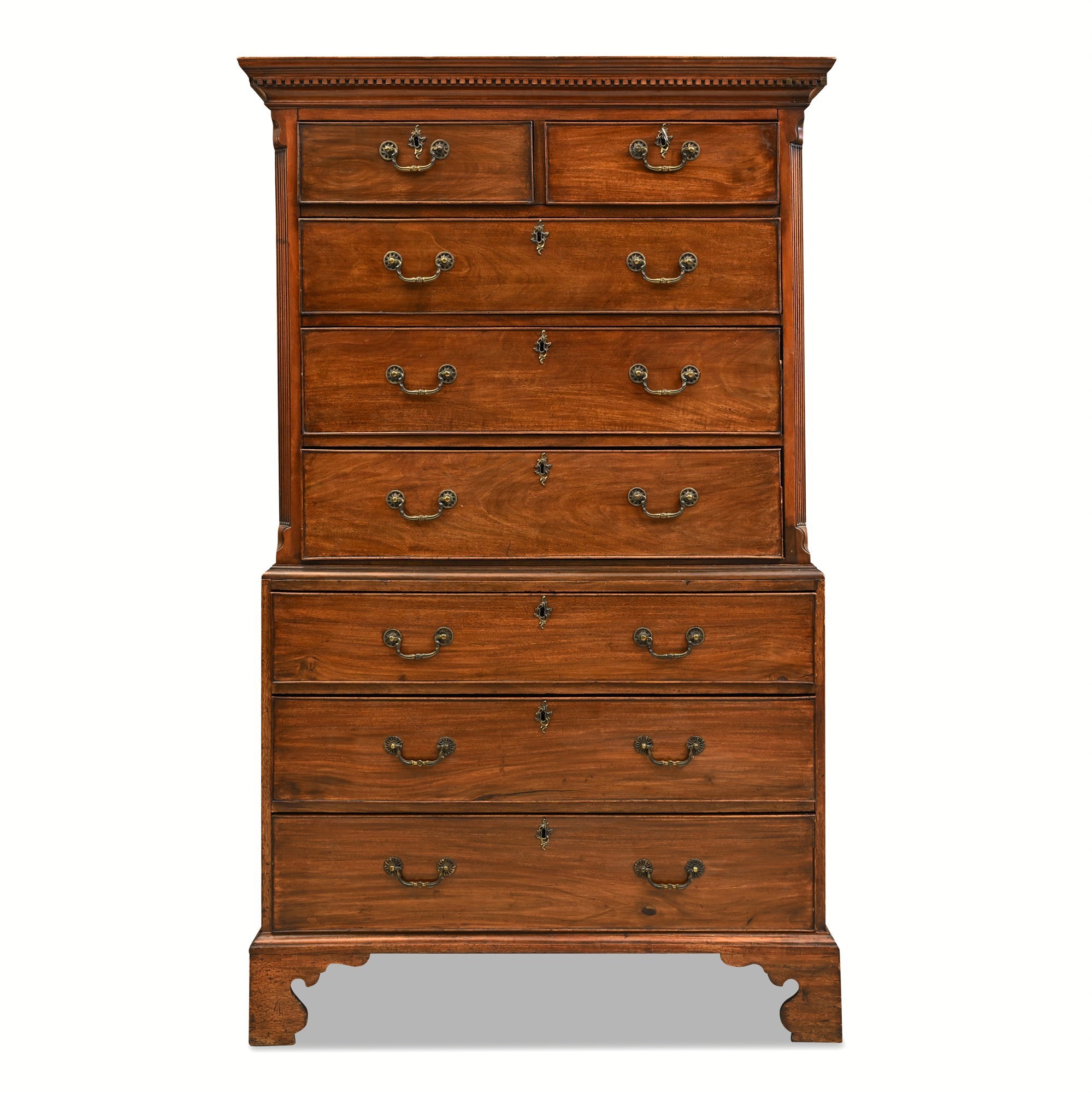
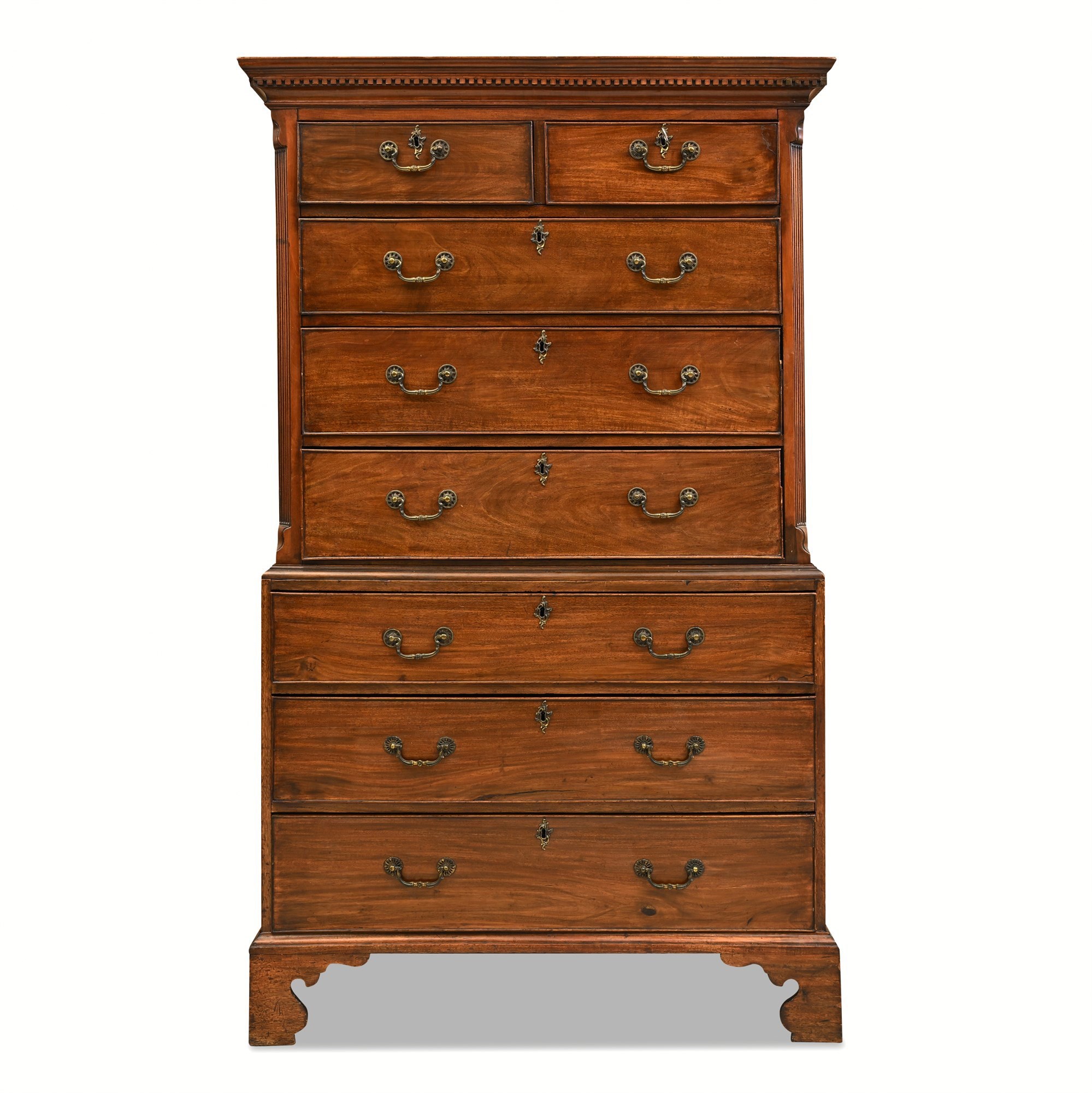
George III Mahogany Chest-on-Chest, English, c. 1760–1780
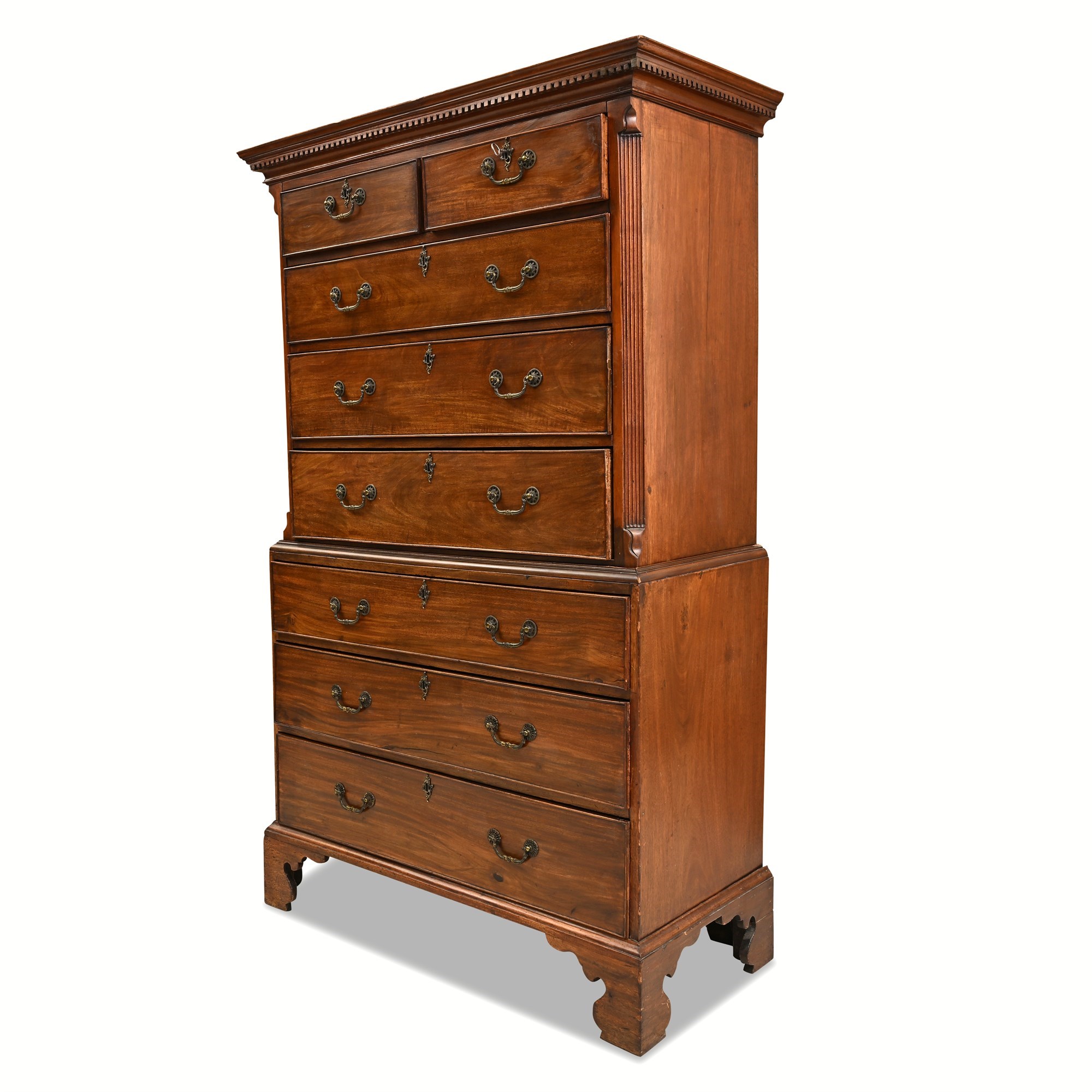
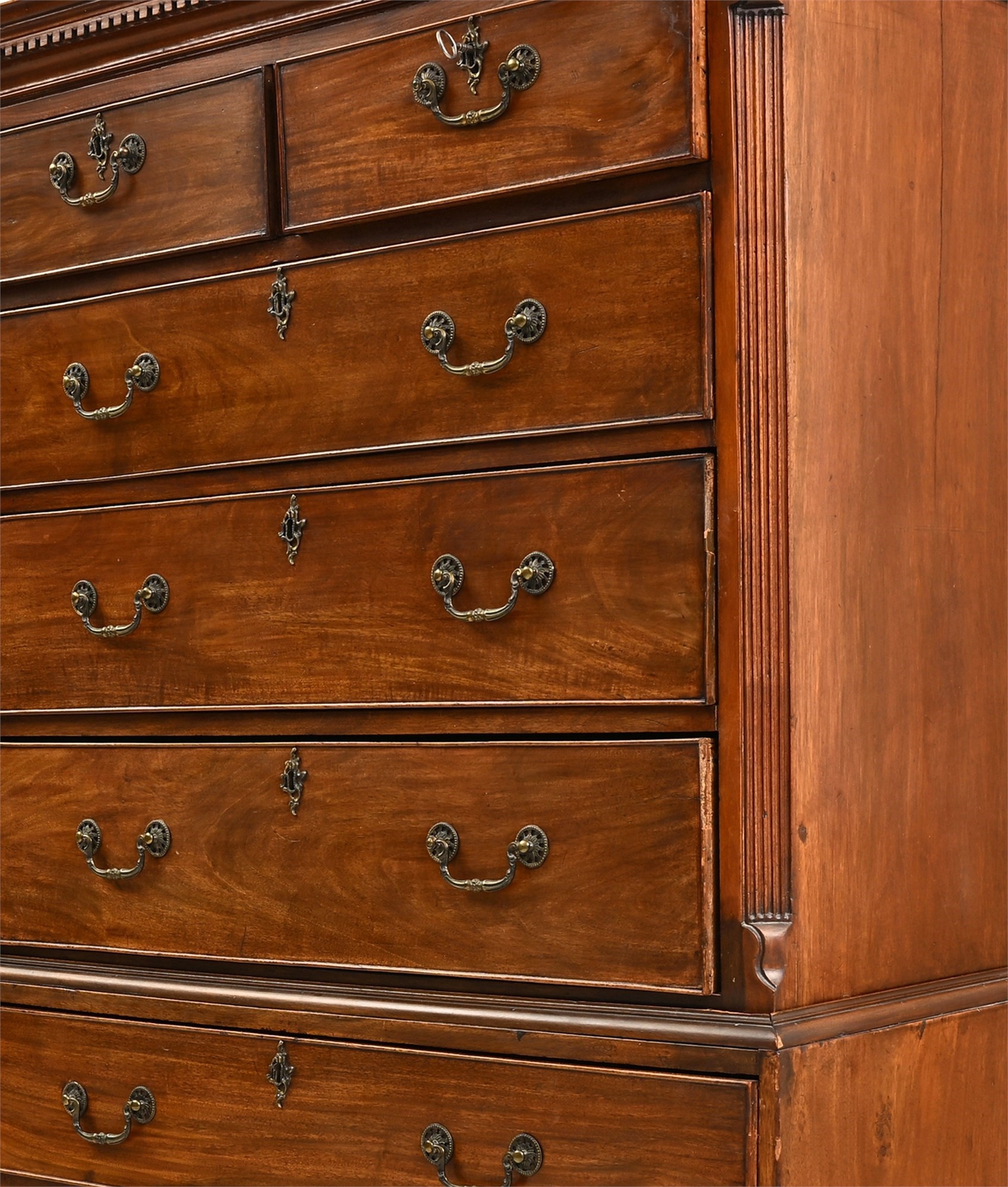
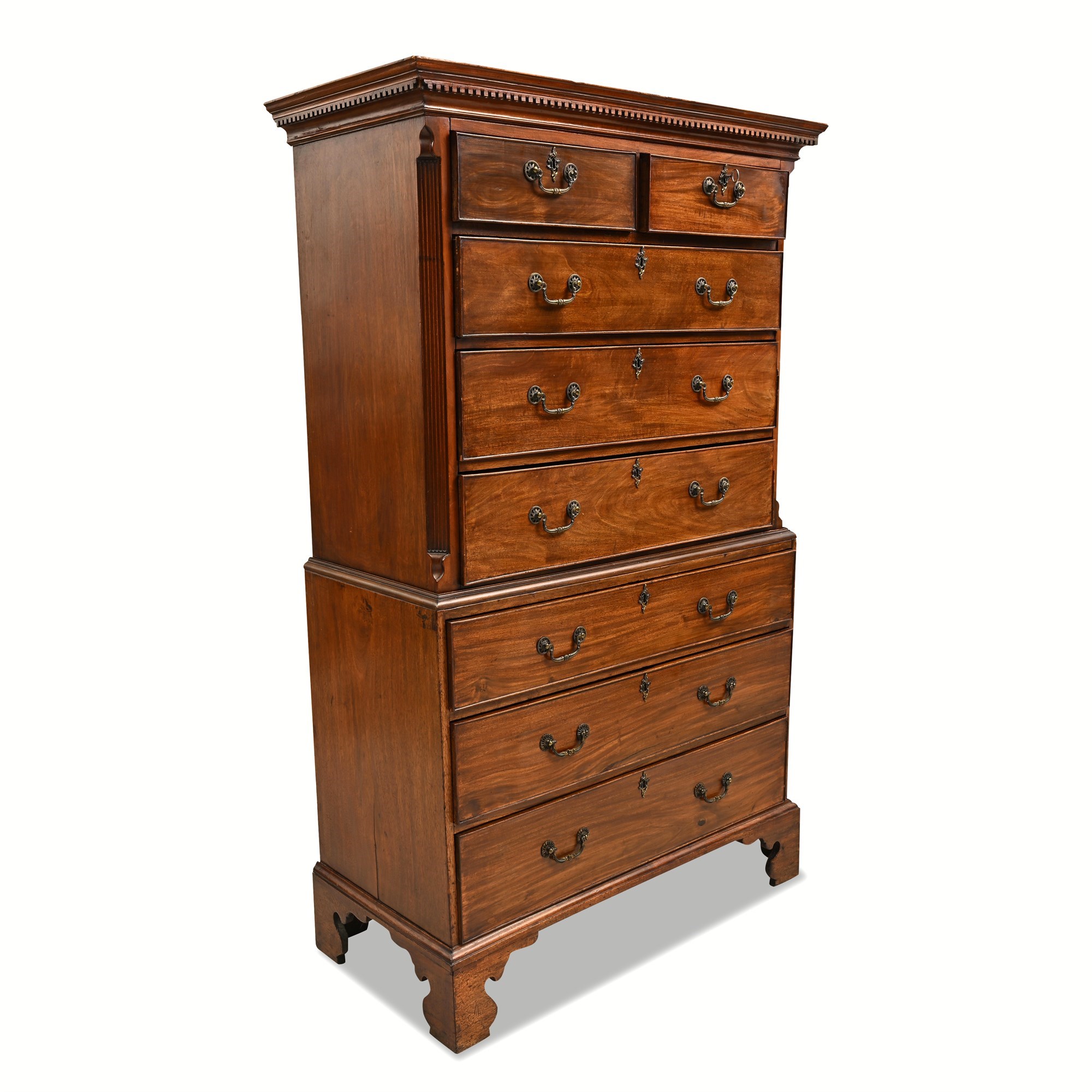
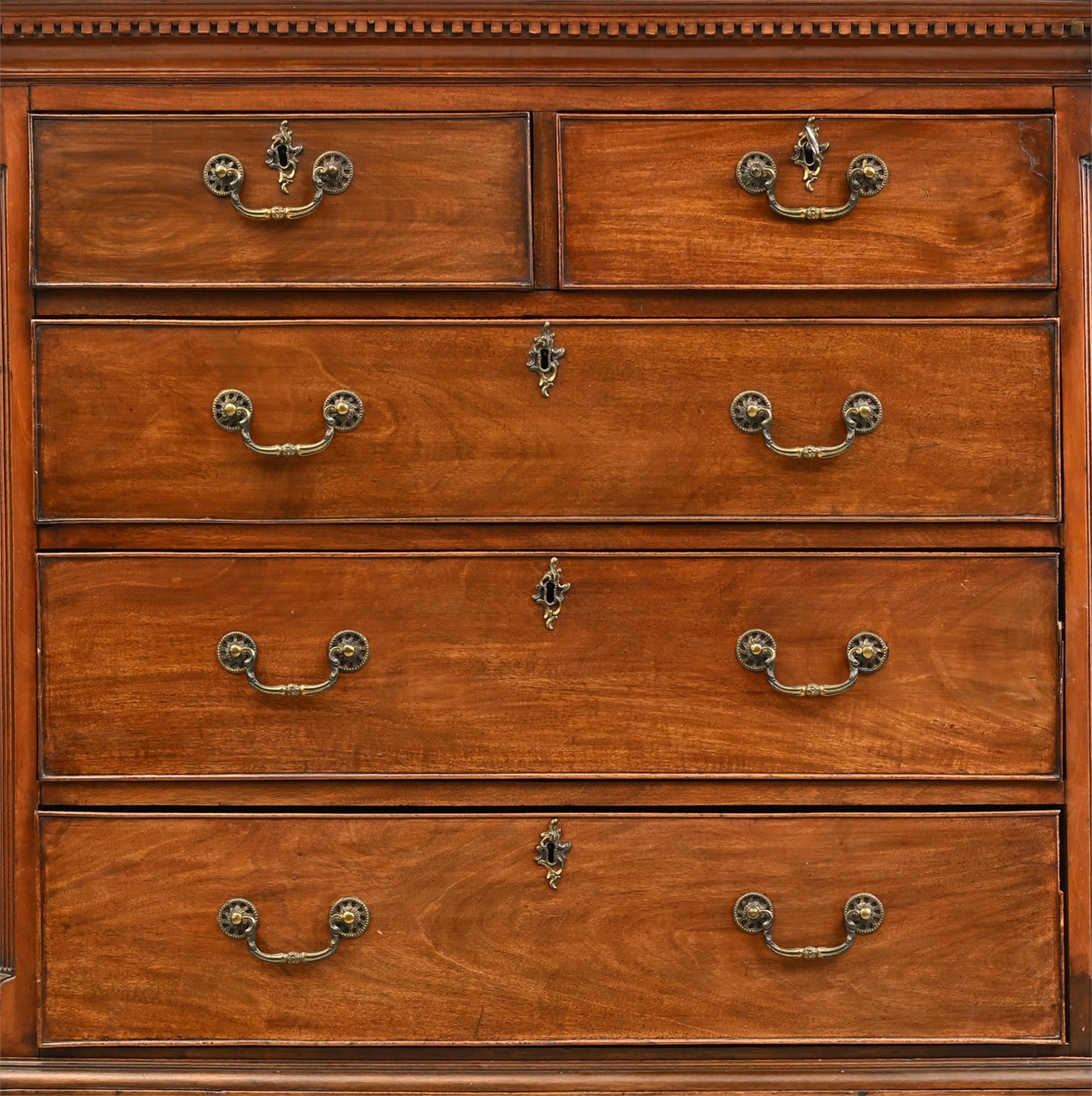
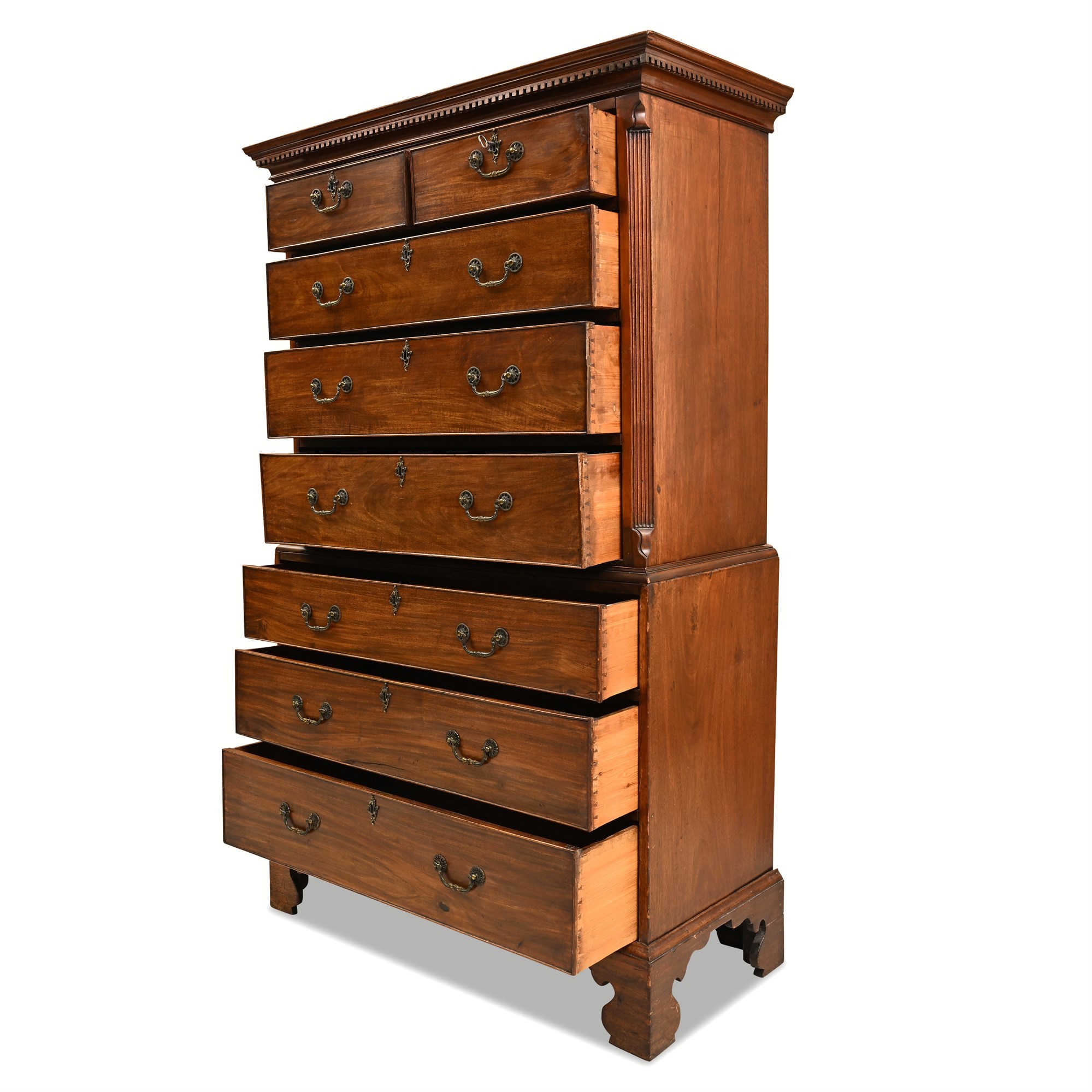
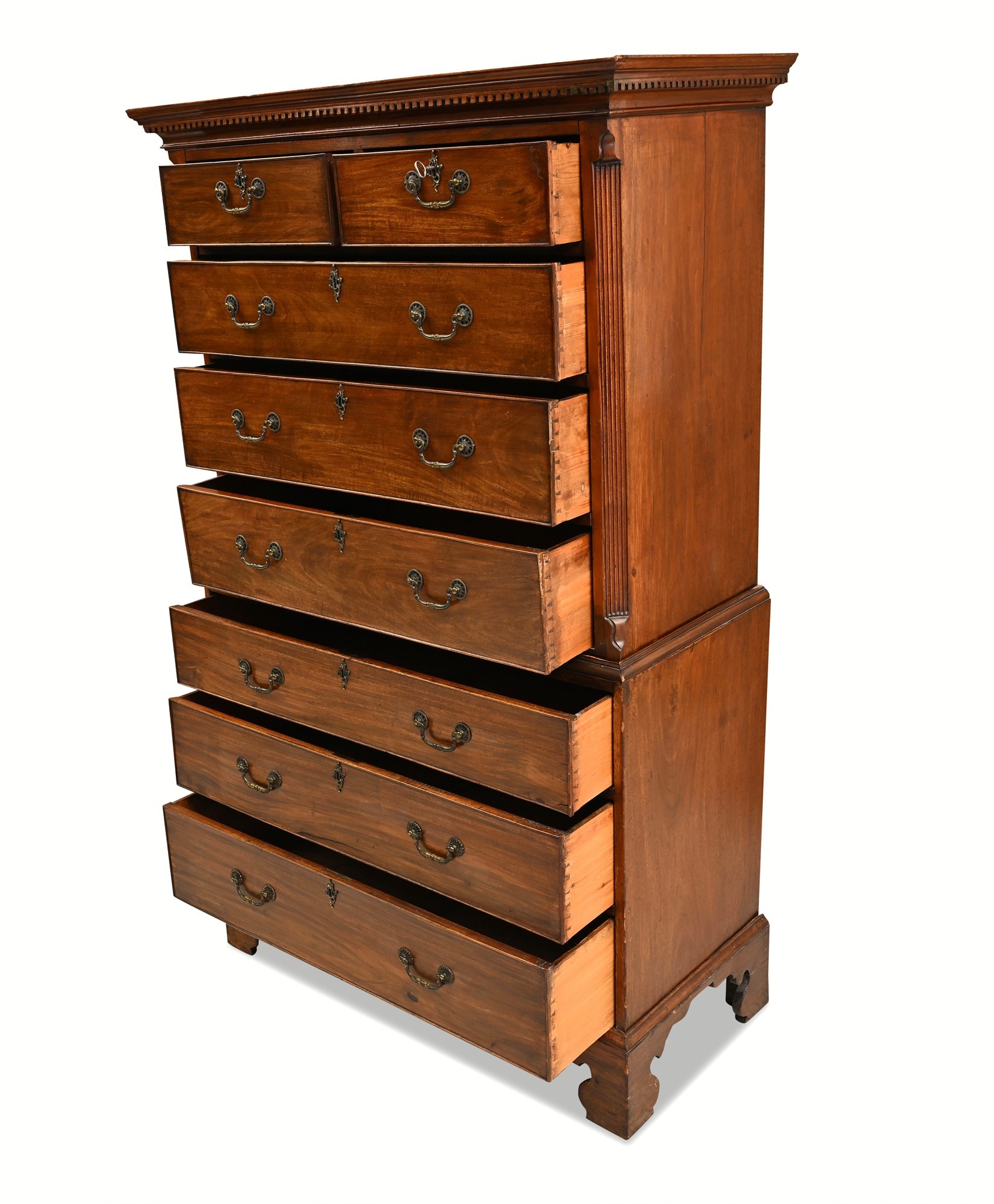
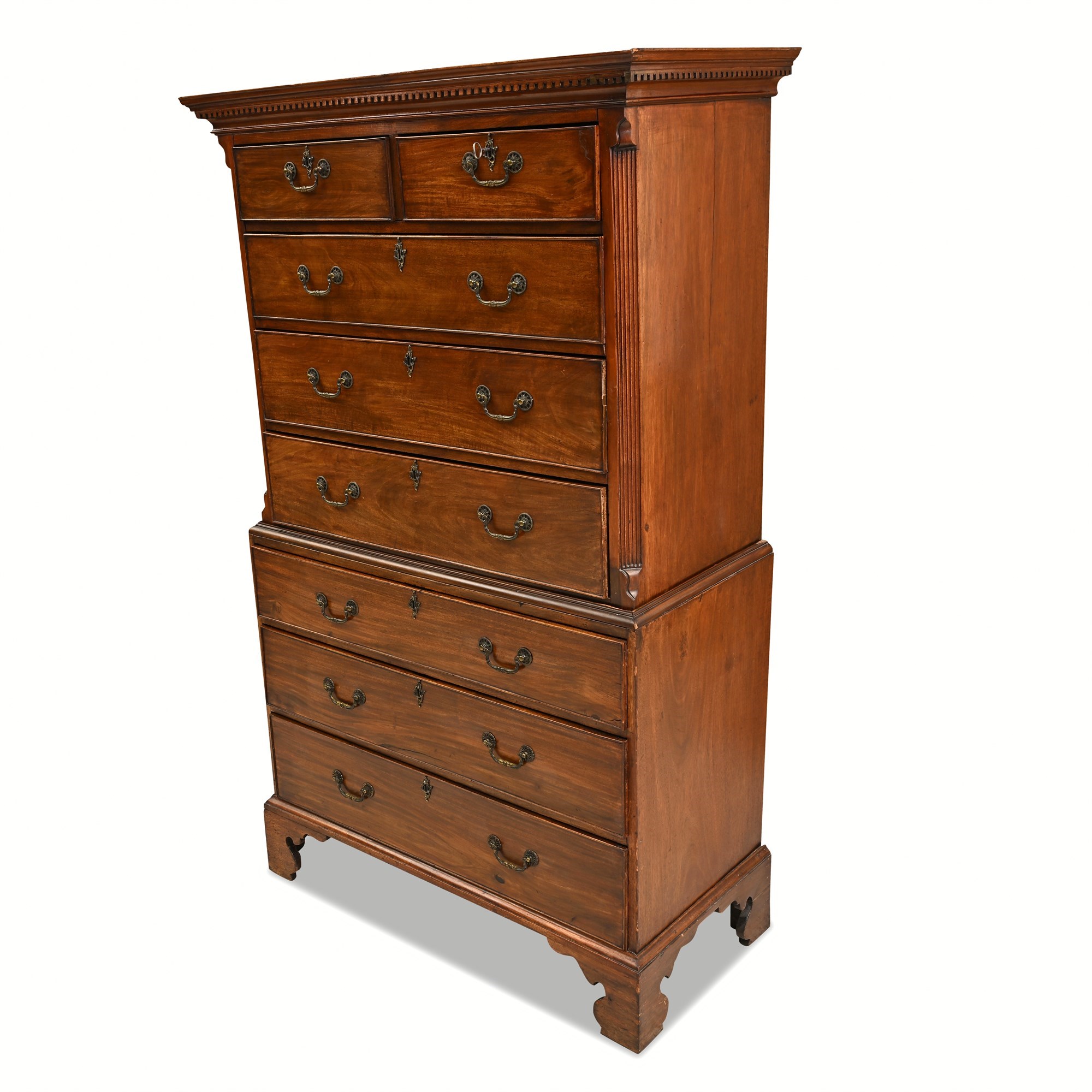
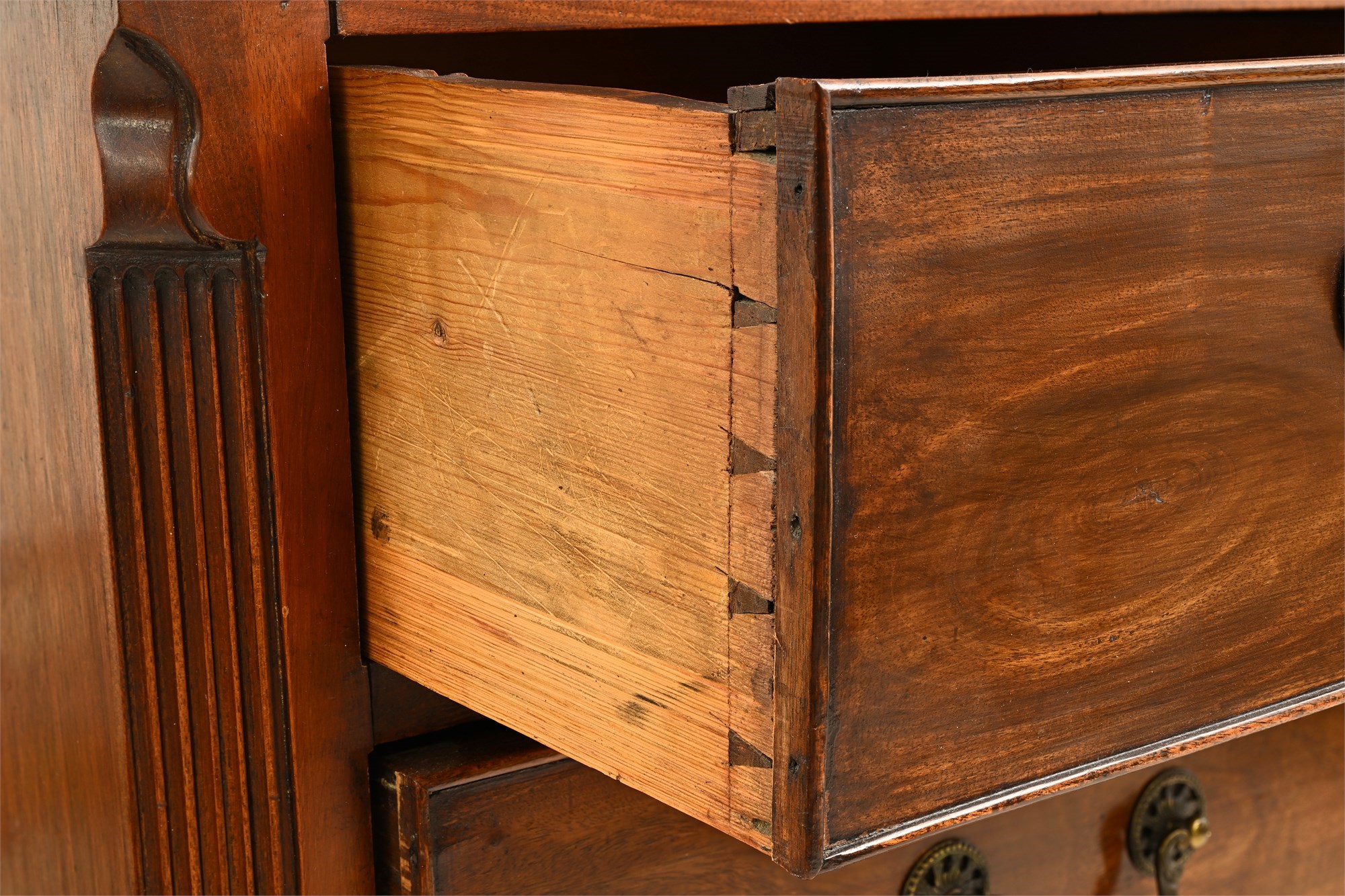
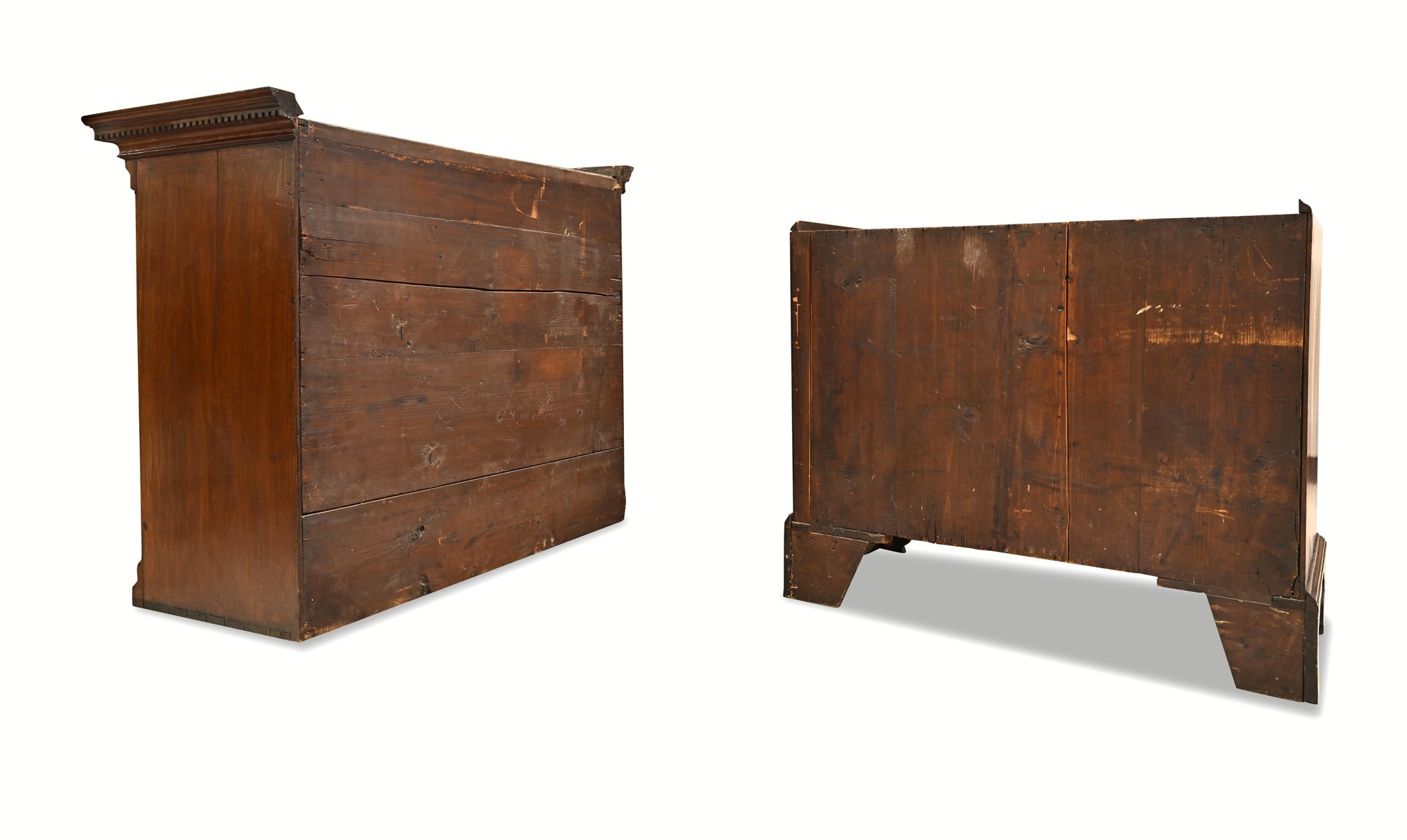
There is a particular kind of quiet that belongs to a room with a piece like this in it. Not silence exactly — more like gravity. The George III mahogany chest-on-chest standing before you was built sometime between 1760 and 1780, in solid timber throughout, by hands that understood wood the way a musician understands an instrument. The stepped cornice is trimmed with a full run of dentil molding. The corners of the upper case are dressed with fully-reeded quarter-columns ending in carved volute capitals — a refinement you find on London workshop and well-funded provincial production of this era, not on common trade furniture. Eight drawers graduate from shallow to deep across two stackable cases, each drawer box joined at the corners with hand-cut through-dovetails. The bracket feet carry ogee-cut profiles on the lower skirt. Not a veneer anywhere in the piece — solid mahogany front to back, top to bottom.
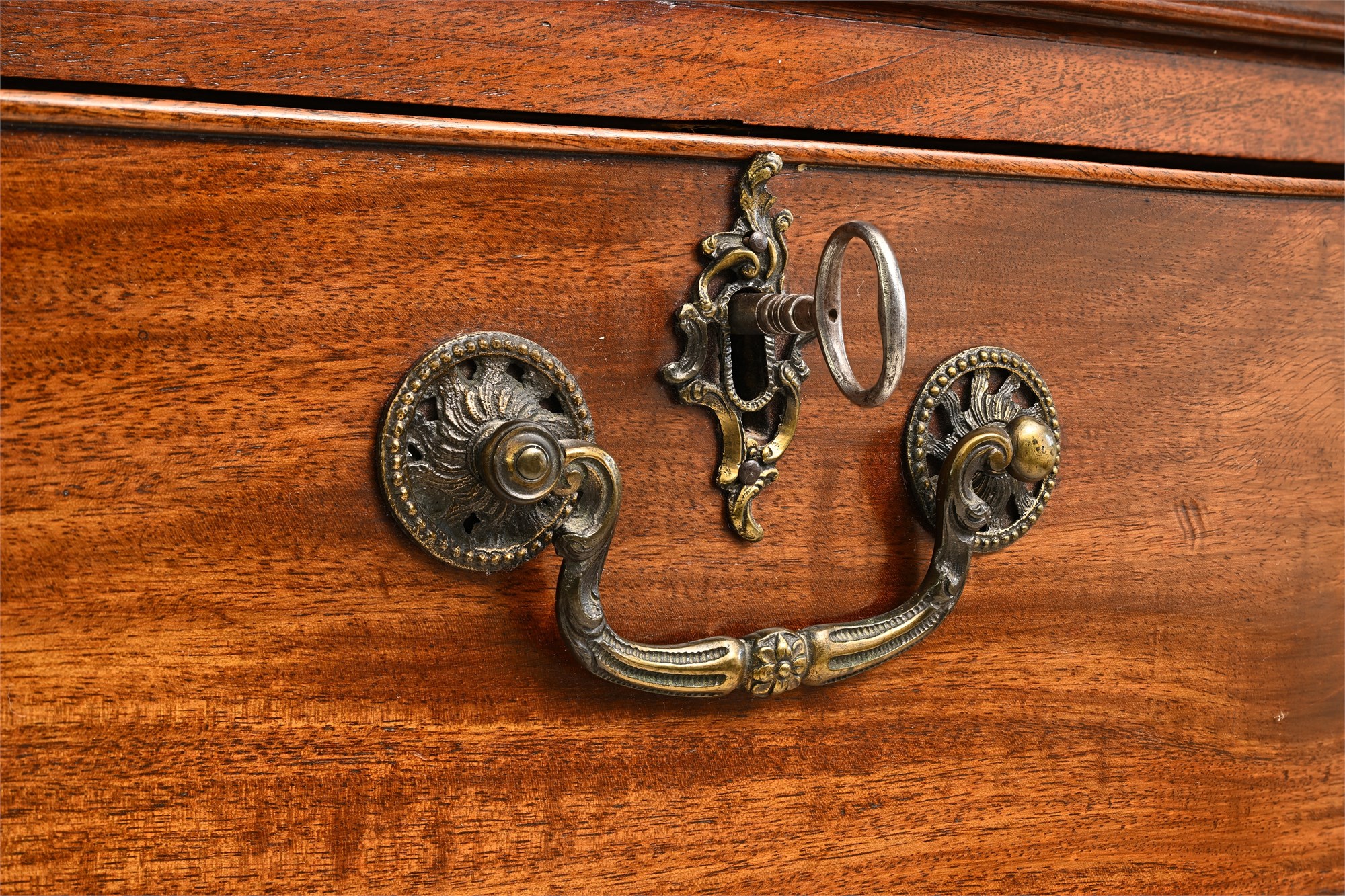
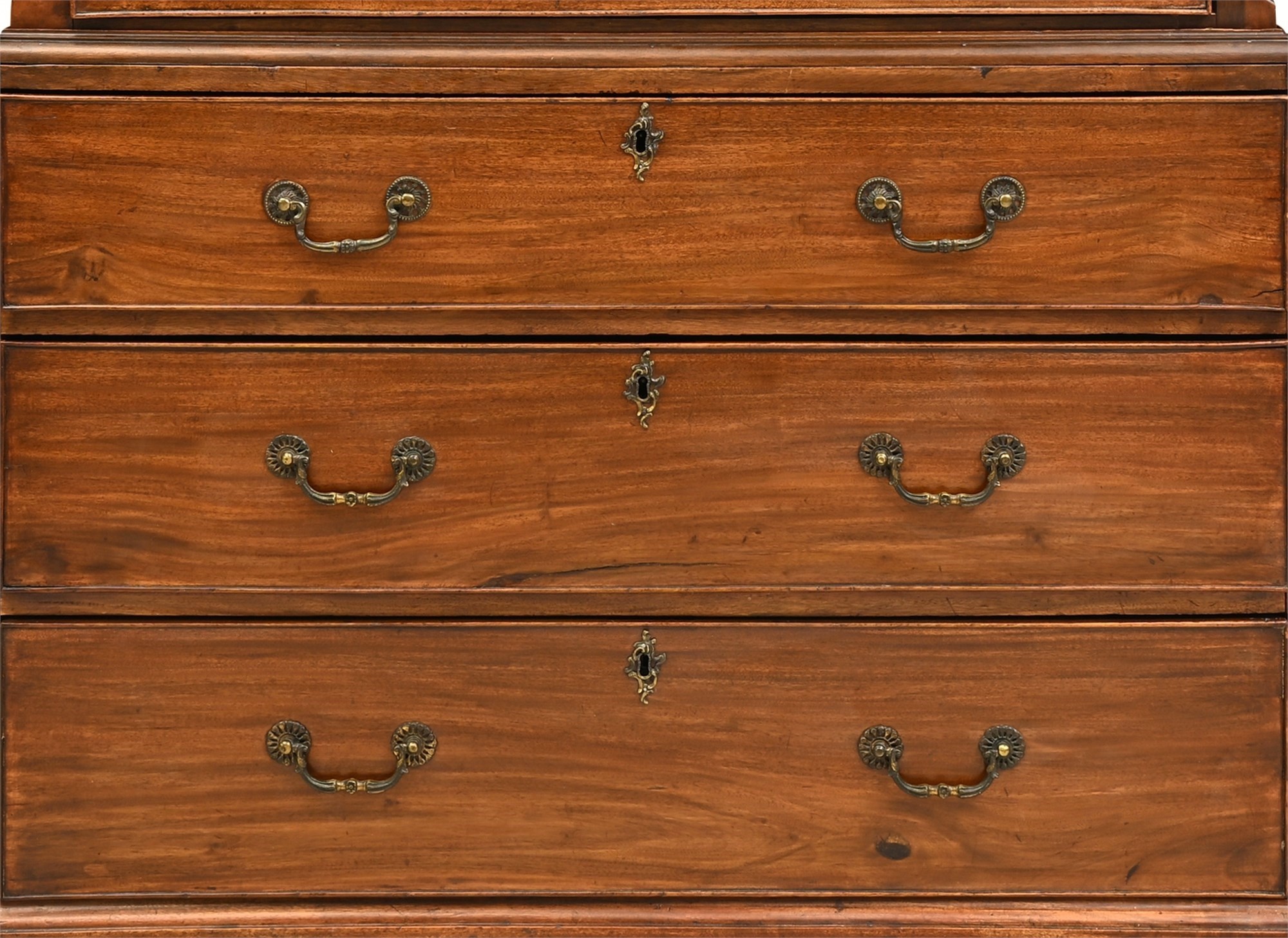
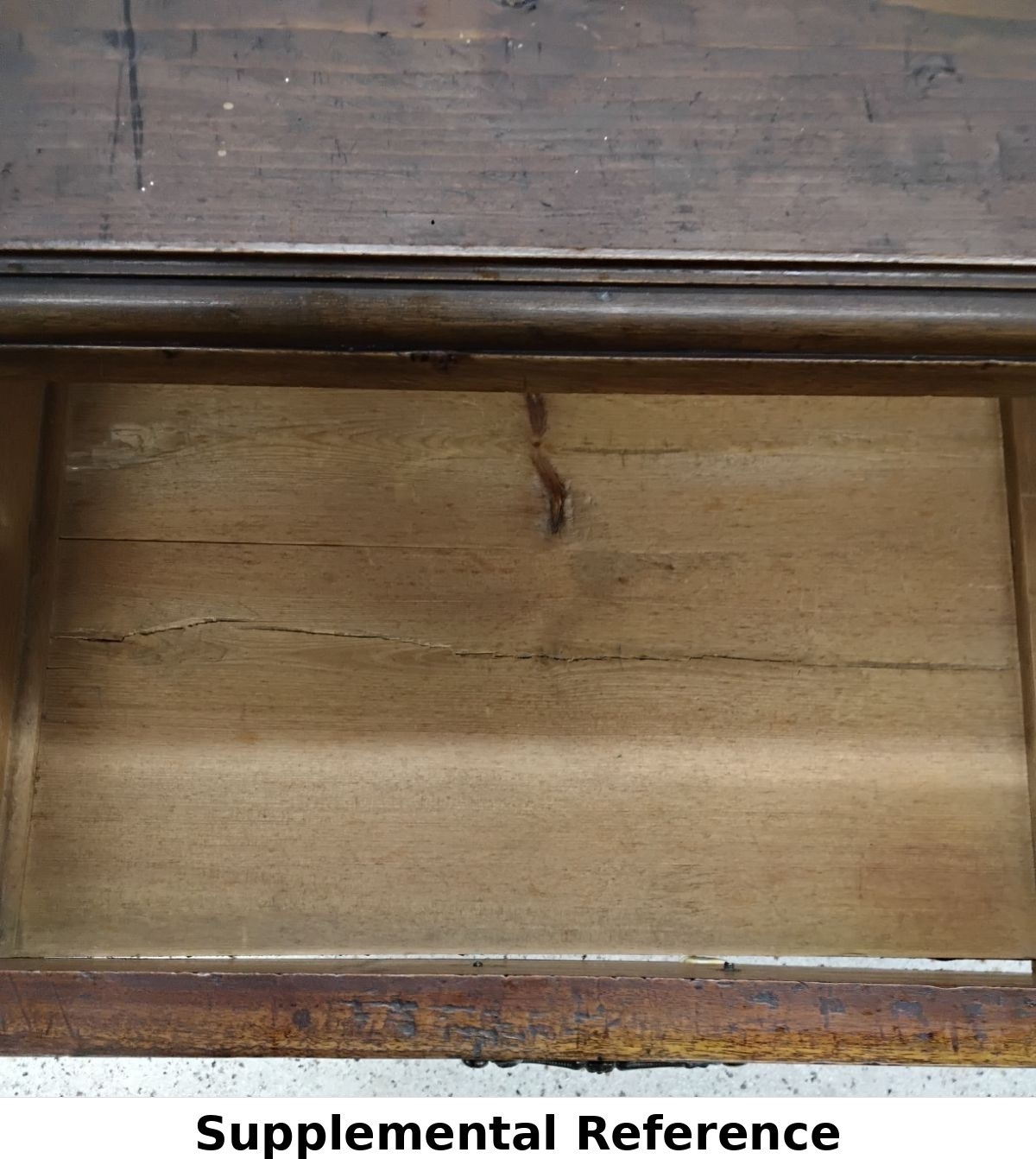
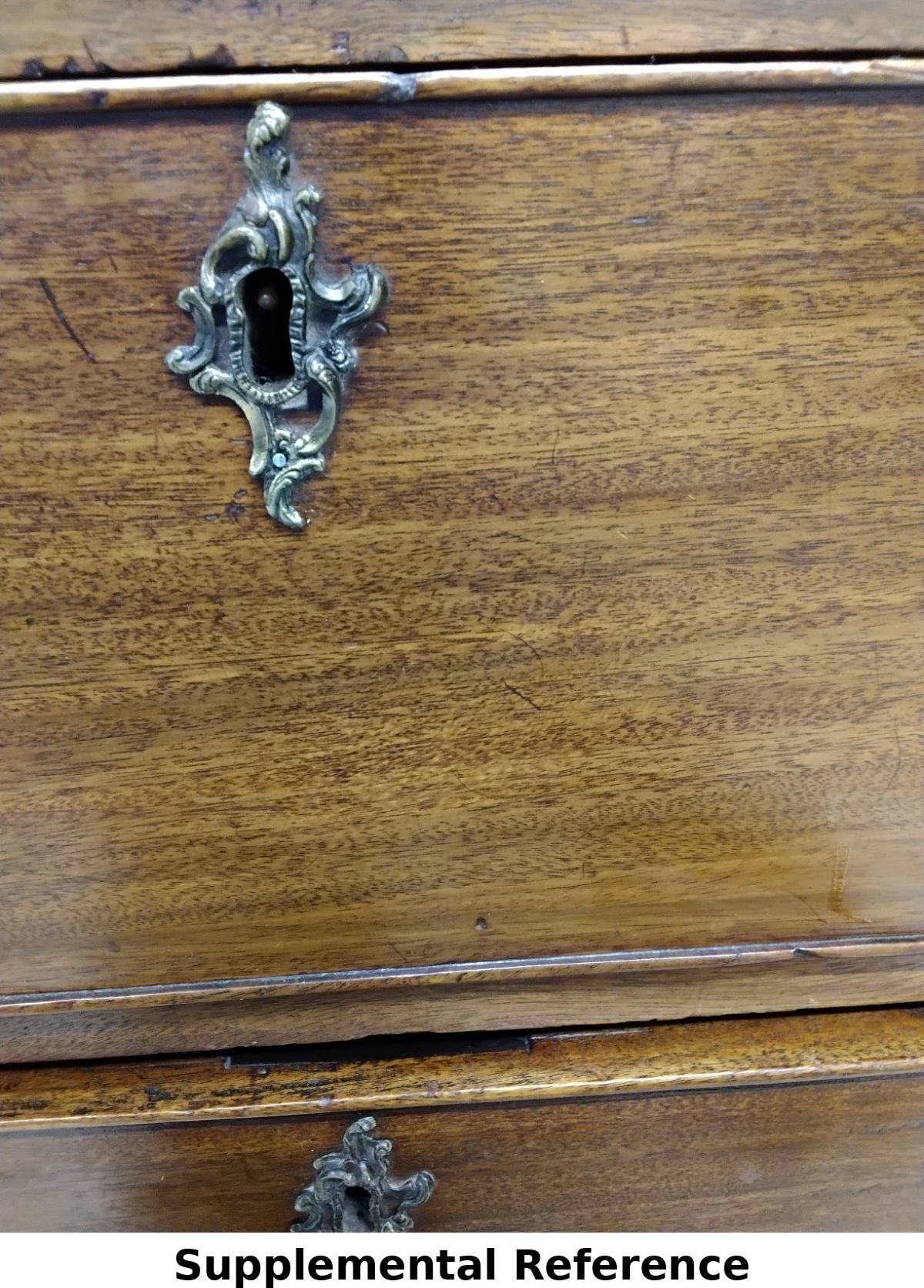
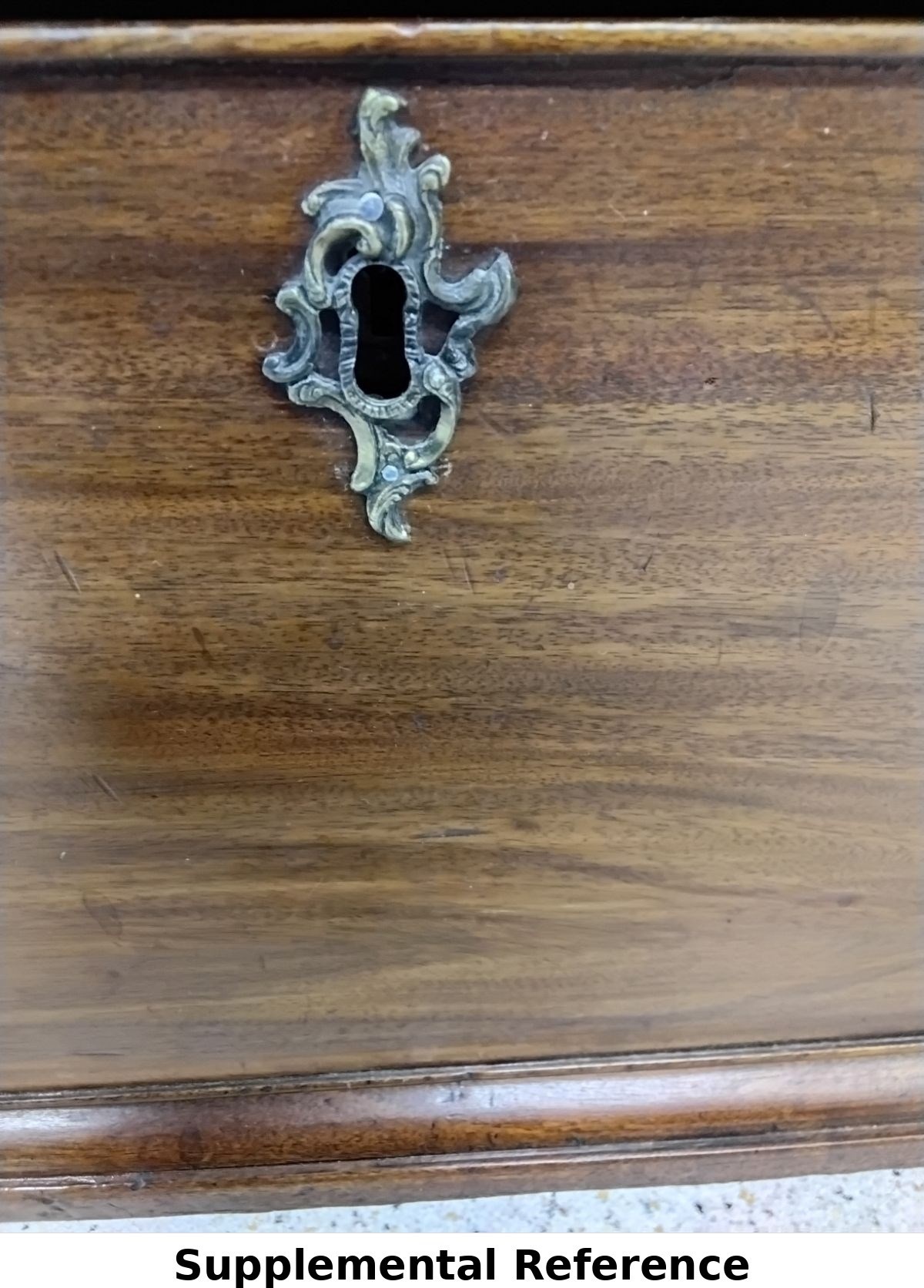
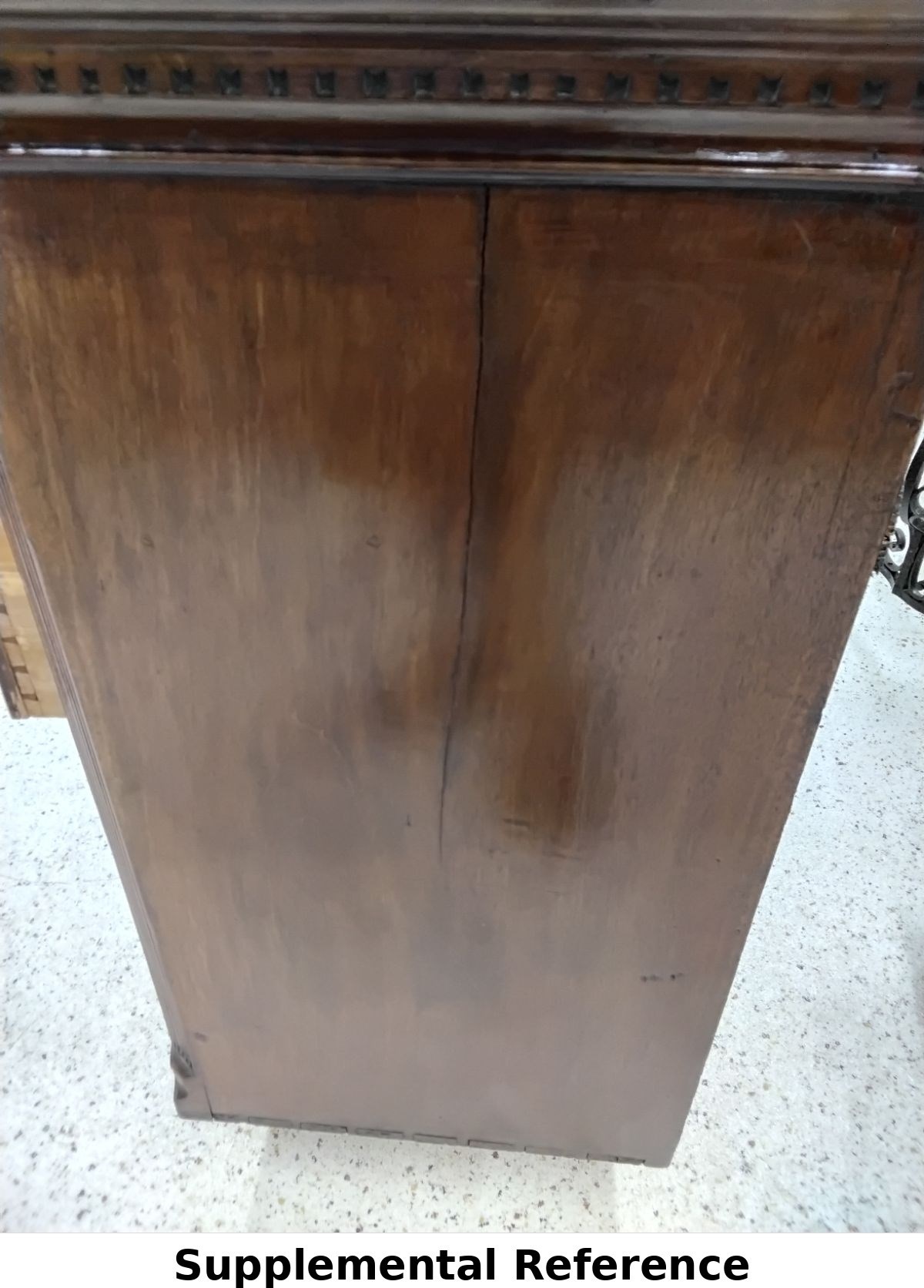
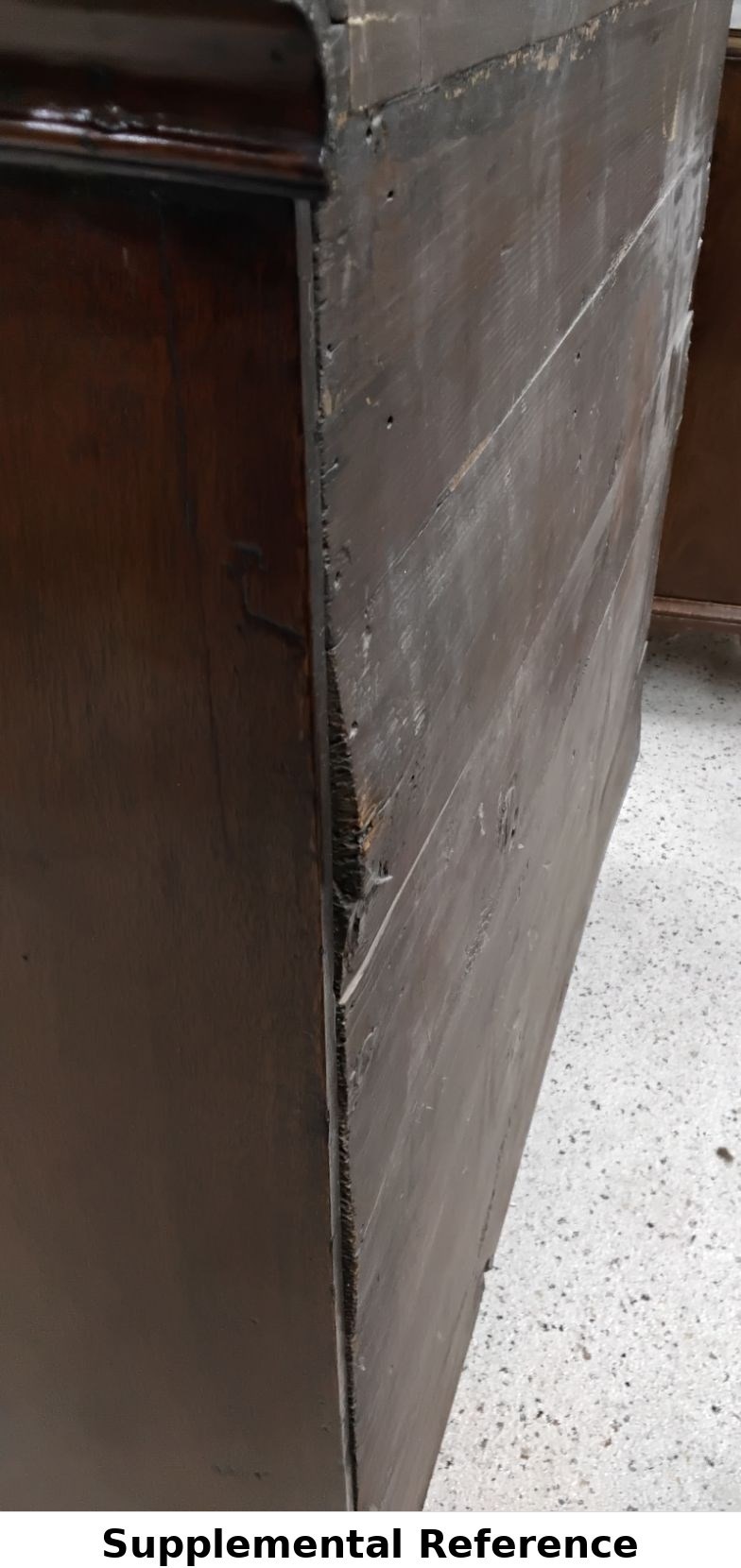
The wood itself tells the story best. That warm, reddish-brown depth — the interlocking grain that seems to glow from within rather than reflect from the surface — is consistent with Cuban mahogany (Swietenia mahagoni), the timber English cabinetmakers considered the finest in the world. The side panels of each case are each cut from a single wide board, a luxury that speaks to the generous old-growth stocks available in the mid-18th century. The drawer boxes are built in fine-grained softwood — Baltic pine or yellow deal, the standard English secondary timber — and the back of the lower case is paneled in solid horizontal boards, nailed in the Georgian fashion. The pierced rococo-cartouche escutcheons, cast with foliate and scroll ornament, and the brass bail pulls with rosette backplates are characteristic of 1760s–1770s English taste. The piece separates into upper and lower cases for transport, and a key is included.
History
The chest-on-chest — the tallboy — reached its mature English form in the second quarter of the 18th century, and by the reign of George III it had become the centerpiece of the Georgian bedchamber. This was not bedroom furniture in the modern sense of afterthought storage. The bedchamber was a room of ceremony, of social ritual, of deliberate display. Among prosperous households — merchants, landed gentry, the professional classes — the tallboy was where the household's finest linens lived: the imported damask tablecloths, the embroidered bed hangings, the silk waistcoats and formal dress that represented both wealth and aspiration. A piece of this scale and quality would have anchored a primary bedchamber, likely in a family home of some standing, passed from generation to generation as part of the household inventory. Thomas Chippendale's Gentleman and Cabinet-Maker's Director (1754, revised 1762) codified precisely this vocabulary — dentil cornice, graduated drawers, reeded quarter-columns, bracket feet — that provincial workshops across England executed for the next thirty years. This piece lives squarely in that tradition. Two and a half centuries later, it is still standing, still doing what it was built to do.
Collector's Note
The woman of the house would have known every drawer by touch. The shallow pair at the top for collars, caps, and small accessories. The long drawers stepping down through the upper case for folded dress lengths and formal garments. The deep drawers of the lower case — the ones with real capacity — for linens, blankets, and the stored wealth of the household in fabric. A chest like this was not just furniture. It was the physical record of a family's standards: what they kept, how they cared for it, what they thought worth preserving. The pierced rococo escutcheons and rosette bail pulls were chosen to signal taste. The solid mahogany carcass, the hand-dovetailed drawer boxes, the single-board side panels — those were chosen to last. Both choices proved correct.
CONDITION
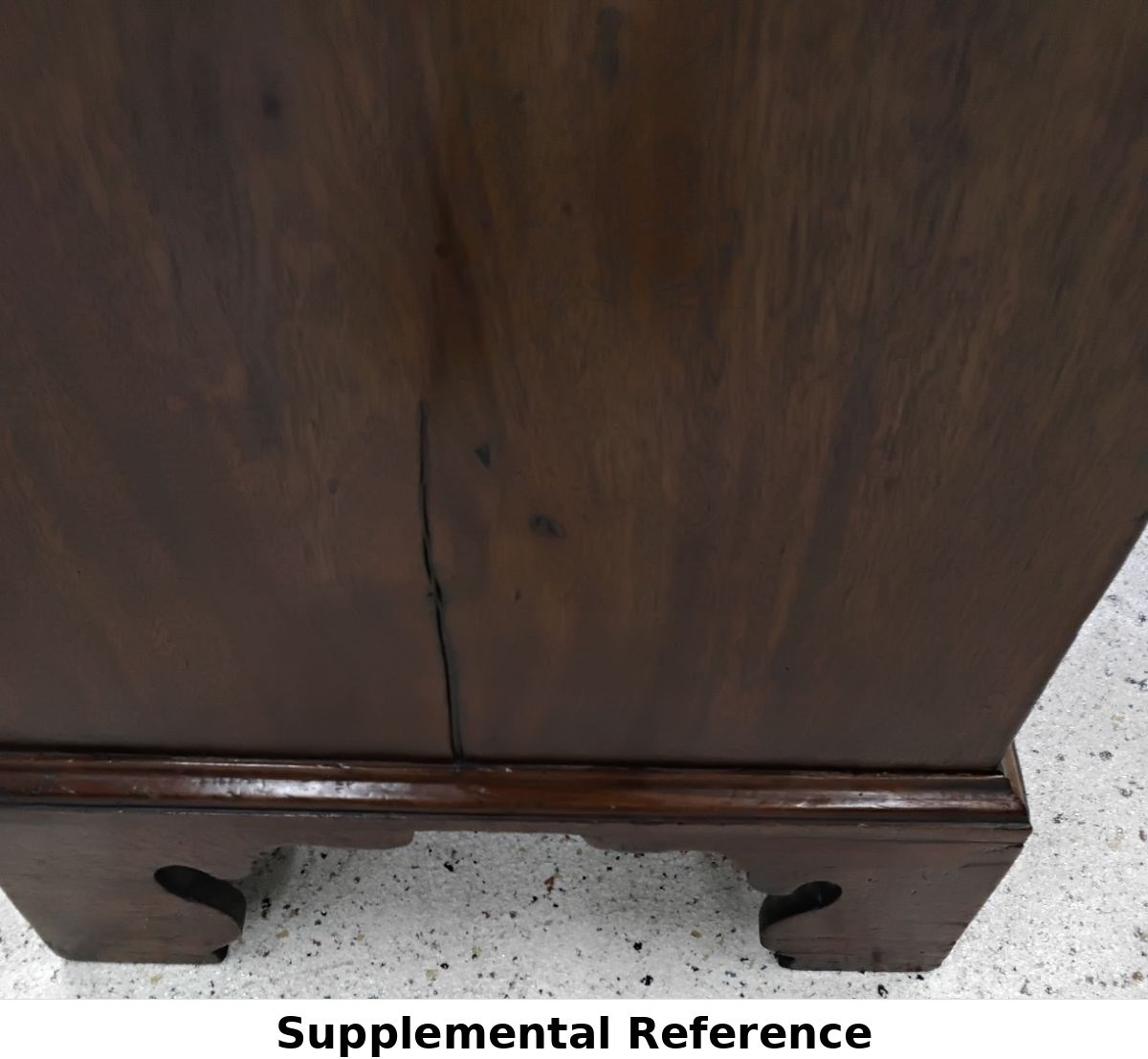
Good for its age — a previously restored piece that has settled well, with surface scratches, light scuffing, staining, and discoloration that read as honest 250-year patina. Two drawers have trim missing on the right side, a vertical shrinkage split is present on one case side, and minor warping is noted in places consistent with the age of the timber. The included key operates all drawers with the exception of the bottom drawer and the second drawer from the top.
DIMENSIONS / SPECIFICATIONS
- Overall: 73¼" H × 44¼" W × 21" D
- Top Section: 37½" H × 44¼" W × 21" D
- Bottom Section: 35¾" H × 43" W × 20½" D (with handles)
- Configuration: 8 drawers — 2 short over 3 long (upper); 3 long (lower)
- Primary Material: Solid mahogany, no veneers
- Secondary Material: Fine-grained softwood drawer boxes; consistent with Baltic pine / yellow deal
- Hardware: Brass bail pulls with rosette backplates; pierced rococo-cartouche escutcheons
- Joinery: Hand-cut through-dovetails at drawer corners
- Back Panels: Solid horizontal boards, approximately 20½" deep, nailed construction
- Includes: One key (non-functioning on bottom drawer and second drawer from top)
- Disassembles into two cases for transport