A.F. Radomski "Navajos" — Egg Tempera on Masonite, Navajo Camp Scene View Watchlist >
Seller Accepts Credit Cards
Payment and pickup instructions will be available on your invoice (under "My Account") at the conclusion of this auction.
Lot # F1154
System ID # 29896187
Start Date
End Date
1 Watching
A.F. Radomski "Navajos" — Egg Tempera on Masonite, Navajo Camp Scene
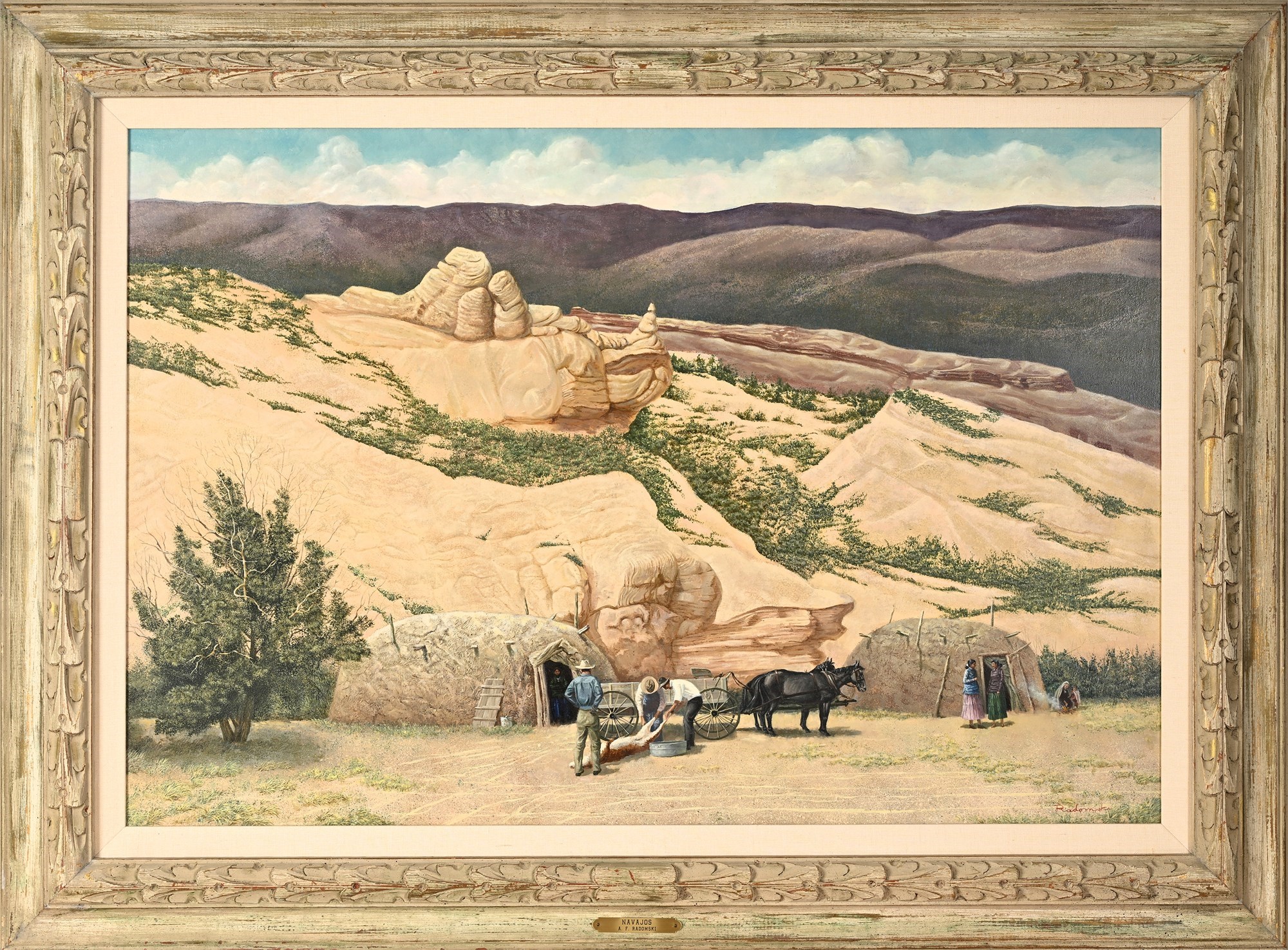
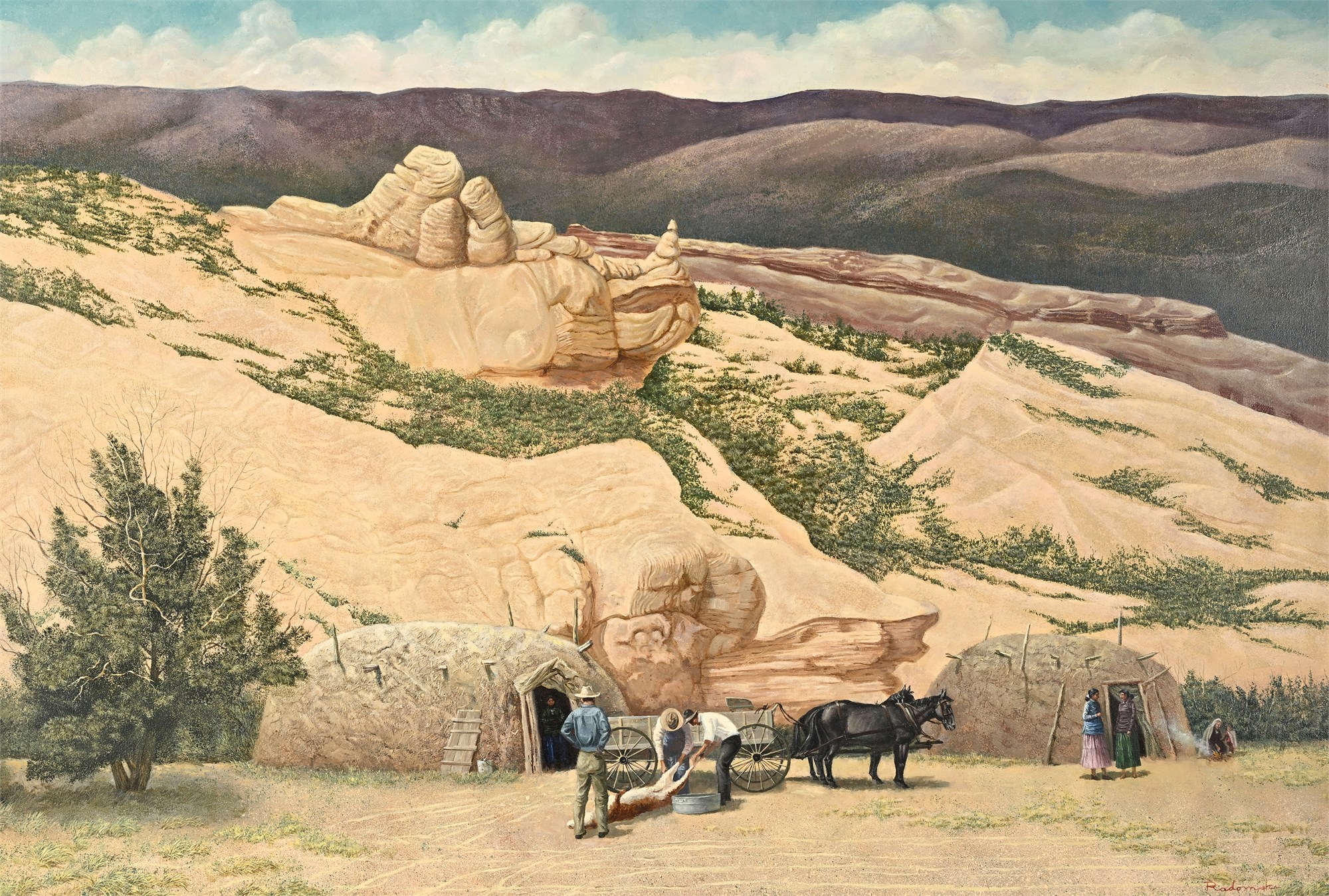
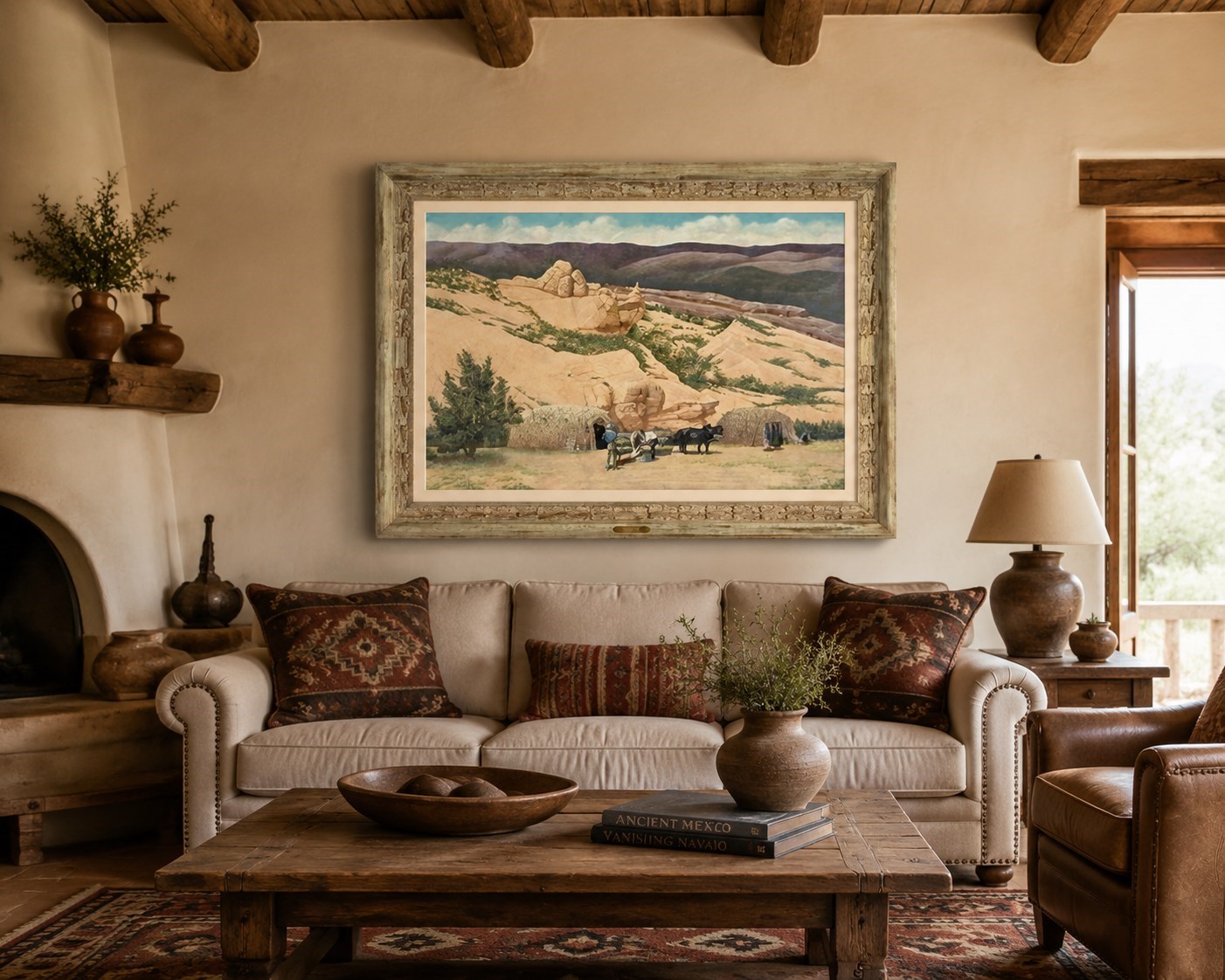
The sandstone is the first thing that holds you. Radomski gives it more than half the canvas — creamy, wind-worn formations stacked in receding ridges, their eroded surfaces rendered with the exacting patience egg tempera demands. The technique builds luminosity through layered, fast-drying strokes rather than the blended pulls of oil, and the result here is almost geological in its precision: each stratum of rock a distinct color, each juniper clump given individual weight against the pale bluff. Then the eye drops to the valley floor, where the scene opens into human time — two dark horses standing at a wagon, men working at its side, hogans built into the rock shoulder, women at a doorway, a small cookfire sending up a thin curl of smoke to the right. The composition is structured the way a field study is structured: everything observed, nothing invented for drama.
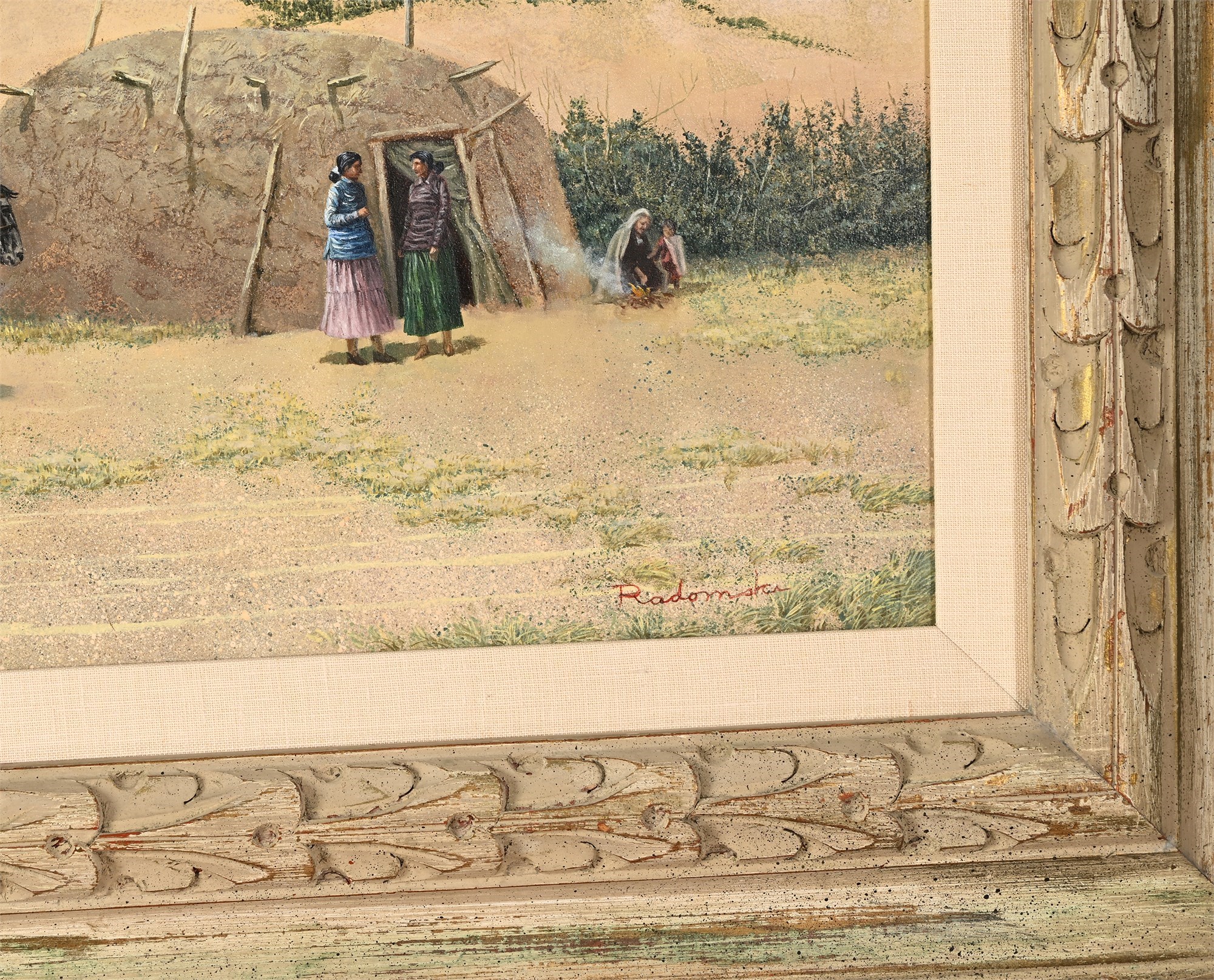
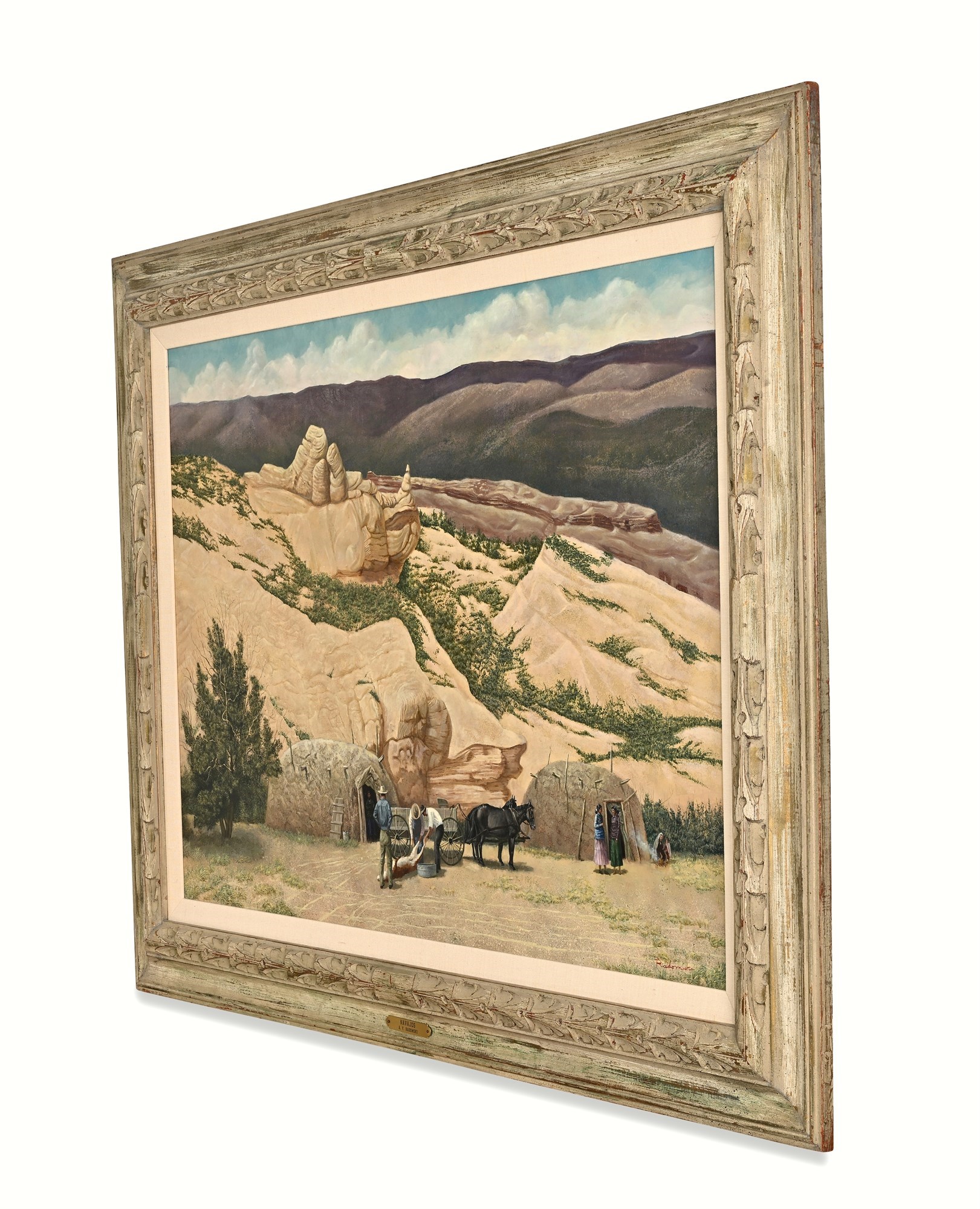
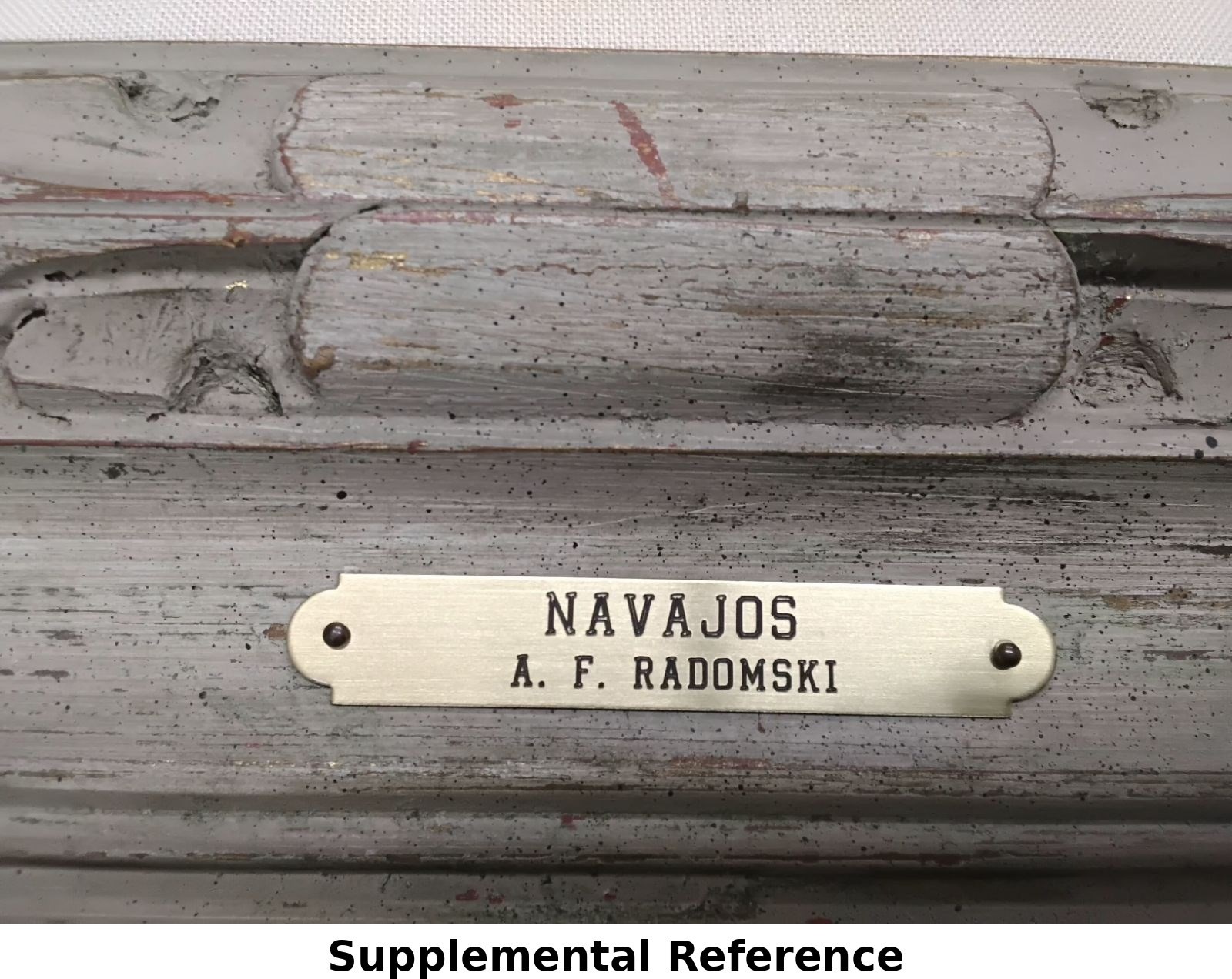
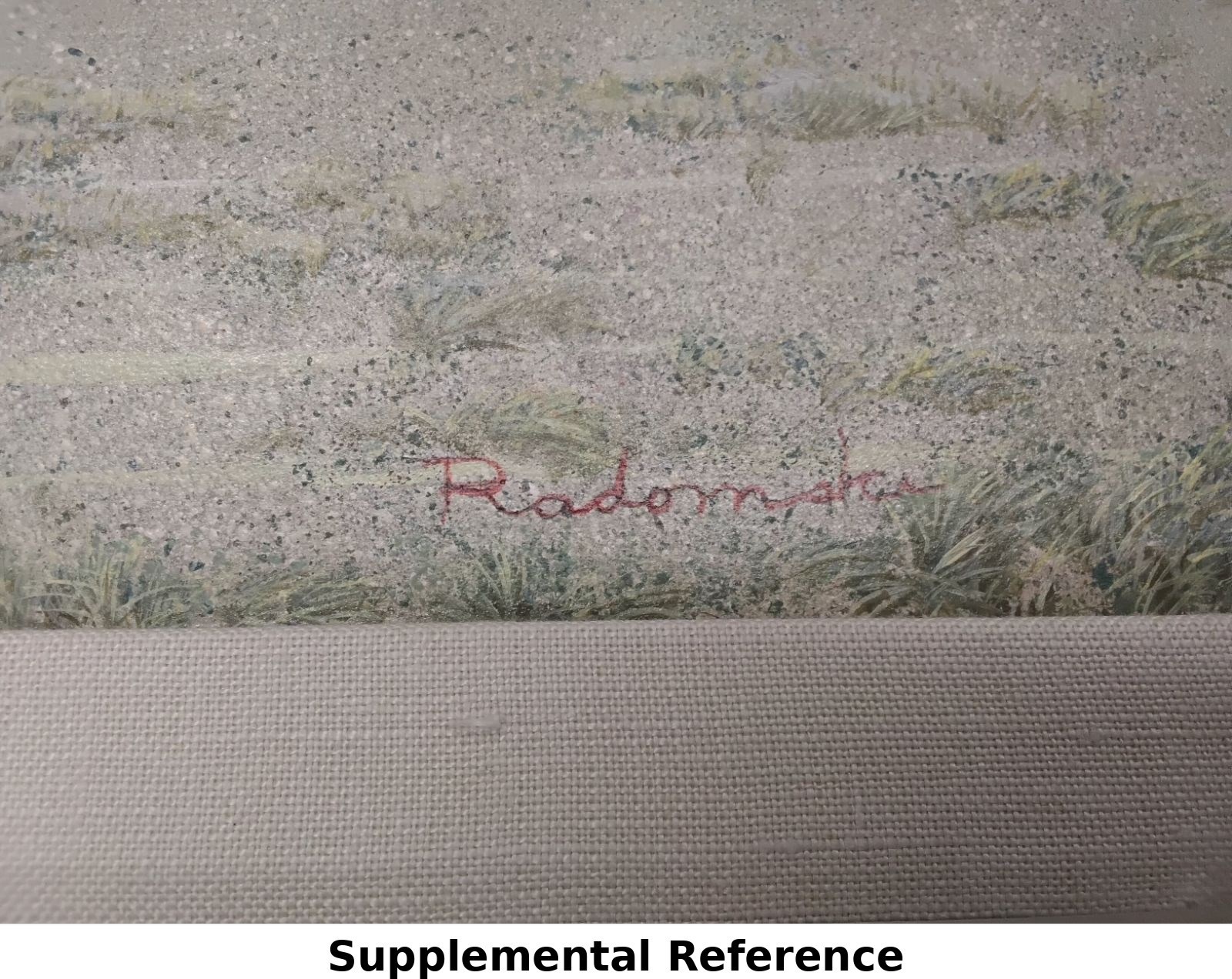
Al (A.F.) Radomski signed the work lower right in red script, and the carved wood frame carries a brass plaque reading "NAVAJOS / A.F. RADOMSKI" — the painting's title and authorship fixed in metal from the time of original framing. The hogans are earth-covered and fully formed, the horses convincingly weighted, the layered Chuska- or Lukachukai-scale mountains behind rendered in muted purples and greens under a sky of cumulus cloud. The linen liner that sets the image off from the carved, whitewashed frame keeps the palette clean at the edge — a framing decision as deliberate as any in the picture itself.
About the Artist
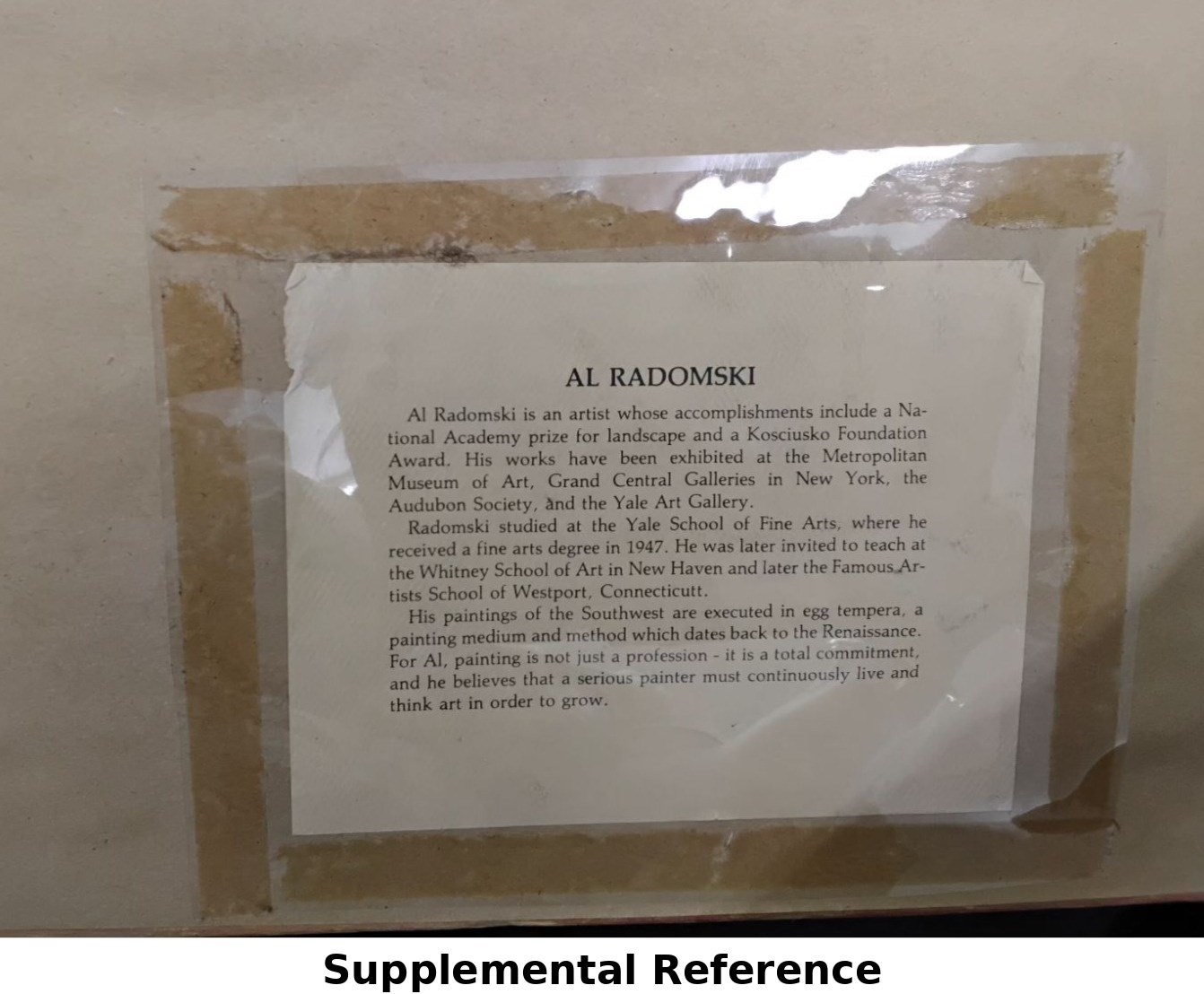
Al Radomski received his fine arts degree from the Yale School of Fine Arts in 1947 and was subsequently invited to teach at the Whitney School of Art in New Haven and later at the Famous Artists School in Westport, Connecticut — the correspondence school that counted Norman Rockwell, Al Capp, and Ben Stahl among its founding faculty and reached hundreds of thousands of students at its peak. His awards include a National Academy prize for landscape and a Kosciuszko Foundation Award. His exhibited work entered the walls of the Metropolitan Museum of Art, Grand Central Galleries, the Audubon Society, and the Yale Art Gallery. For his Southwestern subjects, Radomski chose egg tempera — a Renaissance medium that builds form through accumulation of small, controlled marks rather than the fluid layering of oil. The choice explains the peculiar stillness of his landscapes: tempera doesn't move after it dries, and neither do his compositions. Every surface, from eroded sandstone to the weave of a skirt, carries the same quiet exactitude.
Collector's Note
Radomski's Southwestern temperas occupy an unusual position in the market for mid-century American Western painting. His credentials — Yale-trained, National Academy prize winner, Metropolitan-exhibited — place him firmly in the academic tradition, while his choice of subject and medium sets these works apart from both the Taos School oils and the illustration-inflected Western art of the same era. A fully titled, signed, and brass-plaqued painting of this scale, in excellent condition with its original frame, represents the top of his Southwestern output.
CONDITION
Excellent. No remarkable damage to the painted surface. The carved wood frame shows an intentional distressed, whitewashed finish with expected surface speckling consistent with age; the brass title plaque and linen liner are intact and undamaged.
DIMENSIONS / SPECIFICATIONS
- Overall (framed): 32 1/4" H × 44" W × 1 1/4" D
- Visible image: 23 1/2" H × 35" W
- Medium: Egg tempera on Masonite
- Support: Masonite
- Signed lower right: "Radomski" (red script)
- Brass plaque: "NAVAJOS / A.F. RADOMSKI"
- Frame: Carved wood with distressed whitewashed finish and linen liner