Parfleche Envelope, Crow or Plateau — Painted Rawhide, c. 1870–1890, 27.5" View Watchlist >
Seller Accepts Credit Cards
Payment and pickup instructions will be available on your invoice (under "My Account") at the conclusion of this auction.
Lot # G401
System ID # 30237393
Start Date
End Date
13 Watching
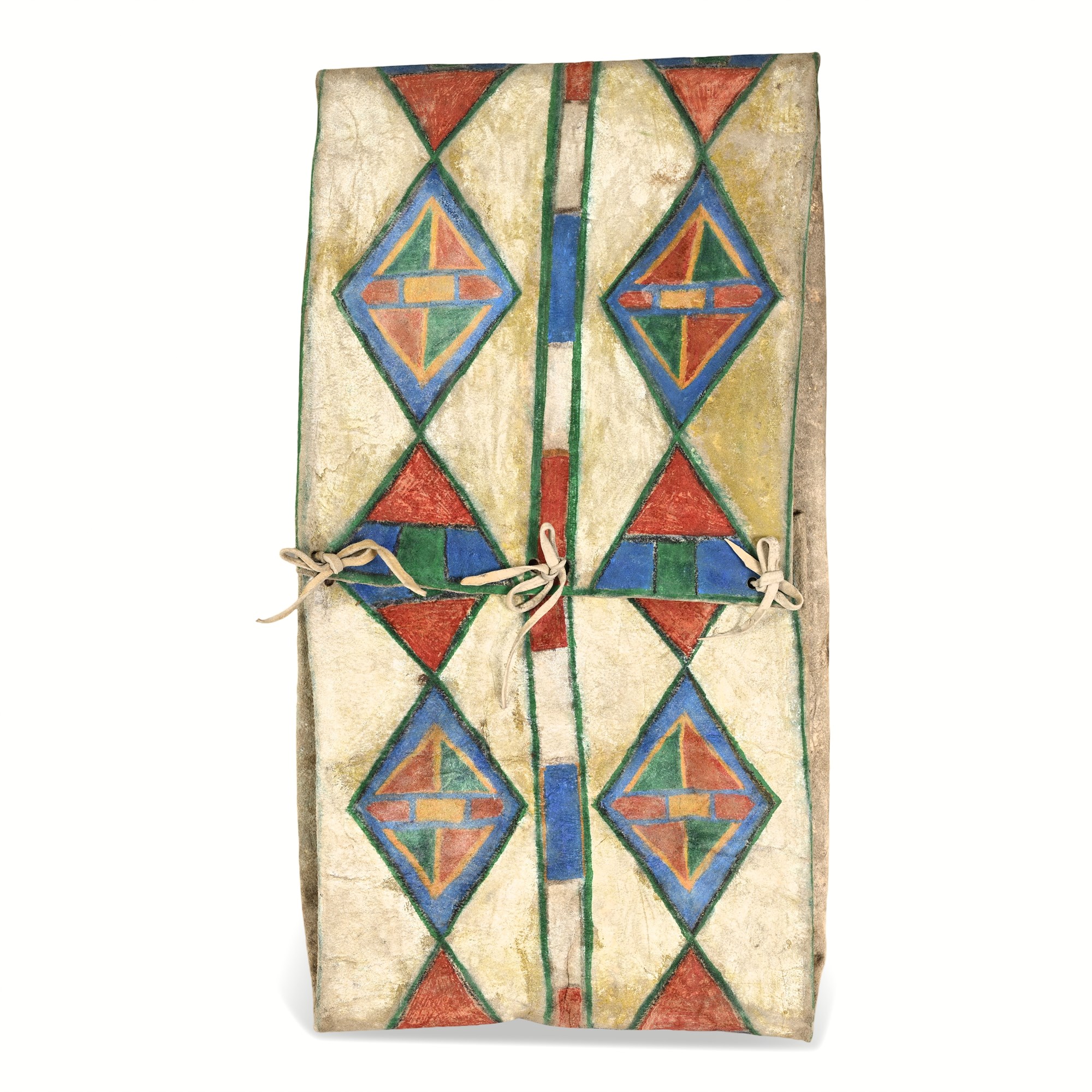
Parfleche Envelope, Crow or Plateau — Painted Rawhide, c. 1870–1890, 27.5"
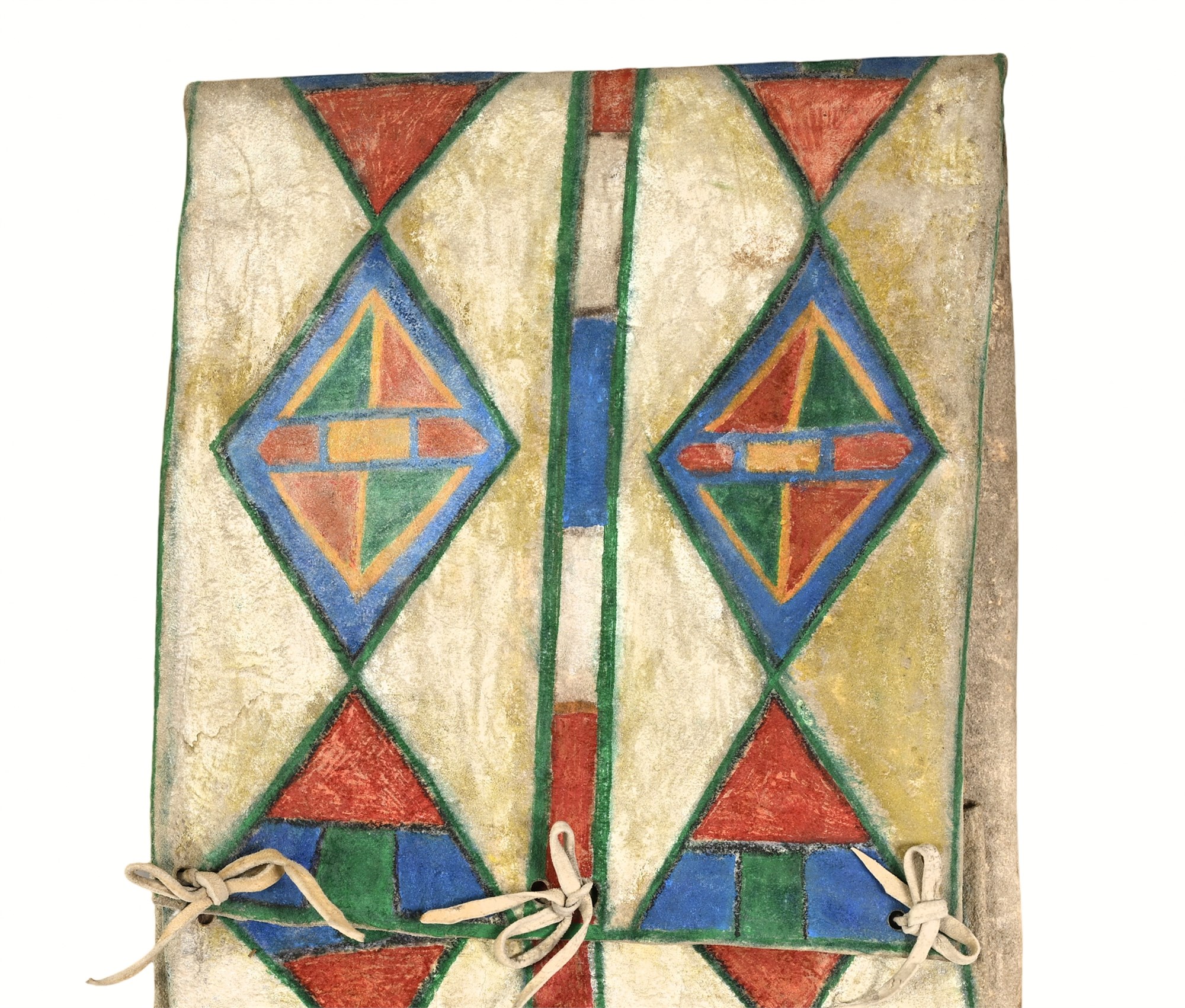
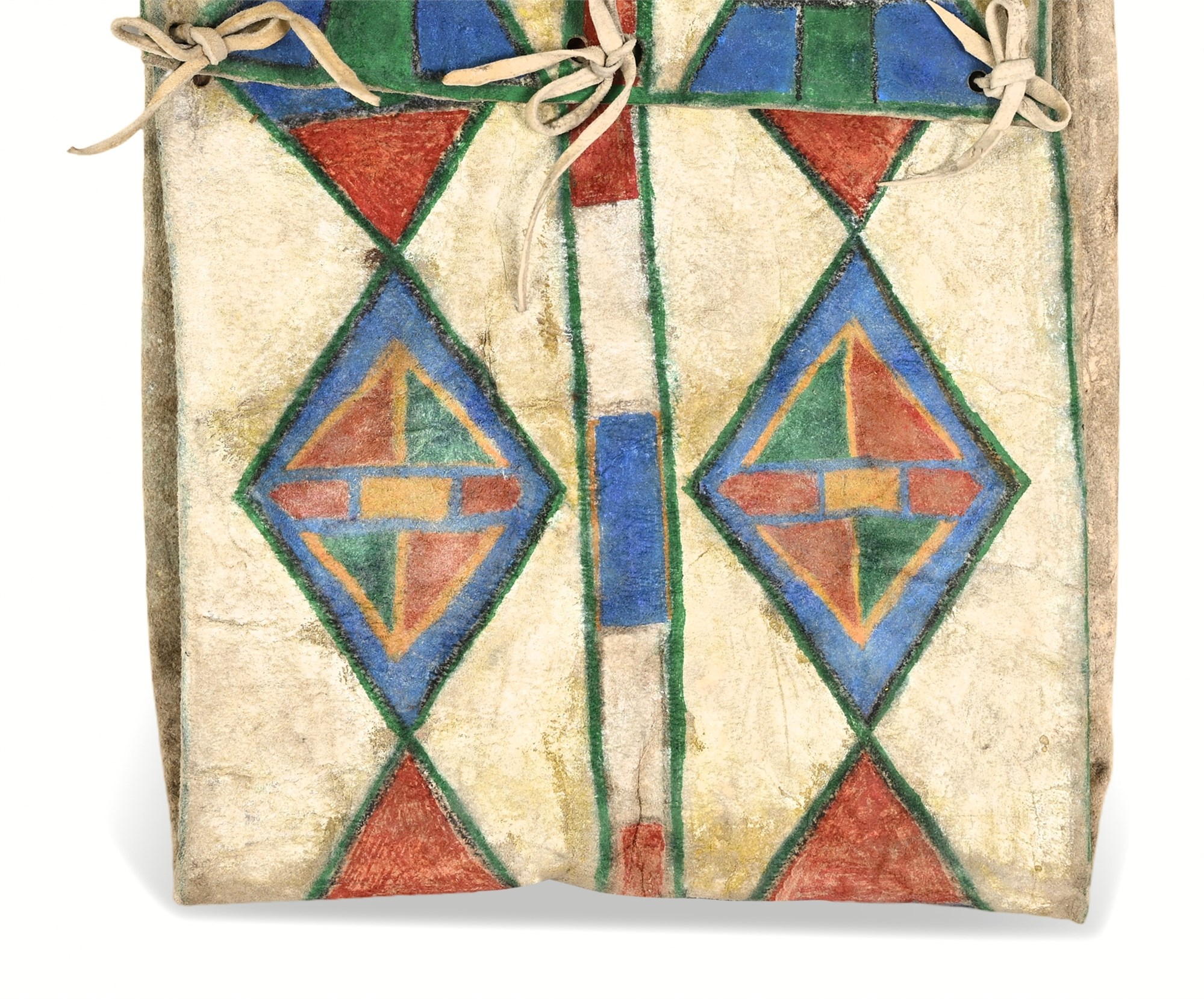
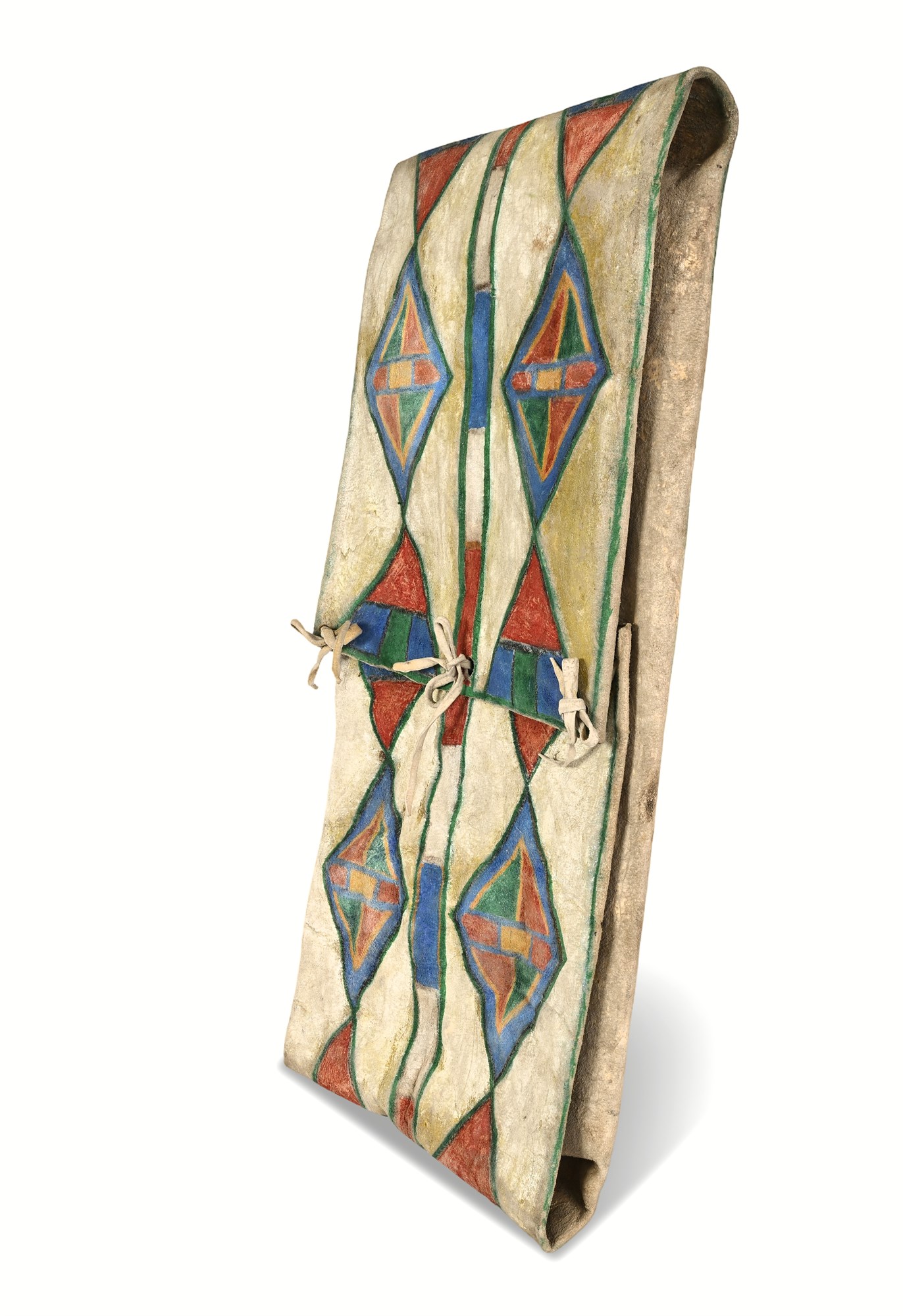
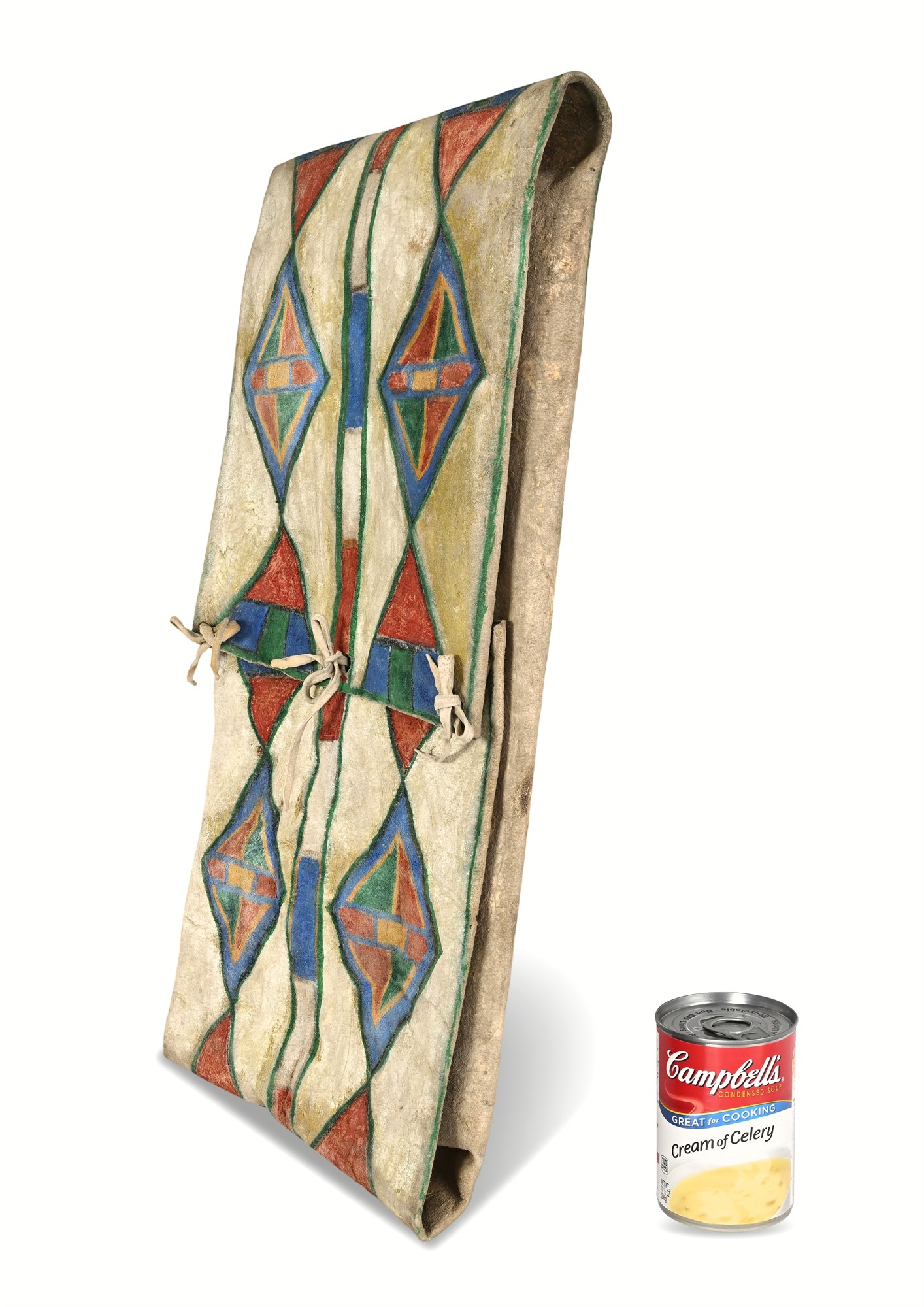
A large envelope-form parfleche of native-tanned rawhide, painted in the Transmontane style shared by the Apsáalooke (Crow) and the Plateau peoples of the Columbia River region. The full front panel carries paired columns of tall, attenuated diamonds, each enclosing a blue-bordered medallion quartered in red and green triangles crossed by a segmented bar, flanking a narrow median stripe of alternating blue, red, and white blocks. All elements are finely outlined in green mineral pigment against a generous open ground — a hallmark separating Crow and Plateau work from the heavily outlined, densely painted styles of the Central Plains. Original hide thong ties secure the flap through punched closure holes.
Parfleches were painted by Native women on freshly stretched hide, worked with boldness and precision since revisions were impossible, then folded and cut to form. They served as the traveling luggage of nomadic life, carried in pairs on horseback, and today stand among the great traditions of American Indian abstract painting — the subject of Gaylord Torrence's landmark study The American Indian Parfleche.
CONDITION
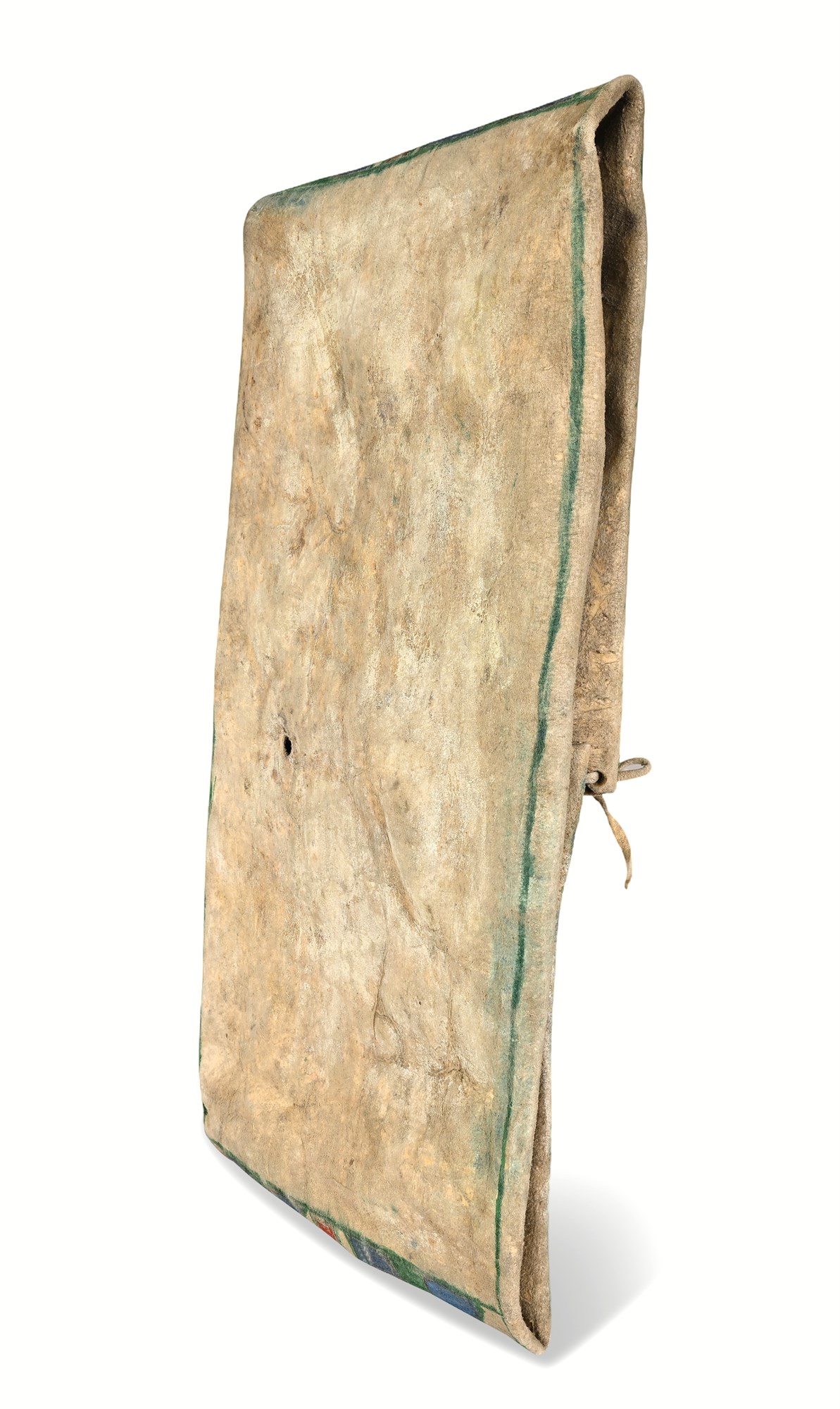
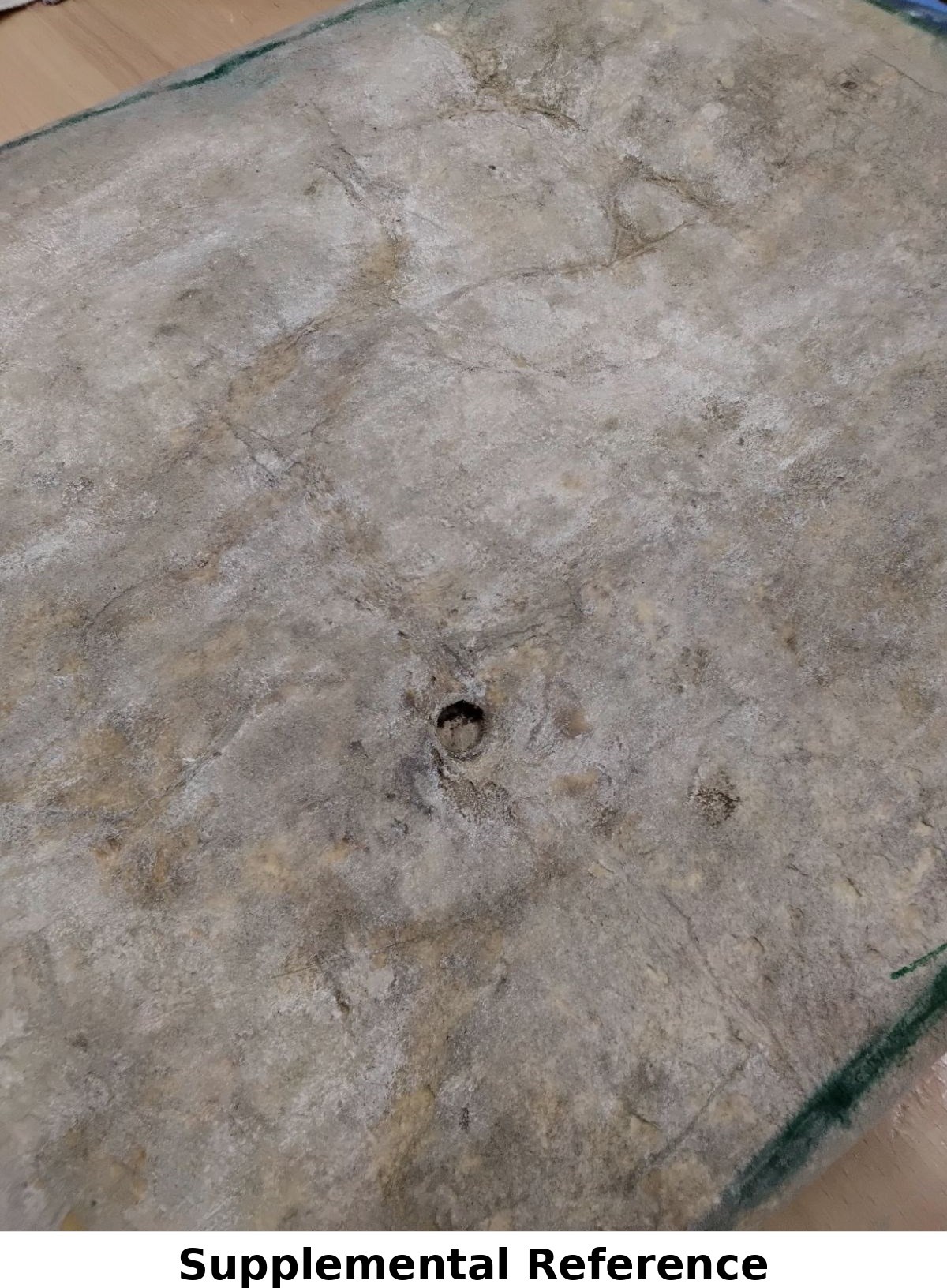
Very Good, with age-appropriate wear. Pigments remain strong and fully legible across the painted panel, and the hide thong ties are supple and intact. A small hole, approximately 1/20 inch, on the rear panel; overall soiling to the unpainted reverse consistent with period use.
DIMENSIONS / SPECIFICATIONS
- Height: 27 1/2"
- Width: 15"
- Depth: 2 1/4"
- Material: native-tanned rawhide with mineral pigments
- Closure: hide thong ties through punched holes
- Attribution: Crow or Plateau (Transmontane style)
- Period: circa 1870–1890