19th-Century Oak Two-Drawer Pedestal Work Stand, Diamond-Point Carved View Watchlist >
Seller Accepts Credit Cards
Payment and pickup instructions will be available on your invoice (under "My Account") at the conclusion of this auction.
Lot # F188
System ID # 28943917
Start Date
End Date
2 Watching
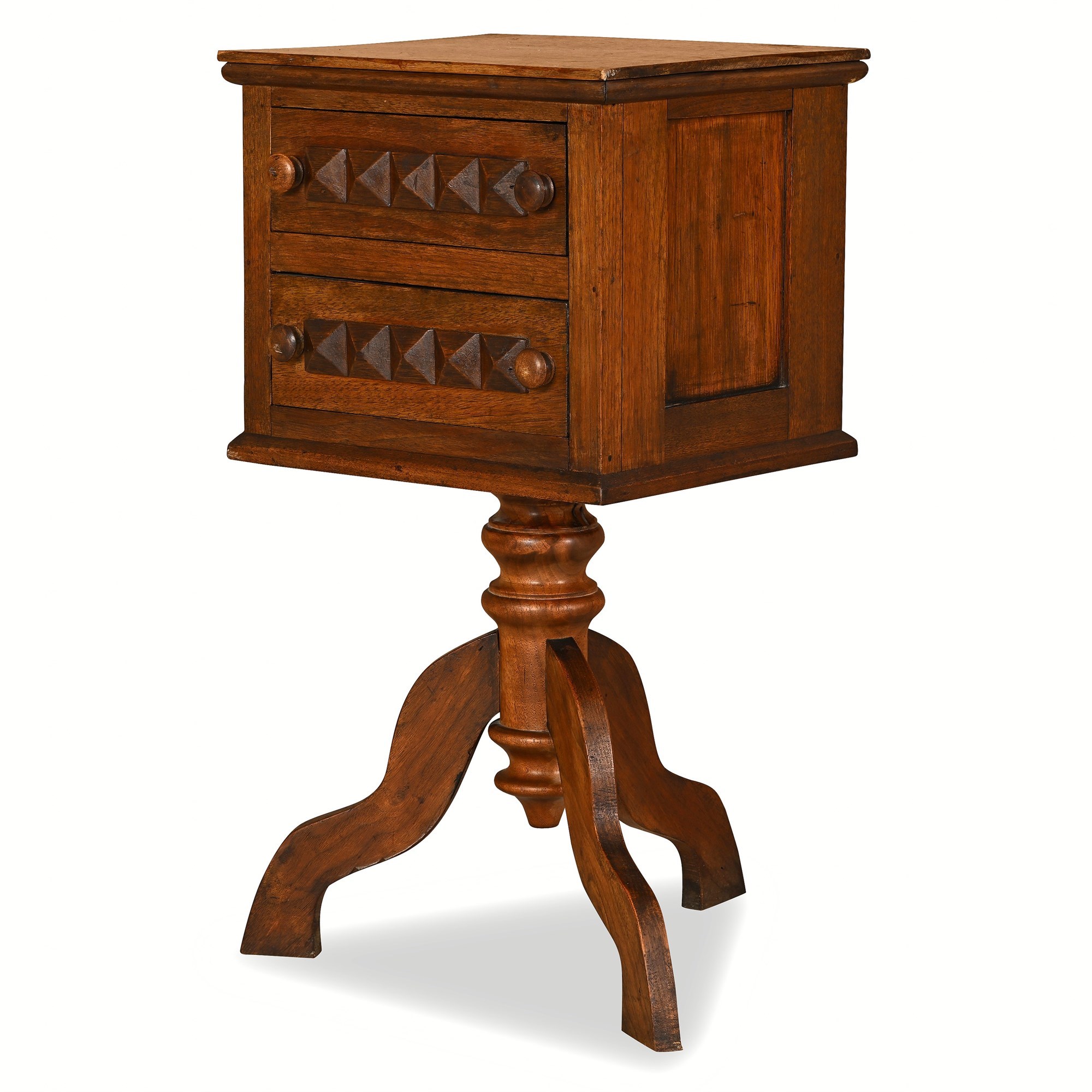
19th-Century Oak Two-Drawer Pedestal Work Stand, Diamond-Point Carved
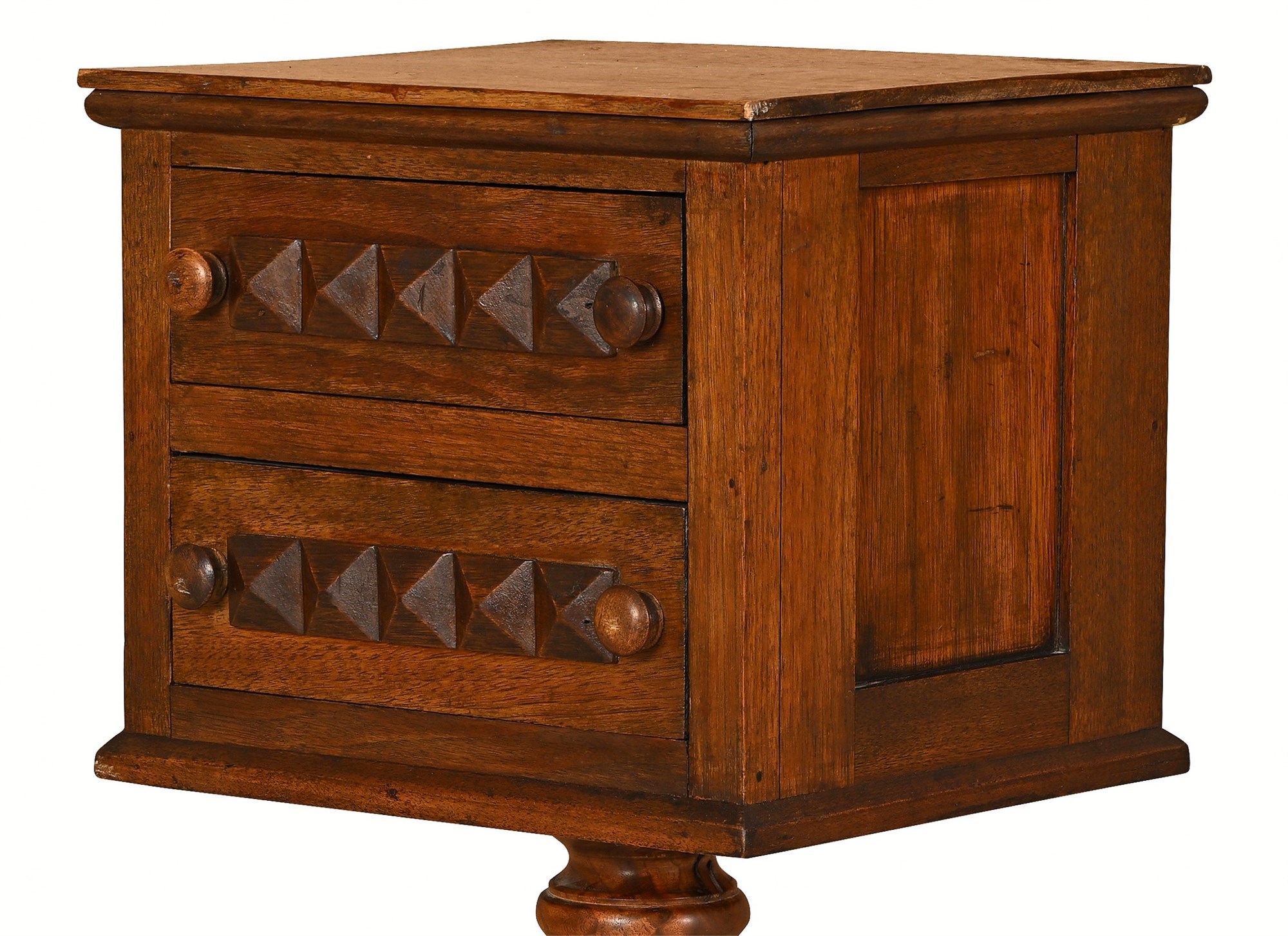
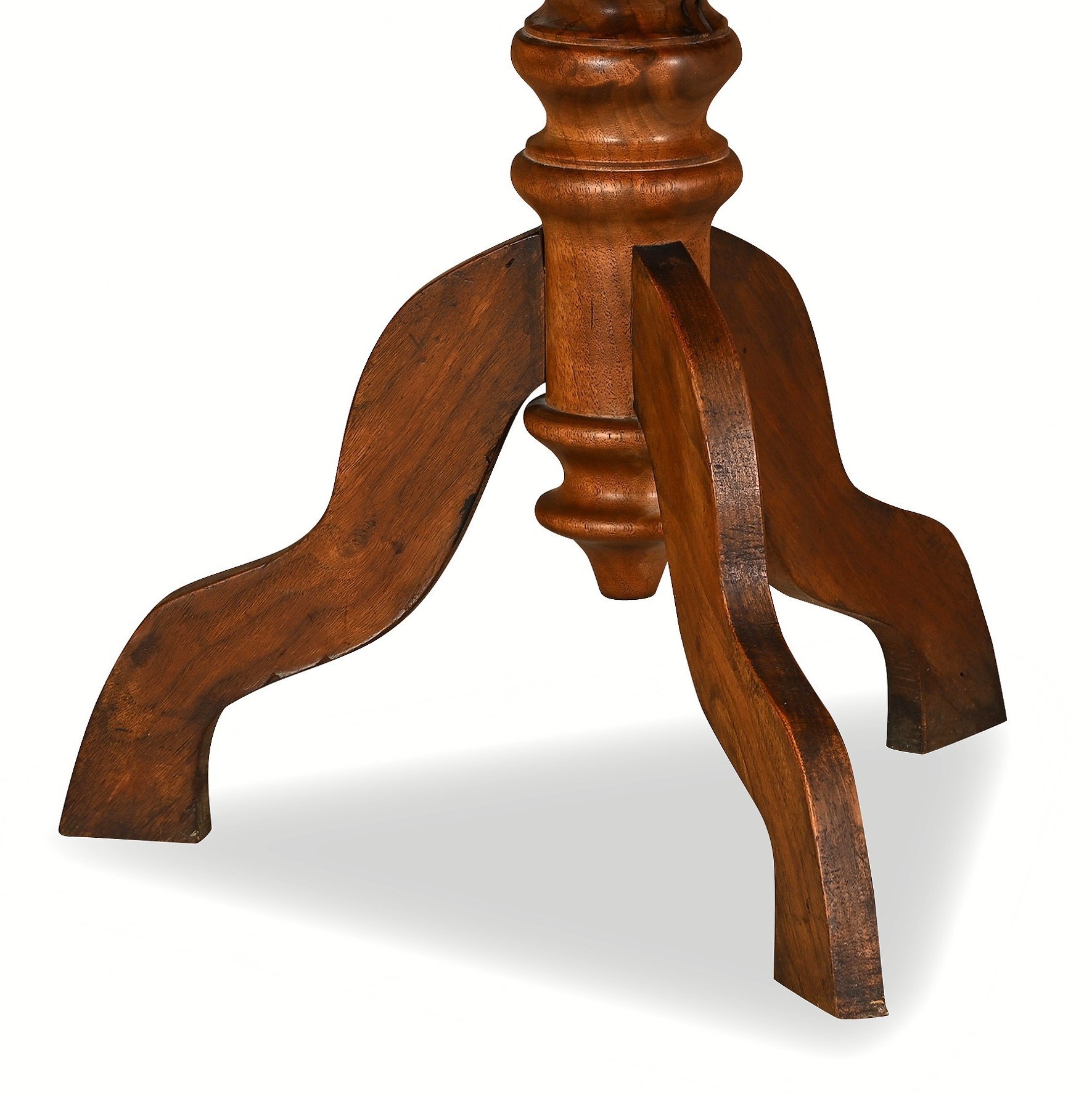
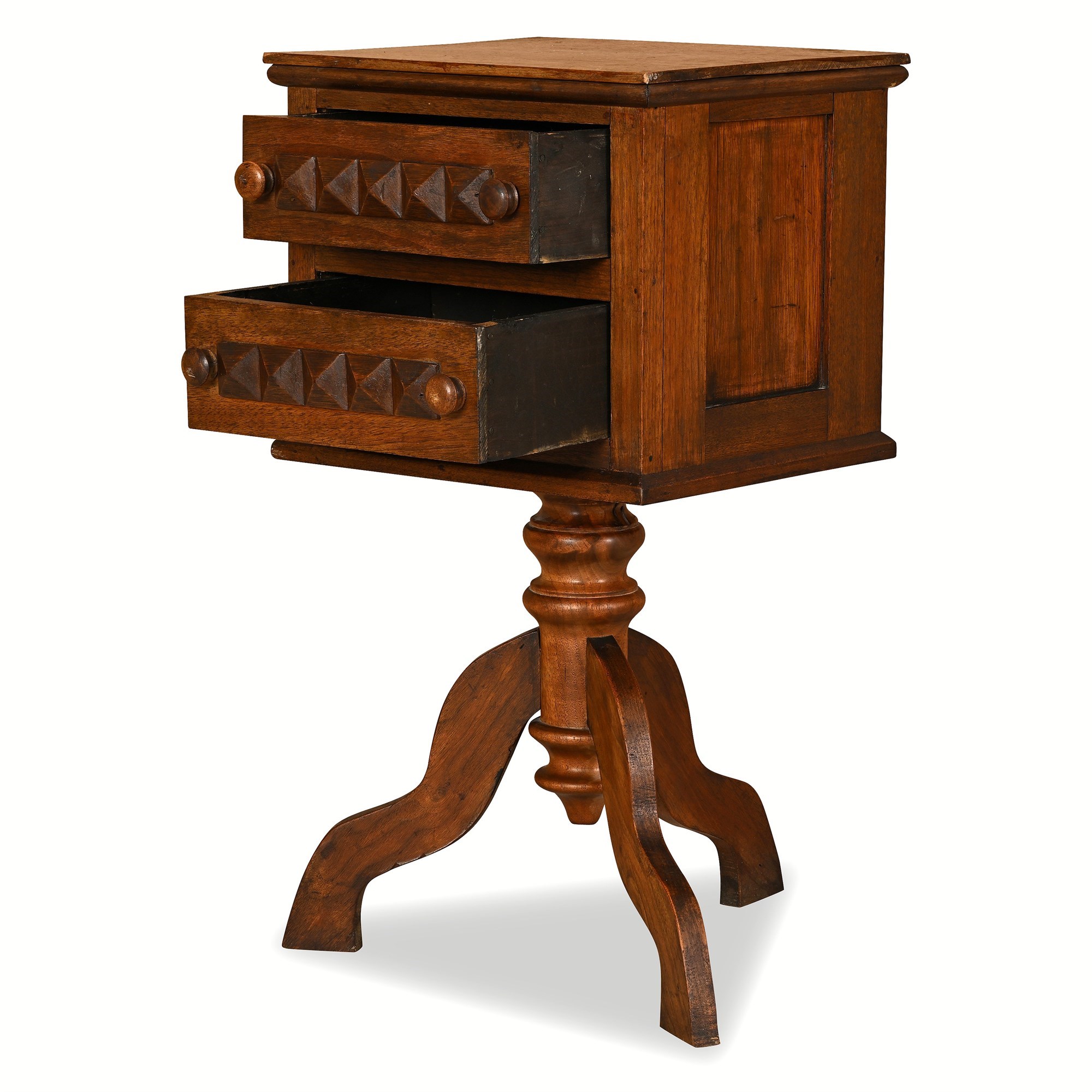
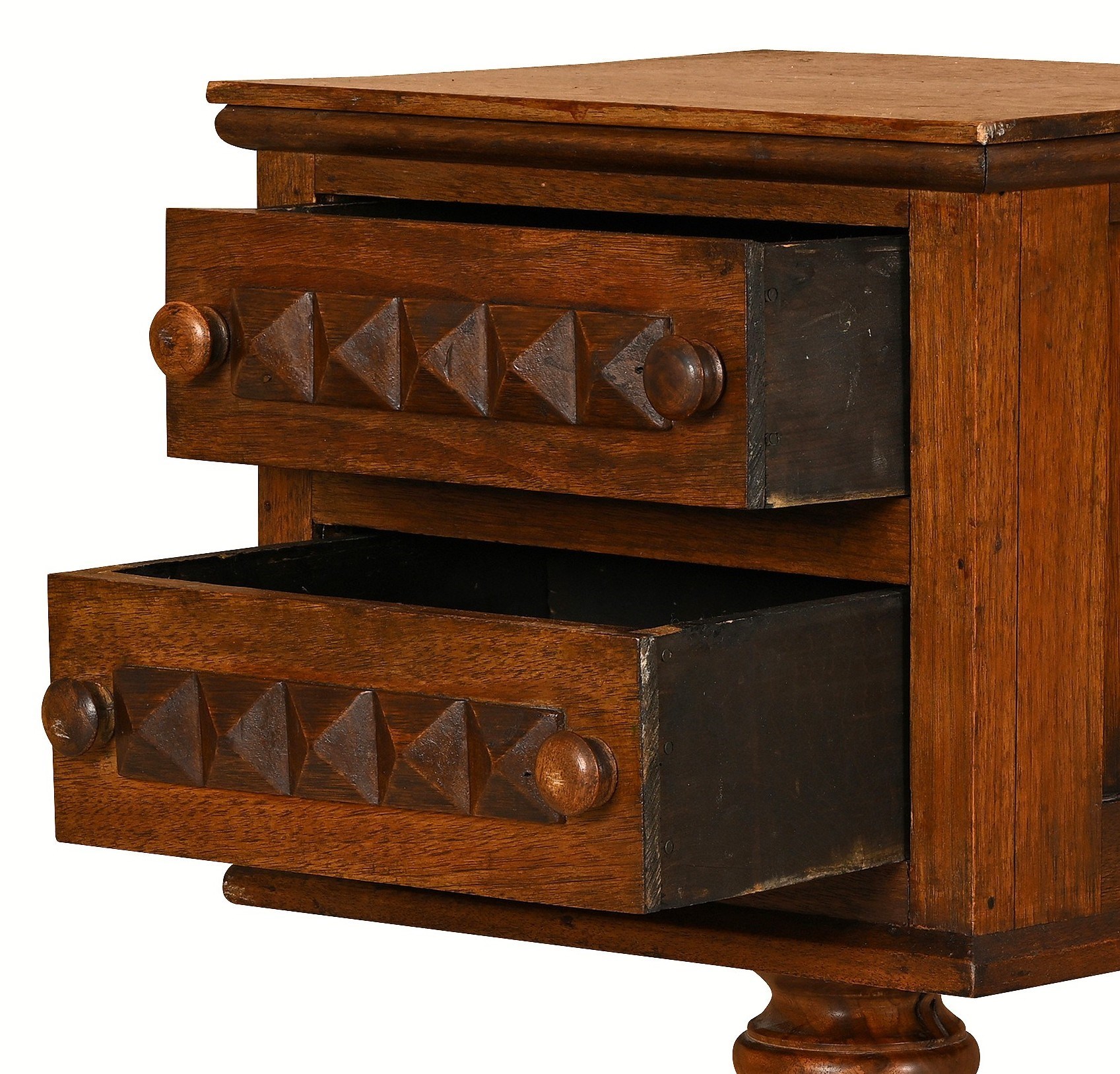
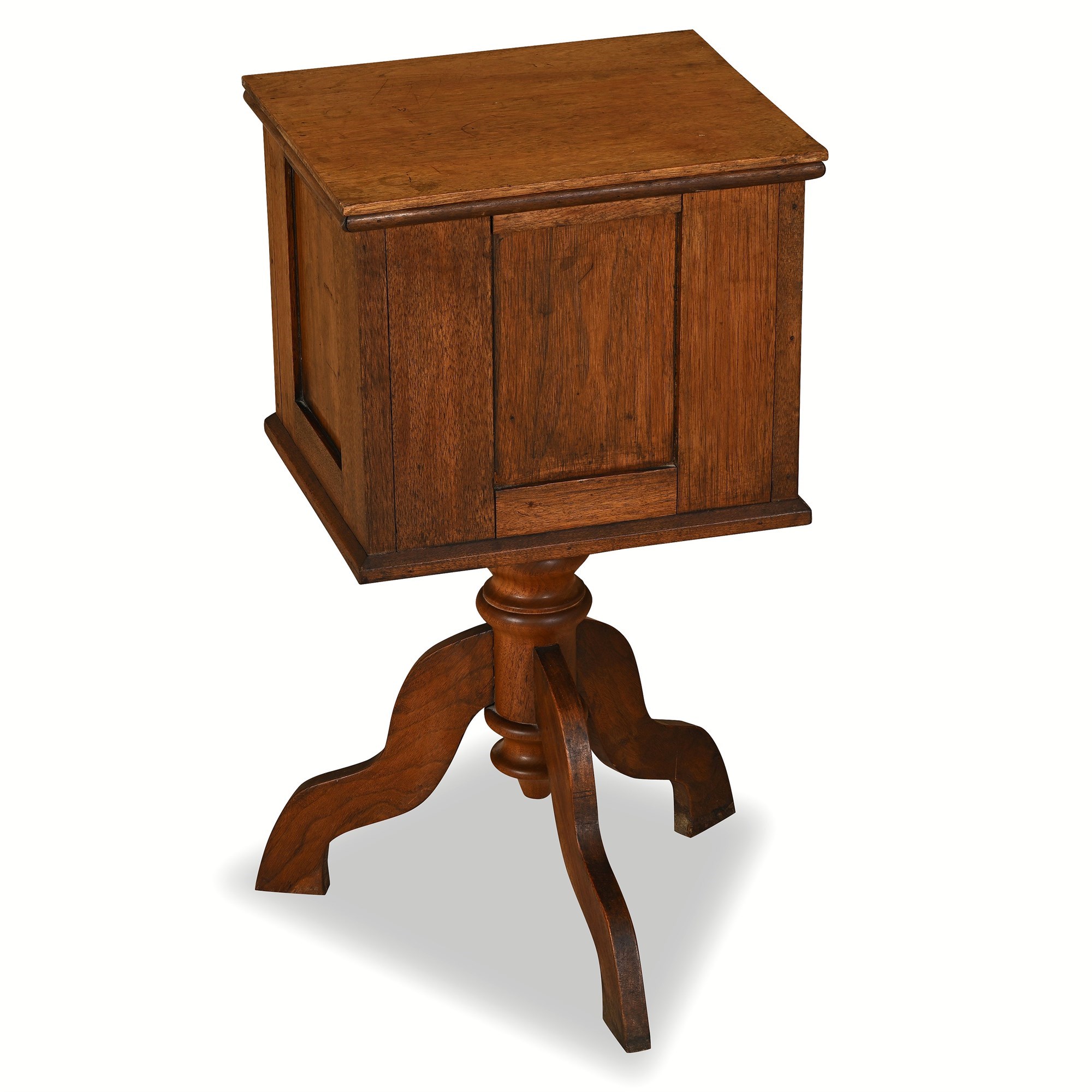
A solid oak pedestal work stand of evident age, the square case fitted with two drawers fronted by rows of bold carved diamond-point bosses — each pyramid cut directly into the drawer face — and flanked by turned ball knobs. The case sits on a molded plinth base and rises to an overhanging top with a rounded edge profile; the sides and back carry recessed fielded panels. Drawer construction is tongue-and-groove, the boxes finished in a darkened secondary wood consistent with pine or poplar. The pedestal is a robustly turned baluster column descending to three scrolled, cabriole-form legs with shaped aprons and squared pad feet — a tripod base with the sweep and presence of mid-19th-century Continental and American work-stand forms.
The diamond-point (pointe de diamant) motif has a long lineage in European decorative woodwork, originating in late-Renaissance Flemish and French case furniture and carrying through into 19th-century provincial and vernacular pieces across France, Spain, and their colonial successors. On American furniture it appears most strongly in the Eastlake movement of the 1870s–1880s, which adapted geometric chip-carved and incised ornament as a reaction against rococo excess — though this piece's tripod pedestal base and overall proportions align it more closely with mid-century European work-stand and guéridon forms than with Eastlake production cabinetry. The finished back confirms it was made to stand away from a wall, functioning as a freestanding work or sewing stand.
CONDITION
Good. Scuffing throughout consistent with age and use; no remarkable damage. Case and base are sturdy, drawers operate, and the finish remains intact across the piece.
DIMENSIONS / SPECIFICATIONS
- Overall: 24" × 17" × 13"
- Construction: Solid wood, likely oak primary; darkened secondary wood in drawer interiors
- Drawers: Two, tongue-and-groove construction
- Hardware: Turned ball knobs, wood
- Back: Finished with recessed panels
- Base: Turned baluster pedestal on three scrolled cabriole-form legs
- Origin: European, late 19th century