Early American Paint-Decorated Child's High Chair, Rush Seat, c. 1830–1850 View Watchlist >
Seller Accepts Credit Cards
Payment and pickup instructions will be available on your invoice (under "My Account") at the conclusion of this auction.
Lot # G542
System ID # 30372281
Start Date
End Date
2 Watching
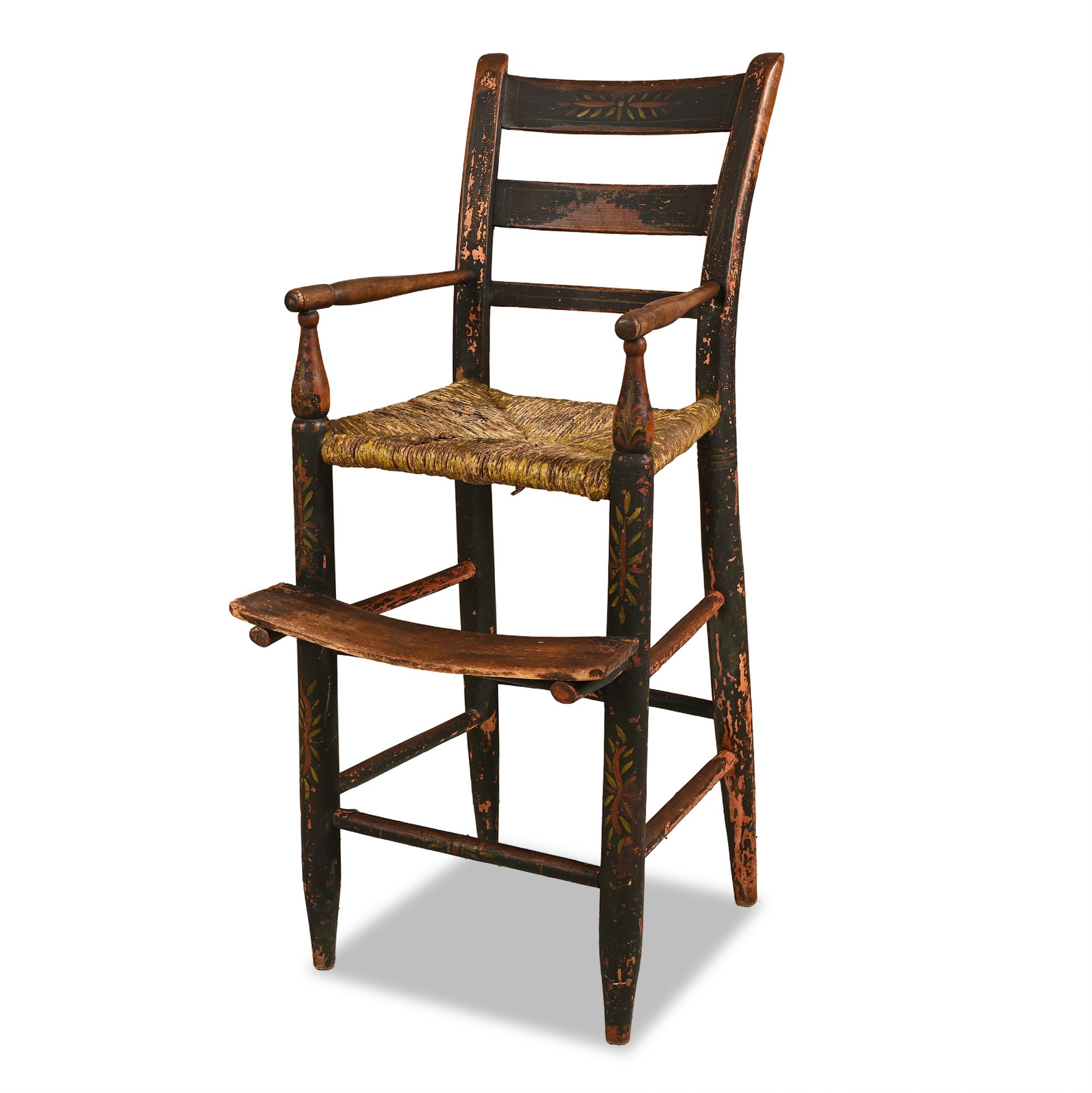
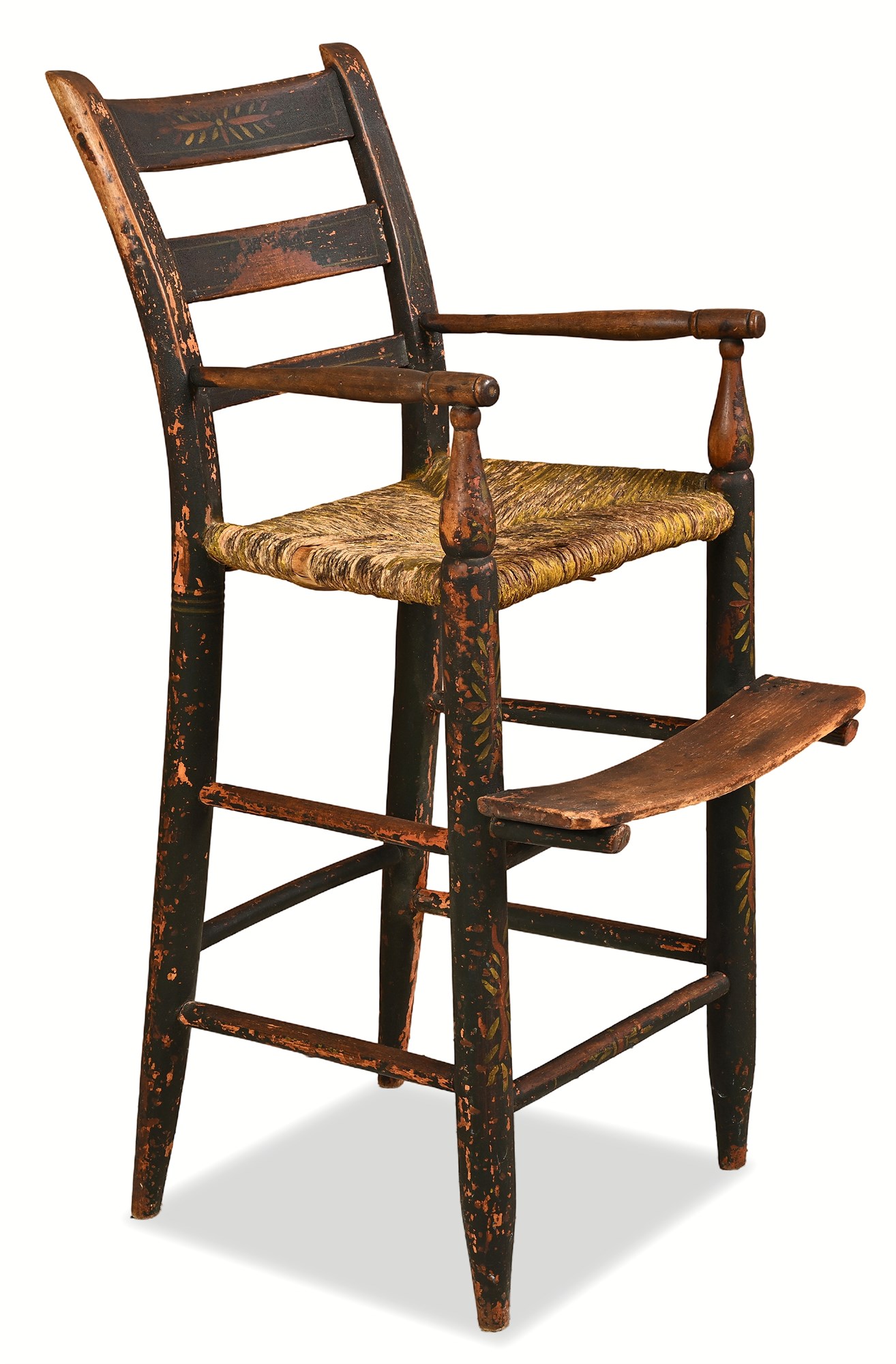
Early American Paint-Decorated Child's High Chair, Rush Seat, c. 1830–1850
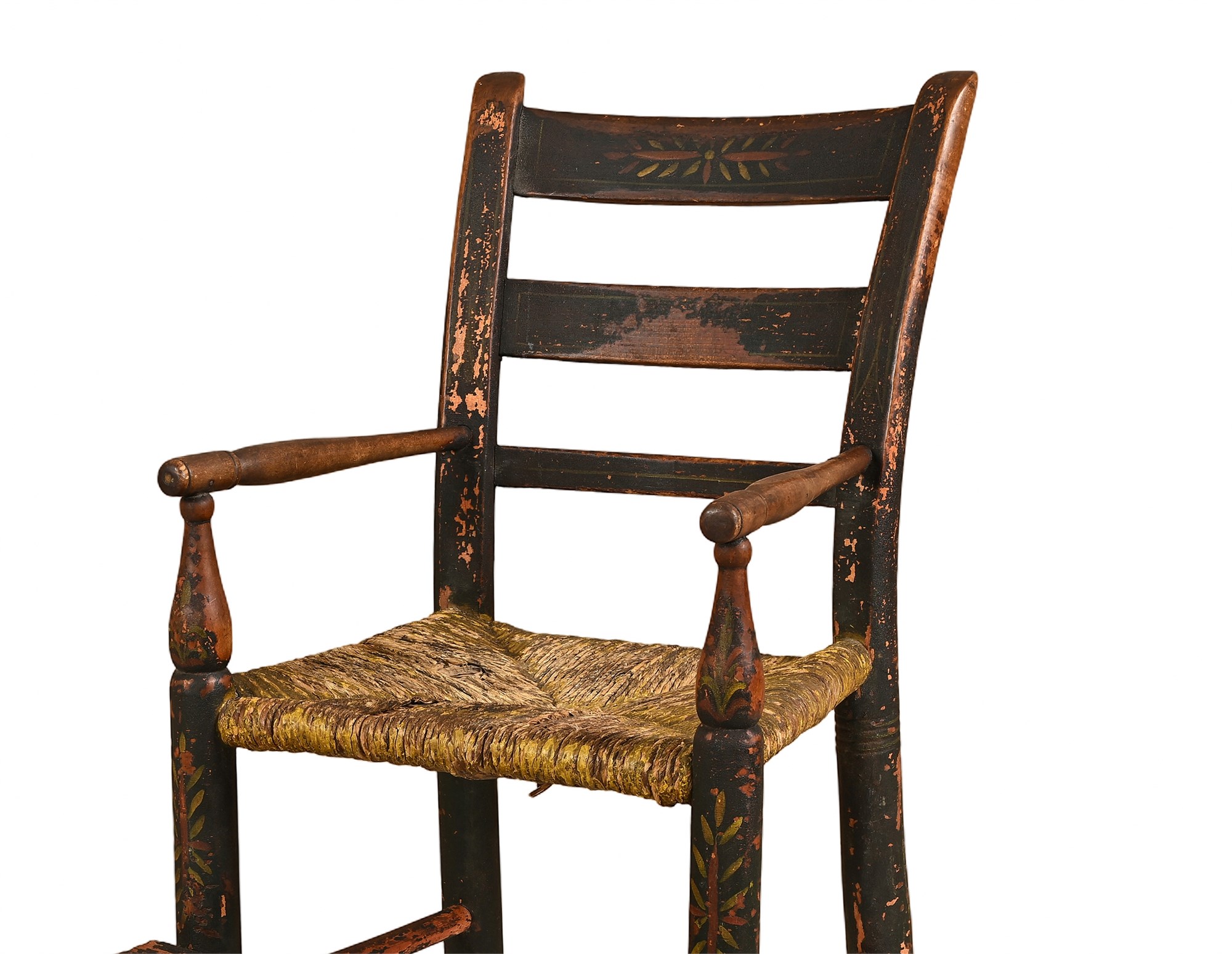
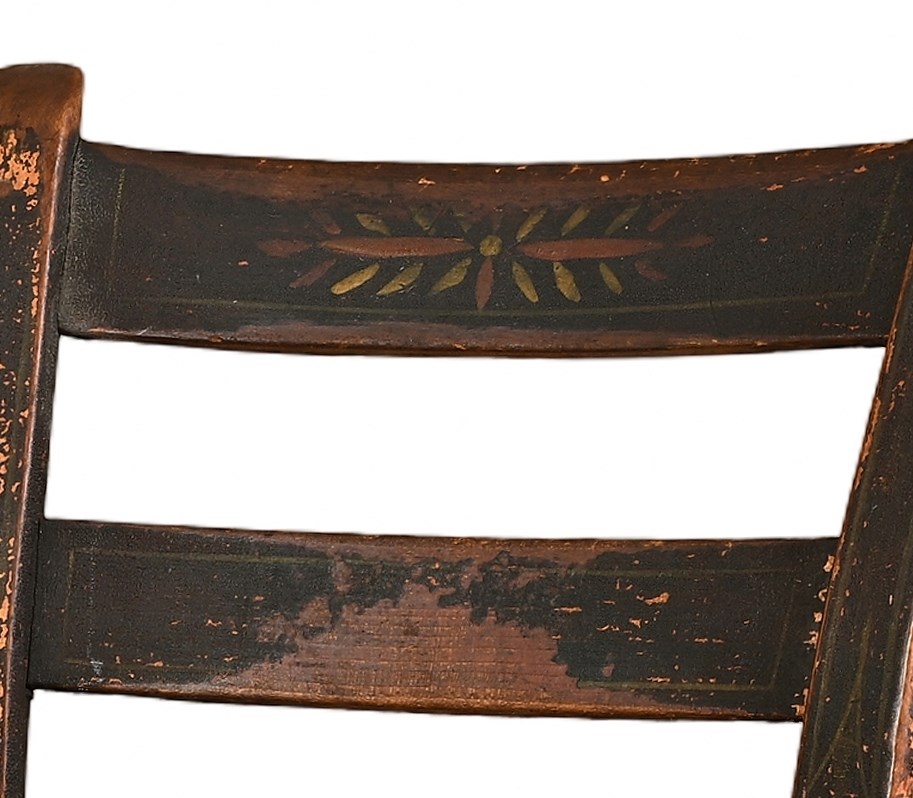
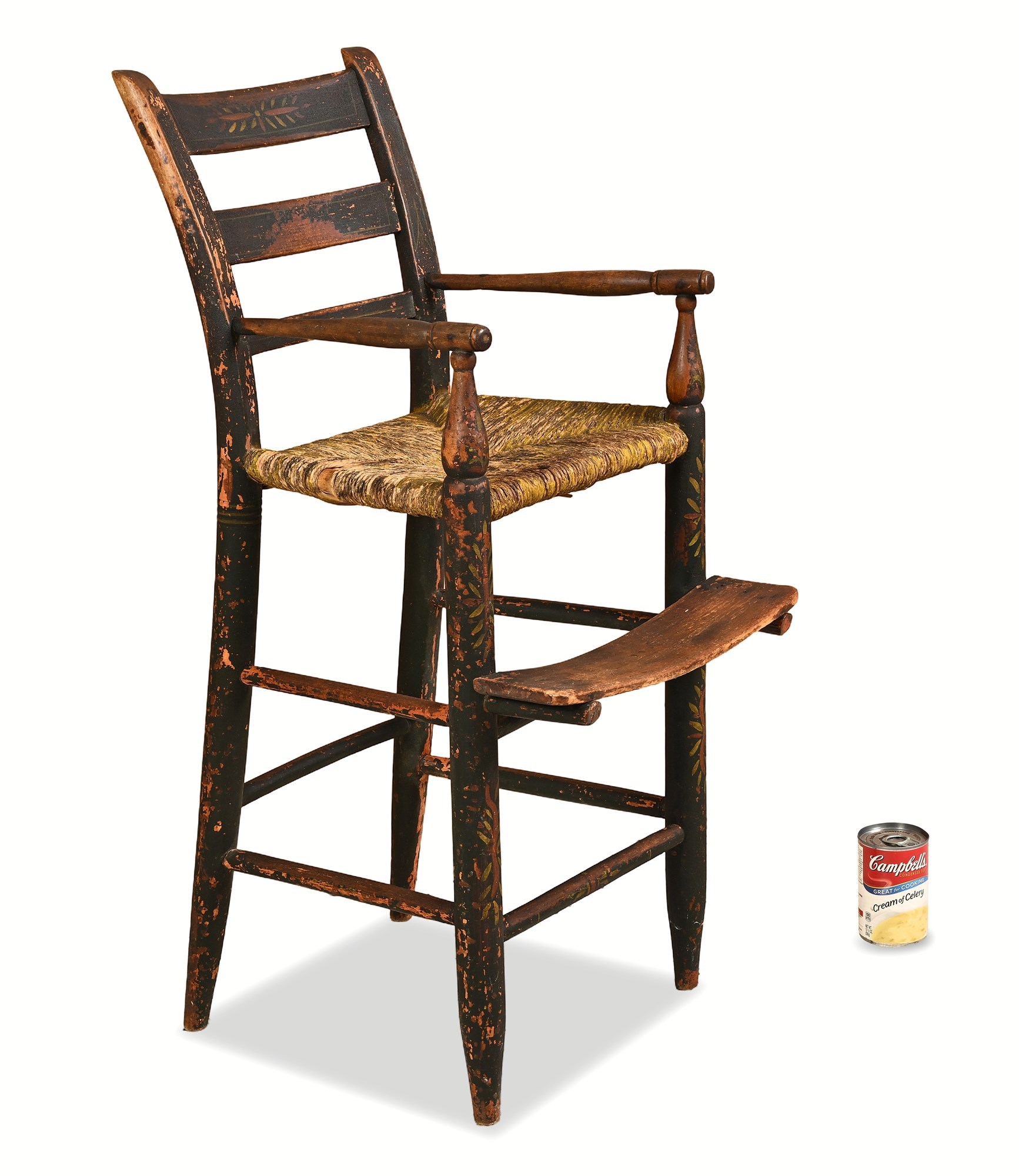
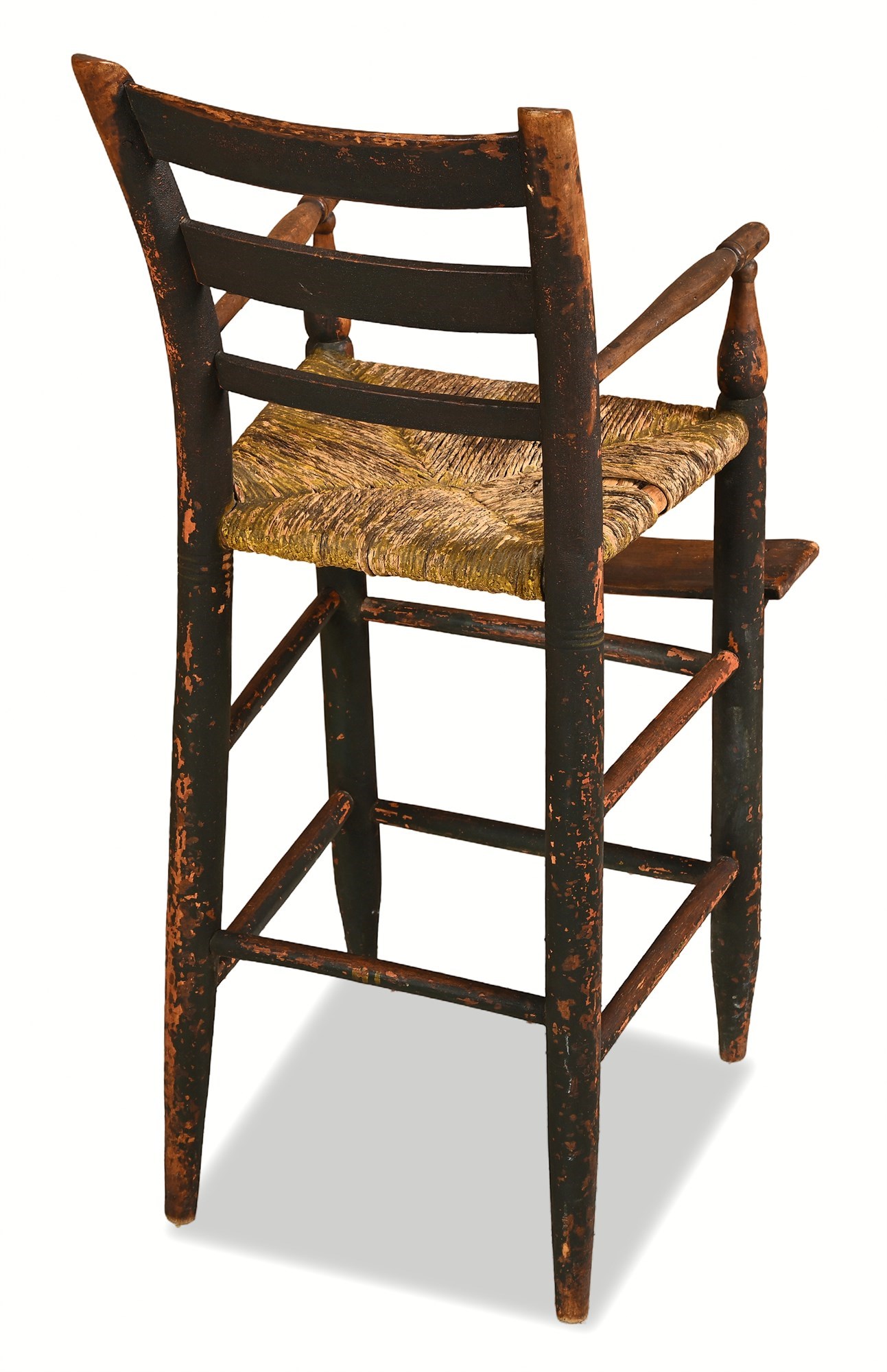
An American fancy-painted child's high chair from the second quarter of the 19th century, built in the vernacular tradition that flourished along the Eastern Seaboard during the peak years of the American fancy-chair movement. The frame is solid hardwood — likely maple or birch, the preferred stock of the period's chair shops — turned on a pole lathe and assembled with mortise-and-tenon joinery. A black-painted ground carries freehand decoration in yellow, red, and green: a starburst or wheat-sheaf motif to the crest rail, leaf-and-stem sprays to the front stiles and legs, and fine stripe detail along the ladder-back slats. This is not stenciled work — the brushwork is freehand, placing the chair in the more individualized end of the fancy-chair tradition rather than the high-production Hitchcock output. Turned arm supports rise to rounded arms, and the splayed rear stiles give the chair its characteristic tall, tapered stance with good visual lightness despite the height.
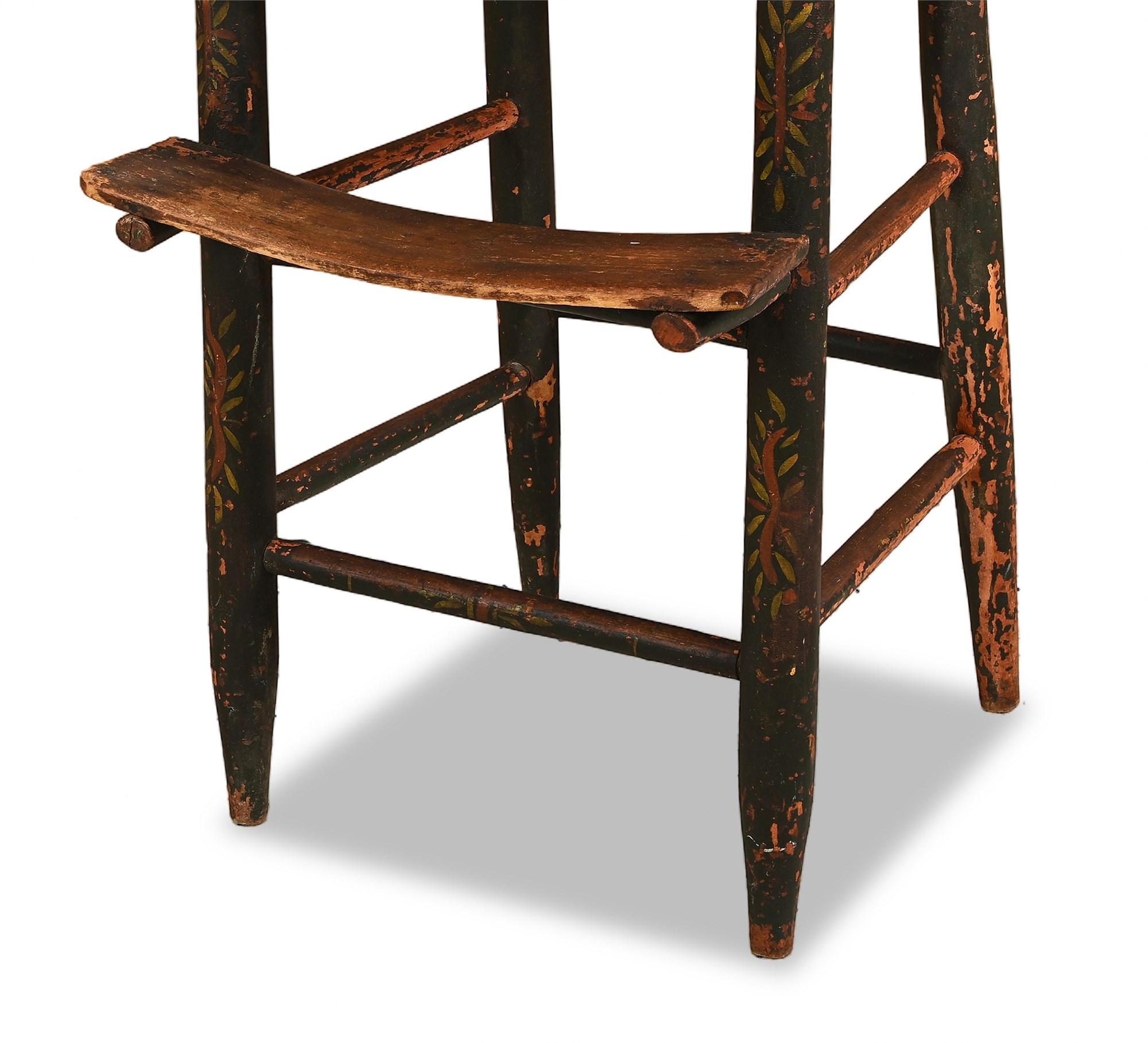
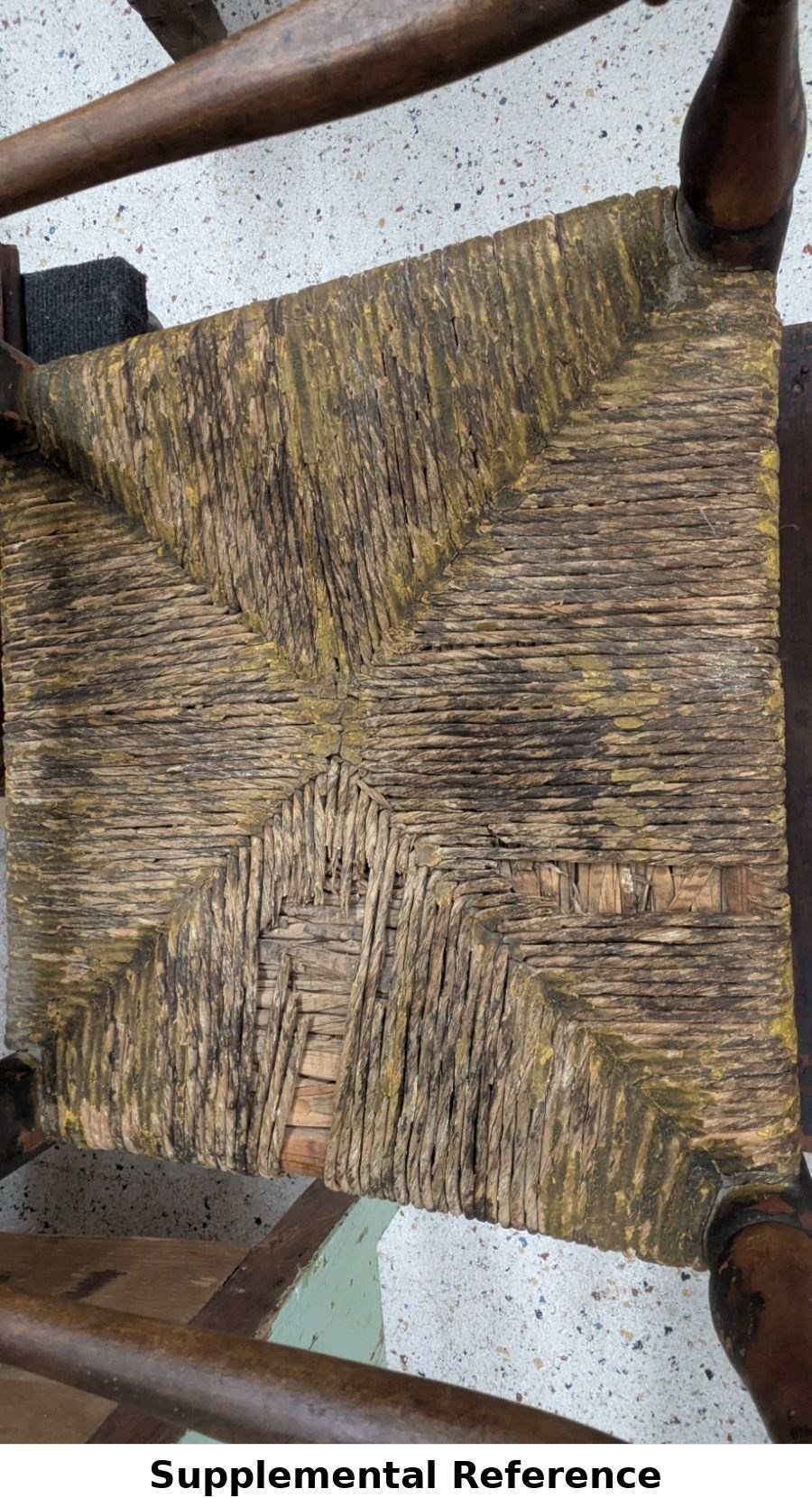
The seat is hand-woven rush — twisted cattail leaf worked in the traditional four-quadrant diagonal pattern over the seat rails, original and intact, with wear and darkening consistent with long domestic use (detail in supplemental reference image). A shaped removable wooden footrest spans the front legs, pinned through with turned wooden pegs and positioned to support a small child sitting at adult table height — the correct ergonomic solution before purpose-built tray high chairs became standard. Double side stretchers and rear stretchers reinforce the base. This form was produced by regional chair shops throughout New England and the Mid-Atlantic states during the 1830s and 1840s, sold through general merchants, and decorated by specialist "fancy painters" — sometimes itinerant — who worked to order for local shops. Original unrestored surfaces like this one, with layered paint loss that reveals the red-orange ground beneath the black, are far more instructive than refinished examples and draw consistent interest from American folk furniture collectors.
CONDITION
Good, original unrestored condition with age-appropriate wear throughout. The frame is wobbly — likely loose mortise-and-tenon joints from seasonal movement — and the paint shows heavy loss to bare wood across the stiles, legs, and arms, with a red-orange ground layer exposed beneath the black in many areas. The rush seat is intact but worn, with fraying, fiber darkening, and separation at the center of the weave consistent with long use; the footrest retains its original surface with similar paint attrition.
DIMENSIONS / SPECIFICATIONS
- Overall: 33½" H × 14¼" W × 18" D
- Seat Height: 21"
- Seat: 11½" W × 11" D
- Frame: Solid hardwood (maple or birch)
- Seat: Hand-woven rush, original
- Finish: Black-painted ground with freehand polychrome decoration, original unrestored
- Origin: American, Eastern Seaboard, c. 1830–1850
- Campbell's Soup Can (4" H) Shown for Scale — Not Included