Henri II Revival Carved Oak Buffet à Deux Corps, French, Late 19th C. View Watchlist >
Seller Accepts Credit Cards
Payment and pickup instructions will be available on your invoice (under "My Account") at the conclusion of this auction.
Lot # G677
System ID # 30536934
Start Date
End Date
3 Watching
Henri II Revival Carved Oak Buffet à Deux Corps, French, Late 19th C.
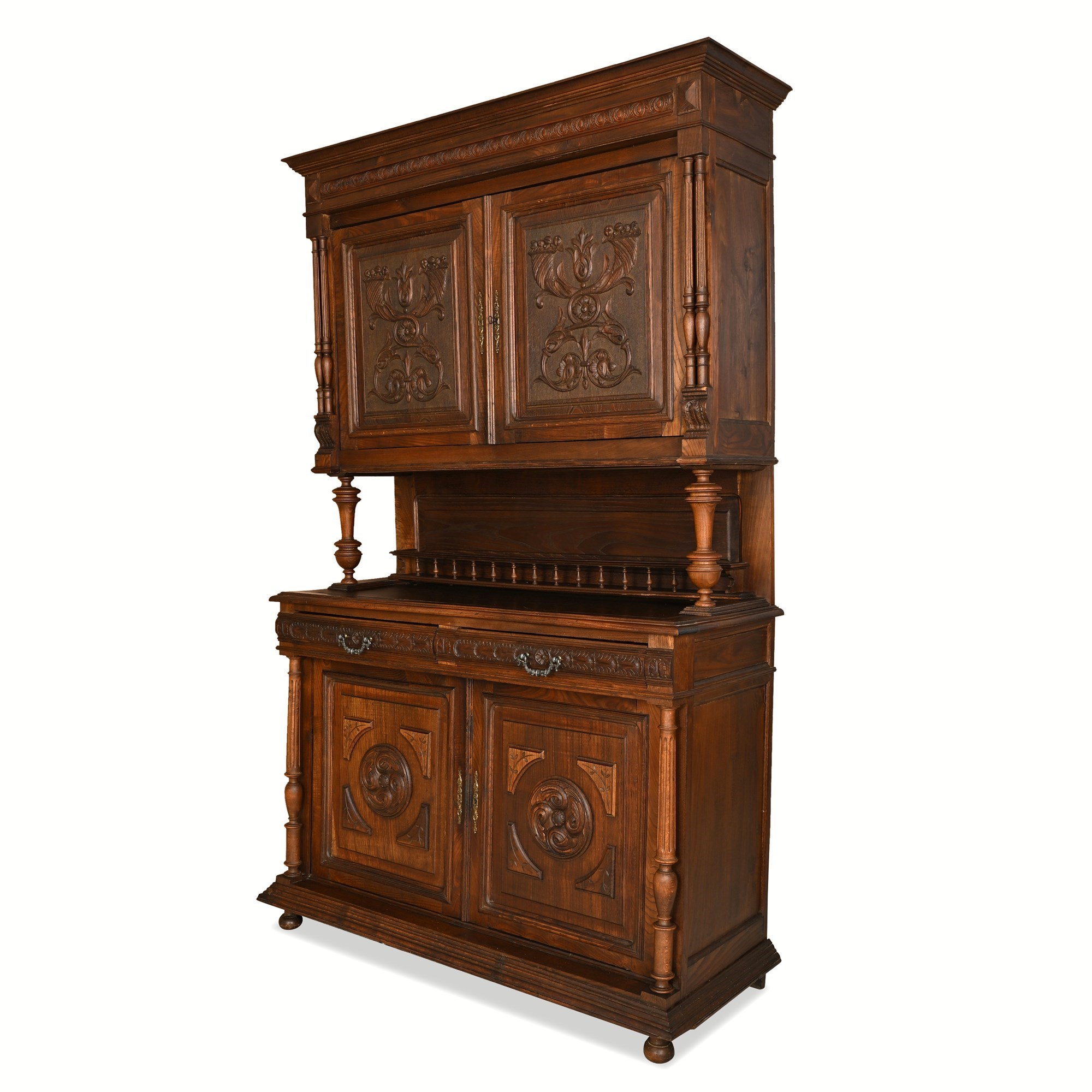
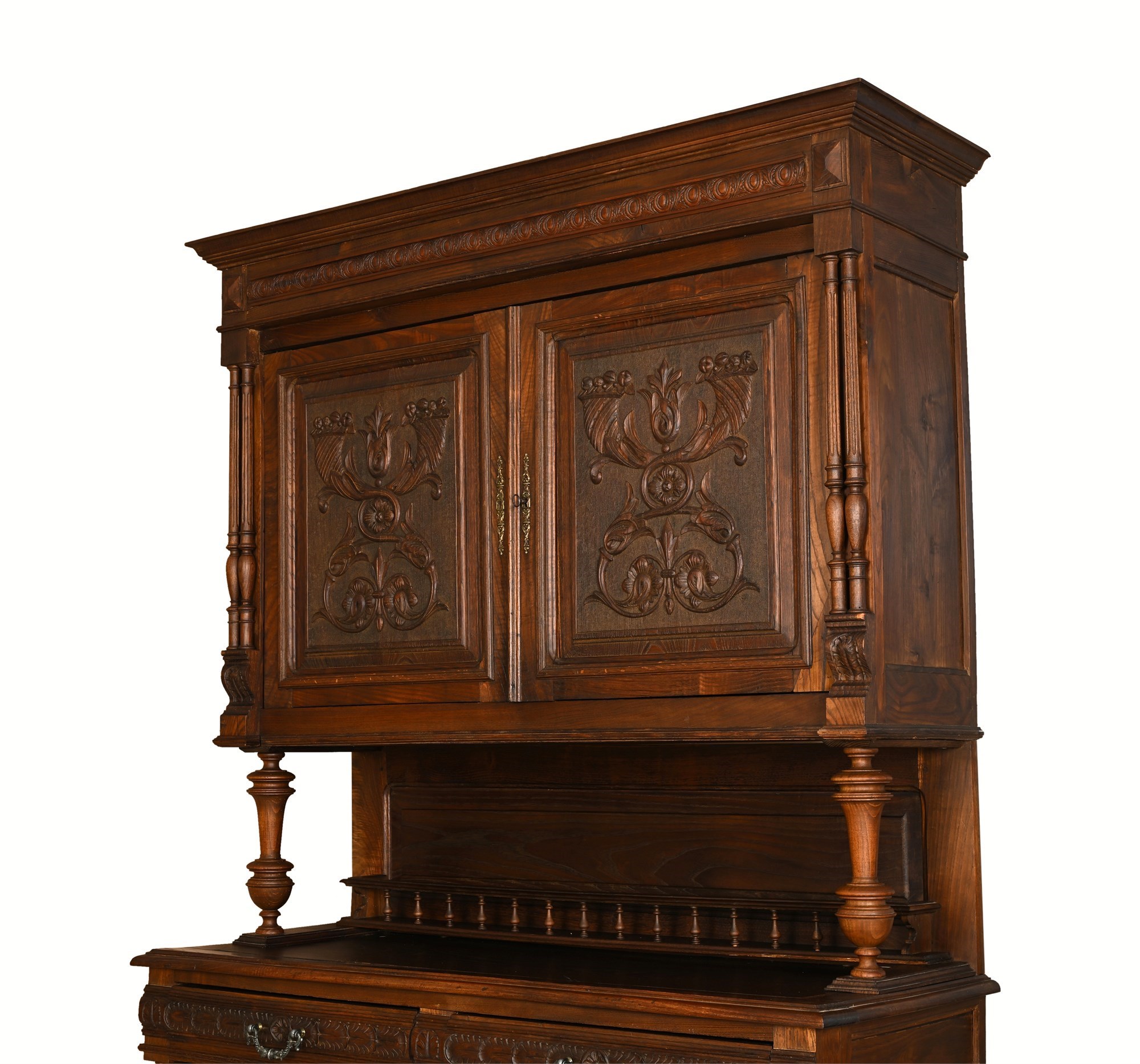
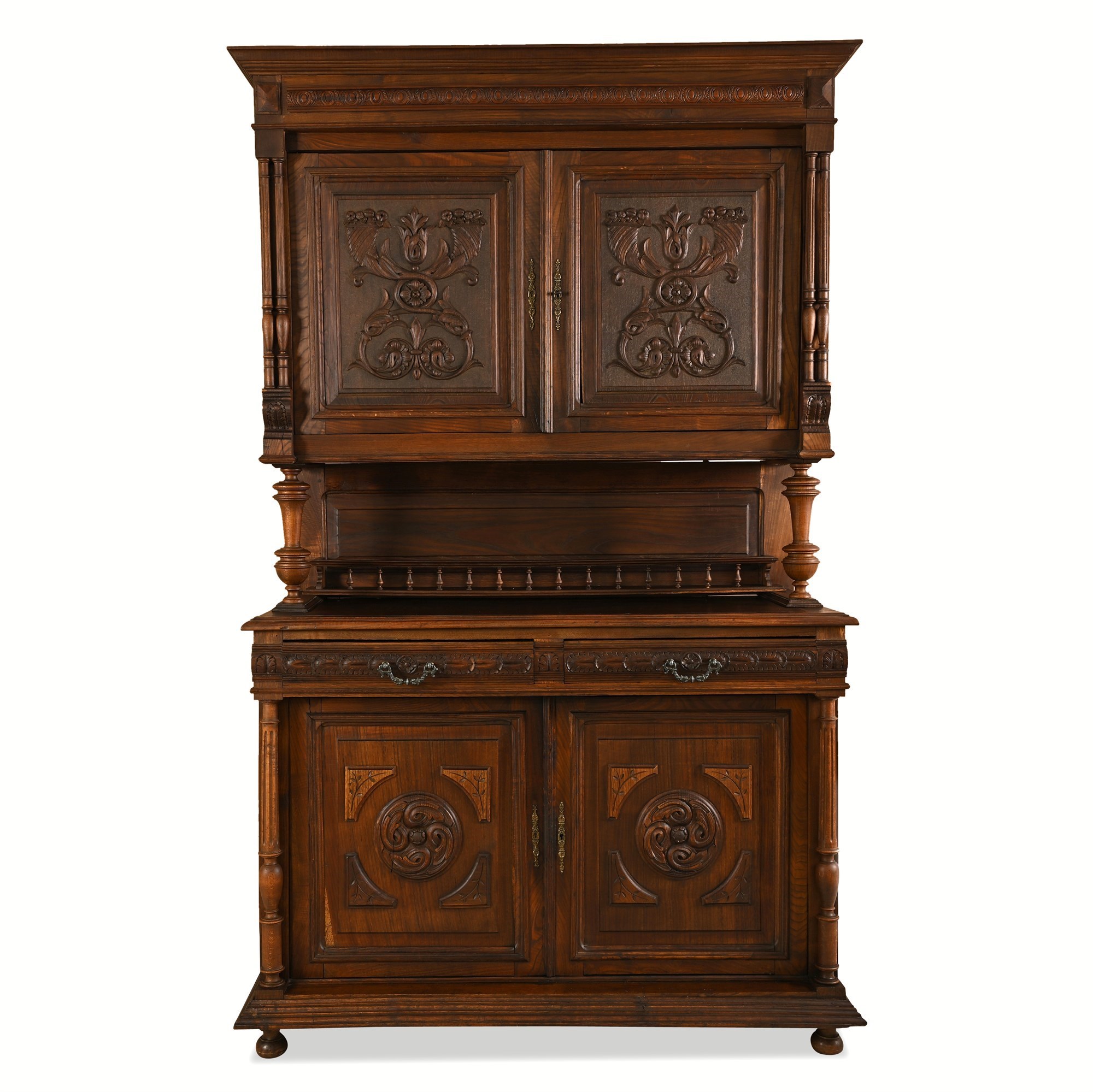
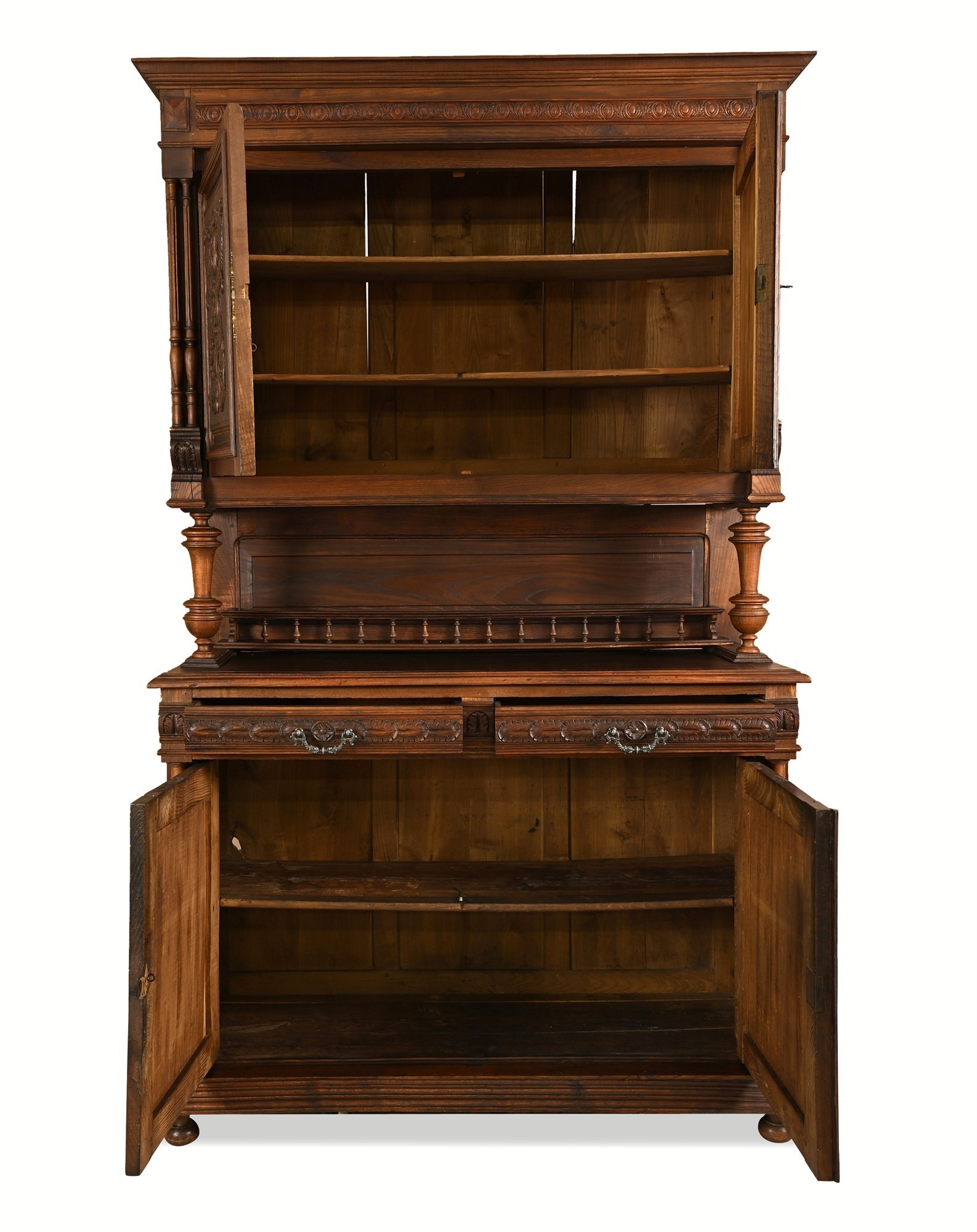
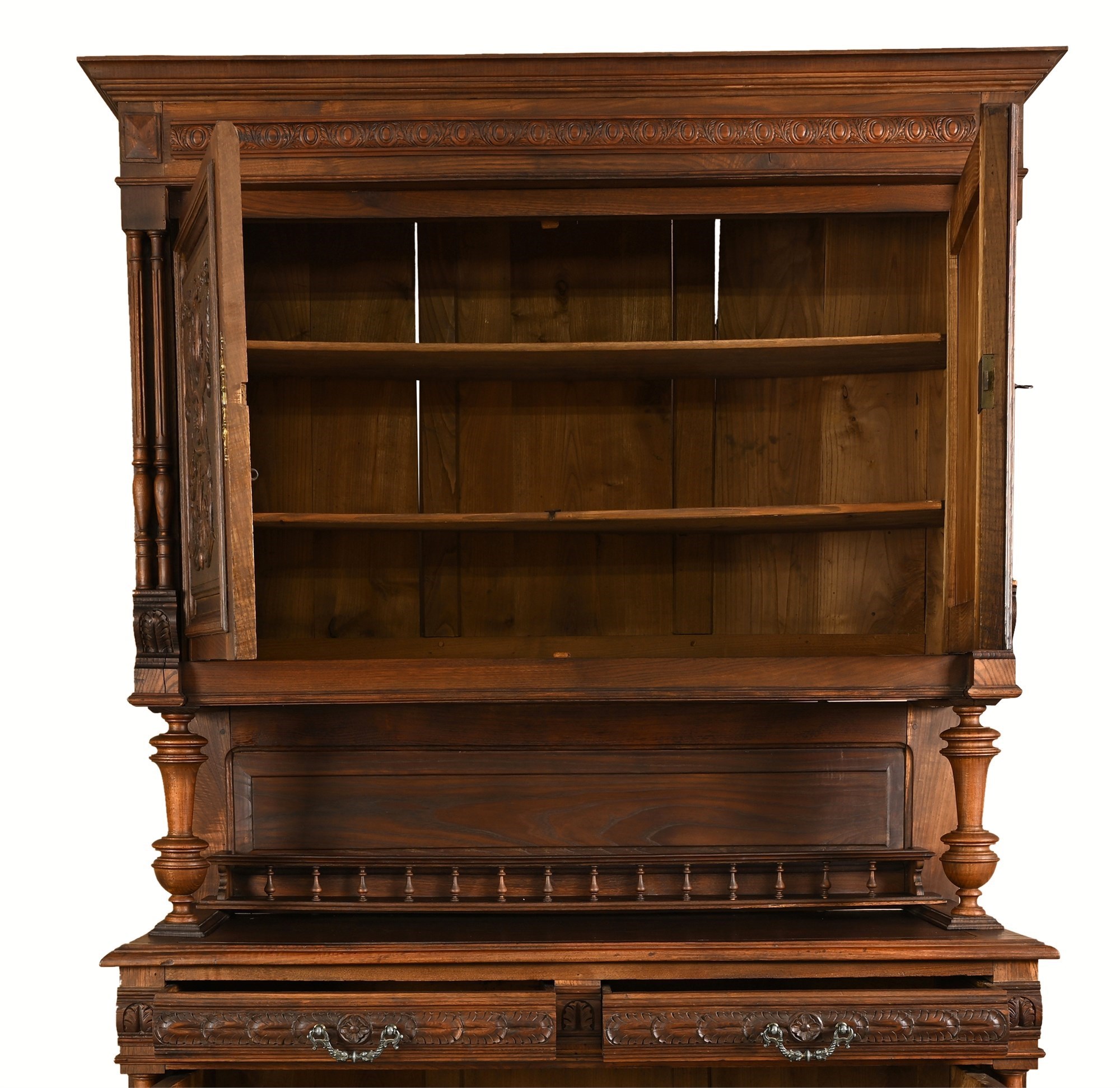
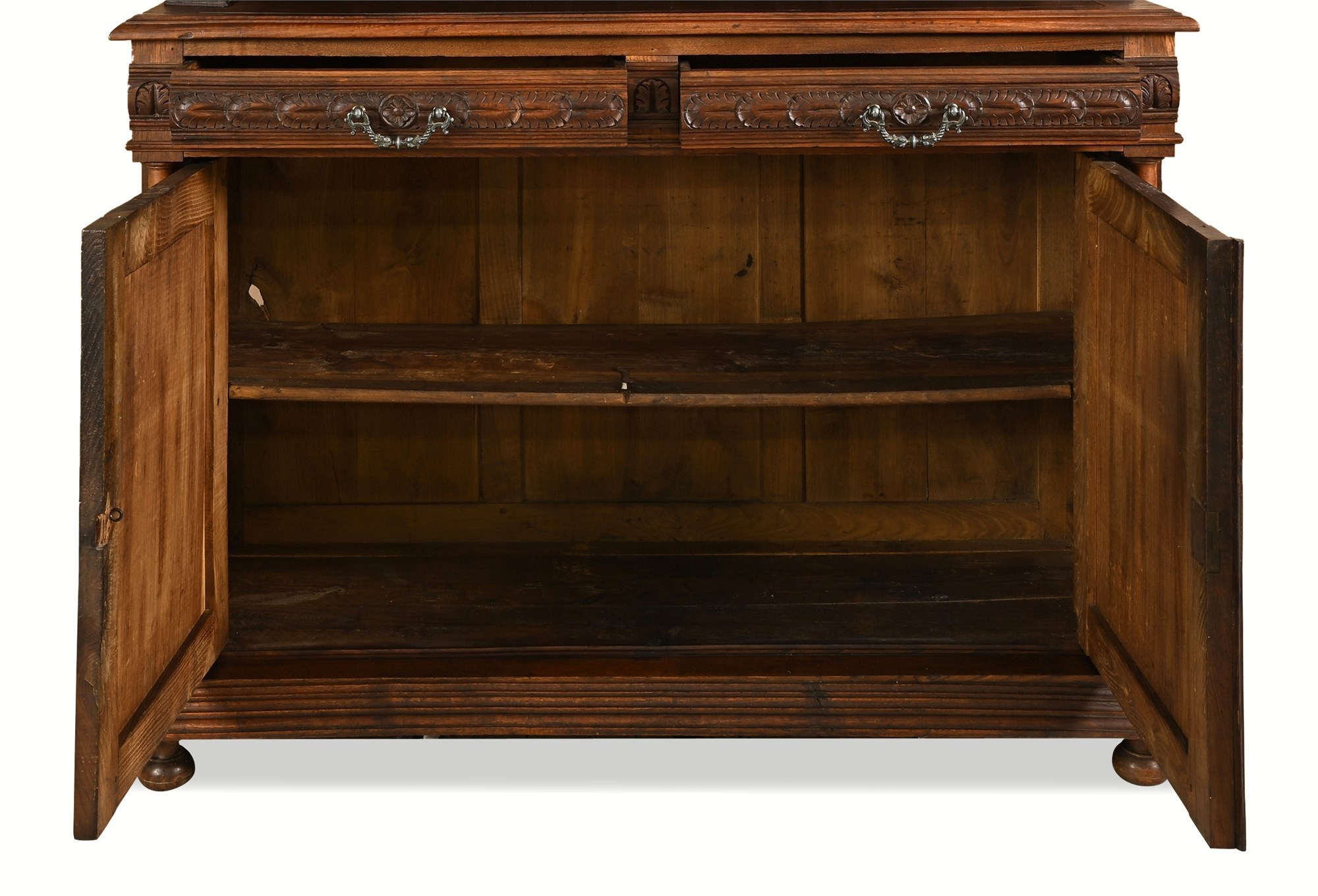
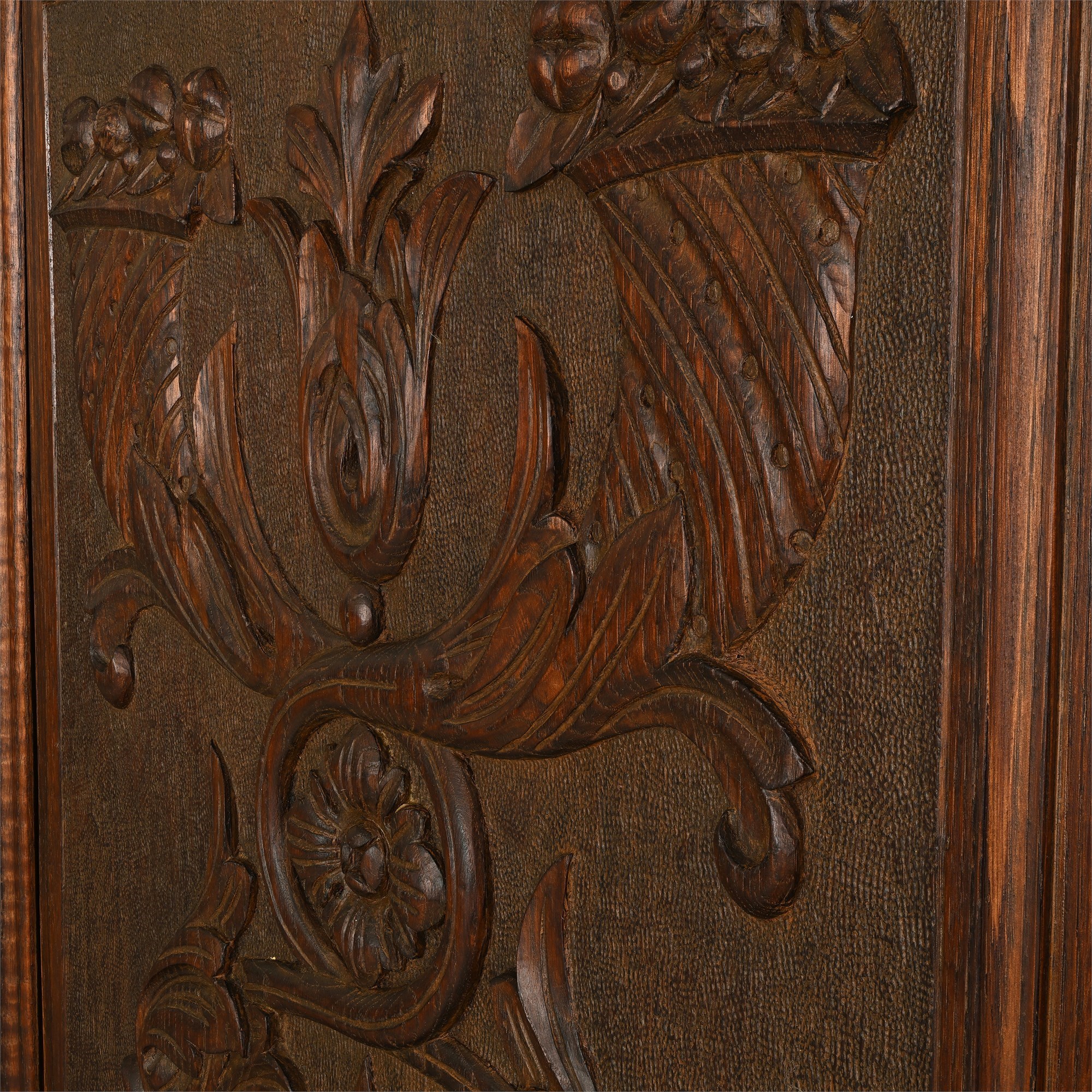
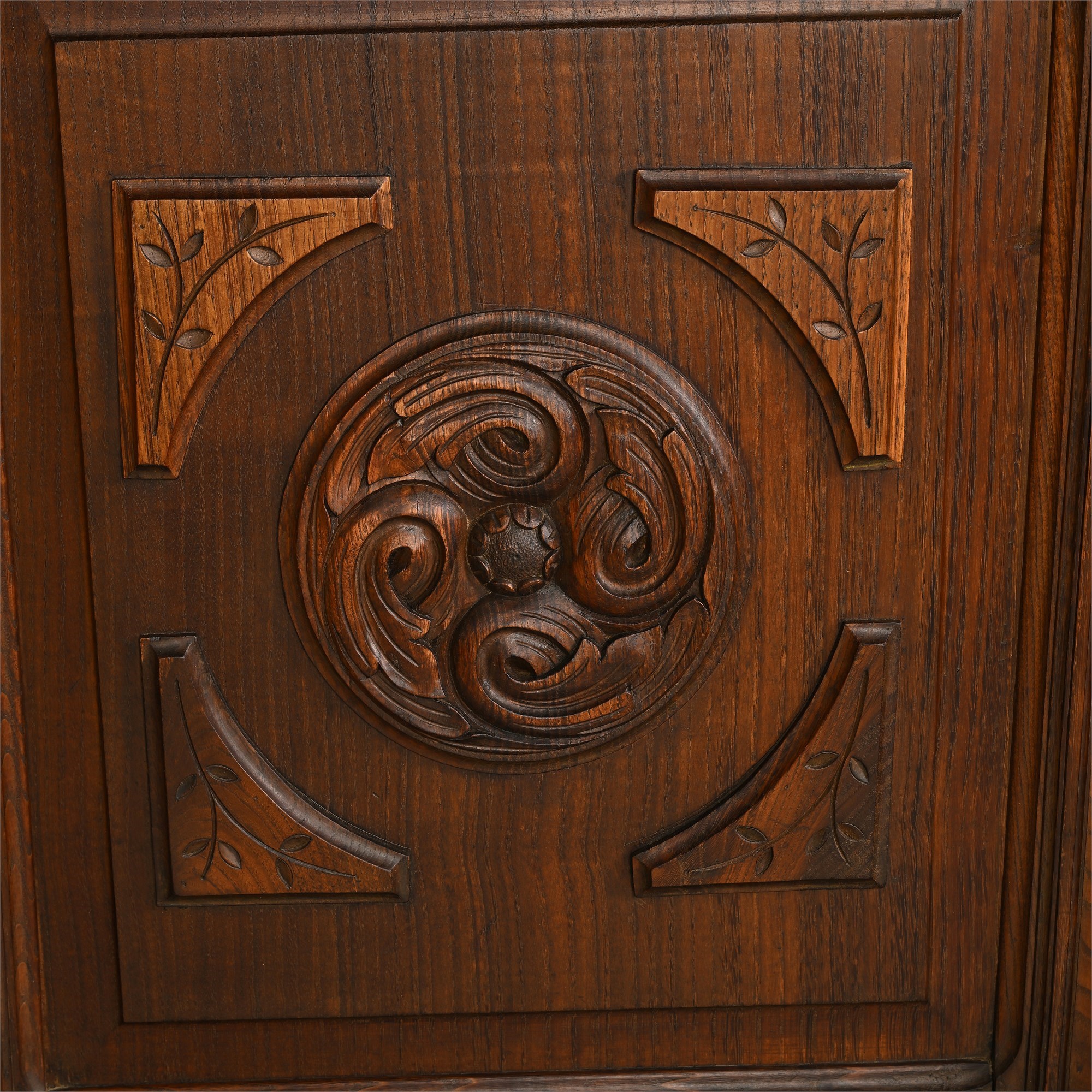
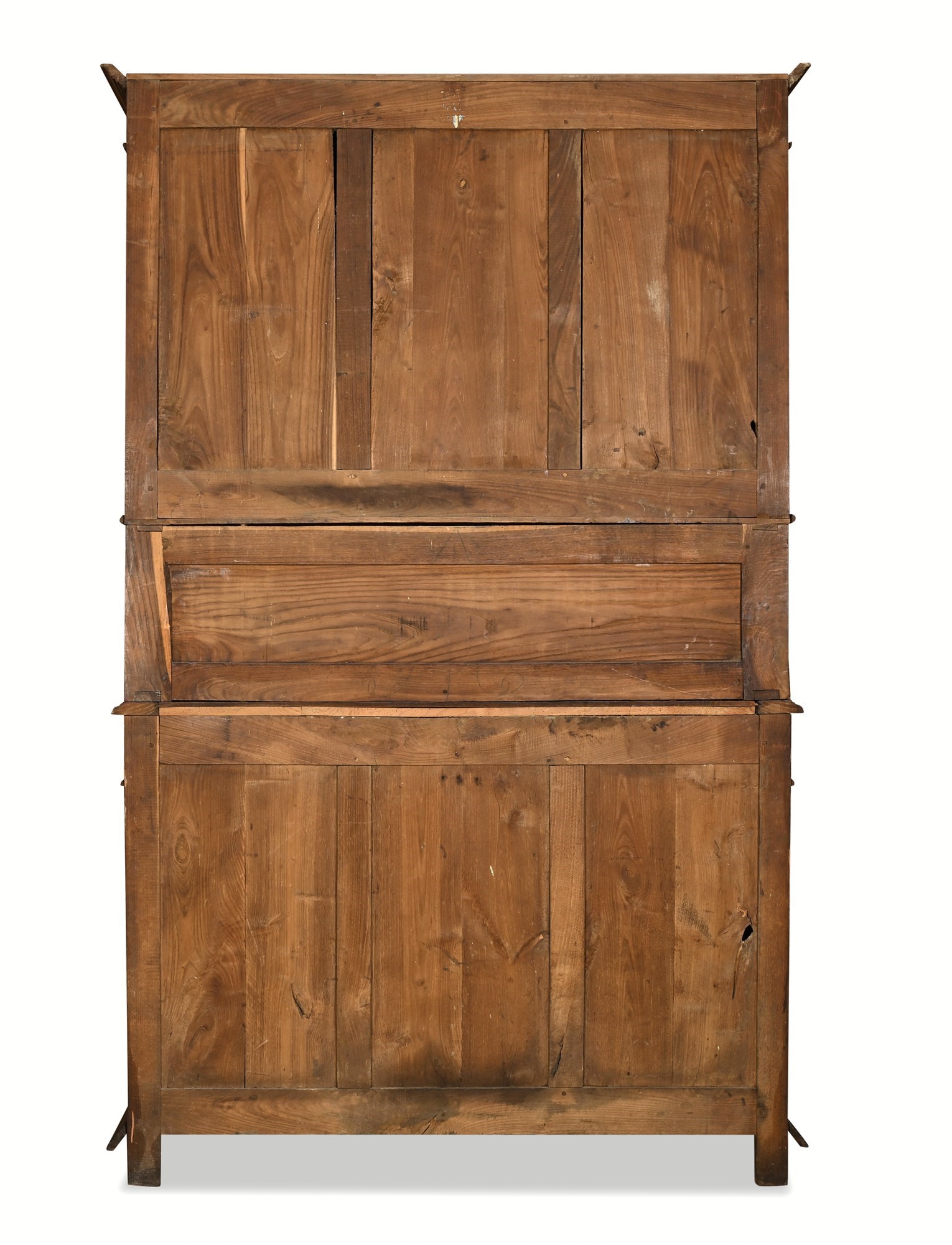
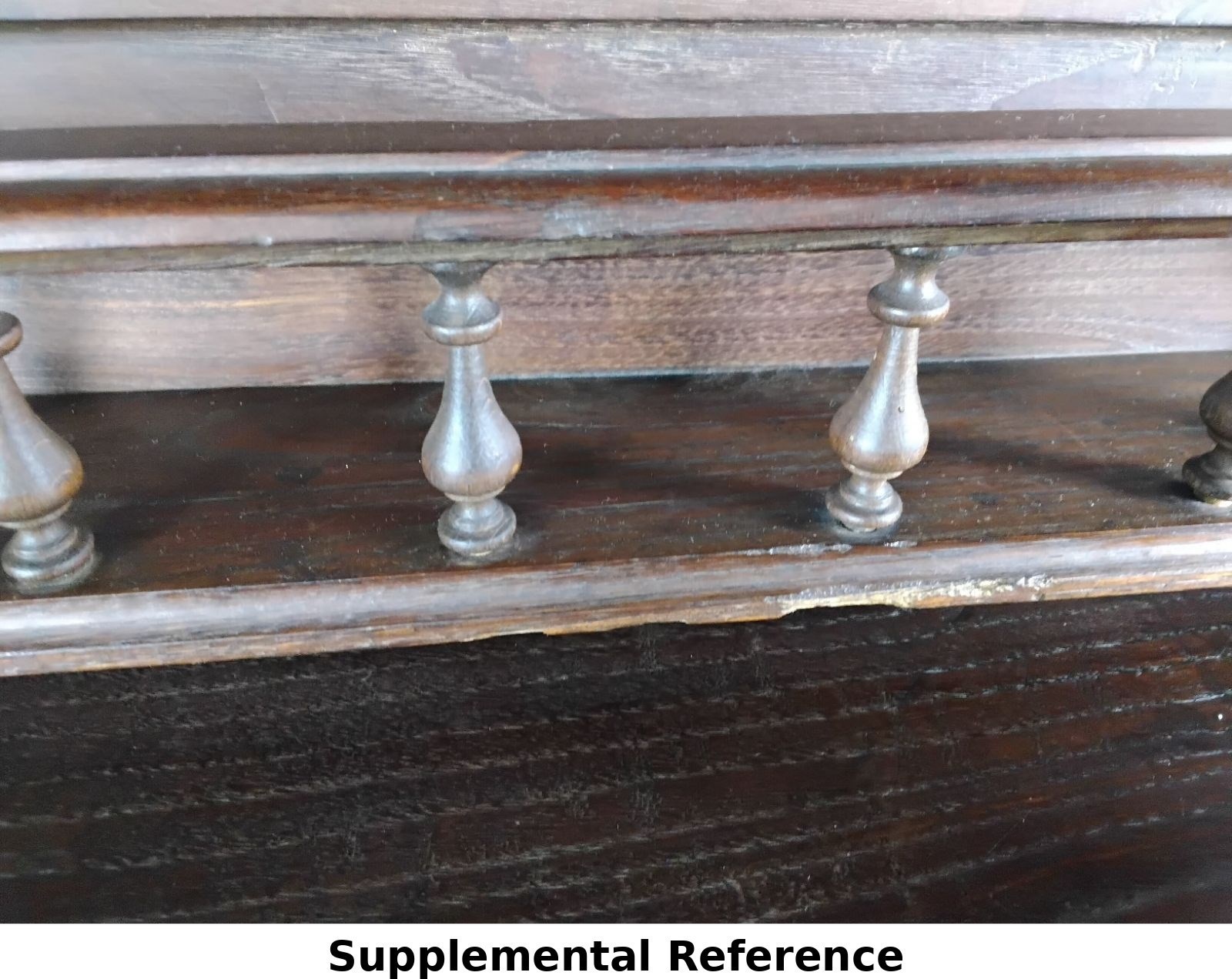
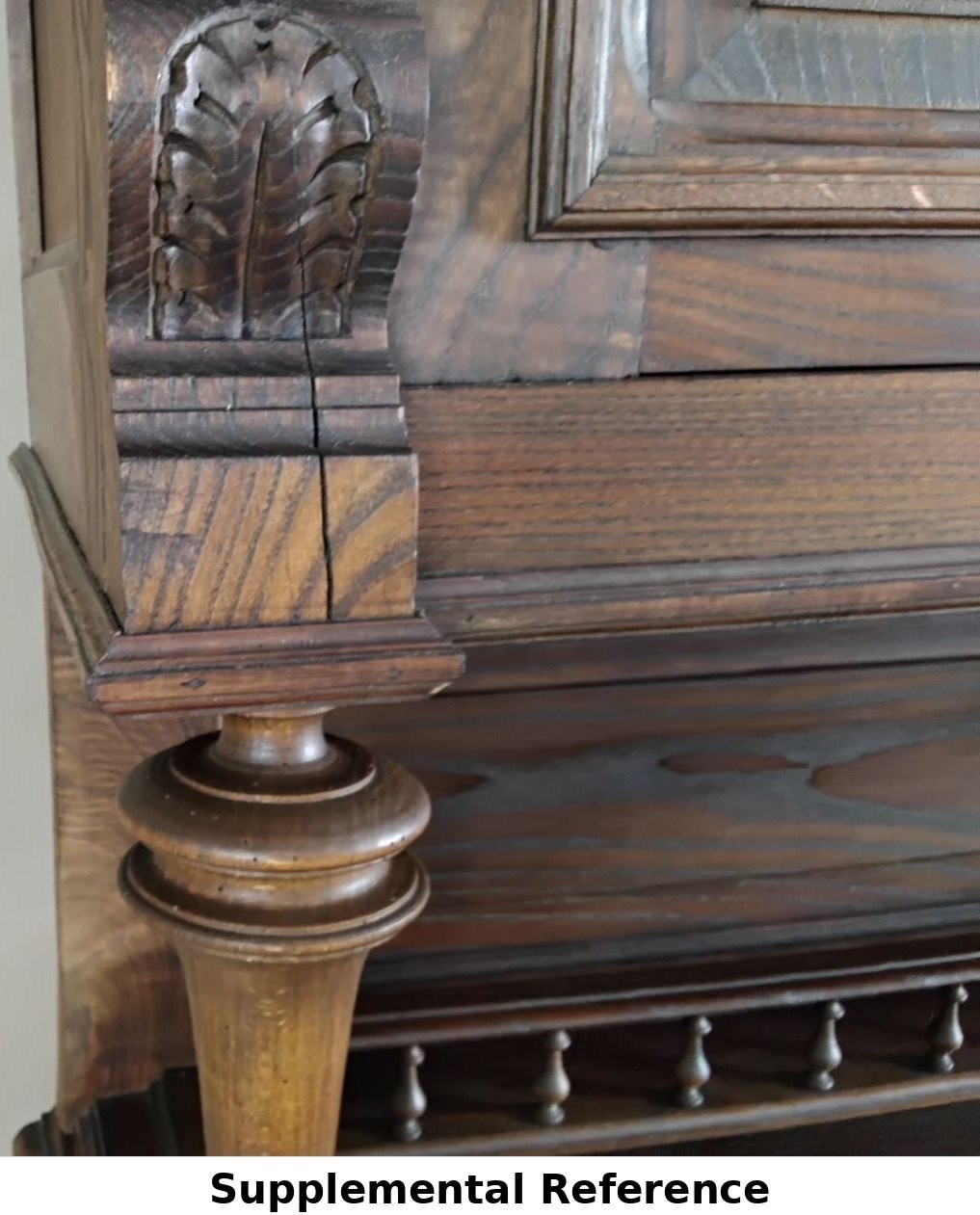
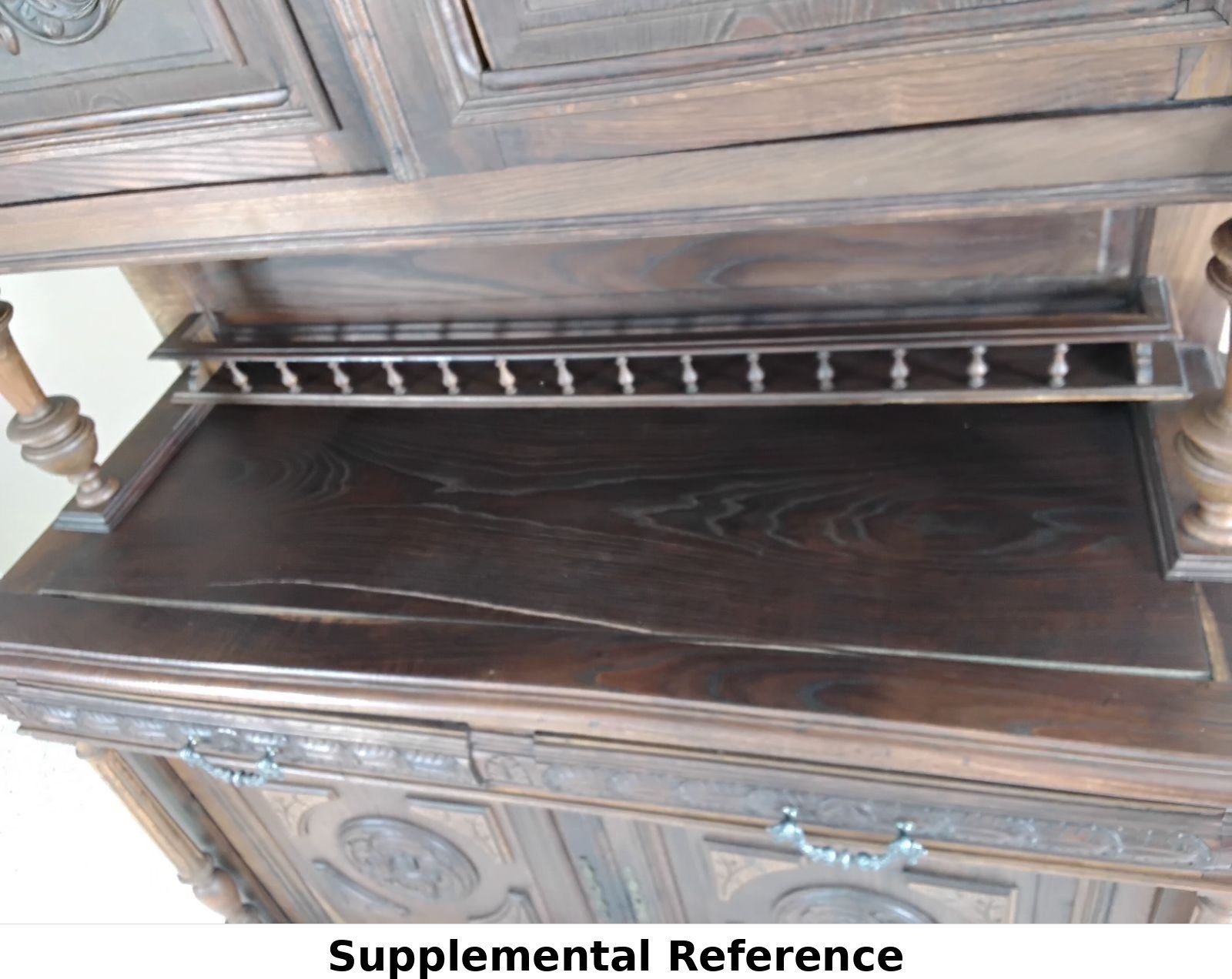
A substantial French Henri II Revival buffet à deux corps in oak, late 19th century — almost certainly produced in Brittany or Normandy, the two regional centers that kept this form alive longest and most literally. The upper cabinet presents two paneled doors carrying deeply relief-carved cartouches against a punched, matte ground: stylized tulips rising from acanthus scrollwork, flanked by what read as stylized cornucopias or heraldic mantling with a fleur-de-lis resolved at the base — the complete vocabulary of 16th-century French Renaissance ornament, faithfully reprised. Turned and fluted columns frame the upper doors above carved acanthus corbels; a recessed mid-tier display shelf sits behind a turned spindle gallery, flanked by freestanding baluster-turned drop columns — the structural flourish that defines the deux corps form. The lower case carries two carved frieze drawers fitted with iron bail handles over a pair of paneled doors, each centered on a carved rosette medallion — three interlocking volutes in the Gothic trefoil tradition — with incised foliate spandrels at the corners. The whole rests on bun feet.
The Henri II style takes its name from the reign of Henri II of France (1547–1559), when Italian Renaissance ornament, filtered through architects like Philibert de l'Orme and designers like Jacques Androuet du Cerceau, fused with French Gothic structure to produce a distinctly French monumental cabinetry idiom. The buffet à deux corps — literally "buffet in two bodies" — was its signature form: upper and lower cases joined by a mid-shelf stage, the whole functioning as both storage and display in the provincial dining room, staging serving pieces publicly while concealing linen and plate behind carved doors. The Revival of this form in the third quarter of the 19th century was deliberate and nationalist: French cabinetmakers and regional schools looked back to the Henri II canon as a rebuke to the English-influenced reform movements then sweeping European decorative arts. Breton workshops in particular preserved the form with striking fidelity. The punched matte ground on the upper door panels — achieved with a chasing tool pressed into the wood surface before carving — is a hallmark of both original 16th-century work and its most conscientious 19th-century revivals. Interior construction is honest to the period: plank-backed cases, mortise-and-tenon door frames, hand-cut drawer boxes with pinned bottoms. The piece separates into three sections and comes with its original key.
CONDITION
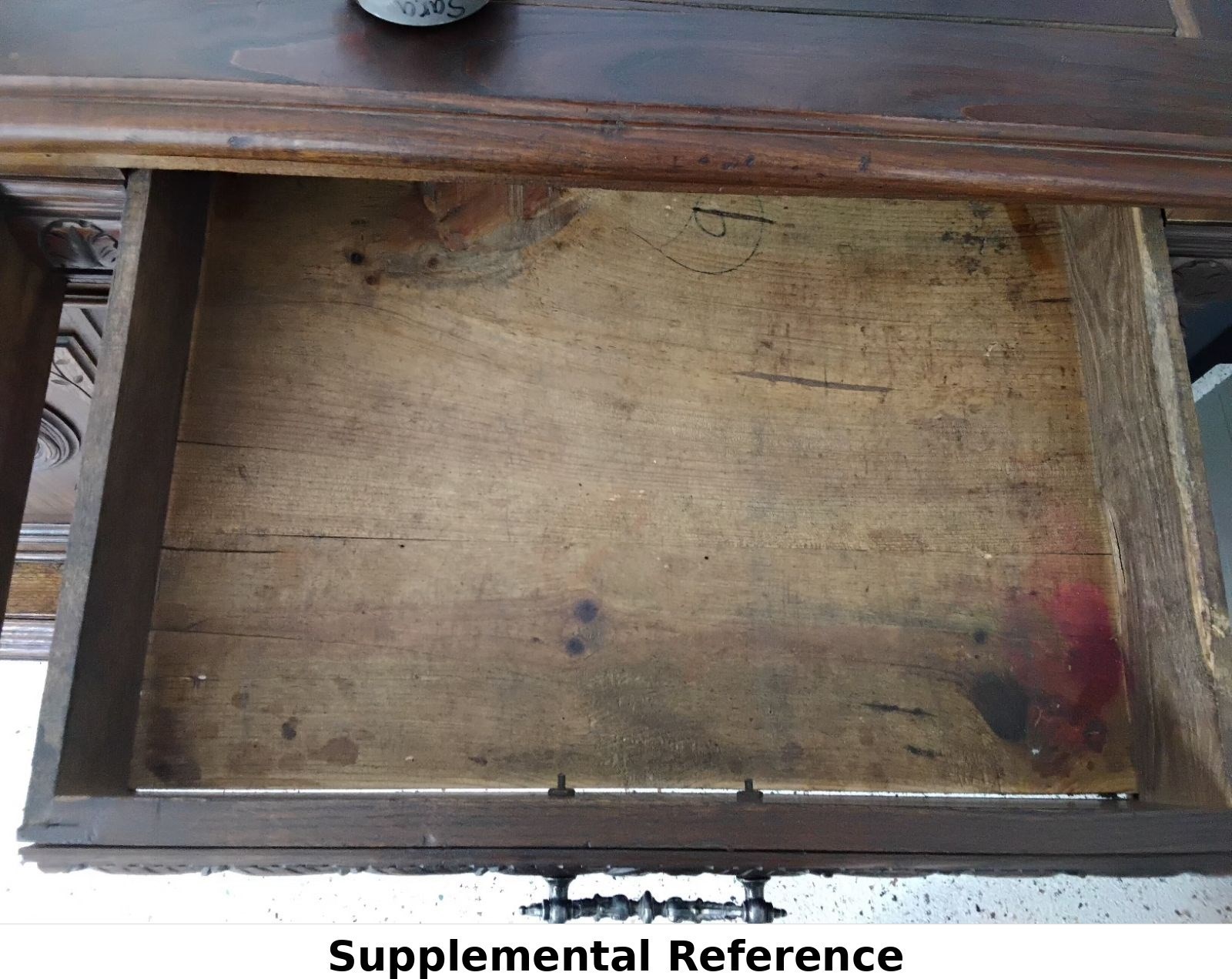
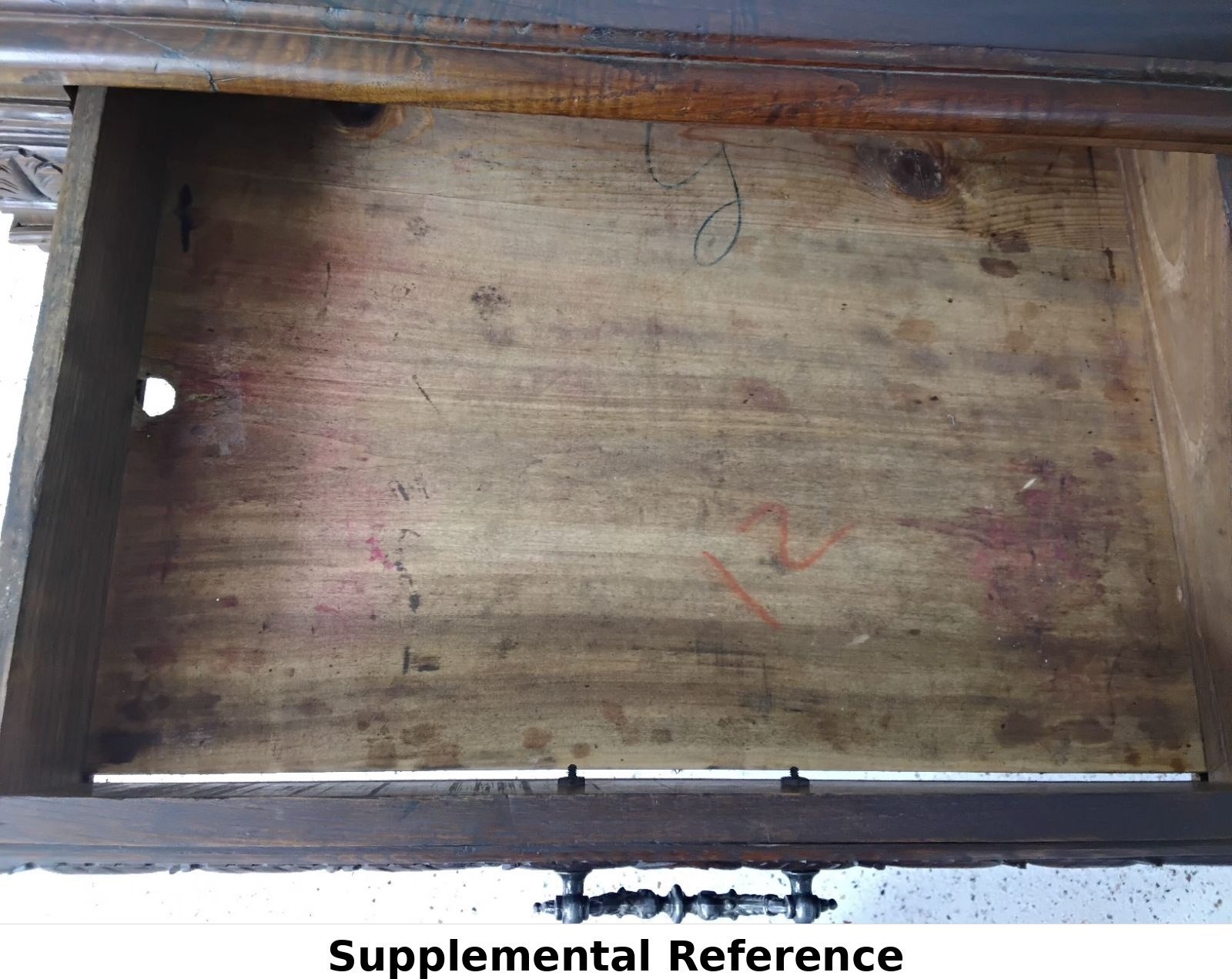
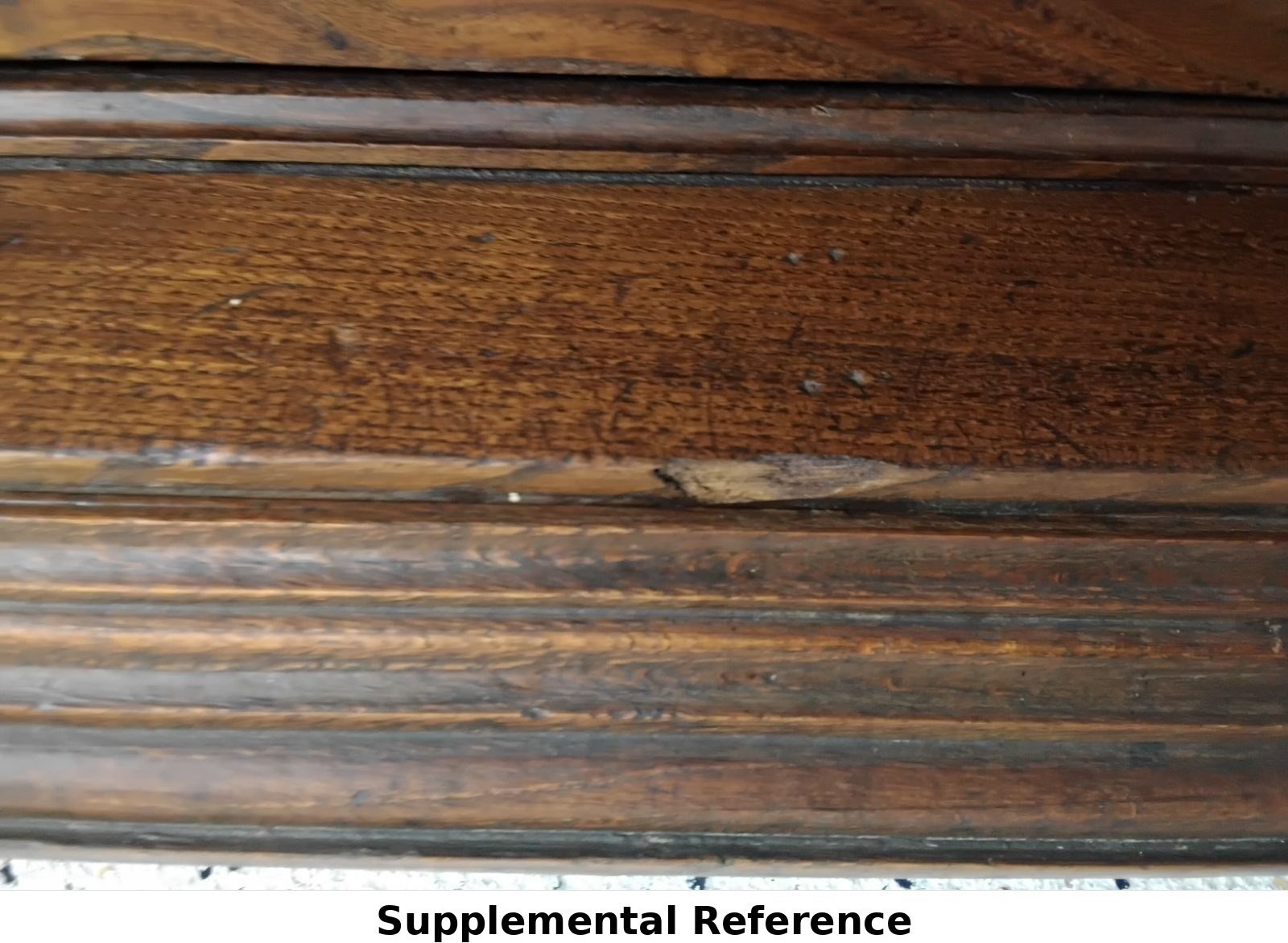
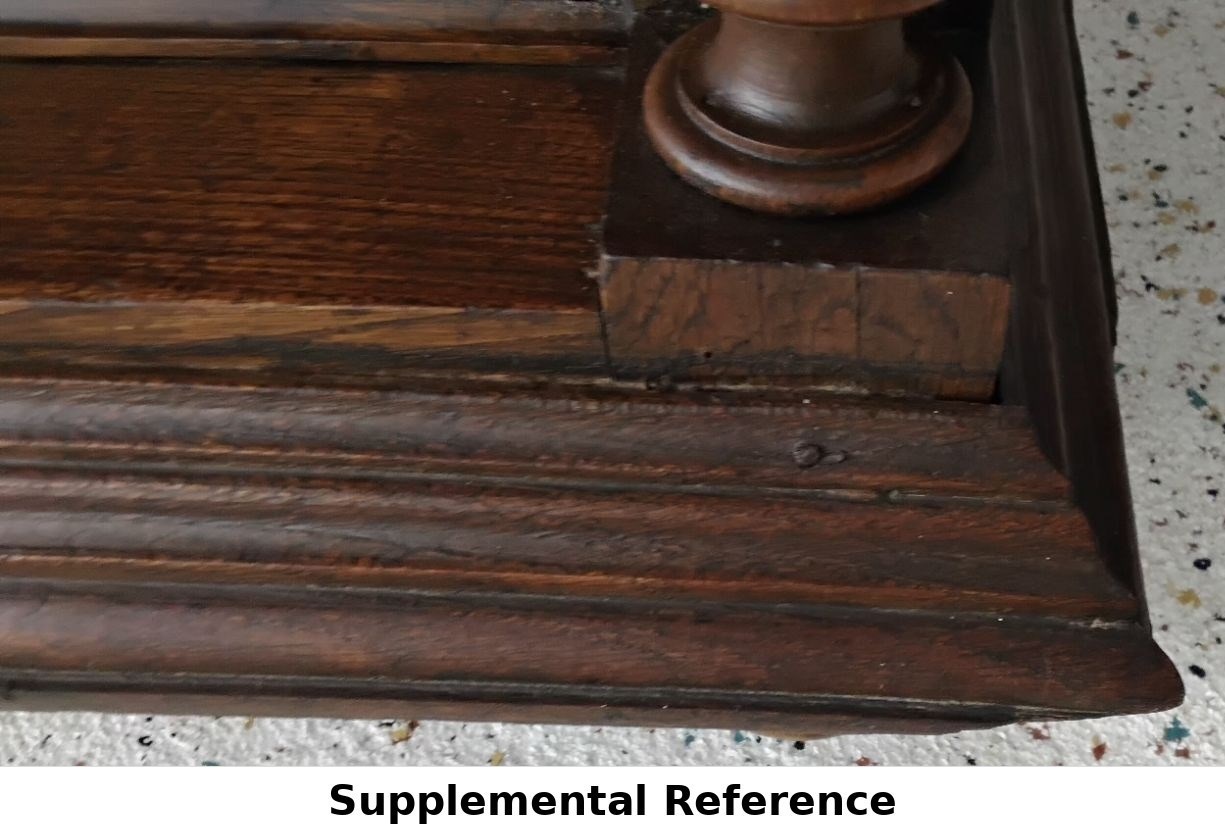
Fair. Age-appropriate wear throughout, with scuffing, finish wear and loss, and staining across exterior surfaces. Several panels are cracked and there are chips throughout, including a chipped molding at the base. Previous restoration is evident at hardware and joinery points. The case leans back when standing. Drawer interiors show old ink and pigment markings consistent with long household use.
DIMENSIONS / SPECIFICATIONS
- Overall: 91 1/2" H × 56" W × 22 1/2" D
- Lower Section: 39 3/4" H
- Upper Section Height (reference): 76 3/4" (measured from base of lower to top)
- Bottom Drawer Interior Heights: 12 1/2" and 14"
- Top Shelf Opening Heights: 9", 10 1/2", and 14"
- Separates into 3 sections for transport
- Lower case: 2 drawers, 1 removable shelf
- Upper case: 2 removable shelves
- Materials: Solid oak; iron bail handles
- Includes original key